Amazon’s newest search intelligence system isn’t ranking keywords.
It’s ranking answers.
COSMO (Common Sense Modeling) is Amazon’s large-scale system for understanding why customers search, click, and buy. Instead of relying only on keywords or attributes, COSMO builds a commonsense knowledge graph that explains user intent behind shopping behavior.
For sellers, this has a clear implication:
Your content is no longer evaluated only on what it says, but on which intent questions it answers.
This article breaks down:
- How COSMO actually works (based on Amazon’s own SIGMOD 2024 paper)
- The 15 canonical questions COSMO is trying to answer
- How a seller brand should think about COSMO when building listings, A+ content, and brand stores
As Amazon’s COSMO system pushes search toward context, intent, and natural language understanding, visibility is no longer limited to traditional keyword rankings. AI systems increasingly evaluate how well listings answer real customer questions and whether products consistently appear in trusted recommendation sources.
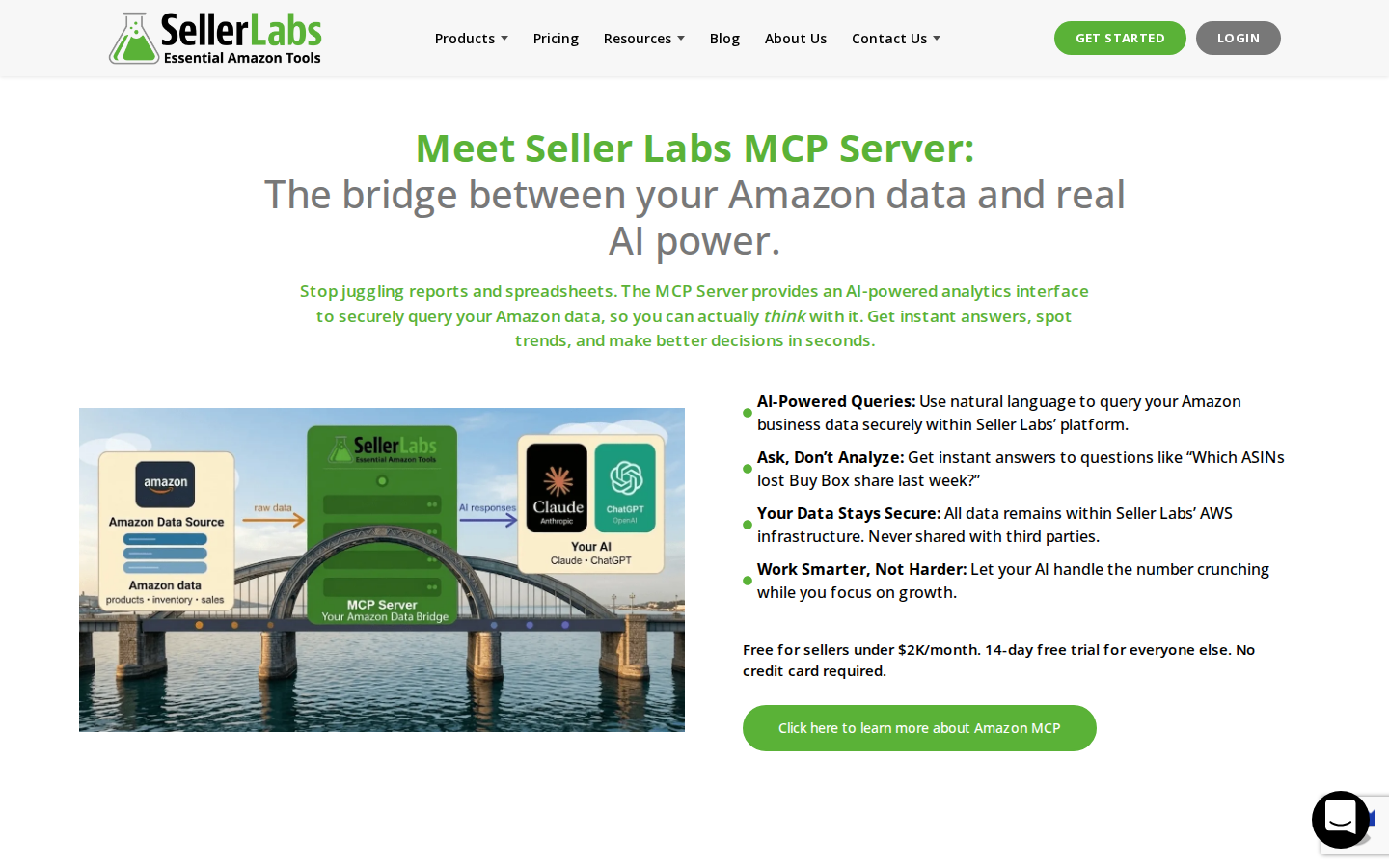
Platforms like Sellm help brands monitor this emerging layer of visibility by tracking how products and brands appear across generative AI engines like ChatGPT, Claude, Gemini, and Perplexity. This broader view of AI-driven discovery complements Amazon-focused optimization efforts and helps sellers understand how their products are being surfaced across the evolving commerce ecosystem.
SmartScout’s AI Visibility and Readiness tools set out to solve these questions through Amazon product page content. Below is the rubric for judging content quality.
How Amazon COSMO Actually Thinks (High Level)
COSMO does three critical things:
- Observes behavior
- Search → buy
- Co-buy (items purchased together)
- Search → buy
- Asks “why?” using large language models
Amazon literally prompts LLMs with questions like:
“What is this product capable of that matches the customer’s intent?”
- Keeps only answers that are:
- Complete
- Relevant
- Informative
- Plausible
- Typical (representative of real shopping behavior)
- Complete
The output becomes structured knowledge used in:
- Search relevance
- Ranking
- Navigation
- Recommendations
This is not theoretical. Amazon reports hundreds of millions in revenue impact from COSMO-powered navigation alone.
The Big Misunderstanding Sellers Have About COSMO
Most sellers think:
“COSMO is about AI-generated explanations.”
That’s wrong.
COSMO is about ensuring Amazon can reliably answer a fixed set of intent questions for every product.
If your content already answers those questions clearly, COSMO doesn’t need to infer as much. Your product becomes easier to rank, route, and recommend.
The 15 Questions COSMO Is Looking to Answer
Amazon ultimately standardizes all intent understanding into 15 relation types. Each one maps directly to a question COSMO expects content to answer.
1–4: Core Usage & Capability (Most Important)
- What function is this used for?
(used_for_func)
Example: “Used for arch support”
- What activity or event is this for?
(used_for_eve)
Example: “Used for hiking” / “Used for weddings”
- What must this product be capable of?
(capable_of)
Example: “Capable of providing insulation in cold weather”
- What task is this used to accomplish?
(used_to)
Example: “Used to build a fence”
These are the highest-value questions for vague and broad searches.
5–6: Product Identity & Role
- What kind of thing is this?
(is_a)
Example: “Is a normal suit”
- What does this function as?
(used_as)
Example: “Used as a smart watch”
This helps Amazon resolve ambiguity and classify products correctly.
7–9: Context (When, Where, Conditions)
- When or in what season is this used?
(used_on)
Example: “Used in late winter”
- Where is this used?
(used_in_loc)
Example: “Used in a bedroom”
- What body part or sensitivity does this involve?
(used_in_body)
Example: “Used on sensitive skin”
10–14: Audience & Persona
- Who typically uses this?
(used_by)
Example: “Used by cat owners”
- Who is this designed for?
(used_for_aud)
Example: “Designed for daycare workers”
- What kind of person is the user?
(xIs_a)
Example: “Pregnant women”
- What does the user want to do?
(xWant)
Example: “Wants to play tennis”
- What is the user interested in?
(xInterested_in)
Example: “Interested in herbal medicine”
These questions power personalization, navigation, and filtering.
15: Compatibility & Pairing
- What does this work with or pair with?
(used_with)
Example: “Used with surface covers”
This directly feeds cross-sell, bundles, and co-buy recommendations.
Why COSMO Cares About “Typical” Answers (Not Generic Ones)
Amazon explicitly rejects answers like:
- “Because customers like it”
- “Because it’s a type of product”
COSMO prioritizes typical shopping intent, not abstract truth.
For example:
- ❌ “Apple Watch is used to tell time”
- ✅ “Apple Watch is used to track fitness and health metrics”
This distinction matters because ranking systems reward what explains behavior, not definitions.
How a Seller Brand Should Think About COSMO
Here’s the mindset shift:
Your listing is no longer just a conversion tool, it’s training data for Amazon’s intent model.
A strong COSMO-aligned listing:
- Answers multiple of the 15 questions
- Uses specific, functional language
- Avoids vague marketing fluff
- Reflects how customers actually shop
Practical Guidance
- Title & bullets: Answer what it is and what it’s for
- Bullets & A+: Answer capable_of, used_for, used_in, used_by
- FAQs: Explicitly answer audience, use case, and context questions
- Brand Stores: Reinforce persona- and scenario-based navigation
You don’t need to answer all 15.
But if your product clearly answers 5–8 of the right ones, COSMO can understand and place it far more effectively than a keyword-stuffed listing.
Final Takeaway
COSMO isn’t magic.
It’s a system designed to answer 15 repeatable questions about intent, at massive scale.
Seller brands that understand and align with those questions:
- Rank more consistently
- Navigate better
- Convert with less friction
- And future-proof their content as Amazon search becomes more intent-driven
See COSMO Through Amazon’s Eyes with SmartScout AI
Understanding Amazon COSMO is one thing. Seeing how it affects your category, competitors, and listings is another.
SmartScout’s AI tools are built to surface the same intent signals Amazon cares about:
- How shoppers actually navigate categories
- Which use cases, audiences, and capabilities dominate search
- Where competitors win because they answer better intent questions and not because they stuff more keywords
Instead of guessing what Amazon “might” reward, SmartScout helps you:
- Identify the intent structures behind top-ranking products
- Spot content gaps where your listing fails to answer key COSMO questions
- Make data-backed decisions on positioning, expansion, and differentiation
If Amazon is ranking answers then SmartScout can help you find the right ones. Explore SmartScout AI tools and see how intent really drives search.

.png)