
SmartScout and Jungle Scout are two of the top names among Amazon sellers. Jungle Scout Catalyst and SmartScout have many features in common and can be compared on the same benchmark.
But Jungle Scout Cobalt is a different gravy that caters to enterprise-level businesses and mid-market brands. SmartScout, on the other hand, offers category-level insights to private label, individual, and wholesale sellers.
Not to mention, SmartScout offers everything a seller needs at 10% to 30% of what Cobalt charges every month.
So instead of going with enterprise-level needs, we will compare SmartScout and Jungle Scout Cobalt on shared features. By the end, you will have enough information to decide which tool might be perfect for your business.
Since this is all about Cobalt, we won’t be featuring any tool from its Catalyst version, as we have already compared it with SmartScout alongside Helium 10. Check the complete comparison in SmartScout vs Helium 10 vs Jungle Scout blog.
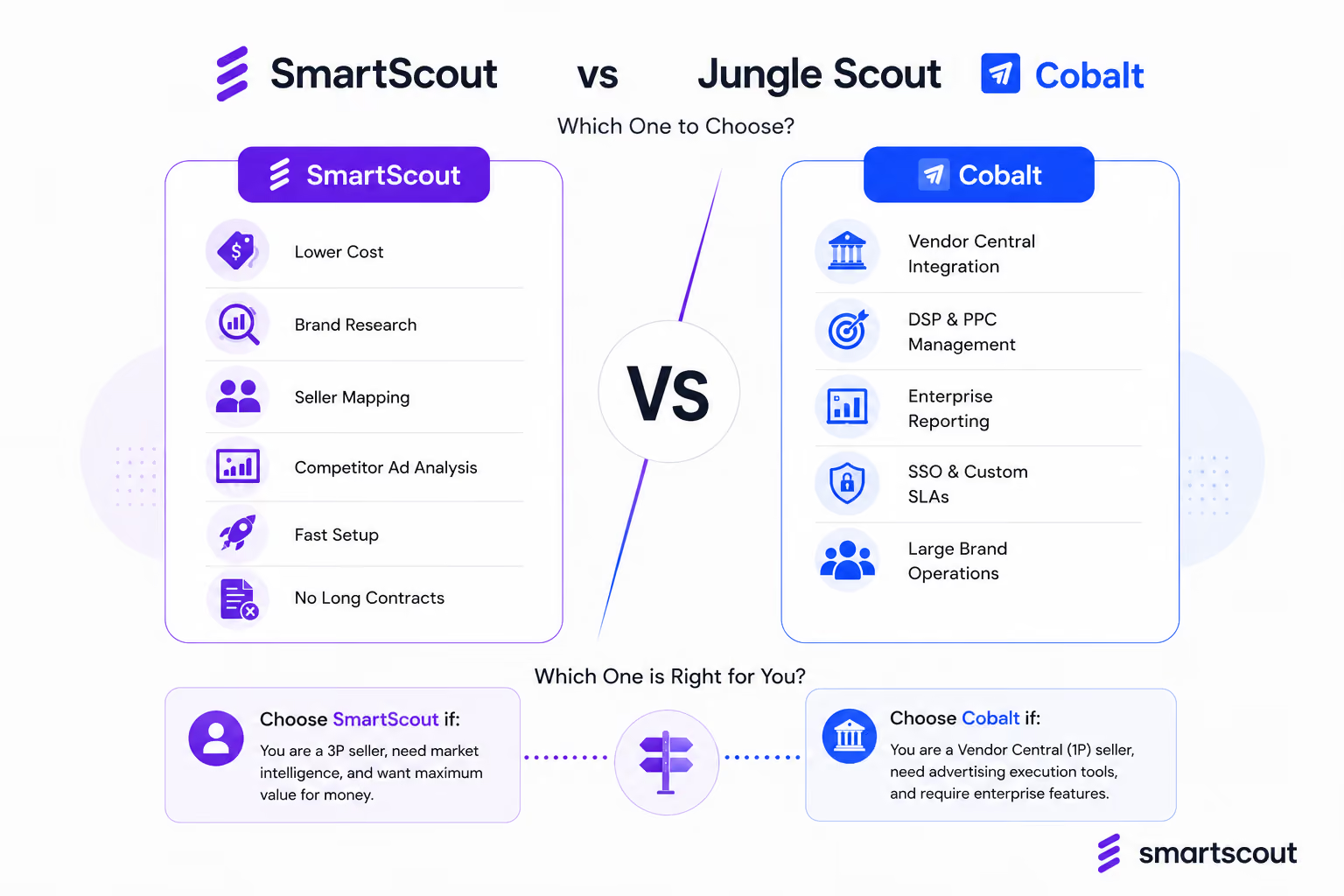
SmartScout caters to small to medium-sized businesses (like individual sellers, wholesalers, and brands), while Cobalt only suits large brands and enterprises,
You can browse within 43,000 subcategories with SmartScout. With Jungle Scout Cobalt, you can create custom segments and operate within a specific niche.
SmartScout offers over 30 filters to find products, keywords and opportunities, while Cobalt allows you to set your own benchmarks and integrate Vendor Central.
Sellers can choose SmartScout plans starting from $29/month. For Cobalt, brands need to get custom quotes according to their needs.
SmartScout is backed by a 7-day money-back guarantee. There is no free trial or refund with Cobalt, but you can get a demo by filling a basic business form.
Let’s start with a quick comparison table first. This will give you a quick idea of what to expect later in the article.
The pricing gap tells an important story. SmartScout’s full-featured Business plan ($187/month) costs less per year than a single month of Cobalt. That is not a value judgment on Cobalt. It reflects the fact that these platforms serve different segments of the Amazon ecosystem.
Most Amazon research tools were built by software companies. SmartScout was built by Amazon sellers. The founding team has over $300 million in personal marketplace sales and advanced computer science degrees, which shaped a product philosophy that is obvious the moment you log in: every data point connects to every other data point.
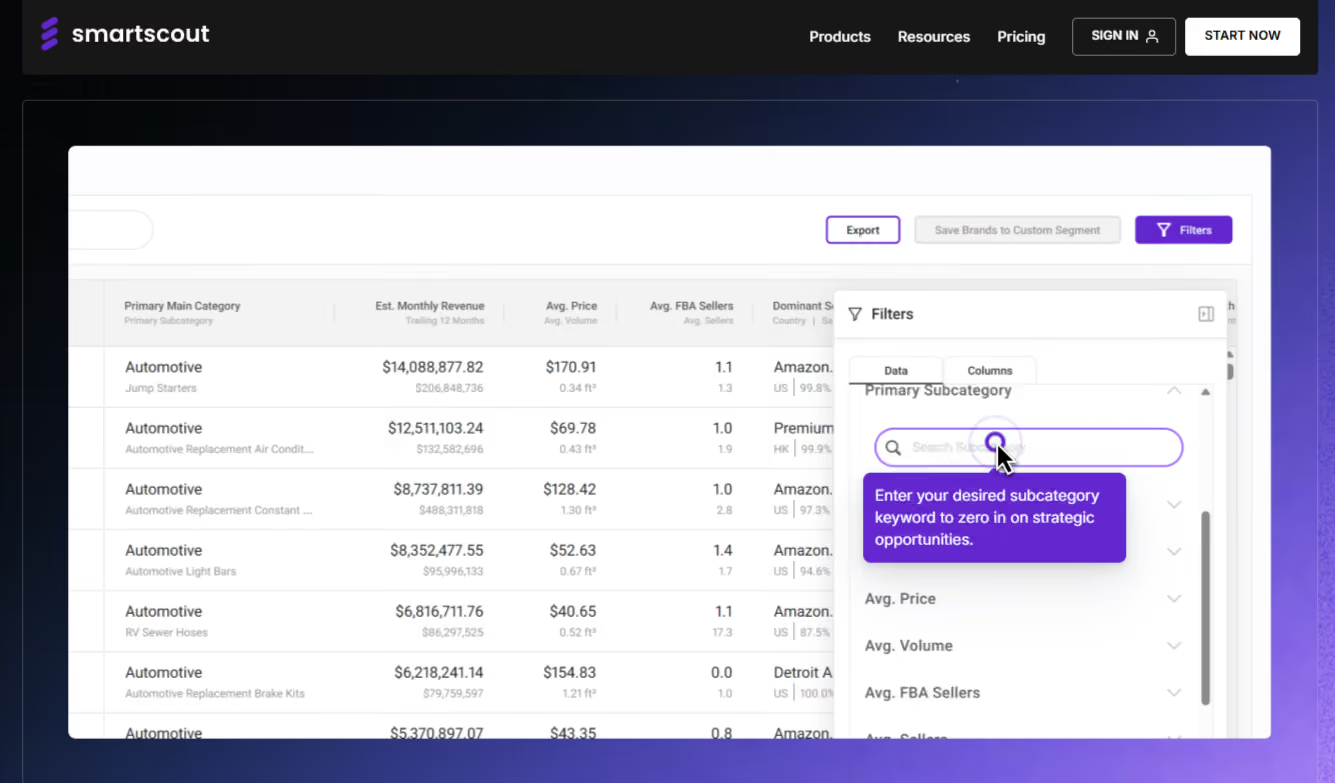
Click a subcategory, and you see the brands inside it. Click a brand, and you see its products, sellers, advertising strategy, and keyword footprint. Click a product, and you see its traffic connections to other products across the marketplace.
That interconnected architecture exists because the people who built it needed it for their own selling operations. SmartScout is also fully bootstrapped, with no outside investors, which means the platform is priced for sellers rather than structured to generate returns for a venture fund. Plans start at $29 per month, every tier includes full research access without per-ASIN caps, and there is no annual contract requirement.
Jungle Scout introduced Cobalt in June 2020 as a standalone enterprise market intelligence platform, separate from its seller-facing product (now called Catalyst). In March 2021, the company raised $110 million in growth capital led by Summit Partners and simultaneously acquired Seattle-based Downstream Impact, an advertising technology company managing over $250 million in annual Amazon ad spend for brands like HP and Bic.
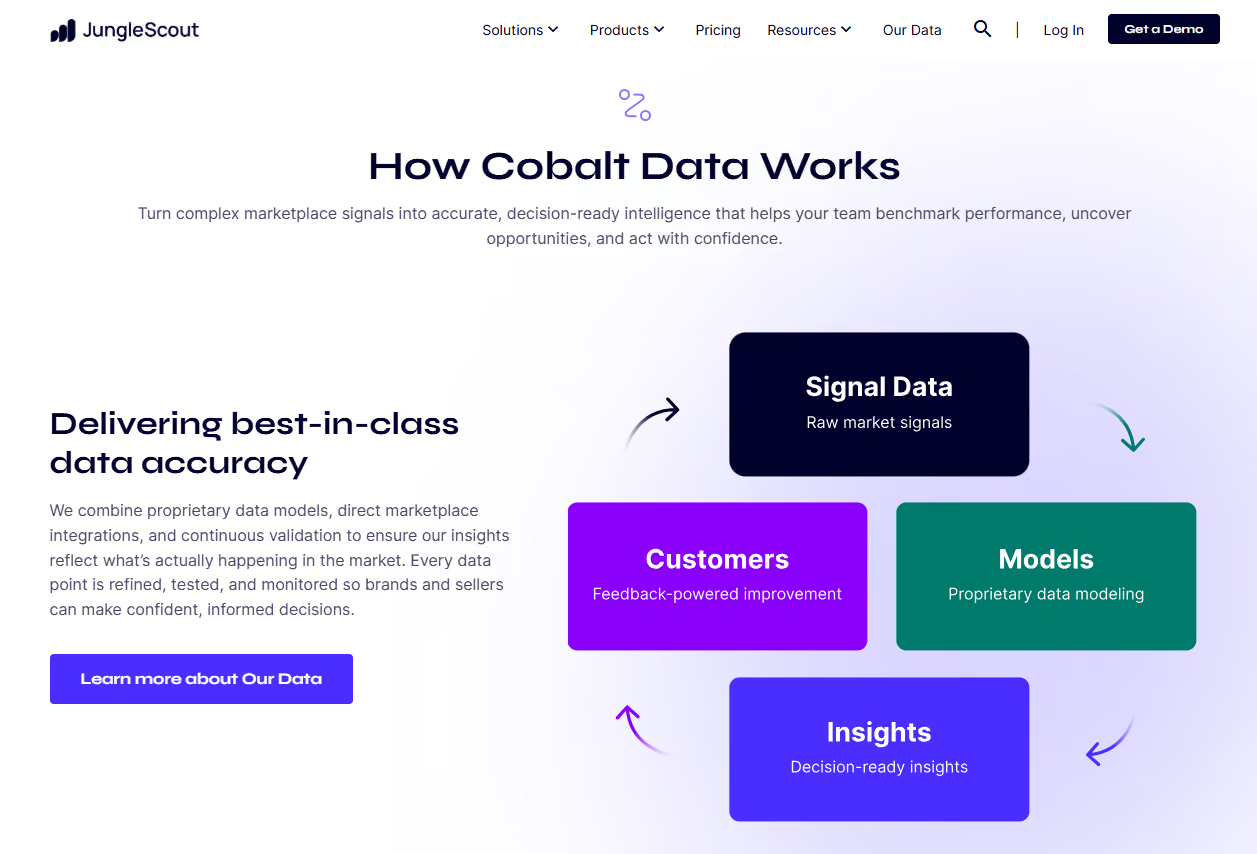
Those two pieces merged into Cobalt 2.0 in May 2023, combining the original Cobalt’s market intelligence with Downstream’s ad automation engine. Today, the platform is organized around four modules:
Market Intelligence for category-level visibility and competitor tracking, Retail Insight for custom performance dashboards, Ad Accelerator for PPC and DSP campaign management, and Digital Shelf Analytics for keyword rankings and Share of Voice tracking.
Cobalt’s Spring 2026 "Speed to Insight" release added AI Agent Workflows, variant-level estimates, product attribute analysis, and a 3P Compliance Dashboard. The platform targets brands with $5 million or more in annual Amazon revenue, along with agencies, retailers, and financial services firms.
SmartScout and Cobalt overlap in market intelligence, brand analytics, advertising, and keyword tracking. But they approach each area differently based on their target audiences. Here is how they compare across the categories that matter most.
Both platforms offer you visibility into Amazon’s categories. The difference is whether you get that data instantly or need to build a custom segment and wait for it to process.
When you open SmartScout’s Subcategories tool, you can browse live category data (over 43,000 subcategories) within seconds of logging in.
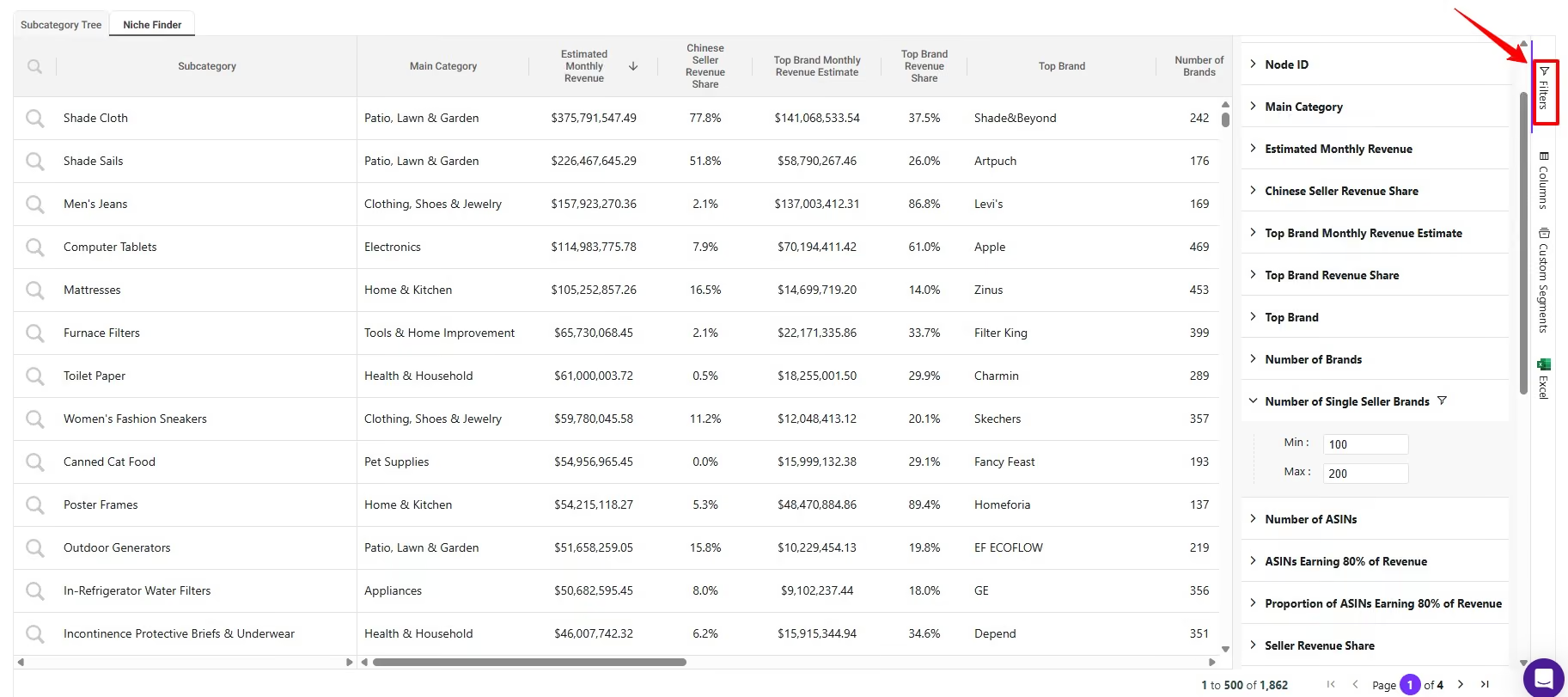
Every subcategory shows estimated revenue, growth trajectory, competitive density, and the split between what Amazon sells directly (1P) and what third-party sellers control.
That 1P ratio is a filter most tools ignore entirely, but it determines whether a category is actually accessible or locked up by Amazon’s own retail operation. No segment building, no processing time, no waiting. The data is pre-computed and continuously refreshed.
Cobalt’s Market Intelligence module lets users build custom segments around categories, brands, and product groups. The Spring 2026 update added "Market Analysis" with dynamic, unlimited segments and no ASIN caps.
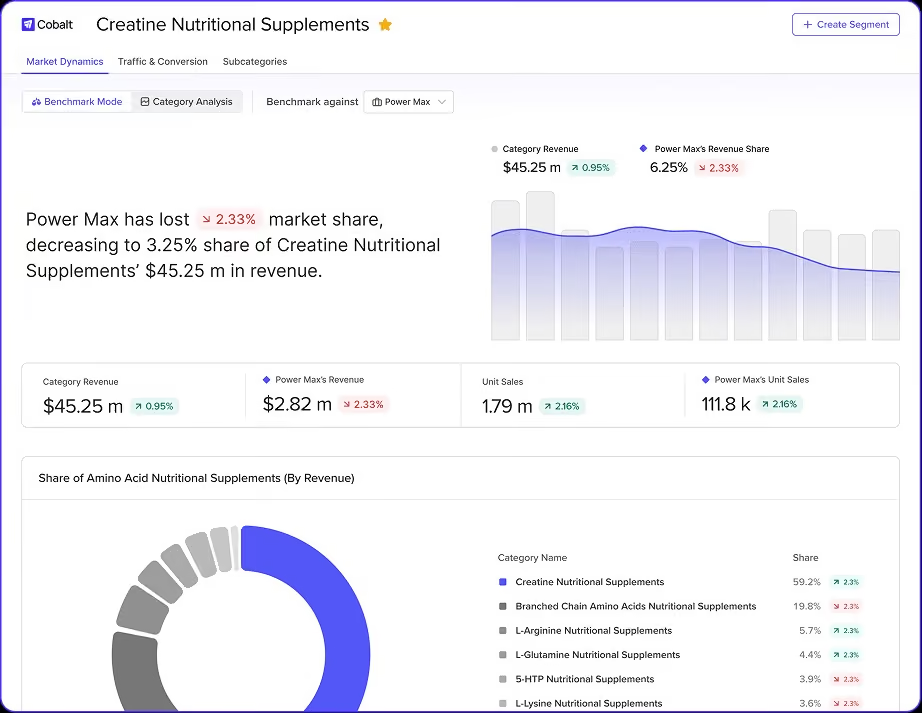
The scope is powerful for recurring reporting, but the workflow remains segment-first: you define what you want to analyze, Cobalt processes it, and results typically populate within 15 to 30 minutes. This works well for structured quarterly reviews but creates friction during exploratory research.
Our Verdict: SmartScout provides deeper Amazon-specific category granularity with instant access across 43,000+ subcategories. Cobalt’s segments are flexible but require setup time. If Amazon is your primary channel and speed matters, SmartScout’s depth is unmatched.
Brands are central to both platforms, but SmartScout and Cobalt study them for opposite reasons. SmartScout evaluates brands as opportunities to pursue. Cobalt monitors them as positions to defend.
SmartScout’s Brand Database lets you research any brand on Amazon without needing account access or a relationship with that brand. Search by revenue range, growth rate, seller density, or Amazon’s own involvement in the listing.
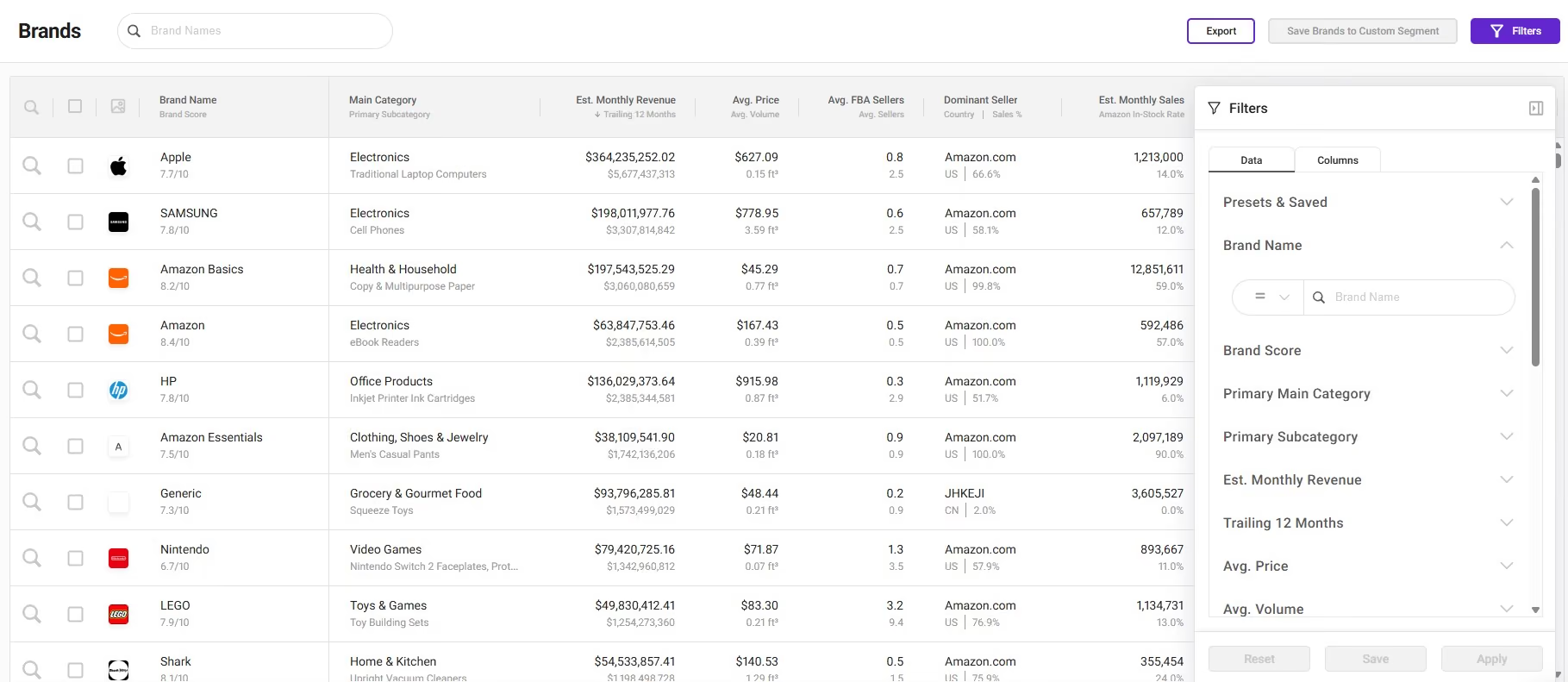
Each brand profile opens into a full competitive dossier, which subcategories the brand operates in, how revenue is distributed across its product catalog, which sellers carry it, and what its advertising footprint looks like.
That depth makes SmartScout the go-to for agencies prospecting new clients, wholesale buyers scouting sourcing targets, and private label sellers studying the competitive landscape around a potential product.
Cobalt’s Retail Insight module enables brands to build dashboards that benchmark their own performance against competitors. The standout advantage is Vendor Central integration: Cobalt pulls data from Seller Central, Vendor Central, and the Amazon Advertising Console into a single view.
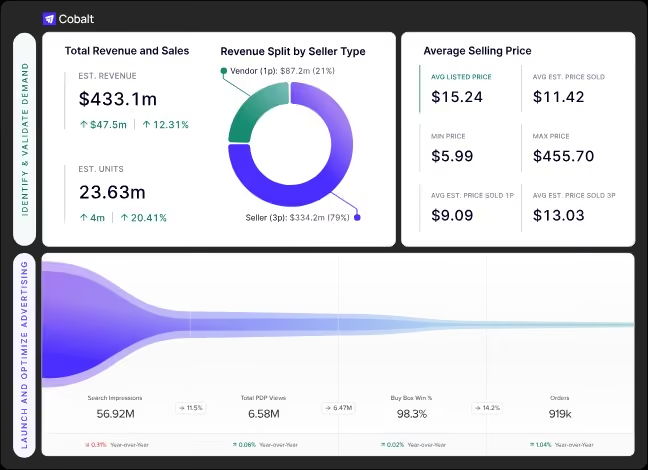
For brands selling through Amazon’s 1P channel, this means you can track sell-through rates, purchase orders, and inventory health alongside market share data in one place.
Our Verdict: SmartScout wins for sellers who need to evaluate brands as business opportunities across the entire Amazon marketplace. Cobalt wins for brand owners who need to track their own 1P/Vendor Central performance against competitors.
Understanding how shoppers move between products on Amazon shapes both advertising strategy and competitive positioning. This is an area where one platform has built a capability that the other does not attempt.
SmartScout’s Traffic Graph answers a question no other analytics platform addresses: where does traffic actually go after a shopper views a product?
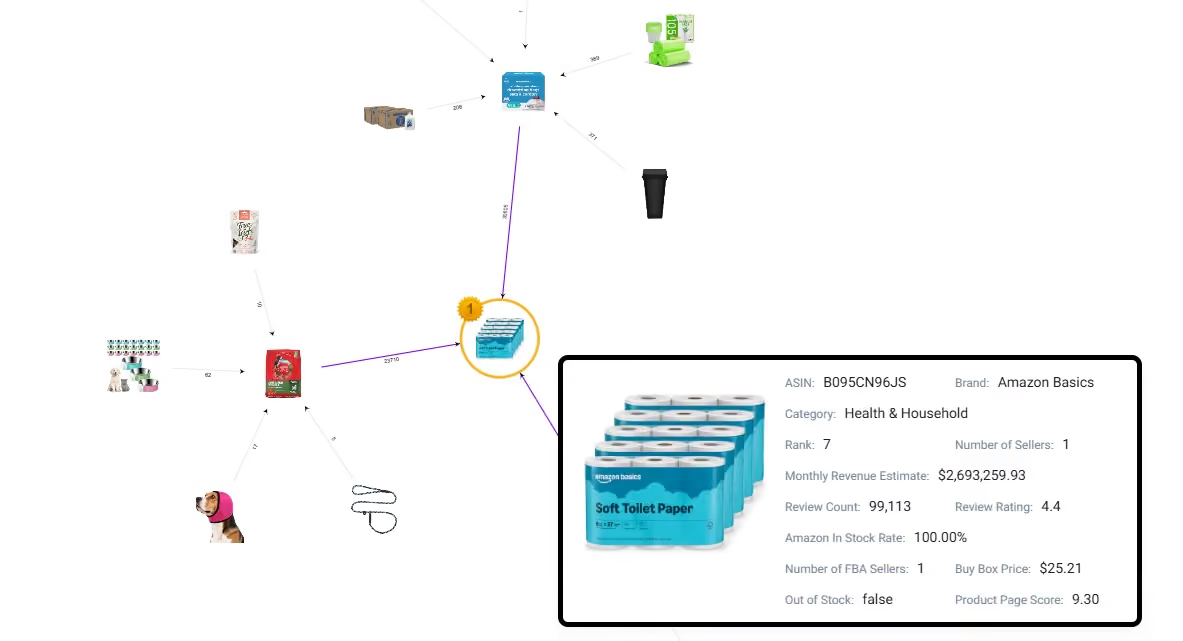
The tool renders a visual network of purchase relationships, showing which products customers buy together, which listings pull traffic from each other, and where cross-sell opportunities exist. If you run PPC campaigns, this data replaces guesswork with a map of real shopper behavior.
Cobalt does not provide product-to-product traffic mapping. Its Digital Shelf Analytics tracks keyword-level traffic trends and Share of Voice at the category level, which is useful for understanding demand drivers. But it does not visualize the individual product relationships that shape cross-sell and advertising opportunities.
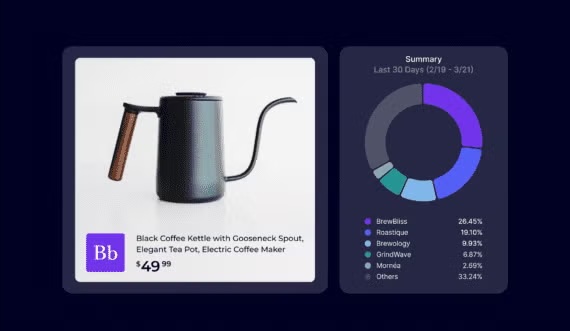
Our Verdict: SmartScout wins. Traffic Graph is a unique capability that no enterprise analytics platform replicates. The ability to visualize product-level traffic flow provides actionable PPC targeting intelligence that category-level data cannot match.
There is a meaningful difference between knowing what your competitors spend on ads and managing your own ad budget at scale. Both are valuable. They are not the same job.
SmartScout’s Ad Spy opens up the black box of competitor advertising on Amazon. Pick any brand or product and see which keywords they bid on, how their spending patterns shift across seasons, and where they are gaining or losing ground against rival advertisers.
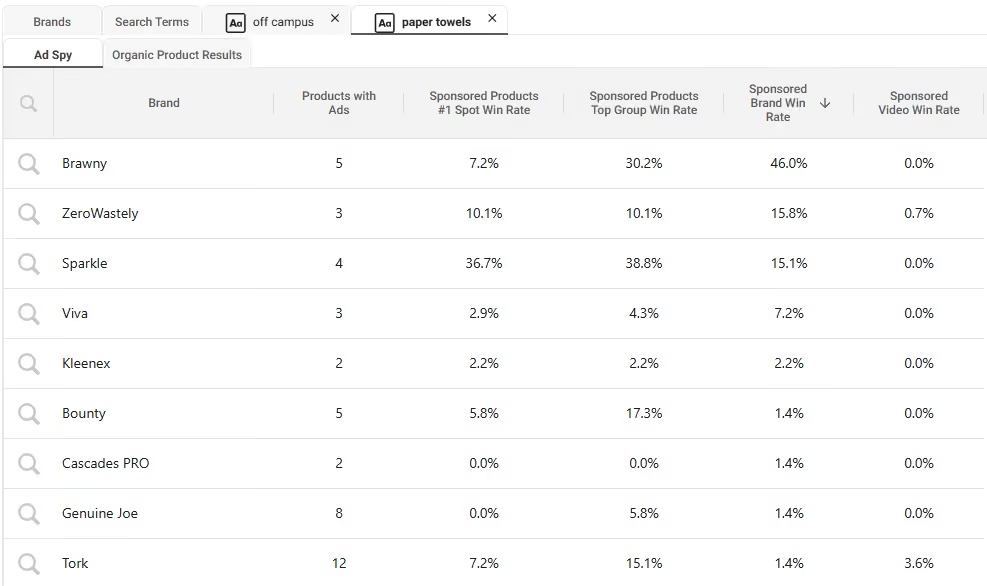
The historical dimension is what gives the tool its edge: you can track how a brand’s PPC strategy evolves over months, not just see a snapshot. For sellers evaluating a brand for wholesale, Ad Spy also signals whether that brand actively invests in demand generation or relies entirely on organic traffic.
Ad Accelerator is not a research tool. It is a full campaign execution platform built on the foundation of Downstream Impact, which managed over $250 million in annual Amazon ad spend before the acquisition.
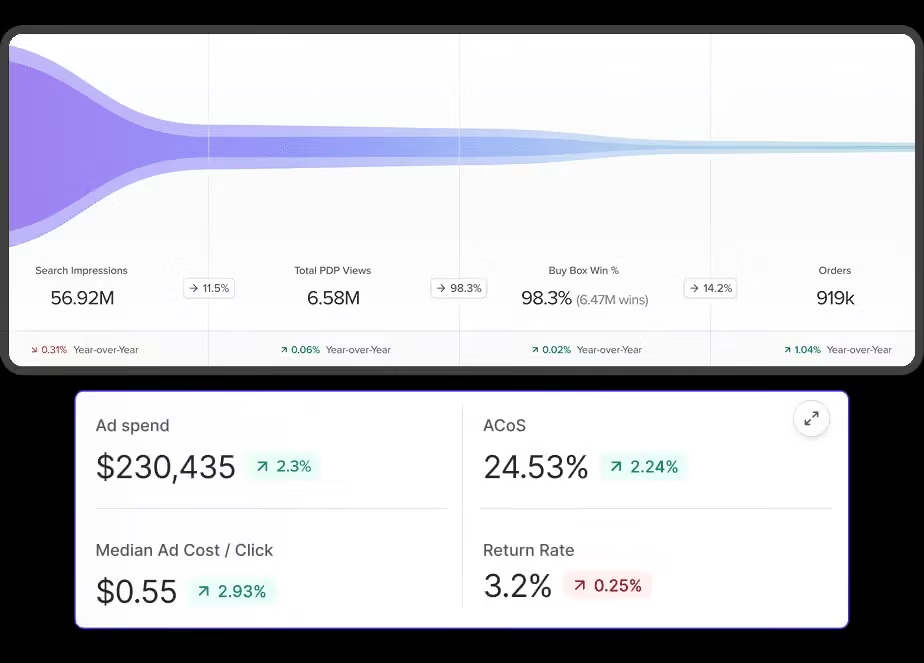
You can manage PPC and DSP campaigns across multiple brands and accounts, build rules-based automation for bid adjustments and budget allocation, and schedule campaigns at hourly intervals. For brands spending seven figures annually on Amazon advertising, Ad Accelerator provides the operational layer that research tools do not.
Our Verdict: Different tools for different jobs. SmartScout Ad Spy is competitive intelligence: it tells you what others are spending and targeting. Cobalt Ad Accelerator is a campaign execution: it manages your advertising operation. Sellers doing their own Amazon PPC get more from Ad Spy. Brands managing large-scale ad budgets need Ad Accelerator.
Tracking keyword trends at the category level and turning keyword data into actionable listing improvements are two very different outputs. One platform does both. The other focuses on visibility reporting.
Keyword Detective takes a competitive approach to search term research. Enter any ASIN and the tool identifies not just what keywords drive traffic to that product, but which of those keywords your competitors rank for and you do not.
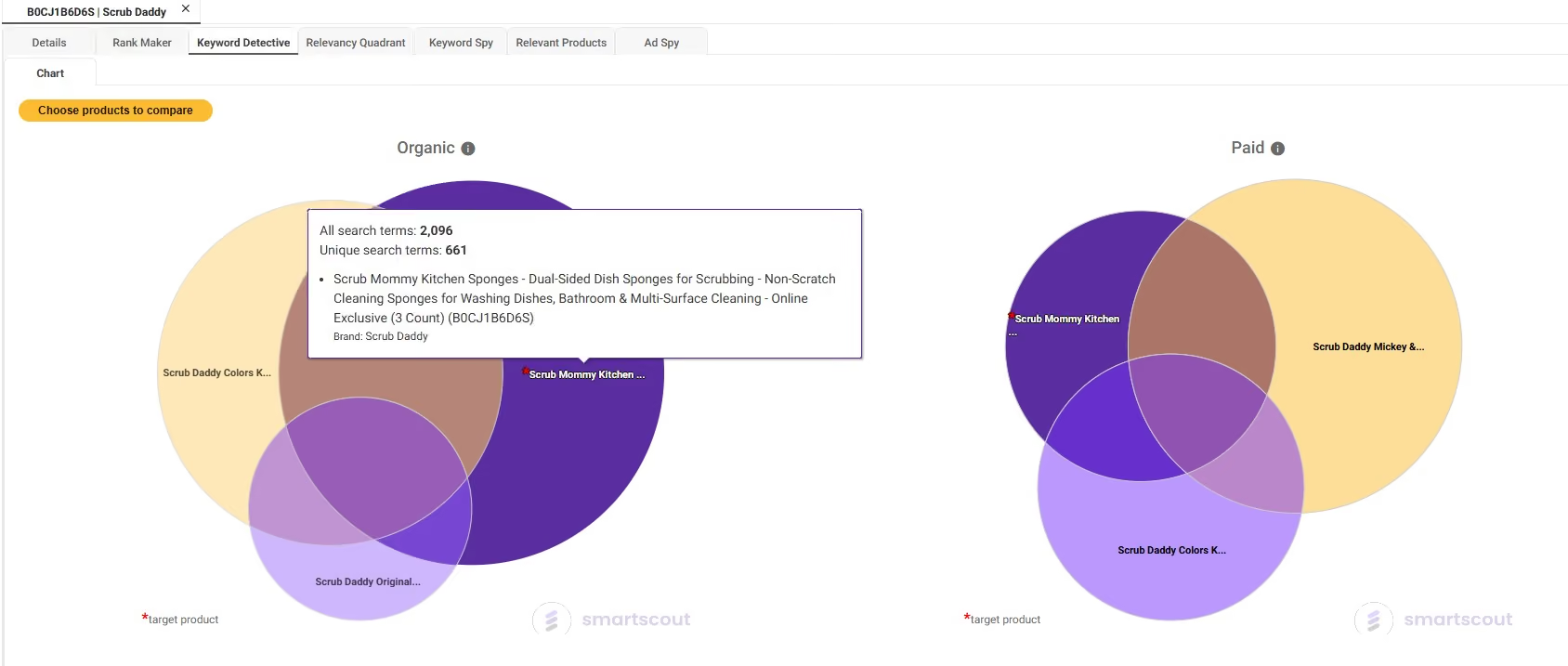
The Relevancy Quadrant adds another dimension: it scores each keyword by how relevant it is to your product and plots that against your current ranking. Keywords that fall into the high-relevance, low-ranking zone are your highest-impact optimization targets.
Cobalt’s Digital Shelf Analytics tracks Share of Voice, measuring brand visibility relative to competitors across a defined keyword set.
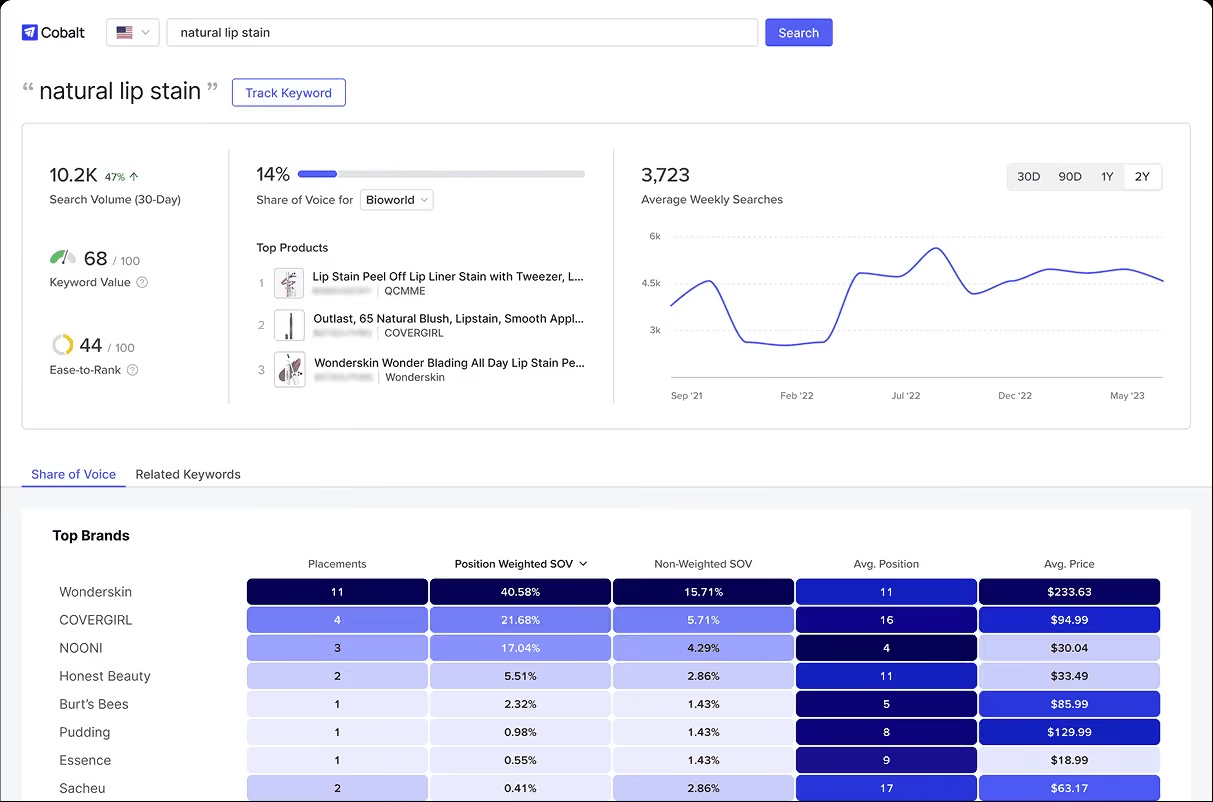
This is useful for enterprise teams that need to report on search visibility trends to leadership and correlate ad spend shifts with positioning changes. Cobalt tracks rankings and competitor ad activity at the keyword level, but does not provide the relevancy-scoring visualization that SmartScout offers.
Our Verdict: SmartScout wins for sellers who need to turn keyword research into optimized listings and PPC campaigns. Cobalt’s Share of Voice reporting is better suited for executive-level visibility dashboards.
You need a tool you can rely on. But you also need to understand how the numbers are calculated so you can make informed decisions, not just trust a dashboard.
No Amazon research tool can provide exact sales figures because Amazon does not publicly share them. Instead, platforms estimate sales using signals such as Best Seller Rank (BSR), category performance, historical trends, and marketplace data.
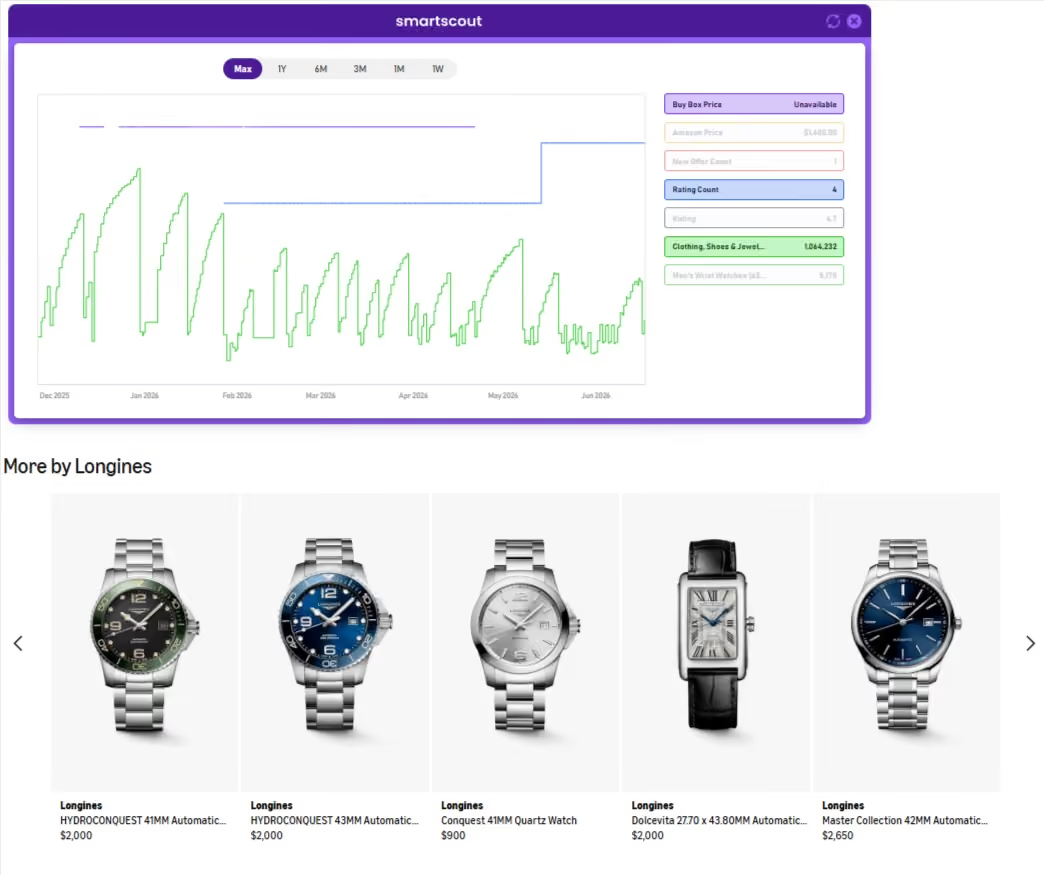
In SmartScout's case, BSR and marketplace data are generally reliable, while sales estimates are typically accurate enough for product research and sourcing decisions. Most experienced sellers view the platform's estimates as being within a reasonable range of actual performance, often landing within 85% to 90% accuracy when compared against real sales data.
What helps build confidence in the numbers is SmartScout's transparency. The Chrome Extension displays sales estimates, revenue figures, seller data, and other metrics directly on Amazon product pages, allowing users to compare the data against live marketplace listings in real time.
The extension also includes 1,000 free monthly uses, making it easy for sellers to validate SmartScout's estimates before committing to a paid plan. Rather than asking users to blindly trust a dashboard, the platform provides multiple ways to cross-check and verify the data during the research process.
You can check how SmartScout processes its metrics and our methodology here.
Cobalt processes over 1 billion data points daily across more than 500 million Amazon products. That is substantial infrastructure.
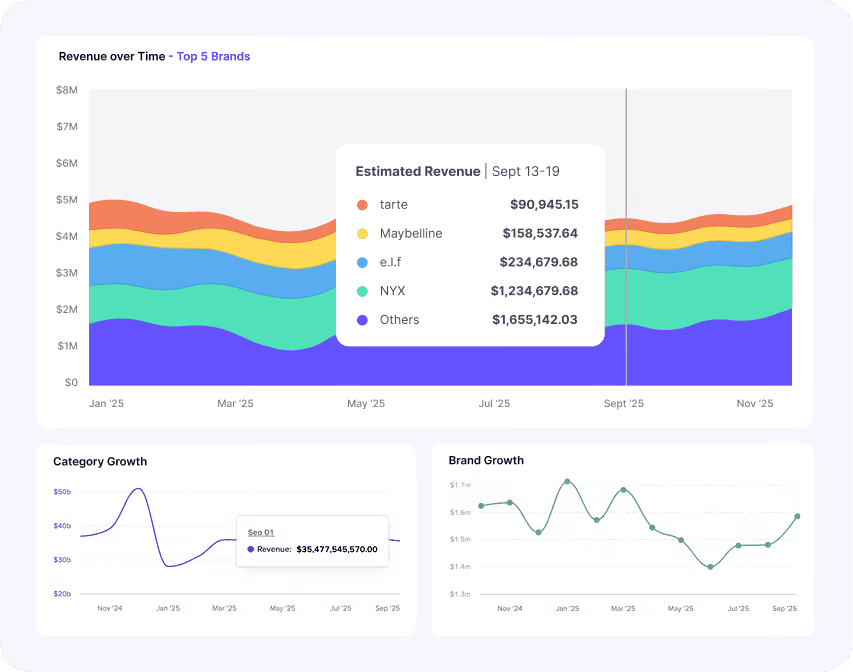
However, Capterra reviews (18 verified users, a small sample) flag specific accuracy issues with variant-level ASIN estimates. Cobalt’s Spring release added variant-level insights, which may address this over time, but those features are still in beta.
Our Verdict: SmartScout wins on transparency. The drill-down model lets you verify estimates at every level of the hierarchy. Cobalt processes more raw data but offers less visibility into how individual numbers are derived.
On Amazon, the seller behind a listing matters as much as the product on it. This section covers a category where only one platform participates.
SmartScout’s Seller Map and Database lets you see who is actually selling behind any listing on Amazon. Search by geography, revenue range, brand portfolio, or product count to build a picture of the competitive seller landscape.
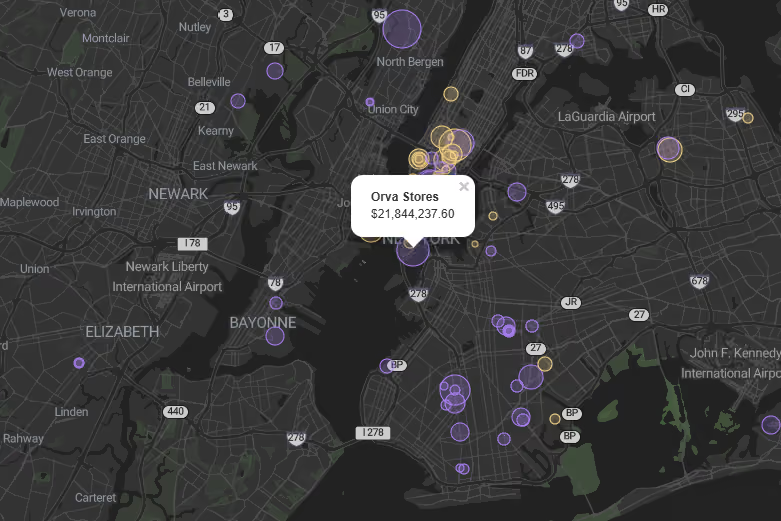
Before approaching a distributor about a wholesale deal, you can see exactly how many other sellers already carry that brand, what their estimated revenue looks like, and whether the market is saturated or has room for another reseller. No other market intelligence platform, enterprise or otherwise, provides this level of seller visibility.
Cobalt does not provide seller-level mapping or seller competitive intelligence. However, you can check all sellers selling under a product category in its “Seller List”.
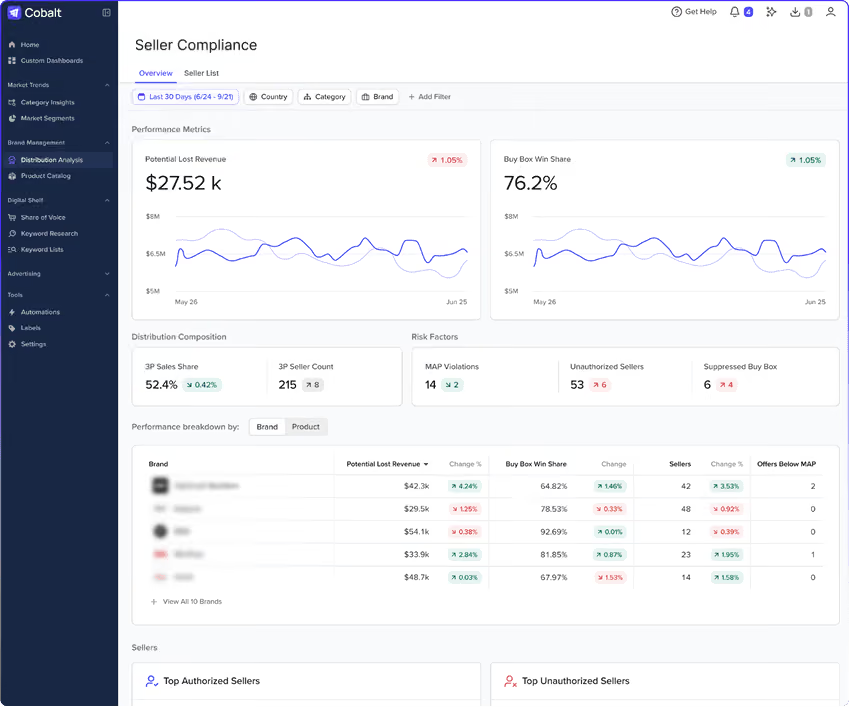
This is by design: Cobalt’s enterprise customers are rarely concerned with individual seller dynamics.
Our Verdict: SmartScout wins (exclusive feature). Seller Map has no equivalent in Cobalt. If seller-level intelligence matters to your business, SmartScout is the only platform that provides it.
AI features are standard in every SaaS platform in 2026. What matters is whether the AI changes your workflow or just adds a layer of automation to an existing process.
SmartScout’s AI Listing Architect connects directly to the platform’s search term and competitor data to generate product listings that are grounded in real marketplace intelligence.
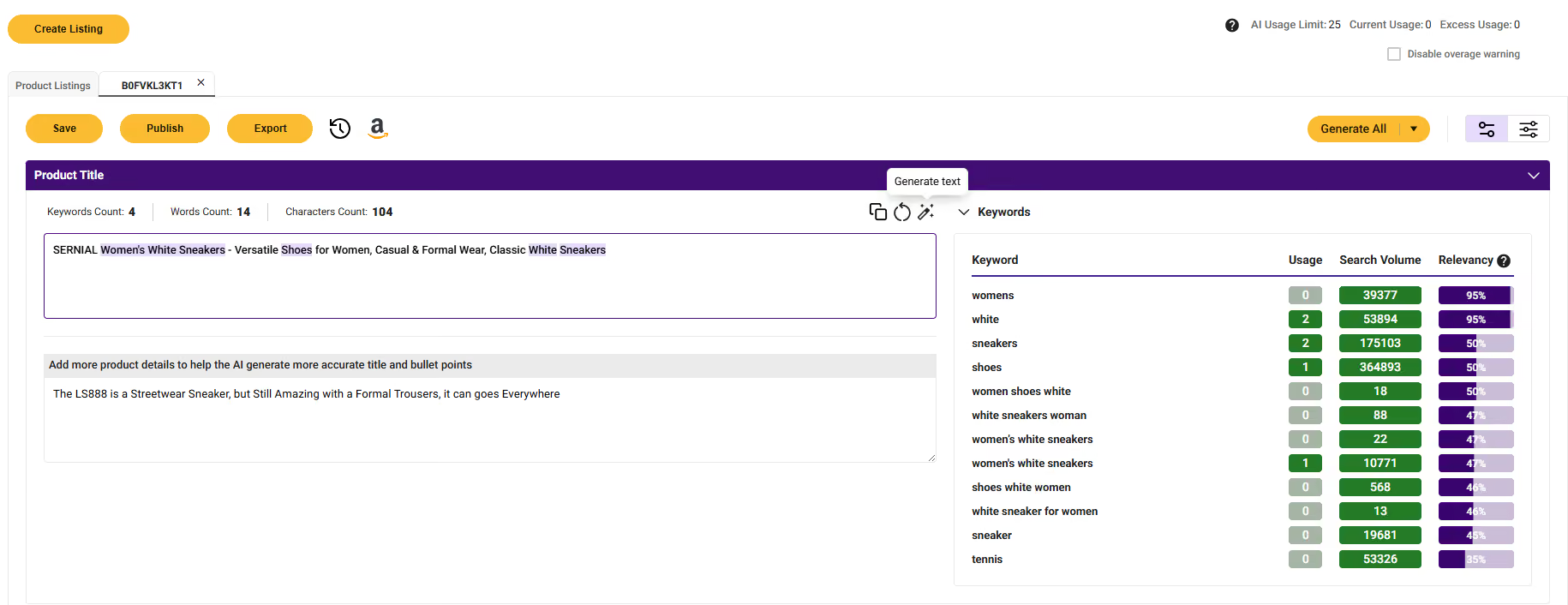
Instead of writing copy in a vacuum and hoping the keywords are right, the tool pulls from SmartScout’s own relevancy and ranking data to produce titles, bullets, and descriptions optimized for the terms that actually drive conversions in your category.
Cobalt’s Spring 2026 release introduced AI Agent Workflows under the Speed to Insight umbrella. These workflows automate benchmarking analysis and category analysis, generating reports with visualizations and actionable summaries.
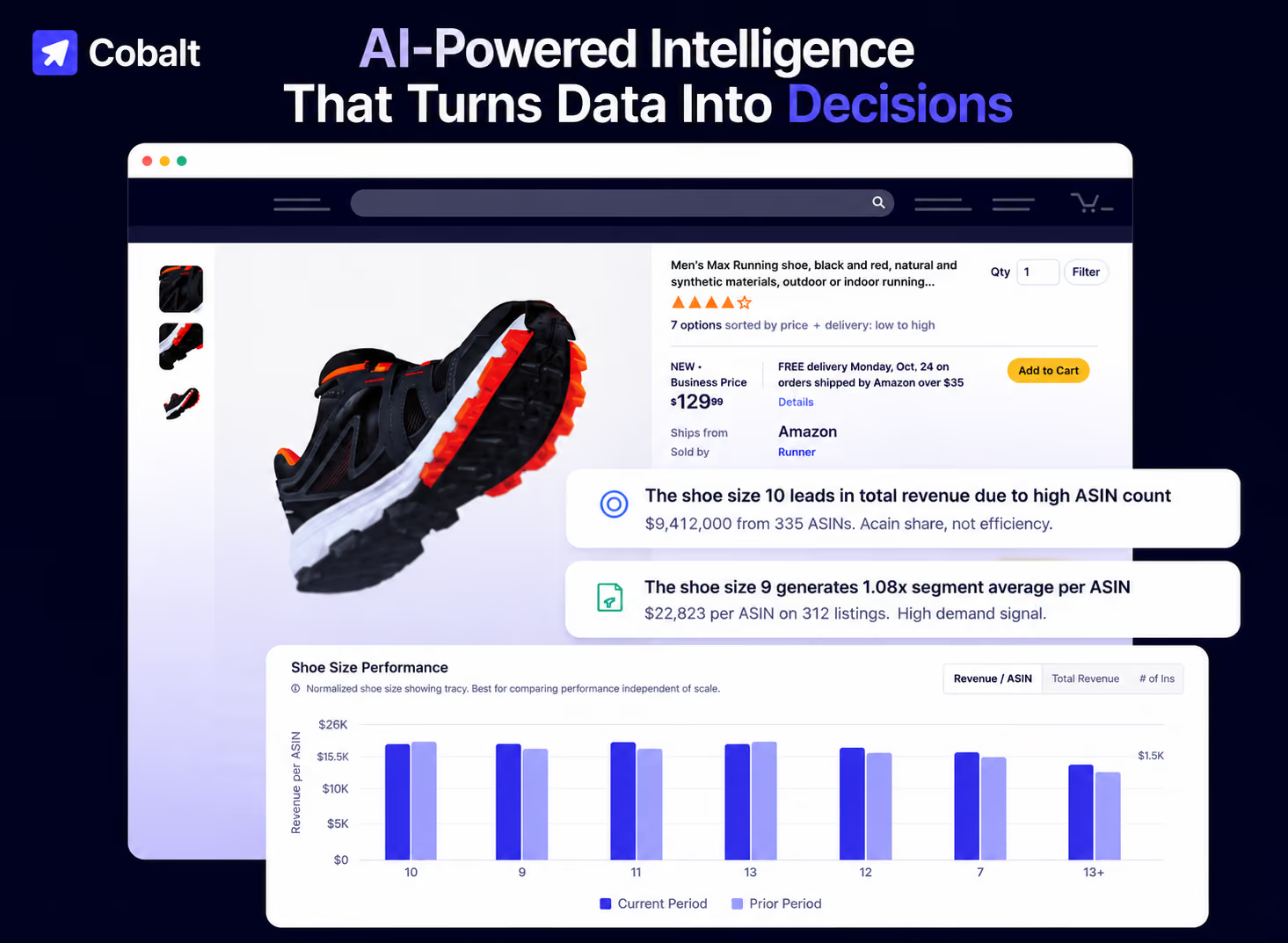
The ambition is significant: turning complex multi-metric analysis into conversational queries. These features are currently in a 60-day beta, so it is too early for an independent assessment of reliability.
Our Verdict: Cobalt wins on AI scope. AI Agent Workflows aim to transform an analytics platform into an interactive analyst. SmartScout’s AI is narrowly focused on listing creation, which is immediately practical but does not match Cobalt’s breadth. Both are early-stage.
The pricing difference is not a rounding error. It reflects fundamentally different business models and target customers.
SmartScout offers three self-serve plans on a monthly and yearly basis. Sellers can upgrade and downgrade at any time without any contracts. However, going for a yearly subscription gets them a discount of up to 22% compared to monthly plans.
Apart from that, SmartScout also offers custom solutions with the Enterprise plan for high-end sellers and brands looking for more visibility.
All the plans, except Enterprise, are backed by a 7-day money-back guarantee. So sellers can try all of its features with confidence and no financial risks.
Check out the complete SmartScout pricing
Cobalt does not publish pricing publicly. Based on multiple third-party sources and SmartScout’s own competitive data, pricing starts at approximately $2,500 per month.
Contracts are structured around the number of ASINs tracked, user seats, marketplace coverage, and which modules are selected. Annual contracts are standard. Every engagement requires a demo and sales conversation.
Our Verdict: SmartScout is 13 to 85x more affordable. The full SmartScout Business plan ($187/month) costs less per year than a single month of Cobalt. For any business with an analytics budget under $2,000/month, SmartScout provides market intelligence that competes with platforms costing dramatically more.
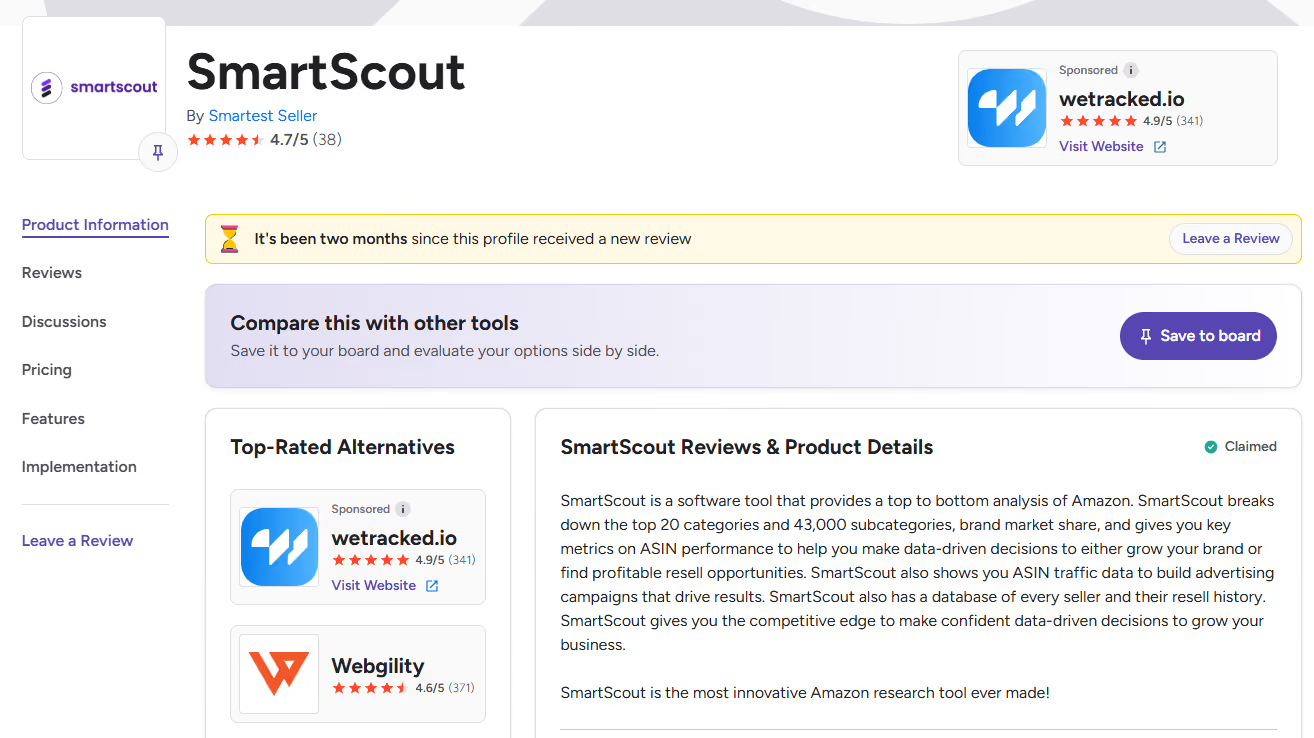
SmartScout holds approximately 4.7 out of 5 across G2 and independent review platforms. Users consistently praise the depth of brand intelligence, the subcategory research tools, and the value relative to price. Support quality receives frequent positive mentions for being responsive and personal.
Jungle Scout Cobalt holds approximately 4.3 out of 5 on Capterra based on 18 verified reviews, a small but positive sample. Users praise the market insight features, Excel and Power BI export templates, and the responsiveness of the Cobalt support team.
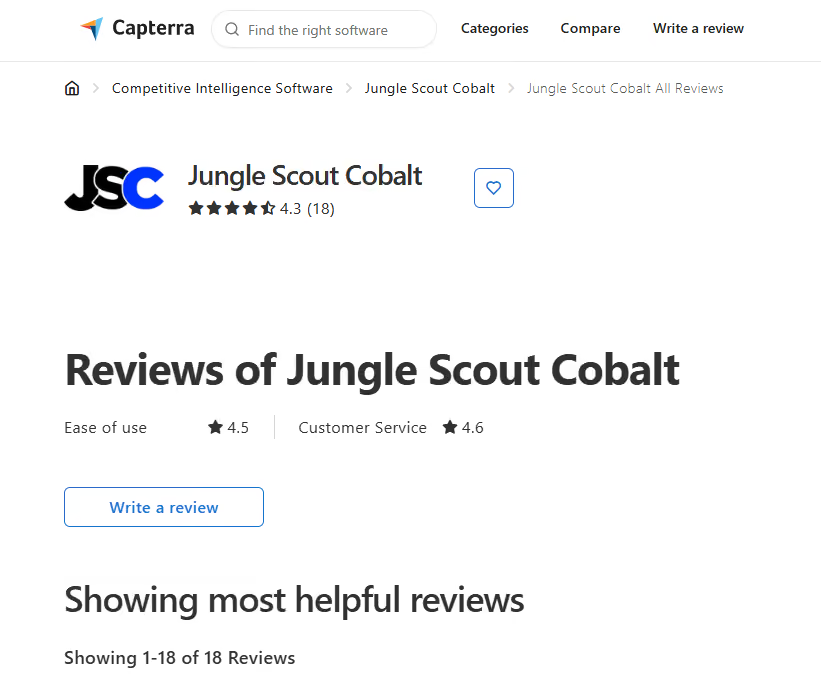
The most common criticisms are UI speed (multiple reviewers note preferring to export data rather than navigate the interface), the segment-building workflow that adds friction before data becomes visible, and accuracy gaps with variant-level ASIN estimates.
Both platforms receive solid user feedback relative to their target audiences. SmartScout users emphasize value and research depth. Cobalt users emphasize data volume and customer support quality.
For most Amazon businesses, SmartScout is the stronger pick. Here is why that answer is not hedging.
Cobalt's two exclusive advantages are Vendor Central account integration and Ad Accelerator campaign management. If you do not sell through Amazon's 1P vendor program and you do not need to run PPC/DSP campaigns from inside your analytics platform,
Cobalt's $2,500+ monthly price tag is paying for capabilities you will never use. SmartScout covers market intelligence, brand research, competitive advertising analysis, keyword optimization, seller mapping, and traffic analysis at a fraction of that cost, with faster data access and no contract lock-in.
Even enterprise brands should evaluate SmartScout before defaulting to Cobalt. SmartScout's Business plan at $187 per month includes every research tool the platform offers. You can run a full competitive audit of your category, analyze rival brands, reverse-engineer competitor ad strategies, and identify keyword gaps, all within your first week. Cobalt requires a sales conversation, contract negotiation, and segment configuration before you see your first data point.
The only scenario where Cobalt is the clear right answer is when all three of these conditions are true: you sell through Vendor Central and need 1P reporting consolidated with your marketplace data, you spend enough on Amazon advertising to justify a built-in campaign execution engine, and your organization requires enterprise procurement features like SSO and custom SLAs. If even one of those conditions does not apply, SmartScout delivers more usable intelligence per dollar.
For most Amazon sellers and smaller agencies, SmartScout alone provides the market intelligence foundation they need. You can explore how SmartScout compares to other tools in the Amazon software comparison.
SmartScout covers market intelligence, brand analytics, competitive advertising research, keyword optimization, seller mapping, and traffic analysis in a single platform, starting at $29 per month. Cobalt covers enterprise reporting, Vendor Central integration, and campaign automation starting at roughly $2,500 per month. The overlap between them is narrower than it appears on paper.
If you stripped both platforms down to their market intelligence capabilities alone, SmartScout delivers faster access to more granular Amazon data at a lower price point. Cobalt's value lies almost entirely in two areas SmartScout does not attempt: managing your 1P vendor relationship inside the analytics platform, and executing PPC/DSP campaigns at scale through Ad Accelerator. If those two capabilities are not on your requirements list, the math is straightforward.
Start with SmartScout. You will know within a week whether it covers what you need, and for the vast majority of Amazon sellers, brands, and agencies, it will.
Try SmartScout for 7 Days or Your Money Back
Even enterprise brands should evaluate SmartScout before defaulting to Cobalt. SmartScout's Business plan at $187 per month includes every research tool the platform offers. You can run a full competitive audit of your category, analyze rival brands, reverse-engineer competitor ad strategies, and identify keyword gaps, all within your first week. Cobalt requires a sales conversation, contract negotiation, and segment configuration before you see your first data point.
The only scenario where Cobalt is the clear right answer is when all three of these conditions are true: you sell through Vendor Central and need 1P reporting consolidated with your marketplace data, you spend enough on Amazon advertising to justify a built-in campaign execution engine, and your organization requires enterprise procurement features like SSO and custom SLAs. If even one of those conditions does not apply, SmartScout delivers more usable intelligence per dollar.
For most Amazon sellers and smaller agencies, SmartScout alone provides the market intelligence foundation they need. You can explore how SmartScout compares to other tools in the Amazon software comparison.

SmartScout plans range from $29 to $187 per month. Cobalt starts at approximately $2,500 per month with annual contracts. SmartScout’s most expensive standard plan costs less per year than a single month of Cobalt.
For market intelligence, brand analytics, competitive research, and keyword optimization, SmartScout provides comparable or superior capabilities at a fraction of the cost. The two areas where Cobalt cannot be fully replaced are native Vendor Central (1P) account integration and in-platform PPC/DSP campaign automation via Ad Accelerator.
No. Cobalt requires a demo and sales conversation before onboarding. SmartScout offers a 7-day money-back guarantee on all plans with immediate self-serve access.
SmartScout’s Ad Spy is better for competitive advertising research: seeing what competitors spend, which keywords they target, and how their strategies shift. Cobalt’s Ad Accelerator is better for managing and optimizing your own campaigns across PPC and DSP.
SmartScout displays 1P vs. 3P seller data across brands, categories, and products. However, it does not integrate directly with Vendor Central accounts the way Cobalt does. If you need to pull your own purchase orders, sell-through rates, and inventory data into your market intelligence platform, Cobalt has an advantage here.
SmartScout is live in 12 international Amazon marketplaces with full category, brand, and seller data in each. Cobalt does not publicly disclose its international marketplace coverage. Enterprise clients may receive access to additional markets based on their contract terms.