
When it comes to Amazon seller tools, most comparison articles pit two platforms that do the same thing against each other. SmartScout vs Helium 10 is a different kind of comparison altogether. These two tools approach Amazon from fundamentally different angles, and understanding that distinction is what separates smart tool investments from wasted subscriptions.
SmartScout is a market intelligence platform. It helps sellers understand the Amazon landscape from the top down. Think subcategory revenue data, brand-level analytics, seller mapping, and traffic flow between products. Helium 10 is an all-in-one operational suite. It helps sellers optimize what they are already doing. Think keyword research, listing SEO, PPC automation, and rank tracking.
Both platforms serve Amazon sellers. But they answer very different questions. SmartScout answers: Where should I compete? Helium 10 answers: How do I optimize what I am selling?
SmartScout is the better choice for sellers who want deep market intelligence, brand-level analytics, and a top-down view of Amazon's competitive landscape. It is especially powerful for wholesale buyers, online arbitrage sellers, and agencies.
Helium 10 is better suited for private label sellers who need an all-in-one suite covering keyword research, listing optimization, and PPC management under one roof.
Here is a side-by-side snapshot of the core capabilities across both platforms. This table will help you evaluate where each tool stands before we get into the detailed breakdowns.
Try SmartScout for 7 Days or Your Money Back
As you can see, both platforms have clear strengths in different areas. SmartScout dominates in market research, brand analytics, and unique intelligence features. Helium 10 leads in keyword depth, listing tools, and PPC automation. The rest of this article breaks down each category in detail.
Choose SmartScout if:
You are a wholesale buyer looking for profitable brands and supplier opportunities
You do online arbitrage and need to evaluate brand dynamics and seller competition before sourcing
You run an agency managing multiple Amazon brands and need market-level intelligence for client pitches
You want to discover untapped niches through subcategory-level data, not just keyword volume
You want to understand traffic flow and product relationships for smarter PPC targeting
You are on a tighter budget and want powerful research starting at $29/month
SmartScout may not be ideal if:
You need a single platform for keyword research, listing writing, PPC automation, and review management
You sell in marketplaces outside SmartScout's 10 supported regions
You are purely a private label seller who never analyzes competitor brands or seller landscapes
Choose Helium 10 if:
You are a private label seller who needs end-to-end tools from product research to PPC
You need deep keyword research with Cerebro's advanced filtering and IQ scoring
You want AI-powered listing optimization for existing and new listings
You sell across 20+ Amazon marketplaces and also operate on Walmart or TikTok Shop
You need full PPC campaign automation through Adtomic (Helium 10 Ads)
You are scaling a high-volume operation and need everything in one dashboard
Helium 10 may not be ideal if:
You are a beginner on a tight budget (plans start at $129/month, no affordable entry tier)
You are a wholesale or OA seller who needs brand-level and seller-level intelligence
You find the feature depth overwhelming and prefer streamlined workflows
You want to understand market dynamics beyond keyword and product-level data
Let’s know more about both platforms, about their founders and background.
SmartScout was built by Scott Needham, a veteran Amazon seller who recognized a gap in the market. Most Amazon tools at the time focused on keywords and individual products. SmartScout took a different approach entirely.
The platform gives sellers a top-down view of Amazon. Instead of starting with a keyword and working your way to a product, SmartScout starts with categories, narrows into subcategories, maps brands and sellers, and then drills into individual products. This approach is particularly powerful for wholesale buyers and arbitrage sellers who need to evaluate entire market segments before making sourcing decisions.
Key features include the Subcategories tool (40,000+ niches with revenue data), Brand Database (30+ filters for brand-level analysis), Traffic Graph (product relationship mapping), Seller Map (geographic seller database), and Ad Spy (competitor advertising intelligence). SmartScout University provides onboarding resources and training modules for new users.
SmartScout offers four pricing tiers: Basic ($29/month), Essentials ($97/month), Business ($187/month), and Enterprise (custom). All plans come with a 7-day money-back guarantee.
Helium 10 launched in 2015, founded by marketing expert Manny Coats and his partner, Guillermo Puyol. The platform started as a Chrome extension and expanded into a full suite of 20+ integrated tools for Amazon sellers.
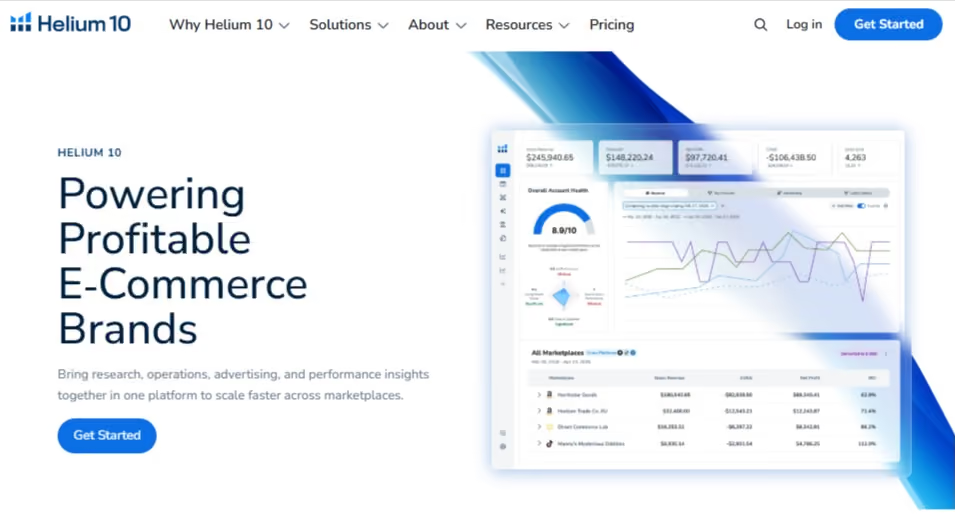
Helium 10's approach is bottom-up and operationally focused. It starts with keyword research (Cerebro, Magnet), moves into product research (Black Box), helps with listing creation (Scribbles, Listing Builder), manages PPC campaigns (Adtomic), and tracks rankings over time (Keyword Tracker). The platform also supports Walmart and TikTok Shop sellers.
The Freedom Ticket training program is included with every paid plan and provides a comprehensive Amazon FBA course taught by experienced sellers. Helium 10 currently offers three main plans: Platinum ($129/month), Diamond ($359/month), and Enterprise (custom).
This is where things get interesting. I have tested both platforms extensively and compared every major feature category. Each section below explains what both tools offer and which one performs better in that area.
SmartScout: Subcategories Tool
SmartScout's Subcategories tool is unlike anything available in Helium 10 or any other Amazon tool. It provides a top-down exploration of over 40,000 Amazon subcategories, complete with revenue estimates, brand market share breakdowns, growth trends, and Amazon's own presence percentage within each niche.
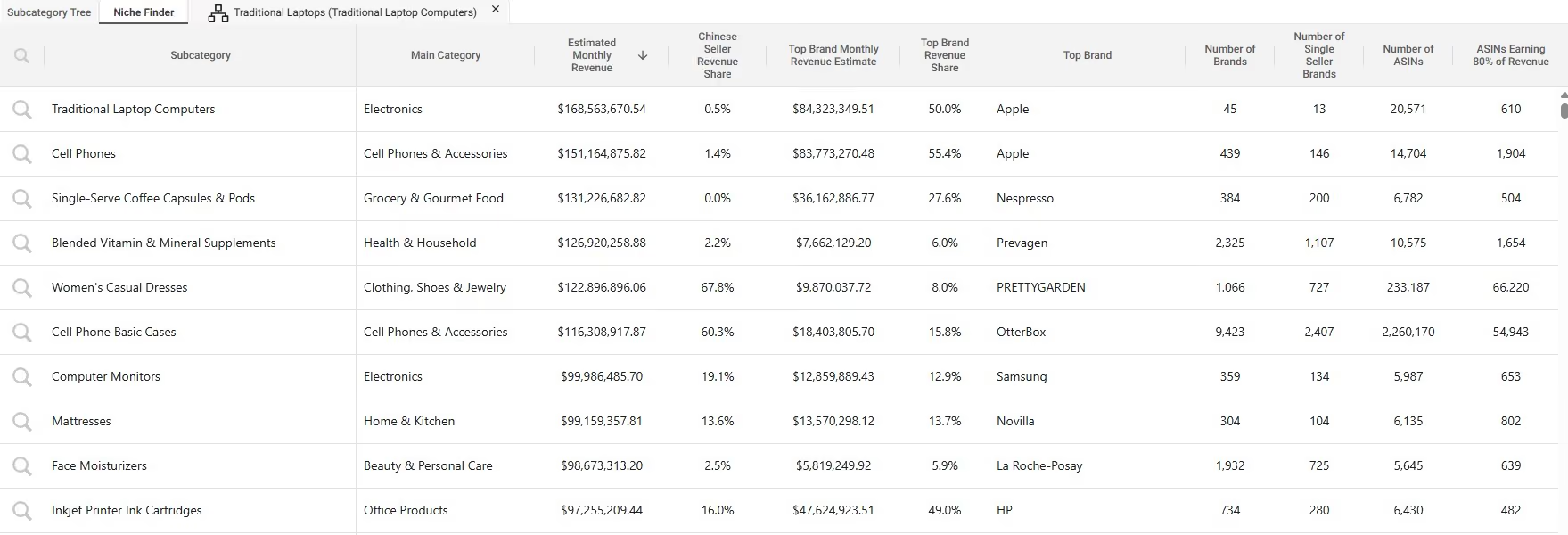
The Niche Finder feature within Subcategories helps sellers identify low-competition, high-revenue subcategories. You can filter by monthly revenue range, number of competing brands, Amazon in-stock rate, and more. This makes it possible to discover profitable niches that would never surface through traditional keyword-driven research.
Helium 10: Black Box
Helium 10's Black Box is a product research tool that uses a bottom-up approach. You set filters like price range, estimated monthly revenue, review count, and category. Then it returns a list of individual product opportunities that match your criteria. Black Box is effective for finding specific products, but it does not provide the macro market view that SmartScout offers.
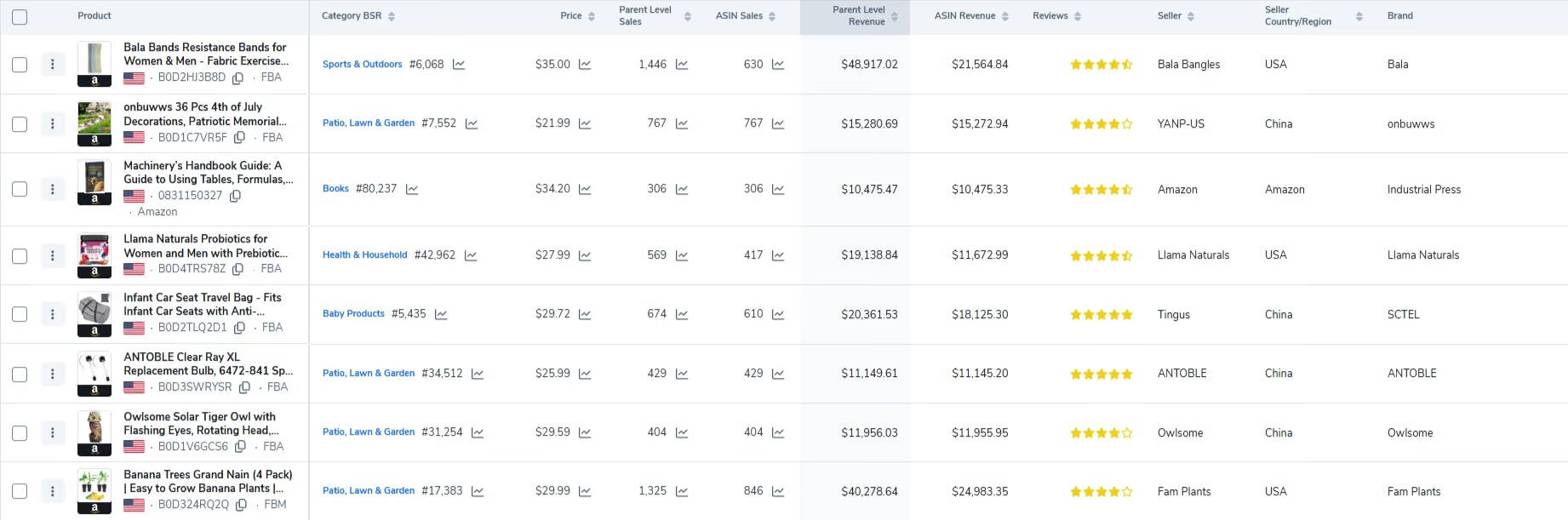
For sellers who have already decided on a niche and want to find individual products within it, Black Box works well. But for sellers who are still deciding where to compete, it falls short.
My Verdict: SmartScout wins. The Subcategories tool helps sellers understand where to compete before drilling into individual products. Helium 10 starts at the product level, which means you might miss entire profitable niches that do not surface through keyword-driven research. For market-level decision making, SmartScout is unmatched.
SmartScout: Brand Database
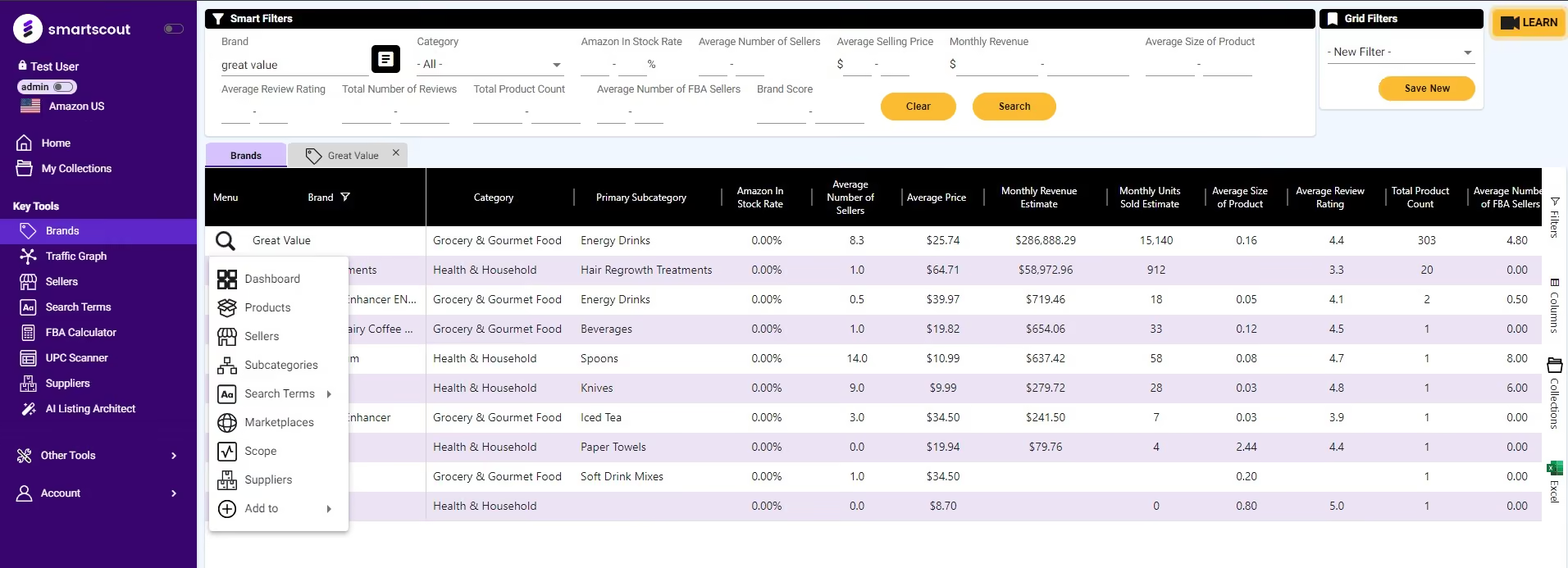
This is SmartScout's defining strength. The Brand Database lets you filter thousands of Amazon brands using 30+ parameters. Revenue range, seller count, Amazon in-stock rate, growth trajectory, product portfolio size, and the proprietary Brand Score are all available as filters.
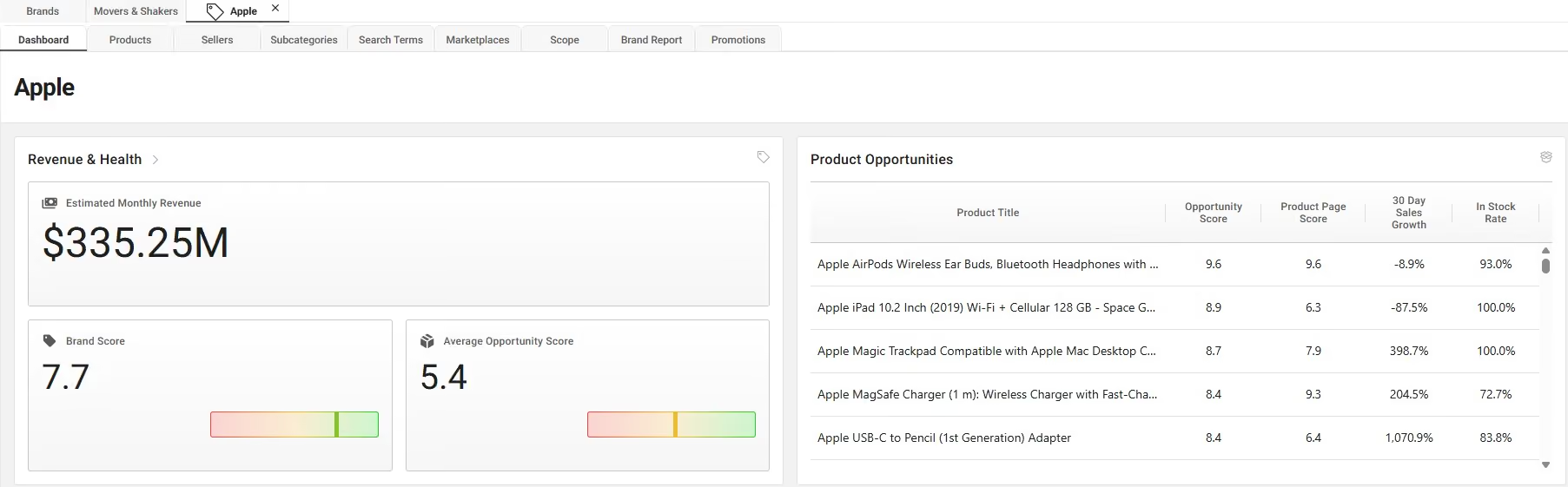
Each brand dashboard shows estimated revenue, product opportunity breakdowns, subcategory distribution, and seller performance metrics at a glance.
One area where SmartScout separates itself from traditional Amazon research tools is the ability to analyze brands as businesses rather than collections of ASINs. Sellers can evaluate how dependent a brand is on Amazon, how concentrated its revenue is across product lines, how many sellers compete on its listings, and whether Amazon itself dominates the Buy Box.
This broader perspective is particularly valuable for wholesale sourcing because it helps identify brands that still have room for new seller partnerships. Instead of hunting for isolated products, sellers can evaluate the long-term potential of an entire brand portfolio before investing time in outreach.
Helium 10: Market Tracker
Helium 10's Market Tracker monitors competitor ASINs and tracks market share changes over time. It is useful for keeping tabs on individual competitors, but it operates at the product level.
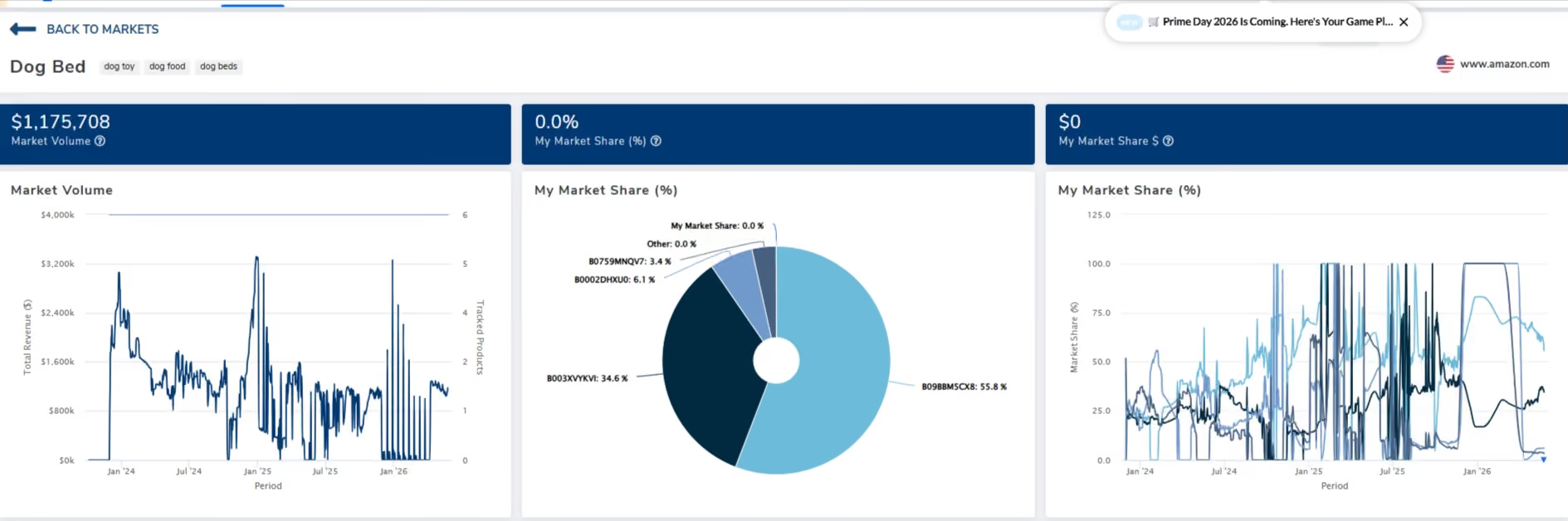
There is no equivalent to SmartScout's brand-wide revenue estimation, Brand Score, or the ability to map entire brand ecosystems.
My Verdict: SmartScout wins clearly. Brand-level intelligence is what sets SmartScout apart from every other Amazon tool. Helium 10 can track individual competitor products effectively, but it cannot map entire brand ecosystems, identify wholesale-friendly brands by seller dynamics, or score brand health the way SmartScout does.
SmartScout: Traffic Graph
The Traffic Graph is one of SmartScout's most unique features. It visualizes "frequently bought together" connections and traffic flow between products on Amazon. You get a visual map showing how customers move between products, which items are viewed as alternatives, and which products are frequently purchased together.
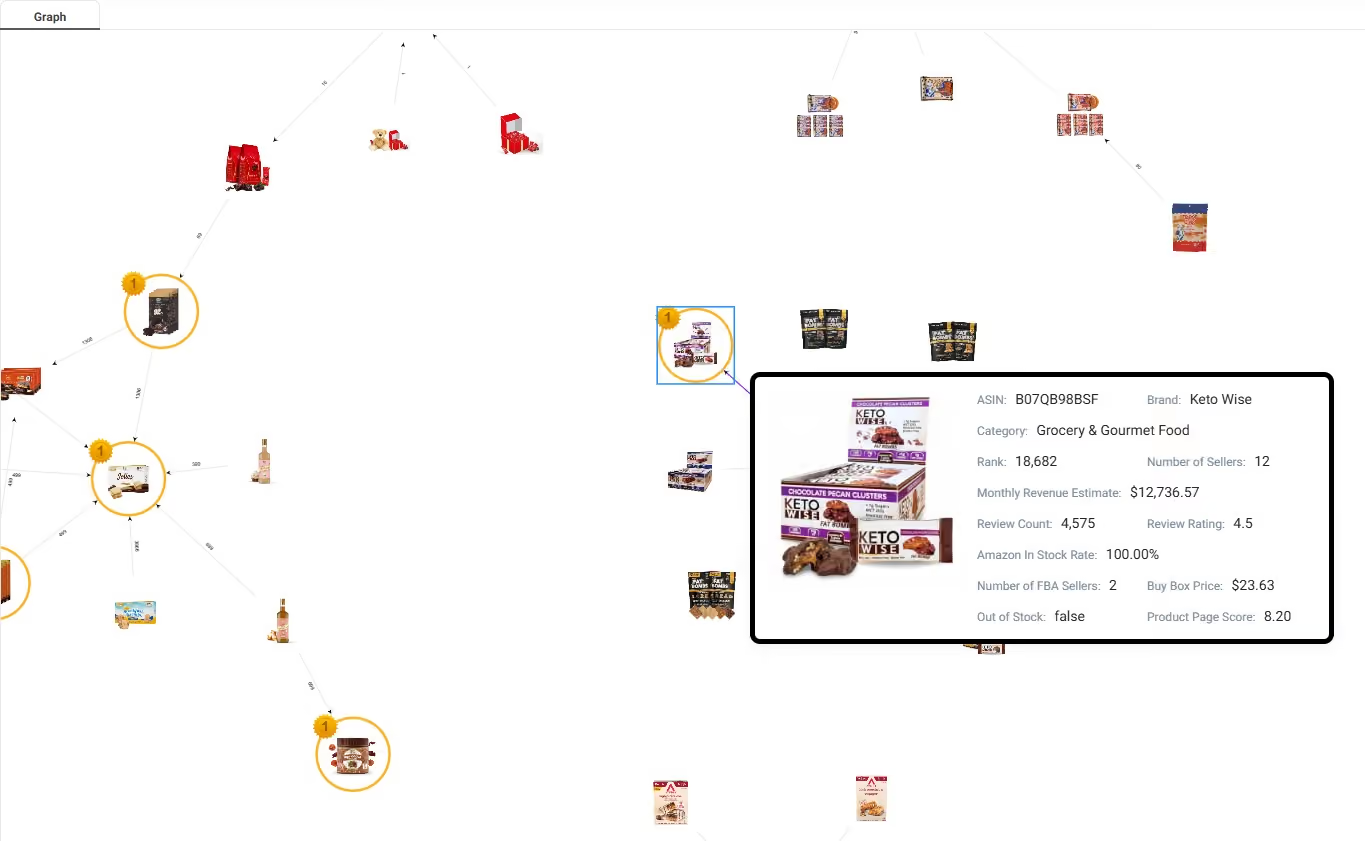
The Traffic Graph is best viewed as a strategic research tool rather than a campaign management tool. It helps sellers understand how products relate to one another within a category and reveals customer purchasing patterns that are difficult to identify manually.
While the insights can support advertising decisions, the larger benefit is understanding market structure, competitor positioning, and cross-selling opportunities before launching products or expanding into adjacent niches.
Helium 10
Helium 10 does not have an equivalent feature. Sellers using Helium 10 must infer product relationships from keyword overlap or conduct manual research on Amazon's product pages.
SmartScout: Seller Map and Seller Database
SmartScout provides a geographic map of Amazon sellers worldwide. You can filter sellers by revenue, product count, brand portfolio, and location. For wholesale buyers, this is invaluable. You can identify who is selling specific brands, how much revenue they are generating, and where they are physically located.

The Seller Database also lets you reverse-engineer competitor seller accounts. Find out what brands they carry, how many products they sell, and what their revenue estimates look like. This kind of intelligence is critical for wholesale sourcing and needs detailed brand reporting.
For agencies and service providers, the Seller Database serves a completely different purpose. Instead of researching products, agencies can identify high-performing Amazon businesses within specific categories, revenue ranges, or geographic regions.
SmartScout even allows filtered seller lists to be exported for prospecting and outreach workflows. This turns the platform into a business development tool in addition to a research platform, a use case that Helium 10 does not directly address.
Helium 10
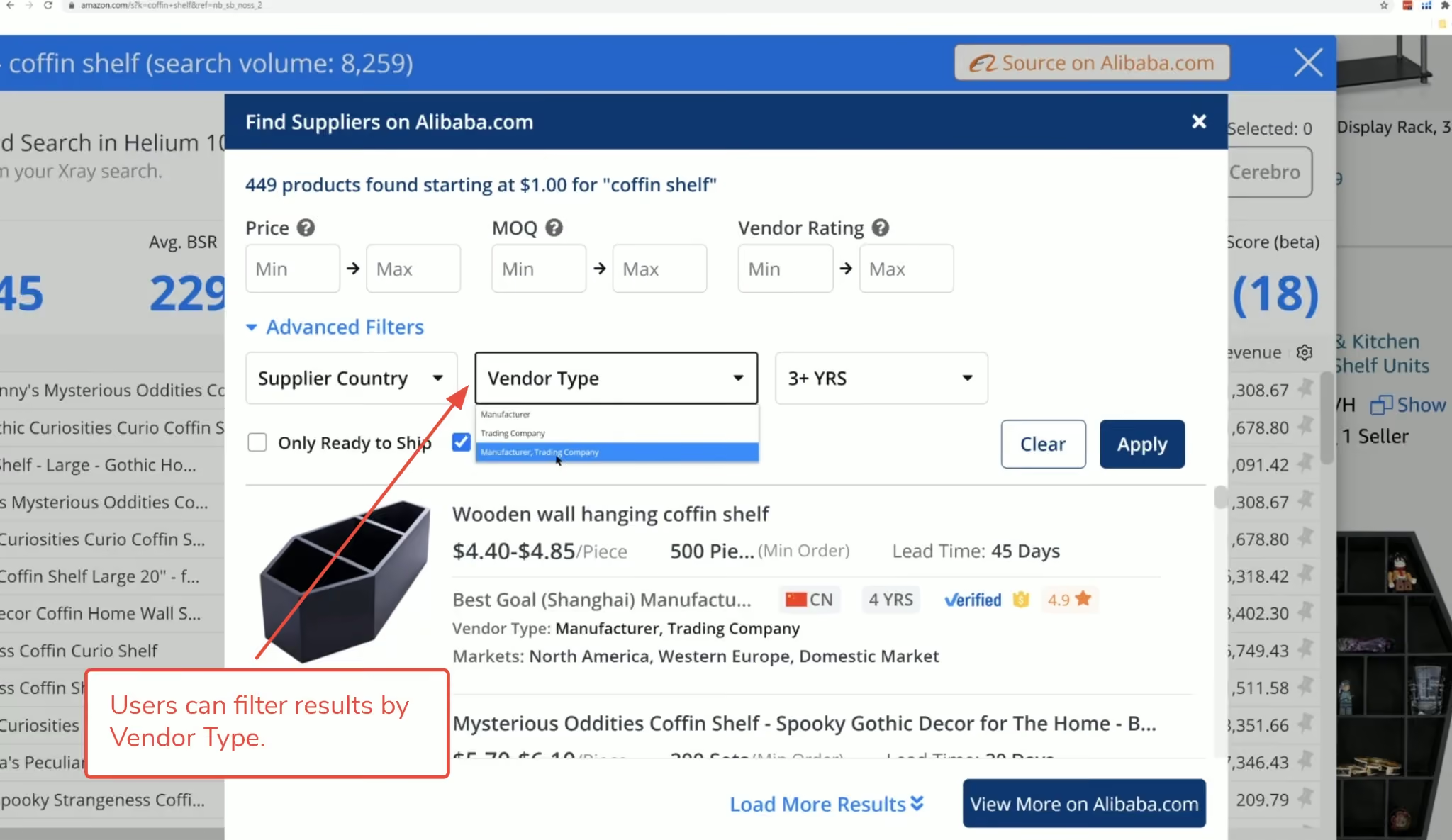
Helium 10 does not offer a seller mapping feature. It has a Supplier Finder tool embedded in its Chrome extension that helps you find suppliers on Alibaba, but it does not map existing Amazon sellers or provide seller-level competitive data.
My Verdict: SmartScout wins (exclusive feature). Seller Map is another tool with no Helium 10 equivalent. For wholesale buyers, online arbitrage sellers, and agencies doing competitive analysis, this feature alone can justify the SmartScout subscription.
SmartScout: Keyword Detective
SmartScout’s Keyword Detective takes a different approach to keyword research than traditional reverse ASIN tools. Instead of starting with a single product, it analyzes search terms across an entire brand or product cluster. You enter a brand, product, or ASIN, and the tool maps out shared and unique keywords across that product and its top competitors using a visual Venn diagram.
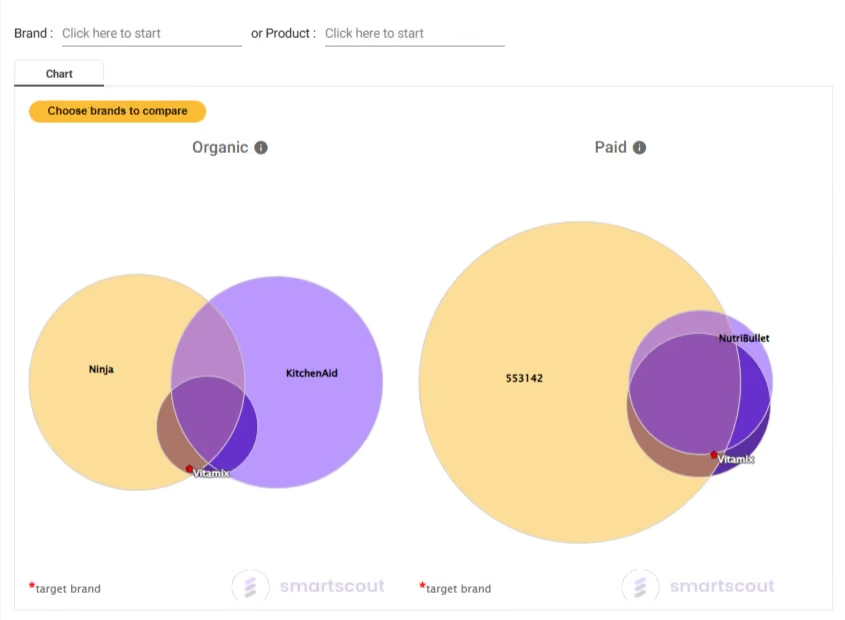
This Venn diagram view is something no other Amazon tool offers. It shows you which search terms your competitors rank for that you do not, which terms you share, and which terms are exclusively yours. For sellers running PPC campaigns, this immediately reveals keyword gaps worth targeting.
Keyword Detective provides data on search volume, cost per click (CPC), product relevancy scores, and search term intent (high, medium, or low purchase intent). The intent filter is particularly useful. It tells you how likely a shopper is to buy one of the top three products after searching that term. High-intent keywords with low competition are the most actionable opportunities for both organic ranking and sponsored campaigns.
Helium 10: Cerebro and Magnet
Cerebro is the gold standard for Amazon keyword research. It offers deep ASIN-level reverse lookup with advanced filters, including the proprietary IQ Score, word frequency analysis, and organic vs sponsored distribution breakdowns. You get a detailed list of keyword phrases along with keyword distribution data and search volume thresholds.
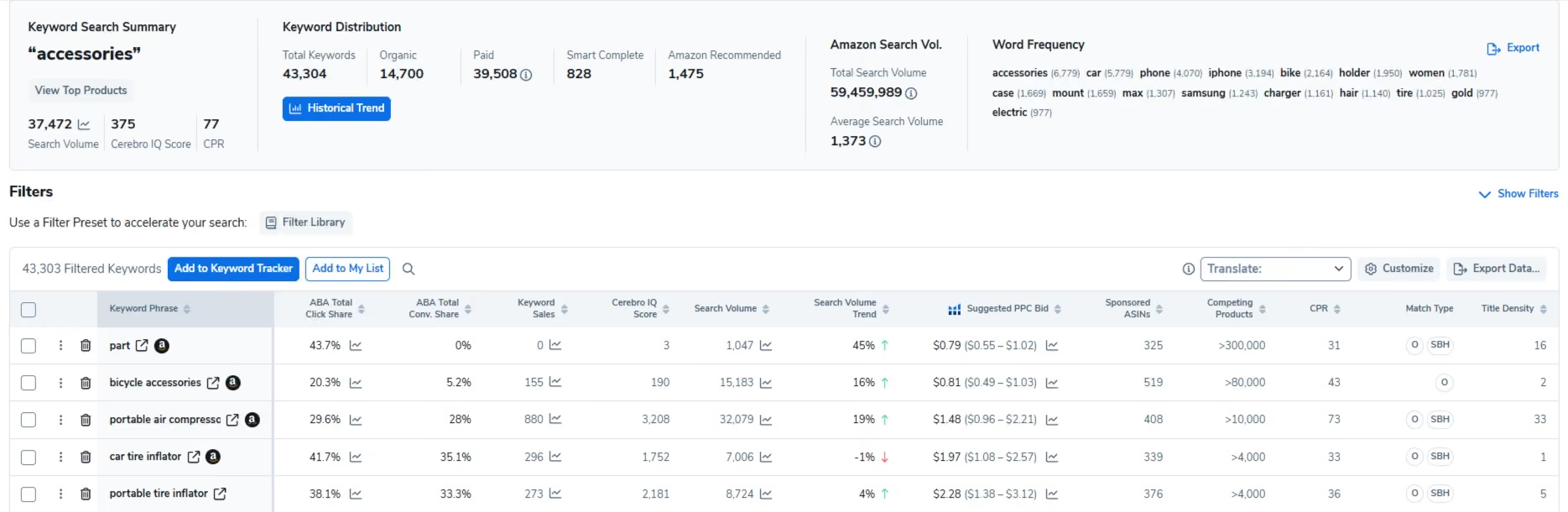
Magnet complements Cerebro by expanding seed keywords into comprehensive keyword lists. The tool data source is updated daily to reflect current trends. Combined with the Keyword Tracker for monitoring rankings over time, Helium 10 provides the most complete keyword research ecosystem in the Amazon seller tool space.
My Verdict: Helium 10 wins. Cerebro is the industry benchmark for Amazon keyword research. SmartScout's Keyword Detective is useful for search term analysis and niche-level understanding, but it does not match the depth, customization, and filtering power of Cerebro for listing-level SEO work. Think of Keyword Detective as answering "what are people searching for in this market?" while Cerebro answers "which exact keywords should I target for this listing?"
SmartScout: AI Listing Architect
Available on Essentials plans and above, SmartScout’s AI Listing Architect generates optimized product titles, bullet points, descriptions, and backend search terms. The tool pulls keyword data directly from SmartScout’s database, so the listings it generates are grounded in actual search term relevancy data rather than generic AI output.
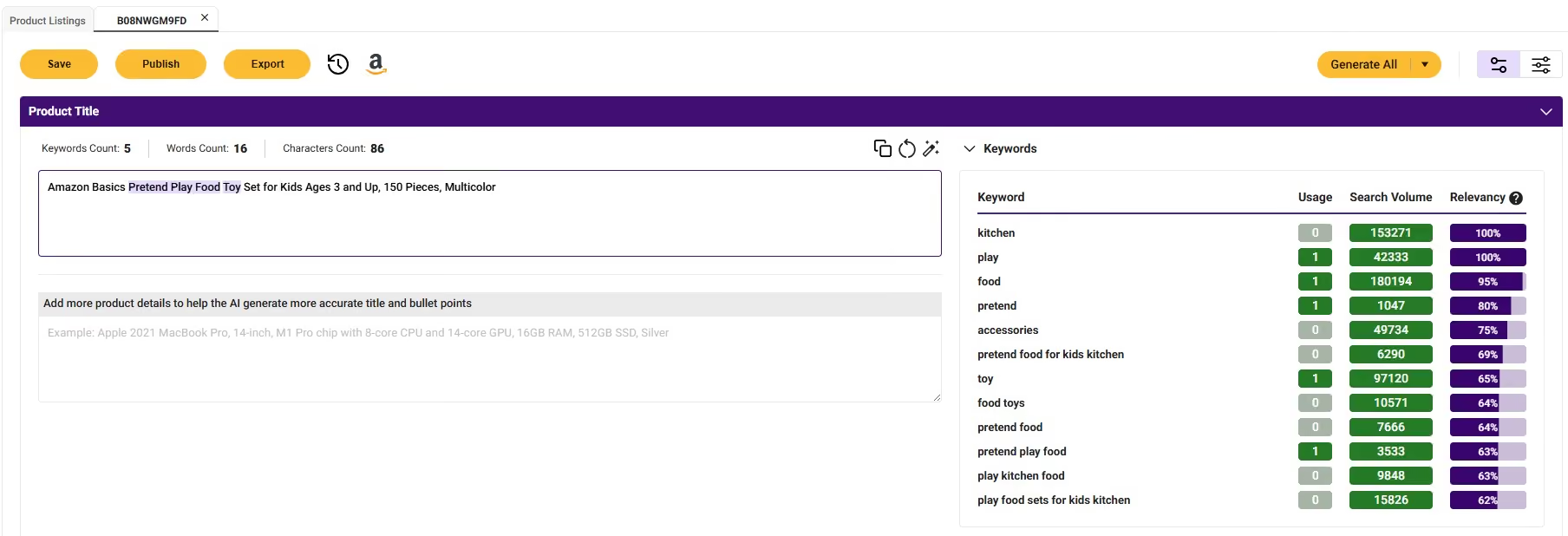
You start by entering your ASIN or product details. The AI Listing Architect then analyzes the search terms associated with that product’s subcategory and competing listings. It generates listing copy that incorporates high-relevancy keywords in the right density across each component. The output covers all five listing sections: title, five bullet points, product description, A+ content text suggestions, and backend search terms.
One advantage of having listing creation built into SmartScout is the data integration. Because the tool sits on top of the same dataset that powers Brand Database and Keyword Detective, it factors in subcategory trends and competitor keyword strategies when generating copy. This is different from standalone AI listing tools that rely on the seller to provide the keyword list manually.
The AI Listing Architect is a newer addition to SmartScout’s feature set and continues to receive updates. It handles standard listing creation well, but it does not yet match the depth of customization and keyword gap visualization that Helium 10’s Scribbles provides. For sellers who already use SmartScout for research and want a quick listing draft without switching platforms, it is a practical time saver.
Helium 10: Scribbles and Listing Builder
Helium 10 offers two dedicated listing optimization tools. Scribbles analyzes how keywords are distributed across your listing components (title, bullets, description, backend). It helps you identify gaps where important keywords are missing. The Listing Builder uses ChatGPT integration to write optimized listing copy tailored to your products.
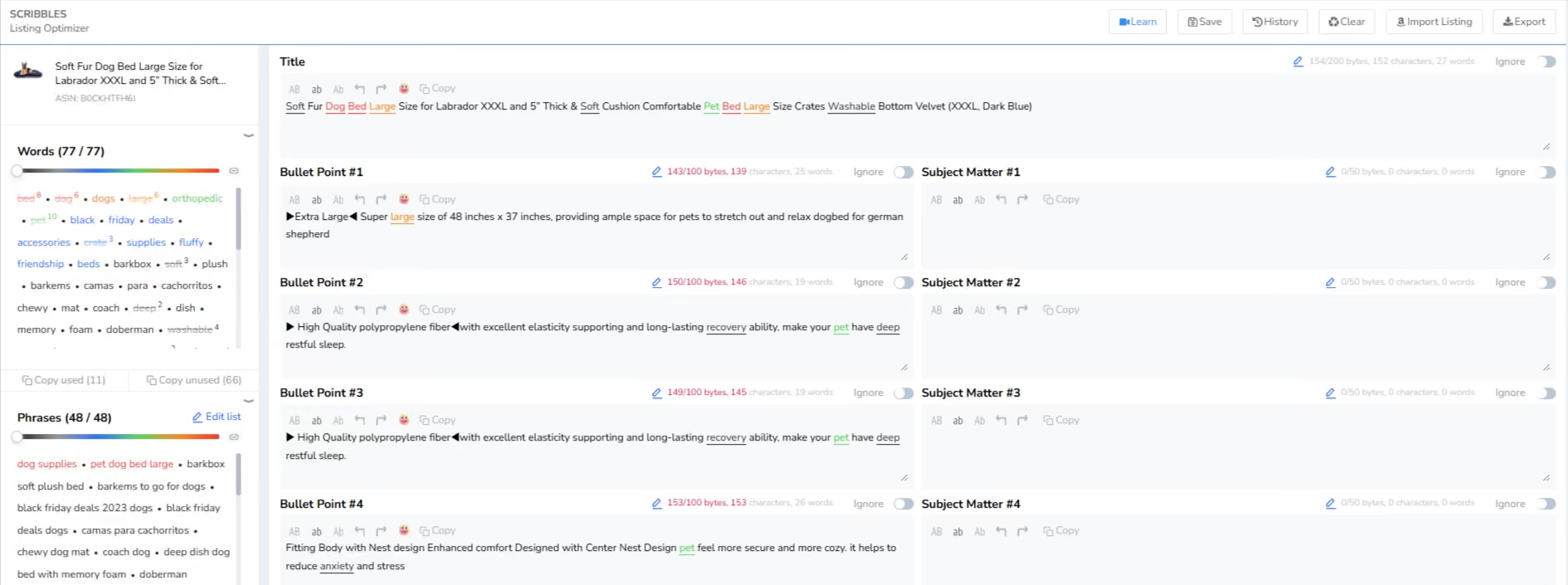
For existing listings, Helium 10 shows green and red indicators that explain whether sections need improvement. You can follow the suggested fixes to increase your listing quality score and improve ranking potential. The combination of Scribbles for keyword placement analysis and Listing Builder for AI-powered copywriting is a mature, well-integrated workflow.
My Verdict: Helium 10 wins. Listing optimization is a core Helium 10 strength. The Scribbles and Listing Builder combination is more mature, offers more customization options, and integrates deeply with Cerebro keyword data. SmartScout's AI Listing Architect is improving, but it is not at the same level yet.
SmartScout: Ad Spy
SmartScout’s Ad Spy is a competitive advertising intelligence tool that reveals how competitors spend their Amazon PPC budgets. It tracks Sponsored Products, Sponsored Brands, and Sponsored Display ad placements across the Amazon marketplace. For any product or brand, you can see which keywords they are bidding on, their estimated ad spend, and which ASINs they are pushing through paid placements.
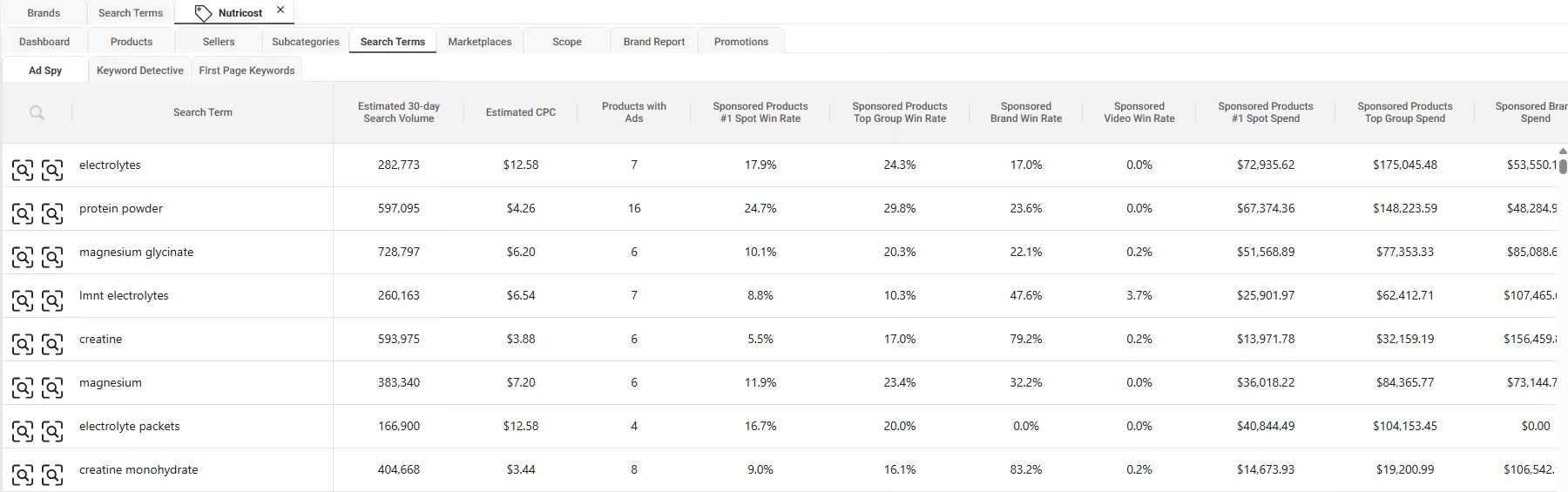
What makes Ad Spy particularly useful is the historical dimension. You can track how a competitor’s advertising strategy has changed over time, not just see a current snapshot. This reveals seasonal spending patterns, new keyword targets they have added, and products they have started or stopped promoting. Sellers planning product launches can use this data to understand exactly how much advertising investment is required to compete in a specific subcategory.
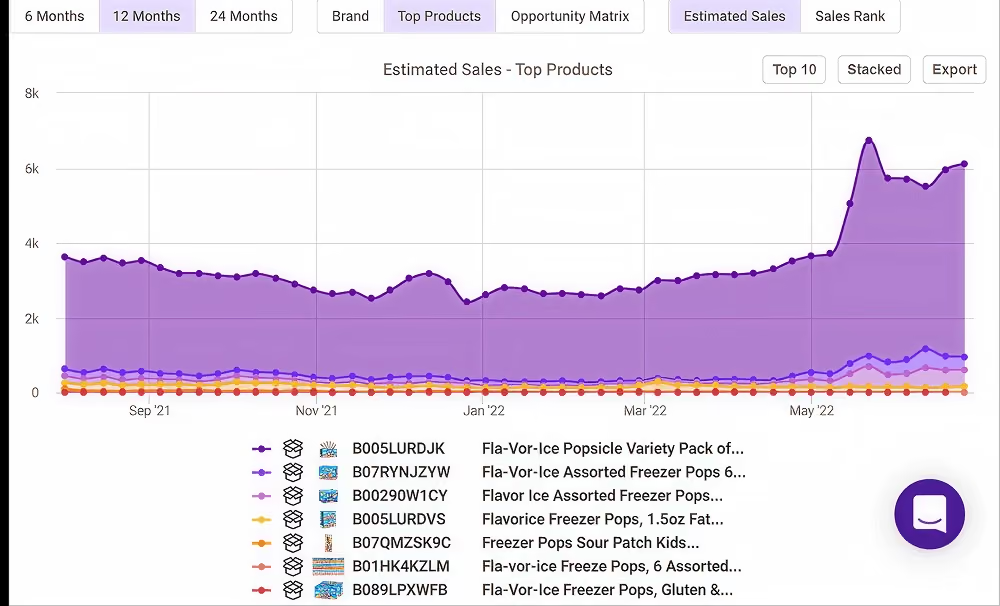
Ad Spy stands on its own as a competitive intelligence platform. Sellers can monitor which products competitors are promoting, identify shifts in advertising focus over time, and uncover categories where competitors are increasing or reducing investment. This historical visibility helps sellers benchmark their own advertising strategy against the broader competitive landscape rather than making decisions based only on their own campaign data.
You can identify products that receive heavy organic traffic but low ad spend (potential targets for your own Sponsored Product campaigns) or products where competitors are overspending on ads relative to their organic visibility.
For wholesale buyers, Ad Spy serves a different purpose. Brands with low or no advertising presence may represent opportunities where a motivated FBA seller can add value through paid promotion. Brands with extremely high ad spend relative to revenue may indicate saturated competition. Either signal helps wholesale sellers make smarter sourcing decisions before committing to inventory.
Helium 10: Adtomic (Helium 10 Ads)
Helium 10's Adtomic is a full PPC campaign management platform. It handles bid optimization, targeted campaign launches, keyword monitoring, real-time budget capping, and performance tracking. The AI-driven automation sets bids based on rank potential and balances scale with profitability to maximize advertising ROI.
.avif)
Adtomic integrates tightly with Helium 10's analytics ecosystem, pulling keyword data from Cerebro and ranking data from Keyword Tracker to make data-driven optimization decisions. It is a hands-off automation tool that frees sellers from tedious hourly campaign adjustments.
My Verdict: These tools serve entirely different purposes. SmartScout's Ad Spy is better for understanding the competitive advertising landscape and planning your strategy. Helium 10's Adtomic is better for executing and managing PPC campaigns. Sellers serious about Amazon advertising will benefit from using SmartScout for intelligence and their preferred PPC tool for automation.
SmartScout Chrome Extension
SmartScout offers a free Chrome extension with 1,000 uses per month. It includes an FBA calculator with up-to-date 2026 fee rates, BSR tracking, seller analytics, and a product opportunity score.
No paid subscription is required for basic use. This makes it one of the most generous free extensions in the Amazon seller tool space.
Download SmartScout Chrome Extension - Free 1000 Uses
Helium 10 Chrome Extension (Xray)
Helium 10's Xray extension is included with paid plans and provides more data points per product. You get estimated net profit per unit, inventory in/out of stock indicators, exact rating breakdowns, and enhanced supplier lookup.
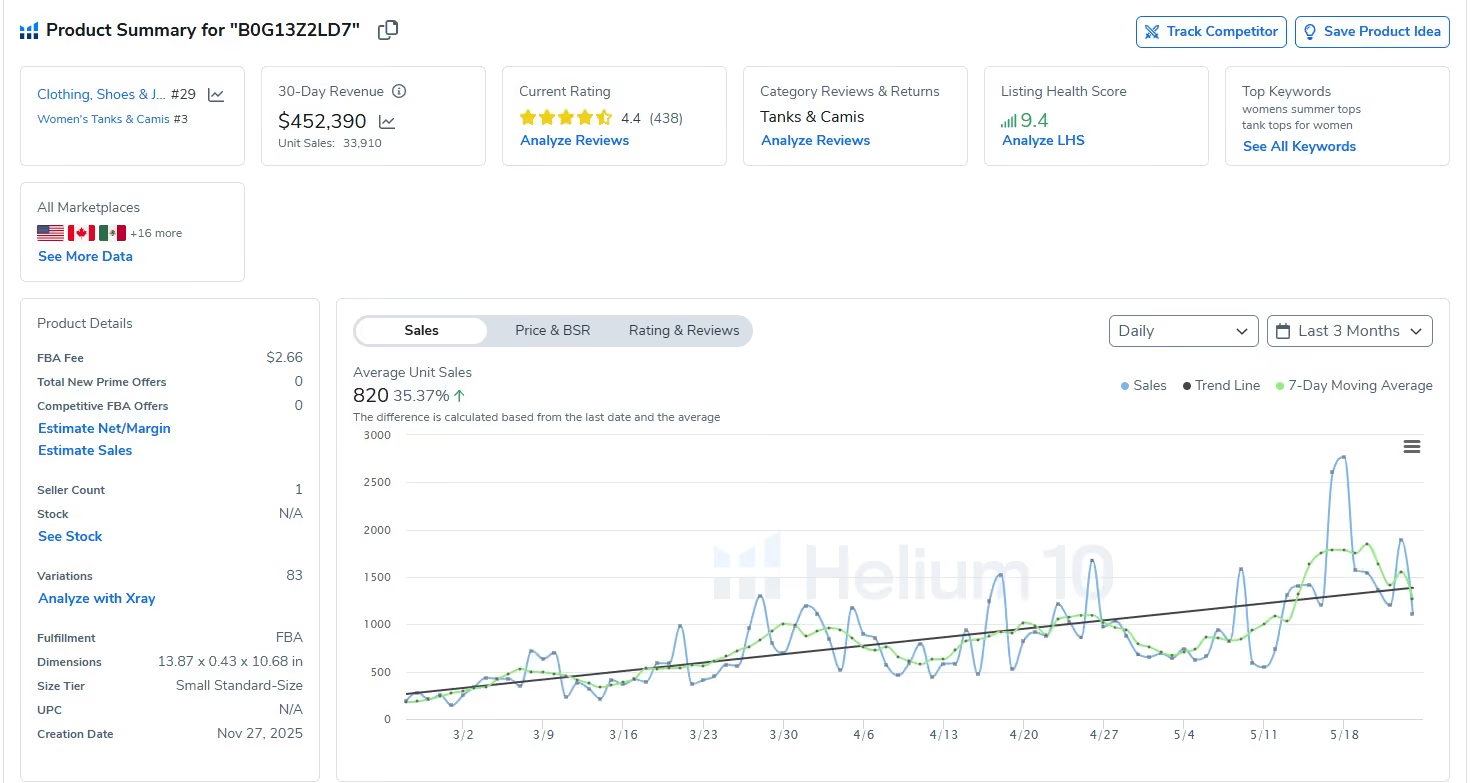
The Xray page scan feature shows average estimates for all products on any Amazon search results page.
My Verdict: SmartScout edges ahead on accessibility with its free extension and generous usage limits. Helium 10 edges ahead on data density per product. For sellers who want a quick research companion without committing to a subscription, SmartScout's free Chrome extension is the clear winner.
SmartScout reports approximately 90% accuracy according to third-party review sites and user testimonials. The platform is particularly strong in brand-level and subcategory-level revenue estimation. A key advantage is that SmartScout shows variation-level sales breakdowns rather than estimating at the ASIN level alone.
Helium 10 tested at approximately 80% accuracy in independent sales estimation tests. It estimated exact sales 29.5% of the time and averaged a variance of 22 units above or below actual sales figures. Helium 10 tends to be more precise at the individual product level.
My Verdict: SmartScout has a slight edge in market-level accuracy (brand revenue, subcategory sizing), while Helium 10 is marginally more precise at individual product sales estimation. Both platforms provide data that is reliable enough for confident decision-making.
Pricing is where the gap between these two platforms becomes most visible. SmartScout offers significantly more affordable entry points across every tier.
SmartScout offers four pricing tiers for different seller sizes:
All SmartScout plans include a 7-day money-back guarantee. Annual billing saves approximately 14 to 20% compared to monthly payments. The Basic plan provides enough functionality for new sellers to start product and brand research immediately.
Helium 10 removed its Starter plan in early 2026, making Platinum the entry-level paid tier. A free plan exists with very limited access to tools, but it is not viable for active selling. Annual billing provides a 20% discount on monthly rates.
My Verdict: SmartScout is significantly more affordable. The Essentials plan at $97/month includes brand analytics, Seller Map, Traffic Graph, and AI Listing Creator, and it still costs less than Helium 10's entry-level Platinum at $129/month. Sellers on a budget can start with SmartScout Basic at $29/month, a price point Helium 10 no longer offers. If you combine SmartScout Essentials with Helium 10 Platinum ($226/month total), you still pay less than Helium 10 Diamond alone ($359/month) while getting access to market intelligence features that Diamond does not include.
SmartScout holds a rating of approximately 4.7 out of 5 across G2 and independent review platforms.
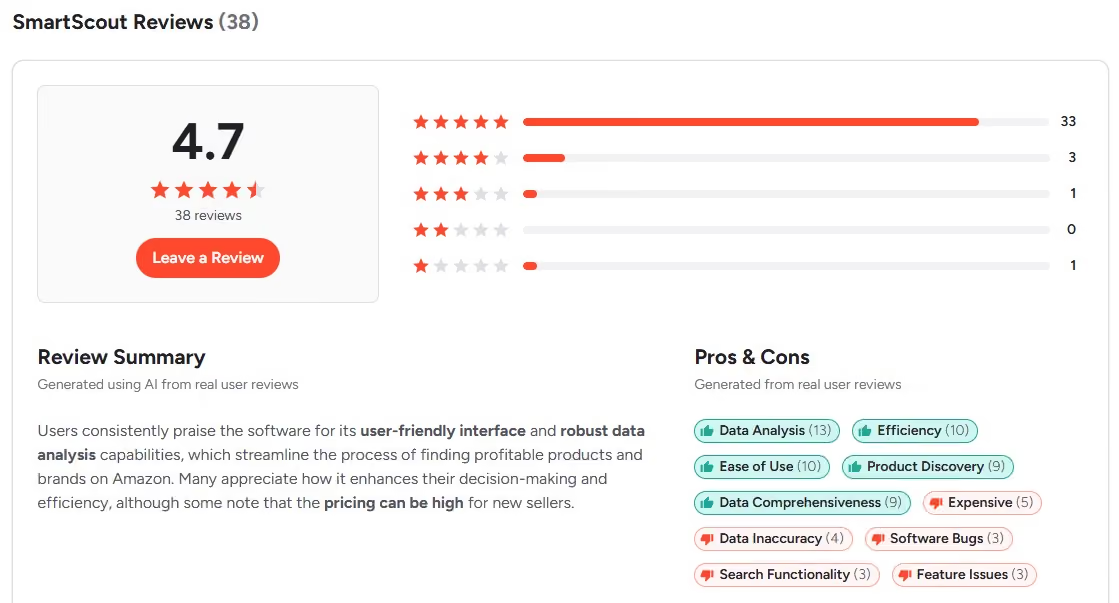
Users consistently praise the depth of brand intelligence, the subcategory research tools, and the overall value for money. Customer support receives positive mentions for being responsive and helpful.
Helium 10 holds a rating of approximately 2.3 out of 5 on Trustpilot with over 700 reviews. Users appreciate the breadth of tools available and the comprehensive feature set.
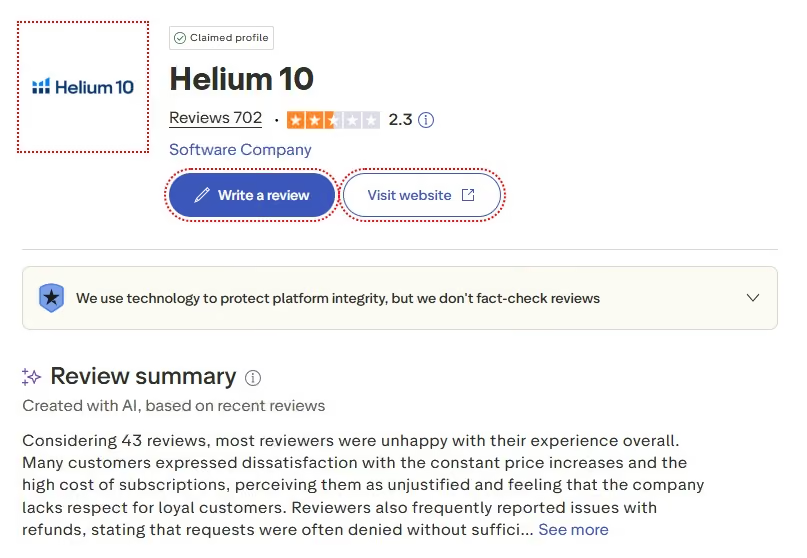
However, recurring complaints mention pricing increases, the steep learning curve for beginners, and inconsistent customer support experiences. Even on G2, customers have rated 1 or 0 stars for their poor customer service and exceptionally high pricing plans.
My Verdict: SmartScout leads in user satisfaction with higher ratings, more consistent praise for support quality, and fewer complaints about pricing. Helium 10 has a larger user base, but the feedback trend shows growing concerns about cost increases and complexity.
Yes. And many serious Amazon sellers already do.
SmartScout and Helium 10 are not direct competitors in the way most people assume. They serve different layers of the Amazon selling workflow. SmartScout provides the strategic intelligence layer: where should I sell, which brands are vulnerable, what niches are underserved, and where is traffic flowing? Helium 10 provides the operational execution layer: which keywords should I target, how do I optimize my listing, and how do I manage my PPC campaigns?
The combined cost of SmartScout Essentials ($97/month) and Helium 10 Platinum ($129/month) comes to approximately $226/month. That is still $133/month less than Helium 10 Diamond ($359/month), and you get market intelligence features that Diamond does not include at any price.
For sellers who want the most comprehensive Amazon toolkit available, running both platforms side by side gives you a research and execution stack that no single tool can match.
Both SmartScout and Helium 10 are capable Amazon seller tools, but they excel in very different areas.
Choose SmartScout if you want to understand Amazon beyond individual products and keywords. Its biggest strengths are brand intelligence, seller intelligence, and market-level research. The Brand Database, Subcategories tool, Seller Database, and Traffic Graph work together to show how brands, sellers, and products interact across the marketplace.
Choose Helium 10 if you need an all-in-one operational suite for private label selling. Cerebro, Scribbles, and Adtomic are best-in-class tools for keyword research, listing optimization, and PPC management. If your primary need is optimizing existing products and managing advertising campaigns, Helium 10 covers those workflows comprehensively.
For sellers who want both strategic market intelligence and operational execution power, using SmartScout and Helium 10 together provides the most complete Amazon selling toolkit available in 2026.