
SmartScout and Profitero both appear in conversations about Amazon analytics, but they operate in fundamentally different product categories.
Profitero is a digital shelf monitoring platform, now owned by Publicis Groupe (the world’s largest advertising company), that tracks how products appear across 1,400+ retailer websites in 70 countries. SmartScout is an Amazon marketplace intelligence platform, bootstrapped by sellers, that reveals competitive dynamics, revenue estimates, seller competition, and advertising strategies specifically within Amazon.
The overlap between them is narrower than it looks. Profitero monitors content compliance, pricing trends, out-of-stock rates, and search placement across dozens of retailers. SmartScout maps the internal mechanics of Amazon: which brands are growing, which sellers compete on a listing, where shopper traffic flows between products, and what competitors spend on advertising. One watches the shelf from the outside. The other works inside the marketplace.
This comparison breaks down the areas where these platforms share common ground, where each one has exclusive capabilities, and which tool fits your operation.
Choose SmartScout if you sell on Amazon and need to understand the competitive landscape before making sourcing, advertising, or product launch decisions. SmartScout is built for sellers, brands, and agencies who need to evaluate brand opportunities, size categories by revenue, research competitor ad strategies, and find keyword gaps. Plans start at $29 per month with no annual contract.
Choose Profitero if you are an enterprise CPG brand managing product presence across Amazon, Walmart, Target, and dozens of other retailers, and need to monitor content compliance, track pricing and availability, detect MAP violations, and measure Share of Search across all of those channels simultaneously. Profitero starts at over $5,000 per month with annual contracts.
Here is how these two platforms compare across the areas that matter most.
SmartScout is fast. You can quickly add products or brands to a collection and see how they add up over time. The charts will pain the picture exactly how you want to see it.
These two platforms come from very different corners of the e-commerce world. One was built inside Amazon by sellers. The other was built outside Amazon by data scientists, then acquired by the world’s largest advertising conglomerate.
SmartScout exists because the Amazon sellers who built it could not find a tool that answered the questions their business actually depended on.
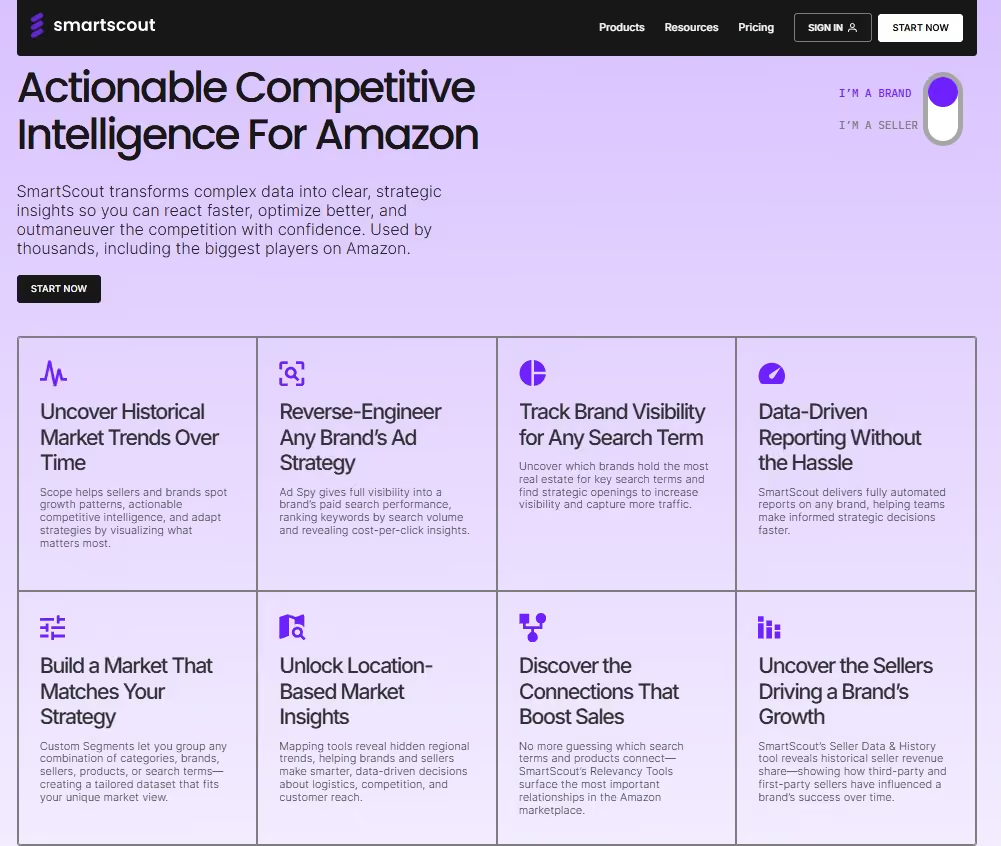
Not keyword volume or listing optimization, but structural questions:
Which subcategories have enough demand to justify entering?
Which brands leave room for third-party sellers versus locking everything behind Amazon’s own retail operation?
How does shopper traffic actually move between competing products?
What are rival brands spending on advertising, and where?
The platform was built from the ground up to answer those questions using Amazon’s own data, and it was funded entirely by the sellers who created it. No outside investors, no parent company, no acquisition pressure shaping the roadmap. That independence shows up in the pricing: $29 to $187 per month, self-serve signup, 7-day money-back guarantee. Every plan gives full research access with no per-ASIN caps.
Profitero was founded in 2010 in Dublin, Ireland, by Vol Pigrukh, Dmitry Vysotski, and Kanstantsin Chernysh, who had previously worked at Google and IBM. The company began as a pricing intelligence service for online retailers and expanded into a full digital shelf analytics platform. It raised $28 million in funding across multiple rounds, including a $20 million Series B from Scaleworks in 2020.
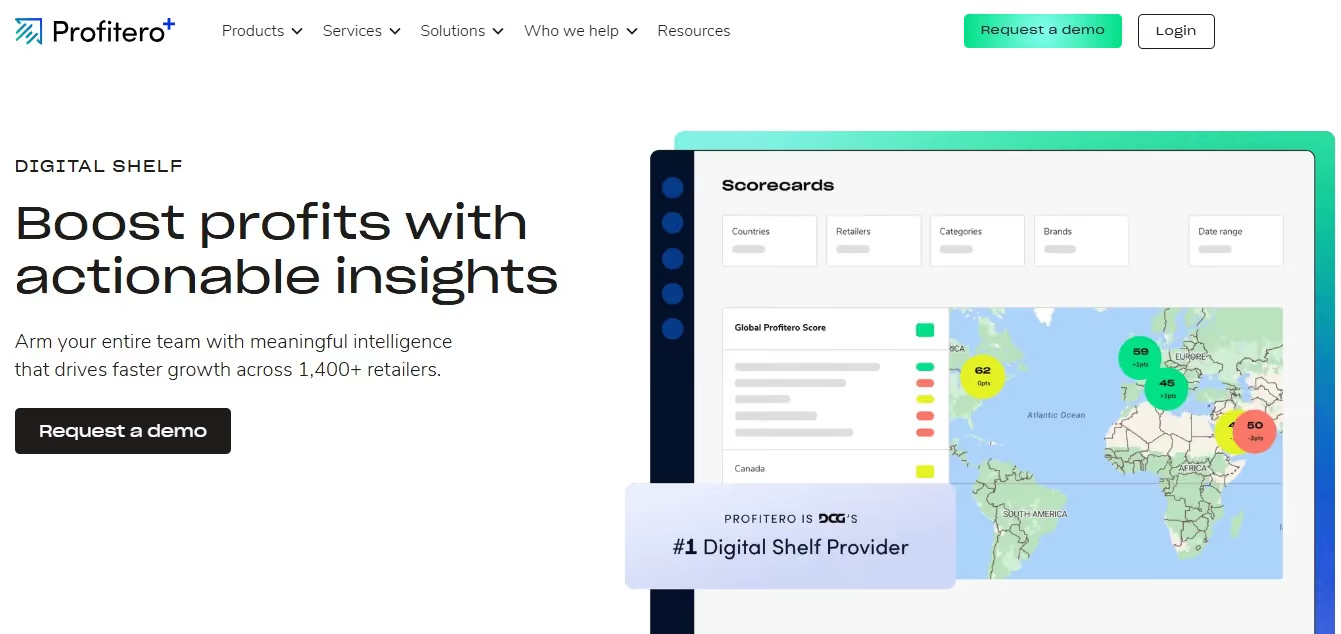
In May 2022, French advertising giant Publicis Groupe acquired Profitero for approximately €200 million ($210 million), integrating it into a portfolio that includes Epsilon (data/identity), CitrusAd (retail media), and Publicis Sapient (digital engineering).
Now rebranded as Profitero+, the company has grown to nearly 1,000 employees across 15 global hubs. It tracks over 80 million products across 1,400+ retailers in 70+ countries, collecting 40 terabytes of data daily.
Clients include L’Oréal, Adidas, General Mills, Bayer, and other major CPG brands. Profitero was named a leader in the IDC MarketScape for Digital Shelf Analytics in 2025.
Despite serving different audiences, SmartScout and Profitero share common ground in a few important areas. Here is how they compare on the capabilities they both offer.
Both platforms provide estimates of Amazon sales performance, but they generate those numbers for different reasons and at different levels of depth.
SmartScout
SmartScout estimates revenue at every level of the Amazon hierarchy: root categories, subcategories, individual brands, specific products, and even individual sellers.
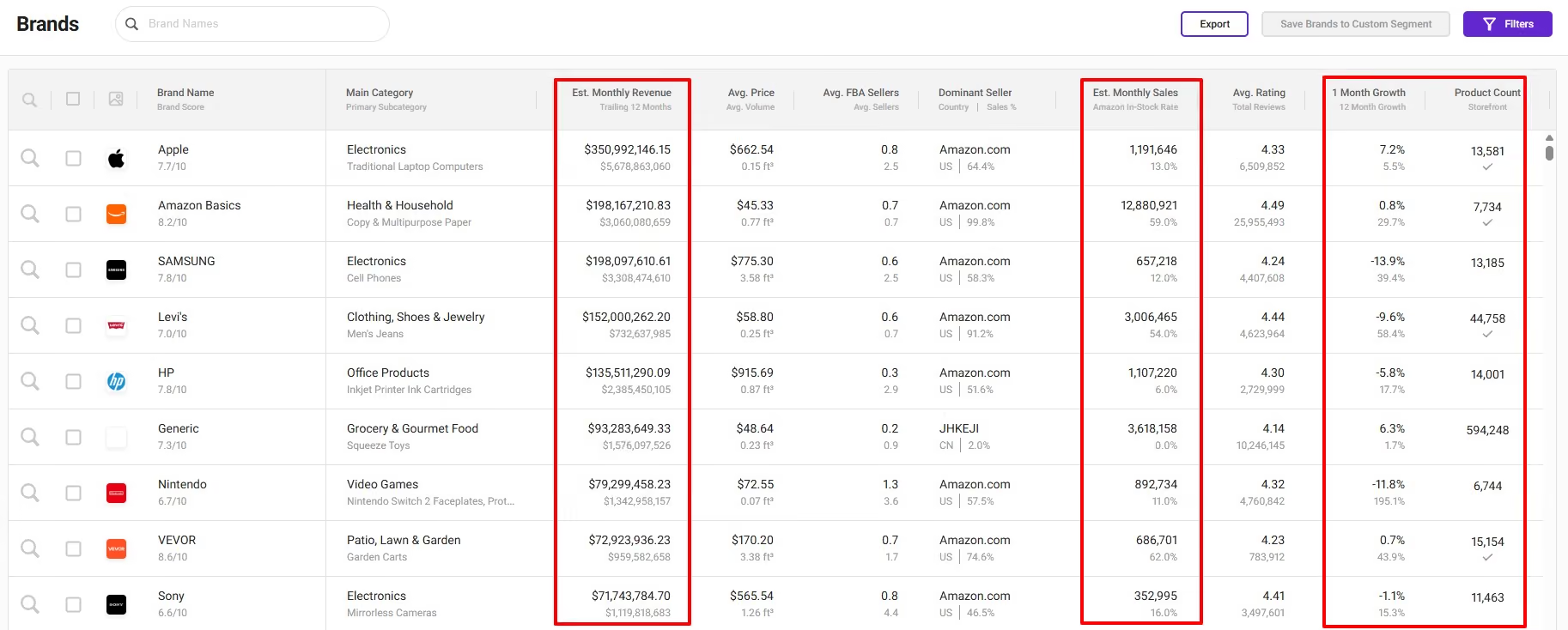
Each estimate connects to the data above and below it, so you can verify a brand’s total revenue by drilling into its product catalog, or validate a subcategory estimate by examining the brands inside it. The platform also separates first-party (Amazon retail) revenue from third-party seller revenue, a distinction that directly impacts sourcing and competitive decisions.
Profitero
Profitero’s Sales & Share module estimates Amazon 1P and 3P sales at the brand and category level, primarily for CPG brands benchmarking their own performance against competitors. According to top sellers and brands, this module is “one of the most powerful and reliable on the market.”
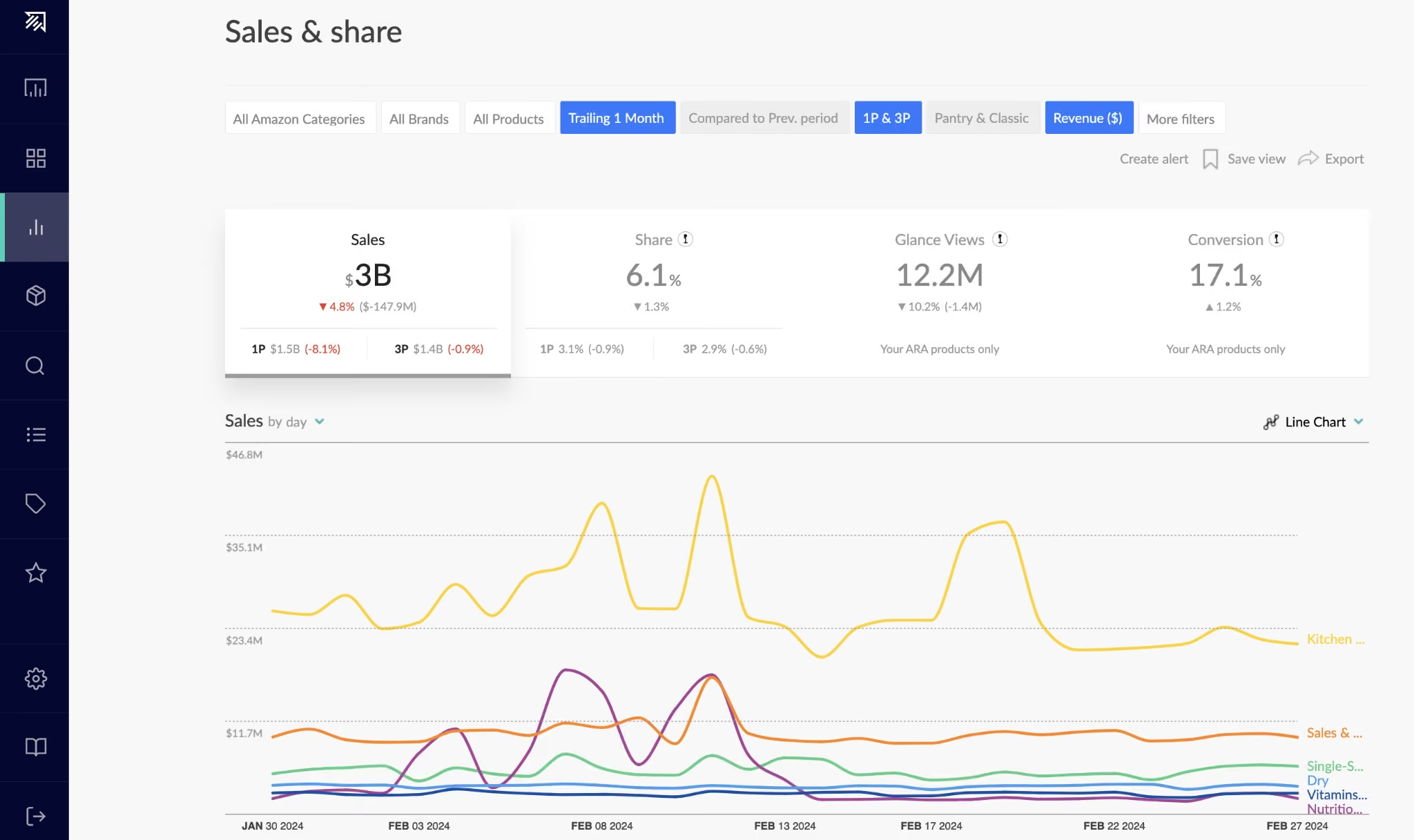
The focus is on tracking your brand’s share trajectory over time relative to the competitive set, not on evaluating whether a brand represents a sourcing or selling opportunity.
Our Verdict: SmartScout wins on depth and accessibility. Revenue estimates span every level of Amazon’s structure and are available to any user on any plan. Profitero’s Sales & Share module is strong but limited to brand-level benchmarking for enterprise accounts.
Sizing a category before committing resources to it is foundational to both platforms, but they approach it from opposite directions.
SmartScout
SmartScout breaks Amazon into 43,000+ subcategories, each showing revenue, growth rate, number of brands, average price, and the ratio of revenue controlled by Amazon’s own retail operation versus third-party sellers.
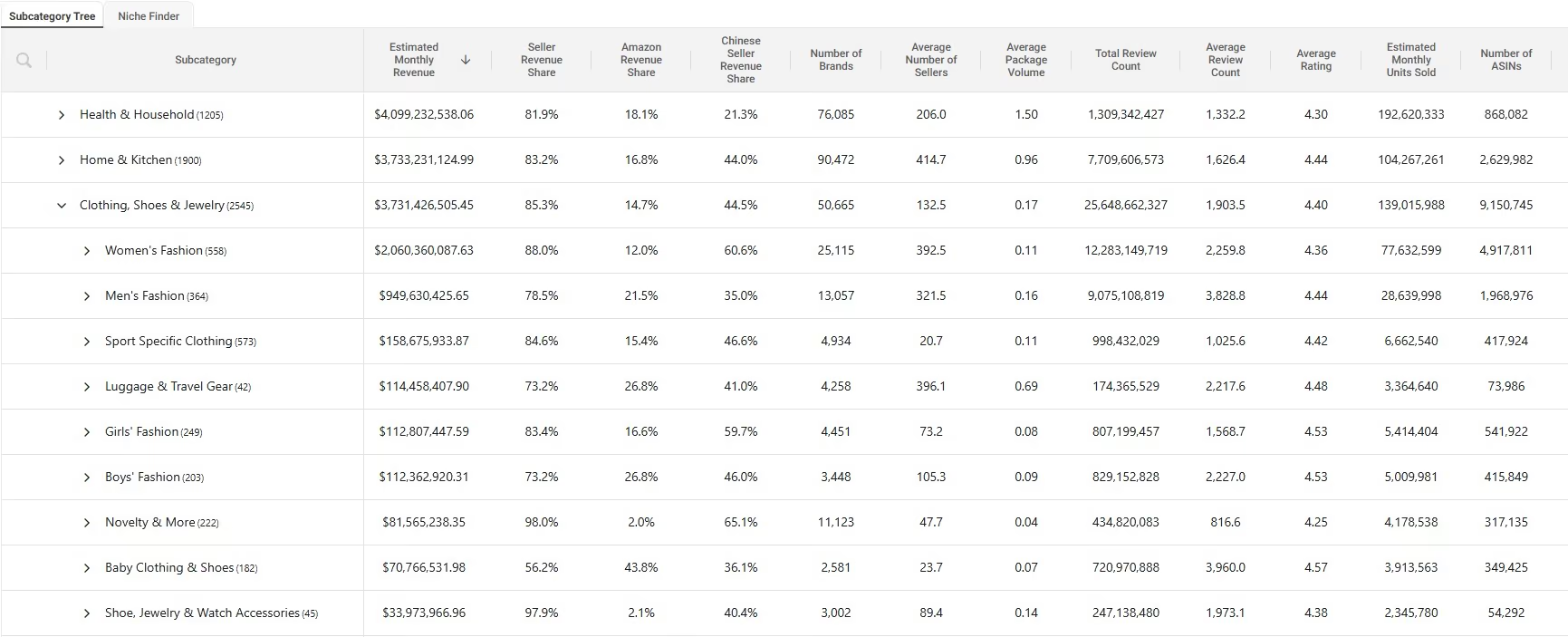
This data is pre-computed and available the moment you log in. You can filter for subcategories where demand is high, competition is thin, and Amazon’s direct involvement is minimal.
Profitero
Profitero sizes categories across multiple retailers, letting CPG brands compare how a category performs on Amazon versus Walmart versus Target in the same view. This cross-retailer perspective is essential for brands allocating budget and inventory across channels.
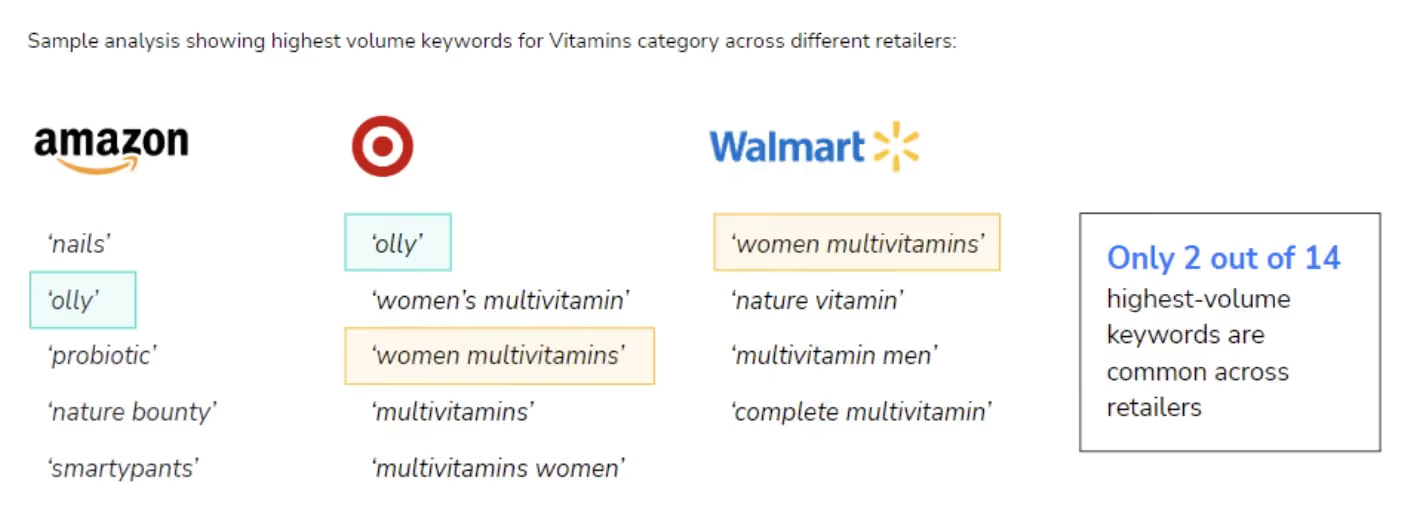
The trade-off is that Profitero does not break Amazon categories down to the micro-niche level or show the 1P/3P competitive split that drives seller-level decisions.
Our Verdict: SmartScout wins for Amazon-specific category depth. Profitero wins for cross-retailer category comparison. If Amazon is your primary channel, SmartScout’s granularity is unmatched. If you manage inventory across multiple retailers, Profitero’s breadth matters more.
Both platforms let you study competitors. The difference is whether you are defending your own brand’s position or evaluating other brands as business opportunities.
SmartScout
SmartScout’s Brand Database covers every brand on Amazon. Each profile opens into a full competitive breakdown: estimated revenue, product catalog performance, which subcategories the brand operates in, how many third-party sellers carry it, what its advertising footprint looks like, and how its performance tracks across international marketplaces.
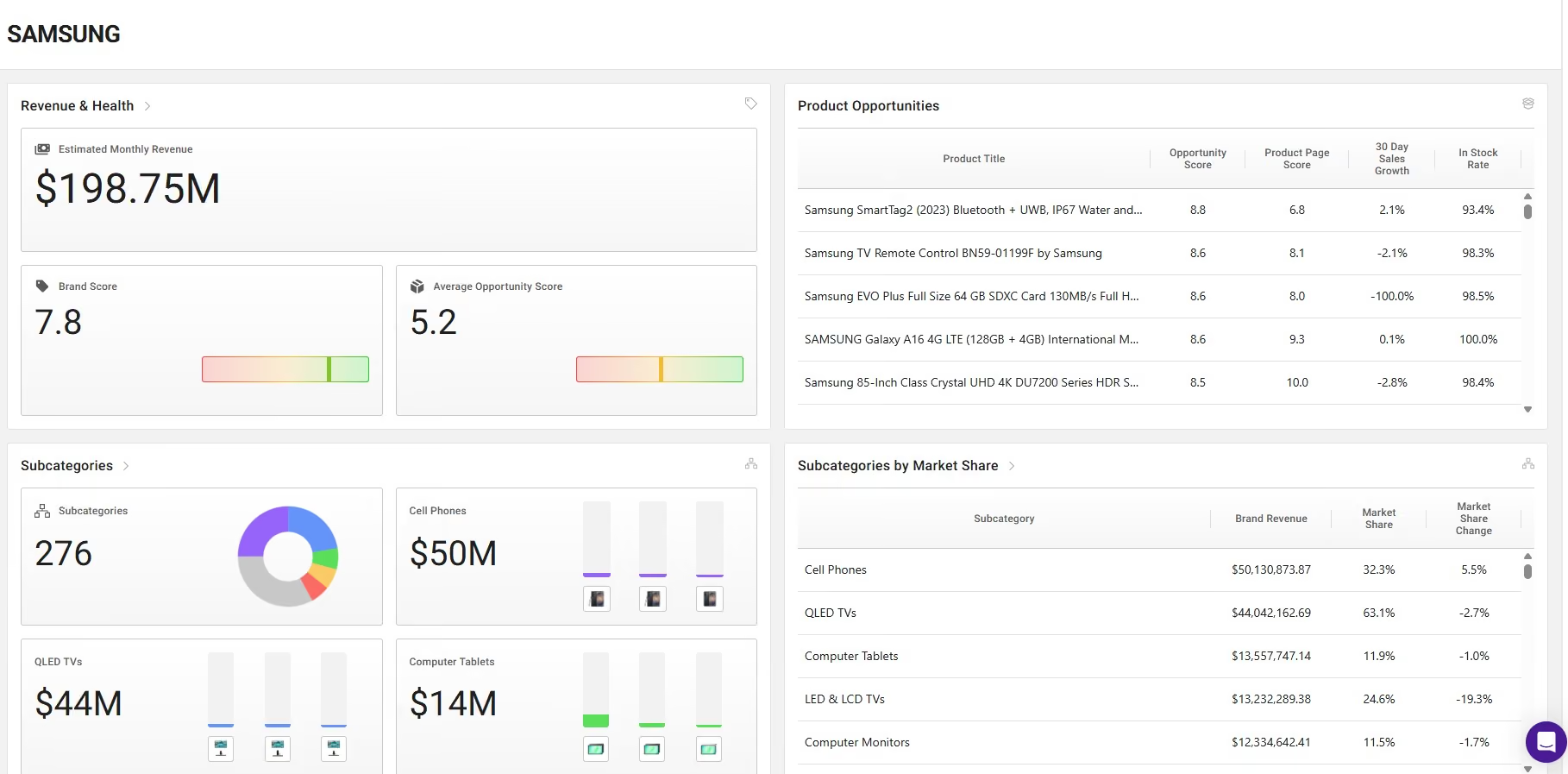
This data is built for people evaluating brands from the outside: agencies prospecting clients, wholesale buyers scouting sourcing targets, and private label sellers studying the competitive landscape.
Profitero
Profitero tracks brand-level market share shifts relative to defined competitor sets across retailers.
The focus is on monitoring your own brand’s position: Are you gaining or losing share? How does your pricing compare? Is your content outperforming the competitive set? Profitero is designed for brand owners defending territory, not for external researchers evaluating which brands to sell or partner with.
Our Verdict: SmartScout wins for evaluating brands as opportunities. Profitero wins for monitoring your own brand’s competitive position across retailers. Different use cases, different strengths.
Showing up in search results drives sales on every marketplace. Both platforms track search performance, but with very different toolsets.
SmartScout
Keyword Detective identifies which search terms drive traffic to any product on Amazon, then compares those terms against competitors to surface gaps: keywords your rivals rank for that you do not.
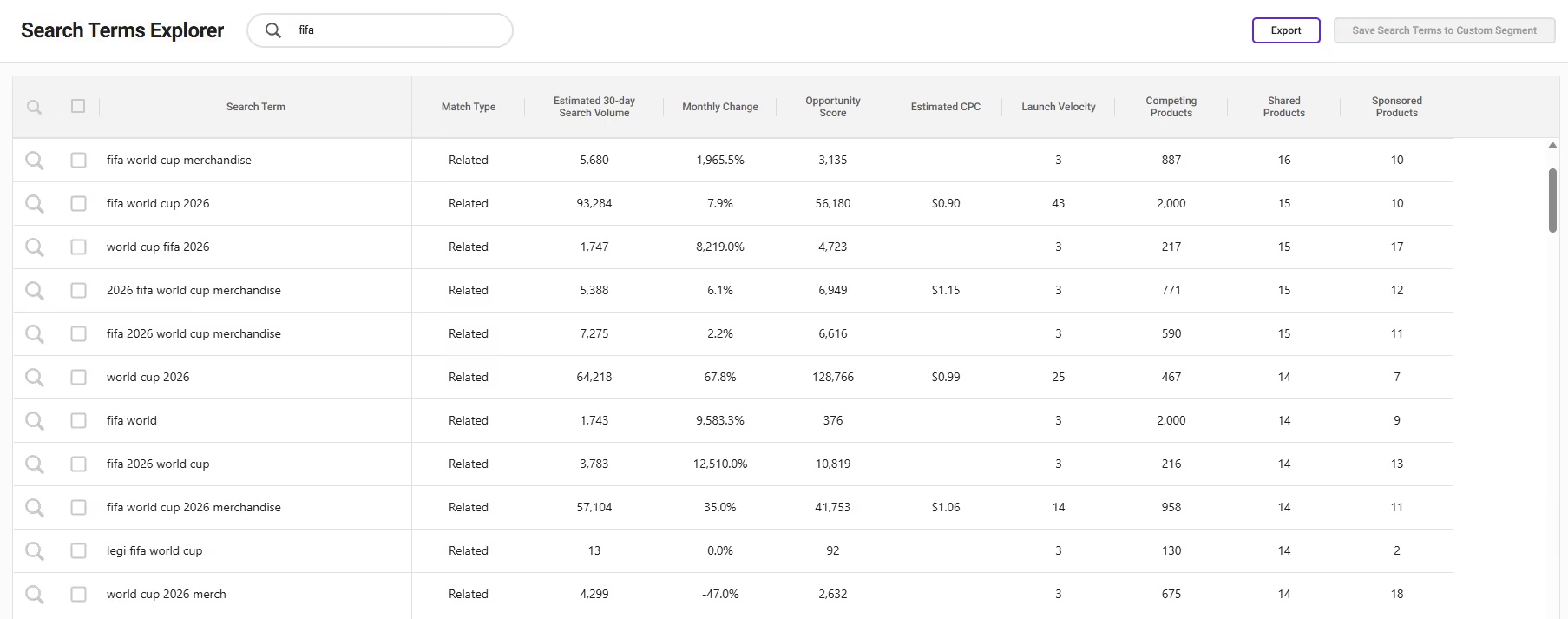
The Relevancy Quadrant adds a strategic layer by scoring each keyword’s relevance to your product and plotting it against your current ranking. The result is a prioritized list of optimization targets, not just a dashboard of positions.
Profitero
Profitero tracks Share of Search across retailers, showing what percentage of search results in a category your brand captures.
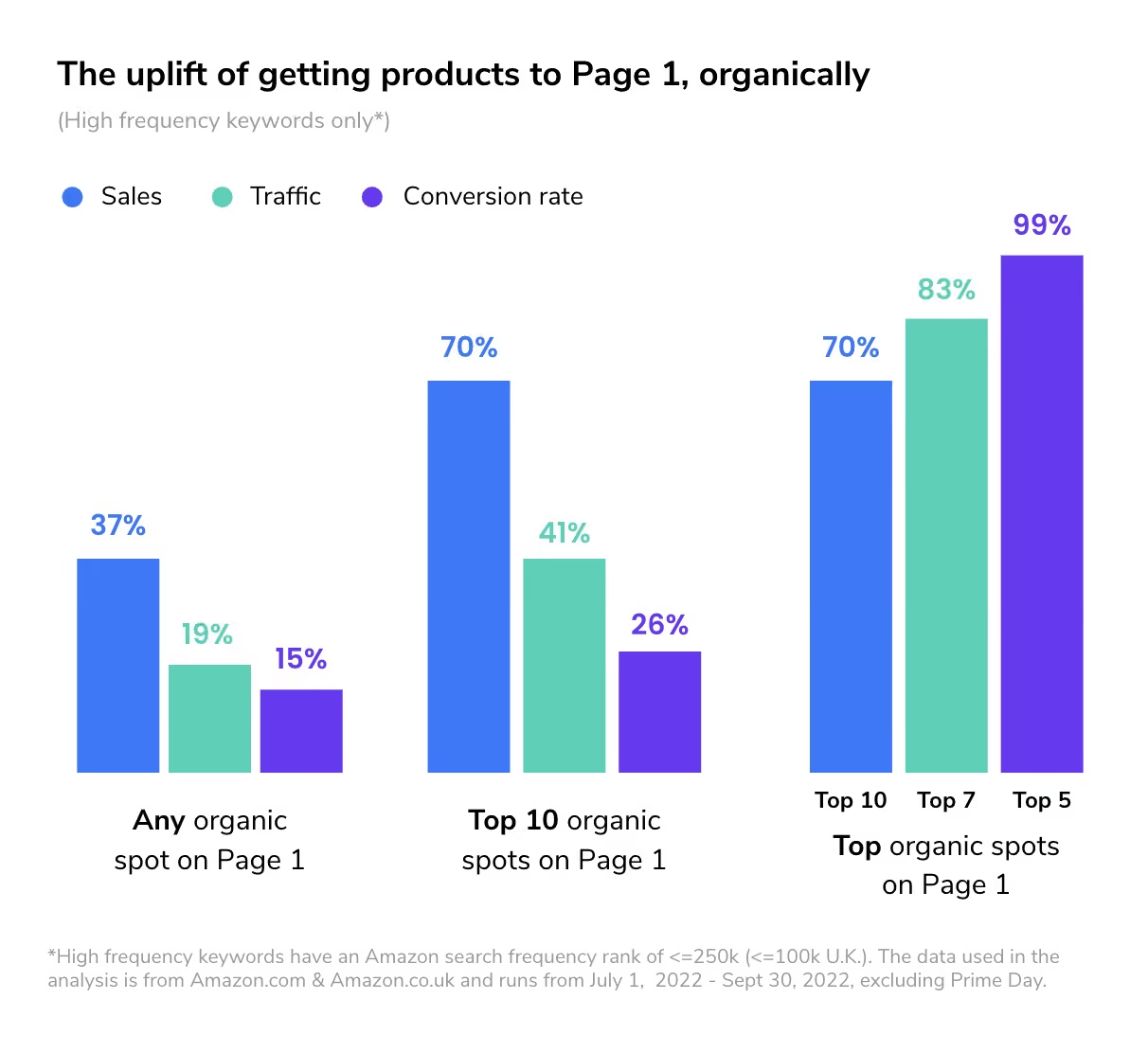
This is a visibility metric rather than a keyword research tool. It tells you whether your brand is gaining or losing presence in search results relative to competitors, which feeds into executive reporting and retail media allocation.
Notably, some users flag that Profitero is still missing Amazon Advertising data and true Share of Voice as built-in metrics.
Our Verdict: SmartScout wins for actionable keyword research that feeds directly into listing and PPC optimization. Profitero wins for tracking overall brand search visibility across retailers at a macro level.
Getting product content right affects conversion rates on every marketplace. Both platforms address content, but from opposite ends of the workflow.
SmartScout
SmartScout’s AI Listing Architect generates product listings from scratch using the platform’s own keyword and category data.
Feed it an ASIN or a product concept, and it produces titles, bullet points, and descriptions that are optimized for the search terms that actually convert in your category. This is a creation tool: it builds listings rather than auditing existing ones.
Profitero
Profitero scores and audits existing product content against retailer-specific best practices. It checks whether images meet size and quality standards, whether titles follow the right format, whether bullet points include required attributes, and whether product descriptions hit content length benchmarks.
The platform also integrates with Salsify and Syndigo for content syndication. This is a compliance and optimization tool: it evaluates what you already have and tells you where it falls short.
Our Verdict: Different jobs. SmartScout creates optimized listings from research data. Profitero audits existing content for compliance. Brands that need content creation should look at SmartScout. Brands that need to monitor content quality across dozens of retailers need Profitero.
Both platforms have invested in AI features, but they apply artificial intelligence to different workflows.
SmartScout
SmartScout’s AI is embedded in the Listing Architect, connecting directly to the platform’s relevancy and ranking data to produce listings grounded in what actually drives conversions. The AI doesn’t sit in a separate chat window. It operates inside the research workflow, turning competitive intelligence into ready-to-use listing copy.
Profitero
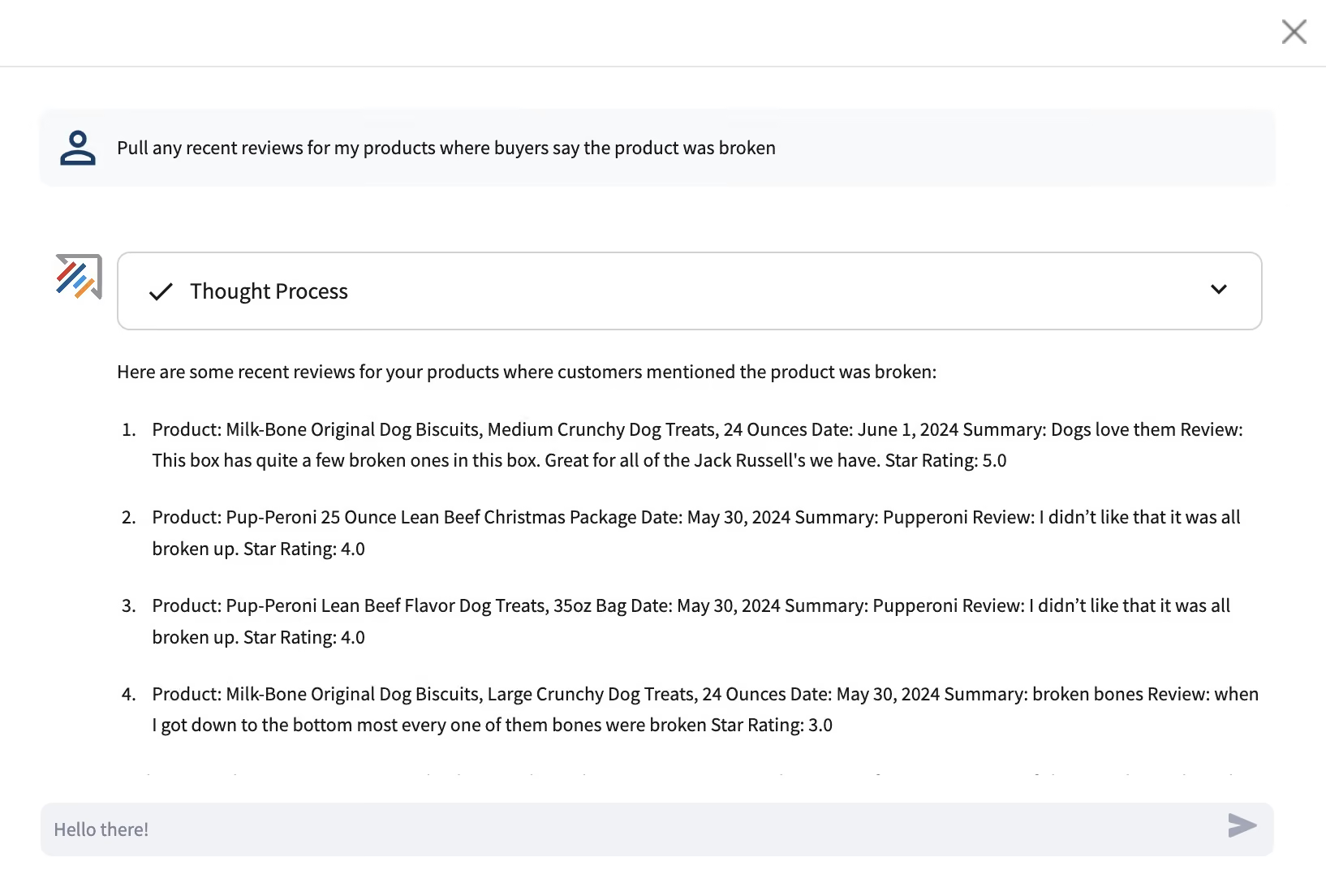
Ask Profitero is a chat-based AI assistant launched in August 2023 that sits on top of Profitero’s full data set. Users can ask natural language questions like "How did my brand’s pricing compare to competitors last month?" or "Which products lost page 1 placement this week?" and get answers without building reports manually.
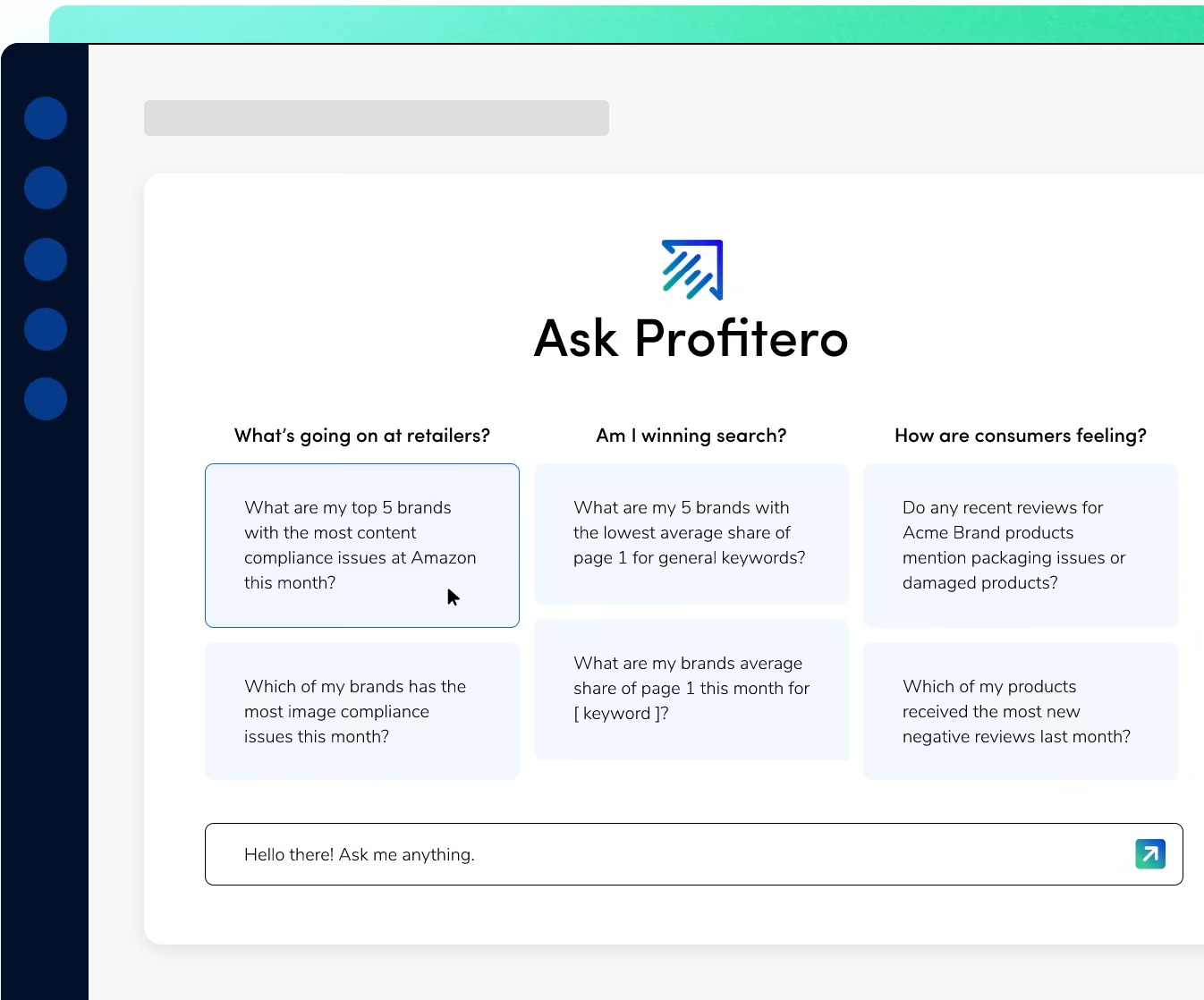
It also generates custom charts and synthesizes review sentiment. For enterprise teams where data needs to reach non-technical stakeholders quickly, this accessibility layer is valuable.
Our Verdict: Different applications. SmartScout’s AI creates listings from marketplace data. Profitero’s AI makes existing analytics conversationally accessible. Neither replaces the other.
Several of SmartScout’s core capabilities have no equivalent in Profitero or any digital shelf analytics platform.
The Traffic Graph renders a visual network of purchase relationships between Amazon products, showing which items shoppers buy together and where traffic flows between competing listings. This data directly informs PPC targeting and cross-sell strategy.
The Seller Map and Database lets you see who is actually selling behind any listing on Amazon. Search by geography, revenue, or brand portfolio to assess competitive density before making sourcing decisions. No other intelligence platform provides this level of seller visibility.
Ad Spy opens up competitor advertising on Amazon, showing which keywords rivals bid on, how their spending patterns shift across seasons, and where they are gaining or losing ground. Profitero integrates with Pacvue and Skai for retail media, but does not provide native competitive advertising research.
SmartScout also includes an FBA Calculator optimized for packaging and fee analysis, a UPC Scanner for quick product lookups, and a free Chrome extension with 1,000 monthly uses.
Profitero’s exclusive strengths center on multi-retailer monitoring and operational compliance, areas SmartScout does not attempt.
Out-of-stock detection and availability alerts notify brands when products go unavailable, allowing teams to act before lost sales compound. Profitero estimates that moving from page 2 to page 1 can boost sales by 40%, and that it takes 3 to 4 days to recover full sales volume after a stockout.
MAP (minimum advertised price) monitoring tracks pricing violations across retailers, helping brands protect profitability and enforce channel agreements.
Content compliance scoring audits product pages against retailer-specific standards for images, titles, bullet points, and descriptions across all 1,400+ tracked retailers.
Store-Based Analytics provides local store-level availability and pricing data, connecting online performance with brick-and-mortar execution.
Profitero also offers managed services through in-house teams covering content creation and syndication, retail media strategy, and operational consulting. These services are part of the broader Publicis Groupe ecosystem.
Even though SmartScout and Profitero share some features, the pricing difference is huge and separates them from a common ground.
SmartScout Pricing
SmartScout offers straightforward, self-serve pricing plans. There are three fixed plan tiers that users can freely choose between monthly and annual plans.
All the SmartScout plans (except the custom Enterprise plan) offer a 7-day money-back guarantee with questions asked. With this, new users can test all the features without any financial risks. This is something you won’t get with Profitero.
Profitero Pricing
Profitero does not publish pricing publicly. SmartScout’s own comparison data and third-party sources place Profitero at well over $5,000 per month. Contracts are annual and priced based on the number of retailers tracked, categories covered, and user seats required. Gartner Peer Insights reviewers describe the platform as “pricey” but effective. Every engagement requires a demo and sales process.
Our Verdict: SmartScout is 25 to 170x more affordable. SmartScout’s full Business plan ($187/month) costs less per year than a single month of Profitero. For Amazon-focused intelligence, SmartScout provides research capabilities that compete with platforms costing dramatically more.
SmartScout holds approximately 4.7 out of 5 across G2 and independent review platforms. Users consistently highlight the research depth, the value relative to price, and the speed of the interface. Support quality receives frequent praise for being personal and responsive.
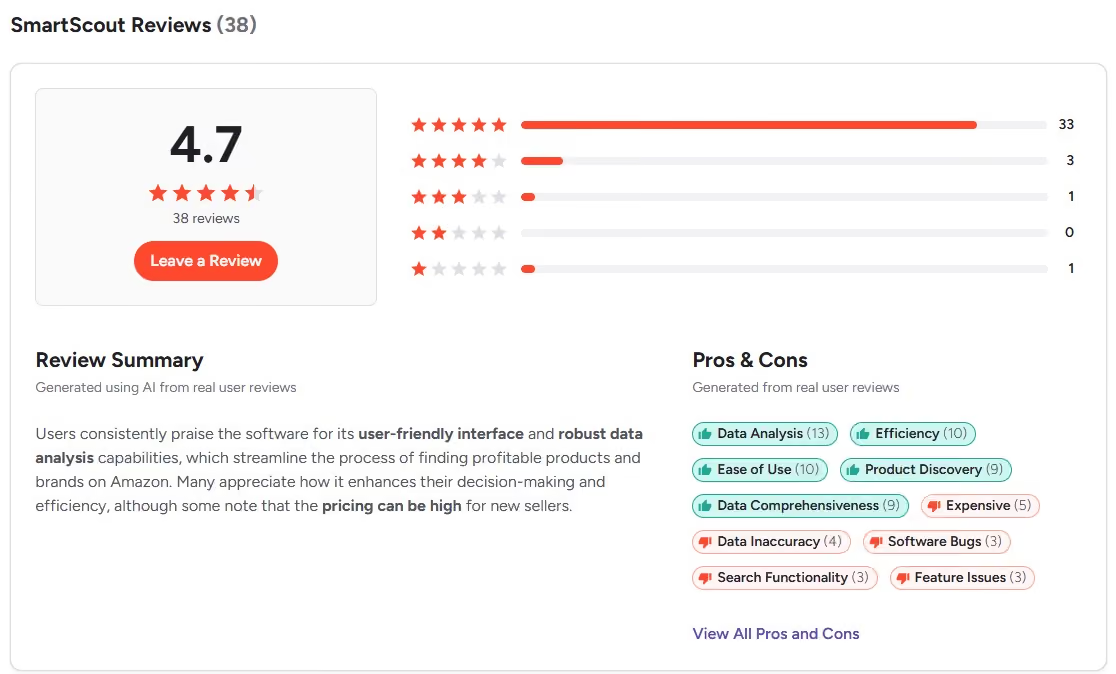
Profitero receives strong average ratings of 4.3 out of 5 from enterprise CPG users on Capterra and G2, with particular praise for the Sales & Share module, the customer success team, and the strategic partnership approach.
Common criticisms include patchy data coverage in smaller European and Asian markets, data that is not always timely enough for rapid trading decisions outside Amazon, complexity in extracting executive-ready insights without manual work, and the high price point relative to competitors.
All the SmartScout plans (except the custom Enterprise plan) offer a 7-day money-back guarantee with questions asked. With this, new users can test all the features without any financial risks. This is something you won’t get with Profitero.
If your primary challenge is understanding the Amazon marketplace, SmartScout is the right tool. It tells you which categories are worth entering, which brands have room for third-party sellers, where competitors are spending their ad budgets, and how traffic moves between products. No digital shelf analytics platform, including Profitero, provides that depth of Amazon-specific marketplace intelligence.
If your primary challenge is managing product presence across multiple retailers, Profitero is the right tool. It monitors content compliance, tracks pricing and availability, detects MAP violations, and measures search visibility across 1,400+ retailer sites. No Amazon marketplace tool, including SmartScout, provides that breadth of multi-retailer digital shelf coverage.
If you run a brand that sells on Amazon and across other retailers, consider using both. Profitero handles the multi-retailer monitoring. SmartScout delivers the deep Amazon intelligence that Profitero’s Amazon coverage does not match.
If your primary challenge is understanding the Amazon marketplace, SmartScout is the right tool. It tells you which categories are worth entering, which brands have room for third-party sellers, where competitors are spending their ad budgets, and how traffic moves between products. No digital shelf analytics platform, including Profitero, provides that depth of Amazon-specific marketplace intelligence.
If your primary challenge is managing product presence across multiple retailers, Profitero is the right tool. It monitors content compliance, tracks pricing and availability, detects MAP violations, and measures search visibility across 1,400+ retailer sites. No Amazon marketplace tool, including SmartScout, provides that breadth of multi-retailer digital shelf coverage.
If you run a brand that sells on Amazon and across other retailers, consider using both. Profitero handles the multi-retailer monitoring. SmartScout delivers the deep Amazon intelligence that Profitero’s Amazon coverage does not match.
This is the most natural pairing of any comparison in this series. Unlike Cobalt or Stackline, where SmartScout can largely replace the competing platform’s Amazon capabilities, SmartScout and Profitero solve entirely different problems.
Profitero monitors the digital shelf: Is your content compliant? Are your prices competitive? Are your products in stock? Are you showing up in search results across Walmart, Target, and Amazon simultaneously?
SmartScout maps the competitive landscape inside Amazon: Who else is selling your brand? Where does shopper traffic flow? What are rival brands spending on advertising? Which subcategories have untapped demand?
For enterprise brands running Amazon as a primary channel, the combination covers both sides of the intelligence equation. The incremental cost of adding SmartScout Essentials ($97/month) to a Profitero contract is negligible relative to the marketplace intelligence it unlocks.
SmartScout covers Amazon marketplace intelligence: brand research, category sizing, seller mapping, competitive advertising analysis, keyword optimization, and traffic flow. Profitero covers digital shelf monitoring: content compliance, pricing trends, availability alerts, and search visibility across 1,400+ retailers. The overlap between them is narrow, and neither tool replaces what the other does best.
For Amazon sellers, brands, and agencies who need to make better decisions inside the marketplace, SmartScout delivers more usable intelligence per dollar than any platform in its category. Start with a plan that fits your budget, and know within a week whether it covers what you need.