Chinese sellers continue to gain momentum on Amazon, dominating numerous product categories and leaving many U.S. brands struggling to compete. As the world's largest marketplace, Amazon attracts sellers from around the globe, making the Amazon marketplace highly competitive and often challenging for both new and established brands. Estimates suggest they now make up over half of all third-party sellers on Amazon, and nearly half of the top 10,000 sellers on the U.S. site. In some datasets, their share of 3P sellers crosses 60%. Cross-border Chinese e-commerce is still accelerating, growing nearly 20% in 2023 alone. Chinese companies are increasingly represented among high-revenue sellers, further shifting the competitive landscape.
But not everywhere.
The number of active sellers on the platform continues to rise, with active Chinese sellers having a significant impact on the marketplace's dynamics and sales distribution.
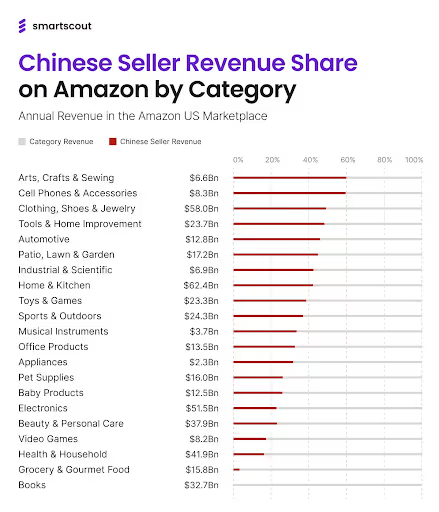
In some categories, U.S. brands remain unshaken, proving resilient against international competition. However, Chinese sellers are particularly successful in certain categories, such as arts & crafts, home goods, and consumer electronics, while categories like books remain largely unaffected.
So where are Chinese sellers thriving, and where are they struggling to make a dent? Let’s break it down.
Marketplace Pulse research provides data-driven insights into these trends, helping to answer questions like how many Chinese sellers are on Amazon and how their presence is shaping the platform.
The Rise (and Limits) of Chinese Sellers on Amazon
China-based sellers have several built-in advantages:
- Direct access to manufacturing hubs and lower production costs
- Ability to source cheaply via platforms like Alibaba
- Efficient supply chains that let them spot trends and launch products quickly
- Heavy use of Fulfillment by Amazon (FBA) to streamline logistics
- Aggressive investment in Amazon PPC to secure top ad placements and visibility
- Chinese manufacturers and Chinese suppliers enable many sellers to start selling quickly and offer lower prices, making it easier for new entrants to compete.
That combination makes them especially dangerous in low barrier, price competitive categories. Chinese competitors and companies leverage lower prices, regulatory loopholes, and direct competition to gain market share. In some niches, like phone accessories, small electronics, and inexpensive home goods, Chinese sellers account for well over 50% of revenue, flooding search results with lookalike Chinese products at rock-bottom prices. The total revenue generated by Chinese products in these categories is significant, with many products sold by Chinese sellers contributing to their dominance.
But there are limits. Relying on a single product can be risky for sellers, so some Chinese entrepreneurs diversify their offerings to reduce risk and appeal to a wider customer base.
Some categories remain almost entirely free of Chinese competition. In books, for example, Chinese sellers account for virtually 0% of sales. And in several highly regulated or trust sensitive categories, U.S. brands still hold the strongest position. Many sellers from mainland China focus on categories where they can sell high volumes and maximize their impact.
Some Chinese suppliers use tactics such as invoice fraud and HS code misclassification to sell products at lower prices, which intensifies direct competition and impacts pricing for all sellers.
The rise of Chinese sellers is also driven by the fact that many Chinese entrepreneurs are able to start selling on Amazon with relative ease, thanks to the platform's low barriers to entry.
This raises a critical question for both new brands and established sellers: Where are you more likely to build a long term, defensible business on Amazon?
Why Some Amazon Categories Resist Chinese Sellers
On a macro level, Chinese sellers are winning. They now account for over 50% of all third-party sellers and surpass U.S.-based sellers among the top performers on Amazon.
On a micro level, not all categories are equally exposed:
- Some niches are heavily regulated or have strict compliance requirements.
- Others rely on deep consumer trust, repeat purchase behavior, and brand loyalty.
- In certain spaces, creating a defensible, hard to copy product matters more than being the cheapest.
There is also mounting scrutiny. A portion of Chinese sellers have been linked to:
- Fake positive reviews to boost their own products
- Fake negative reviews and upvoting tactics to bury competitors
- Counterfeit products, invoice manipulation, and misclassification to dodge tariffs
- Opening multiple “stealth accounts” to evade suspensions
- The illegal sale of internal Amazon data or reports, which can provide unfair advantages and undermine fair competition
These tactics are not exclusive to Chinese sellers, but they are frequently cited in enforcement actions. In response, Amazon has ramped up efforts with machine learning based review detection, more aggressive account enforcement, and programs like Transparency and Project Zero aimed at reducing counterfeits and combating the prevalence of fake products. Even so, fake reviews and counterfeit products remain two of the biggest threats to the marketplace. Regulatory shifts may also impact the presence and strategies of Chinese sellers, as changes in government policy could alter the competitive landscape.
For new brands, the strategic takeaway is simple: Be where your fiercest competitors are not.
If you are launching or scaling a brand, it is often smarter to enter categories where overseas manufacturers have less of an edge. Supporting local sellers is crucial for the U.S. economy, but seller fees can impact their competitiveness compared to foreign merchants.
Categories Where U.S. Brands Remain Strong
Certain product categories are naturally more difficult for international sellers to dominate, due to regulatory hurdles, logistics, and trust dynamics.
Even though Chinese sellers excel in categories like clothing, shoes, and jewelry, offering a wide range of fast fashion items and accessories and holding a strong market share, other niches still favor U.S.-based brands:
Health and Household
Consumers are cautious about what they put in and on their bodies. Supplements, OTC health products, and wellness items depend on trust, clear labeling, and compliance. U.S. brands with strong quality control and branding have a major advantage.
Grocery and Gourmet Food
Strict FDA regulations, perishability, and complex cold-chain logistics make this tough for foreign sellers. Local brands and regional favorites tend to win here, and it is harder for low cost overseas competitors to simply spin up a new listing and scale.
Books
Between legacy publishers and self-published authors, books remain one of the most domestically controlled categories. There is little room for overseas manufacturers to undercut on price or speed in the same way they do with physical goods.
In these and similar categories, U.S. sellers can build defensible brands, differentiate on quality and story, and maintain long term customer relationships without competing solely on price.
Black Hat Tactics and Fake Reviews: The Dark Side of Marketplace Competition
The rapid growth of Chinese sellers on Amazon has brought not only fierce competition but also a surge in black hat tactics that threaten the integrity of the world’s largest marketplace. Many Chinese sellers, eager to secure a spot on the coveted first page of Amazon search results, have turned to fake reviews as a shortcut to success. Marketplace Pulse data reveals that over half of Chinese sellers on Amazon have engaged in manipulating product ratings through fake reviews, giving themselves an unfair advantage over other sellers.
These fake reviews are designed to mislead buyers, making products appear more popular and higher quality than they actually are. This practice not only distorts the marketplace for honest sellers but also erodes the trust of Amazon customers, who rely on star reviews and seller feedback to make informed purchasing decisions. As more international sellers, including many Chinese sellers, flood the platform, the challenge of maintaining a fair and transparent marketplace grows.
Amazon’s platform is built on trust, and when fake reviews proliferate, it undermines the experience for both customers and sellers on Amazon. To ensure a level playing field, all sellers—whether from China or other countries—must adhere to Amazon’s policies and guidelines. The continued use of black hat tactics by some Chinese sellers highlights the need for ongoing vigilance and enforcement to protect the integrity of the marketplace and the interests of customers worldwide.
Misleading Buyers and Consumer Protection on Amazon
To combat the rise of fake reviews and protect Amazon customers from being misled, Amazon has invested heavily in advanced consumer protection measures. The company now uses sophisticated machine learning algorithms to detect and remove fake reviews, and it encourages customers to report suspicious activity directly on the platform. These efforts are designed to safeguard the marketplace and ensure that buyers can trust the information they see.
Despite these initiatives, many Chinese sellers continue to exploit fake reviews and other black hat tactics, putting US sellers and other non-Chinese sellers at a disadvantage. This manipulation can lead to lost sales, damaged reputations, and a marketplace where quality and authenticity are overshadowed by deceptive practices. For Amazon to truly level the playing field, it must remain committed to enforcing its policies and cracking down on those who mislead buyers.
For all Amazon sellers, the best way to compete is by focusing on product quality, customer satisfaction, and building a base of genuine positive reviews. By prioritizing these elements, sellers can earn the trust of customers and stand out in a crowded marketplace, even against aggressive international sellers. Ultimately, a commitment to quality and transparency is the most effective way to build long-term success and resilience on Amazon’s platform.
The Big Question: Will Chinese Sellers Continue to Grow?
The trajectory of Chinese sellers on Amazon is still pointed upward. The number of Chinese businesses selling directly to foreign consumers continues to rise, and their share of Amazon’s top sellers remains above 50%.
But that growth may eventually be shaped by:
- Trade policy and regulations targeting cross-border e-commerce
- Stricter enforcement around fake reviews, counterfeits, and stealth accounts
- Shifts in consumer trust and preference for transparent, higher quality brands
For brands looking to secure long term success, category selection matters as much as product and marketing. Entering a niche that is less exposed to low cost, high volume overseas competitors gives you a much stronger foundation for sustainable growth.
Key Takeaways for Amazon Sellers
- Chinese sellers dominate many low barrier, price sensitive categories, thanks to manufacturing access, efficient supply chains, FBA, and heavy PPC spend.
- Some categories remain resistant, especially those with higher regulation, strong brand loyalty, or complex logistics (health, household, grocery, books).
- Bad actors exist: fake reviews, counterfeit products, and stealth accounts are ongoing issues, even as Amazon rolls out programs like Transparency and Project Zero.
- U.S. sellers can still win by playing a different game:
- Build a distinct, recognizable brand
- Focus on quality and defensible products that are harder to copy
- Diversify your product mix and revenue streams
- Invest in long term customer relationships and outstanding service
- Use influencer marketing and content to build trust and visibility beyond price
- Build a distinct, recognizable brand
Will Chinese sellers continue to take over Amazon, or will their growth eventually plateau? That remains to be seen. But one thing is clear: where you choose to compete matters.
Want to know how competitive your category is? SmartScout can show you which brands dominate your niche.
Love SmartScout in 7 days, or get your money back!

.png)