TL;DR
- Amazon suspends roughly 8,000 sellers per month, and nearly 1 in 12 active sellers has been suspended in recent years. The risk is not theoretical.
- The Amazon arbitration process is structured and contractual, not emotional. Strategy and documentation matter more than outrage.
- Reinstatement should always be the first objective. Restoring your account improves leverage and unlocks revenue while you pursue recovery of damages.
- Most major fund disputes hinge on Sections 2 and 3 of the Amazon BSA, particularly permanent withholding and notice requirements.
- Amazon AAA arbitration costs $60,000 to $80,000 and can take 6 to 25 months. It only makes financial sense when damages justify the investment.
- Nearly half of AAA B2B cases settle before an award. Filing for arbitration often shifts the balance of power and forces serious negotiation.
- Arbitration is final. Poor preparation, weak documentation, or self-representation can permanently damage recovery potential.
If You’re Going to Fight Amazon, Read This First
I’m writing this the way I would speak to you if we were sitting across from each other. Not as a marketer or someone trying to sell you something, but as someone who has spent over 12 years in this arena, first building and selling seven-figure Amazon brands myself, and then representing sellers when things go sideways.
If you build long enough on Amazon, there is a real possibility that the platform will lock up your capital or inventory one day. It usually starts with a suspension or an inventory loss, damage, or destruction at FBA. When funds are frozen, the emotional temperature rises quickly, and that’s when even the smartest sellers make their biggest mistakes: they let emotion drive a process that should be governed entirely by math.
What most sellers fail to understand is that the Amazon arbitration process is not emotional, political, or personal. It is contractual and procedural. If you approach Amazon arbitration strategically rather than reactively, your chances of success increase significantly.
The Mathematical Reality of Suspension Risk
To understand the scale of the “Goliath” we are dealing with, look at the raw data. According to SmartScout’s records from July 29th, 2021, to February 18th, 2026, there were 435,470 total account suspensions on the Amazon.com marketplace.
The speed of enforcement is significant. Approximately 8,064 sellers are suspended every single month. Every 24 hours, roughly 268 businesses lose access to their accounts. To put this into perspective, with an estimated 1.1 million to 1.9 million active sellers on Amazon, roughly 1 in 12 have been suspended during this period.
The Escalation Ladder: Precision Over Passion
Most sellers believe there are only two appeal paths:
- Plans of Action (POAs)
- Arbitration
In reality, a sophisticated strategy utilizes a ladder of four distinct stages, each moving further away from automated algorithms and closer to human legal judgment:
- Appeals And Reinstatement: This is the front line of defense, involving direct interaction with Amazon’s Seller Performance and Account Health teams. The goal is to resolve "policy" flags through a Plan of Action (POA). While this is the fastest route to getting back into business, it is also the most frustrating, as you are often pleading your case to an automated system or entry-level investigators who may lack the operational context of your brand.
- Administrative and Regulatory Escalation: When standard appeals fail, this stage introduces high-level pressure to force a manual override. It involves formal outreach to Amazon’s internal Legal Department, the Washington State Attorney General, and specific Amazon Executives. The objective at this stage is to bypass the "black box" of Seller Support, using regulatory and corporate oversight to secure account reinstatement or the release of frozen assets that require high-level human intervention.
- Pre-Arbitration Negotiation (SynArb®): This is a deliberate shift from administrative pressure to the legal arena. The strategy at this stage is to bypass internal departments and present a "trial-ready" case directly to Amazon’s outside legal counsel. By engaging their external law firms, we trigger a billable event for Amazon, forcing their attorneys to evaluate the risk and cost of a 12-month AAA proceeding before the first formal filing fee is ever paid.
- AAA Arbitration: This is the final, binding stage of the contractual dispute system. It is a formal legal proceeding overseen by an independent arbitrator from the American Arbitration Association (AAA) and defended by Amazon’s outside counsel. Unlike an appeal, this is a "mini-trial" involving the exchange of evidence (discovery), witness testimony, and cross-examination. It is the only stage where a third-party human—not an Amazon employee—has the final authority to order the release of your funds or the reimbursement of your inventory.
Each stage increases cost and complexity. Your first objective is always reinstatement, because once your account is restored, your utilization changes completely. Reinstatement allows you to continue selling and generating revenue while unlocking seized funds. This cash flow then funds the secondary fight for claims like FBA inventory reimbursements.
Case Study 1: The “Dead” 8-Figure OTC Brand

I’ve seen accounts declared “dead” come back.
We represented an 8-figure OTC pharmaceutical brand that was suspended for 5 years. They faced "related account" flags and complications with Amazon Pay, with roughly $500,000 in held funds and disposed inventory. Multiple consultants and attorneys failed to reinstate them for half a decade, declaring the account “dead.”
The resolution wasn't found in writing a 'better' appeal; it was found in changing the forum. By bypassing the standard Seller Support loops and presenting a rebuilt compliance narrative directly to Amazon’s outside legal counsel, the incentive for Amazon shifted immediately. They were no longer evaluating an automated policy ticket; they were conducting a risk-adjusted review of a potential arbitration event handled by their own billable defense team. This methodology, which we refer to as Synthetic Arbitration® (SynArb®), involves providing outside counsel with the exact evidence and legal theories intended for a formal AAA filing—forcing a professional evaluation that internal departments often ignore for years.
The accounts were reinstated, funds were released, and we secured a solid path for inventory reimbursements.
Belief doesn’t win reinstatement. Consistency and documentation do. A successful reinstatement requires a sharp legal theory delivered to a decision-maker who has the discretion to act—which, in complex cases, is often found only at the outside counsel level.
The “Black Box” of the BSA: Deconstructing Sections 2 and 3
To fight an Amazon account suspension effectively, you must understand the specific anatomy of the contract you signed. The Amazon Business Solutions Agreement (BSA) is a “contract of adhesion,” a take-it-or-leave-it deal in which Amazon holds the pen. Two sections in particular serve as the engine for almost every case we arbitrate.
Section 2: The Permanent Withholding Trap
Section 2 contains the financial terms of the agreement. It states that to be eligible for disbursement, you must refrain from deceptive, fraudulent, or illegal activity.
If Amazon determines, in its sole discretion, that your account was used for such activities, it claims the right to permanently withhold payments to mitigate "monetary damages and irreparable non-monetary harms."
The Strategic Challenge
In the AAA room, we sometimes treat this as an unenforceable penalty clause. Under contract law, a party cannot simply seize capital as a "punishment." They must prove actual, liquidated damages. If Amazon holds $500,000 but cannot show an equivalent loss, we argue their "sole discretion" has exceeded legal fairness.
Nearly every major Amazon arbitration involving frozen funds centers on how Section 2 of the Amazon BSA is interpreted and applied.
Section 3: The Cure Period and Termination
Section 3 governs the life and death of accounts. While Amazon can terminate “for convenience” with 30 days’ notice, most sellers face immediate suspension. The contract mentions a 7-day cure period for material breaches. Unless the breach exposes Amazon to third-party liability, you are technically entitled to that window to fix the issue.
The Strategic Challenge
We look for “Notice Failures”. Section 3 requires Amazon to promptly notify you of the reason for termination. When Amazon goes silent, they may be in breach of their own notice requirements. Furthermore, we attack the reasoning for the suspension itself. If we show that they lack “liability exposure,” it helps persuade the arbitrator to release the funds.
In Amazon AAA arbitration, procedural failures under Section 3 of the Amazon BSA often serve as useful grounds for fund recovery and negotiated settlement.
The Hard Math and Creative Risk-Sharing
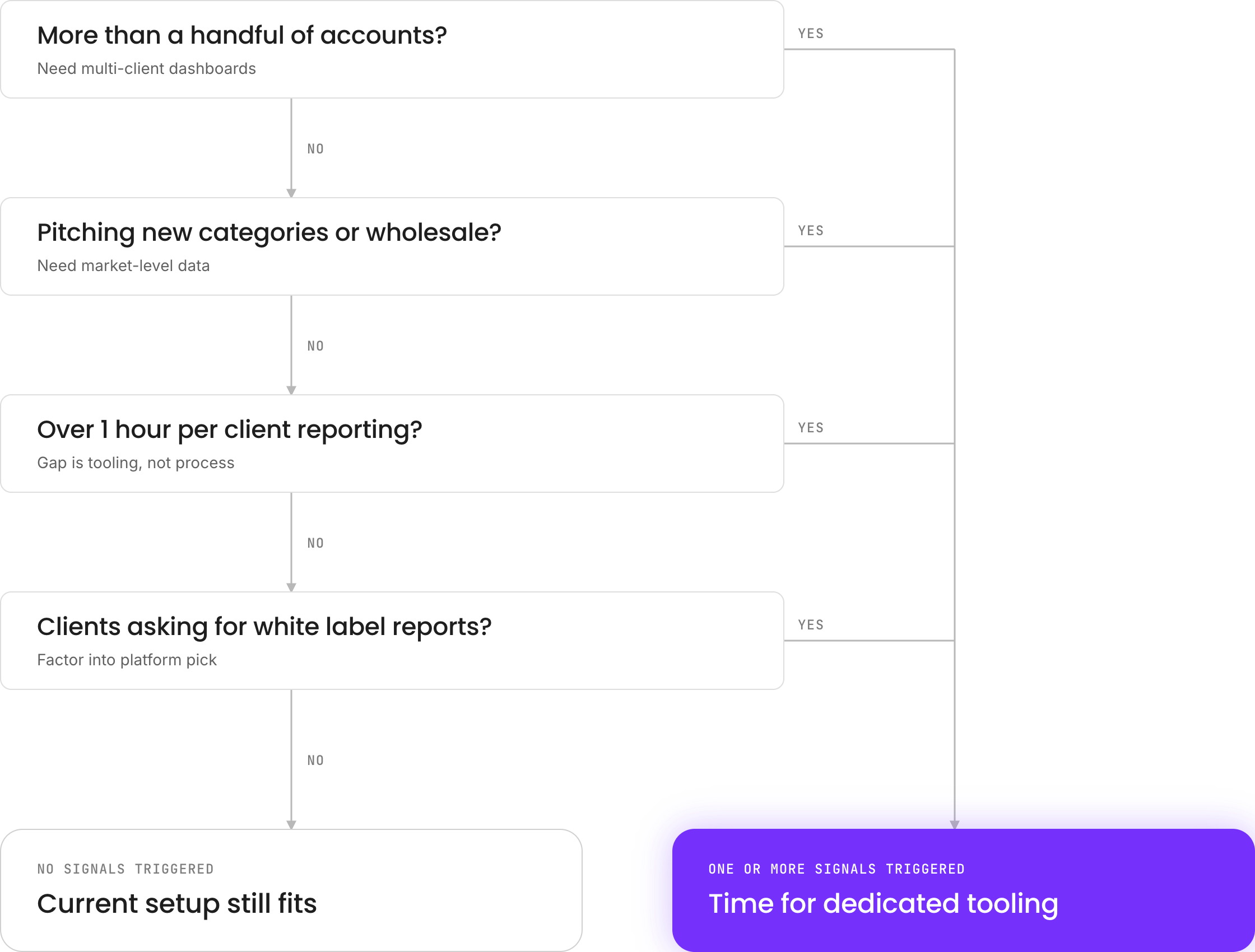
The financial threshold for entering the Amazon AAA arbitration arena is high. On average, a commercial arbitration proceeding costs between $60,000 and $80,000. If a seller’s damages are $75,000, the math rarely justifies the investment, as the cost to recover capital effectively equals the capital itself. From a strategic standpoint, a damage threshold of $200,000 is typically required before the risk-adjusted return on investment makes sense for a brand.
However, the traditional hourly billing model often creates a conflict of interest in these complex matters. A more sophisticated approach involves risk-sharing, where legal counsel assumes a portion of the financial risk through a contingency element. This model ensures that the attorney and the brand are perfectly aligned—focusing entirely on the strength of the evidence and the probability of recovery.
Case Study 2: The $700,000 Fund Recovery
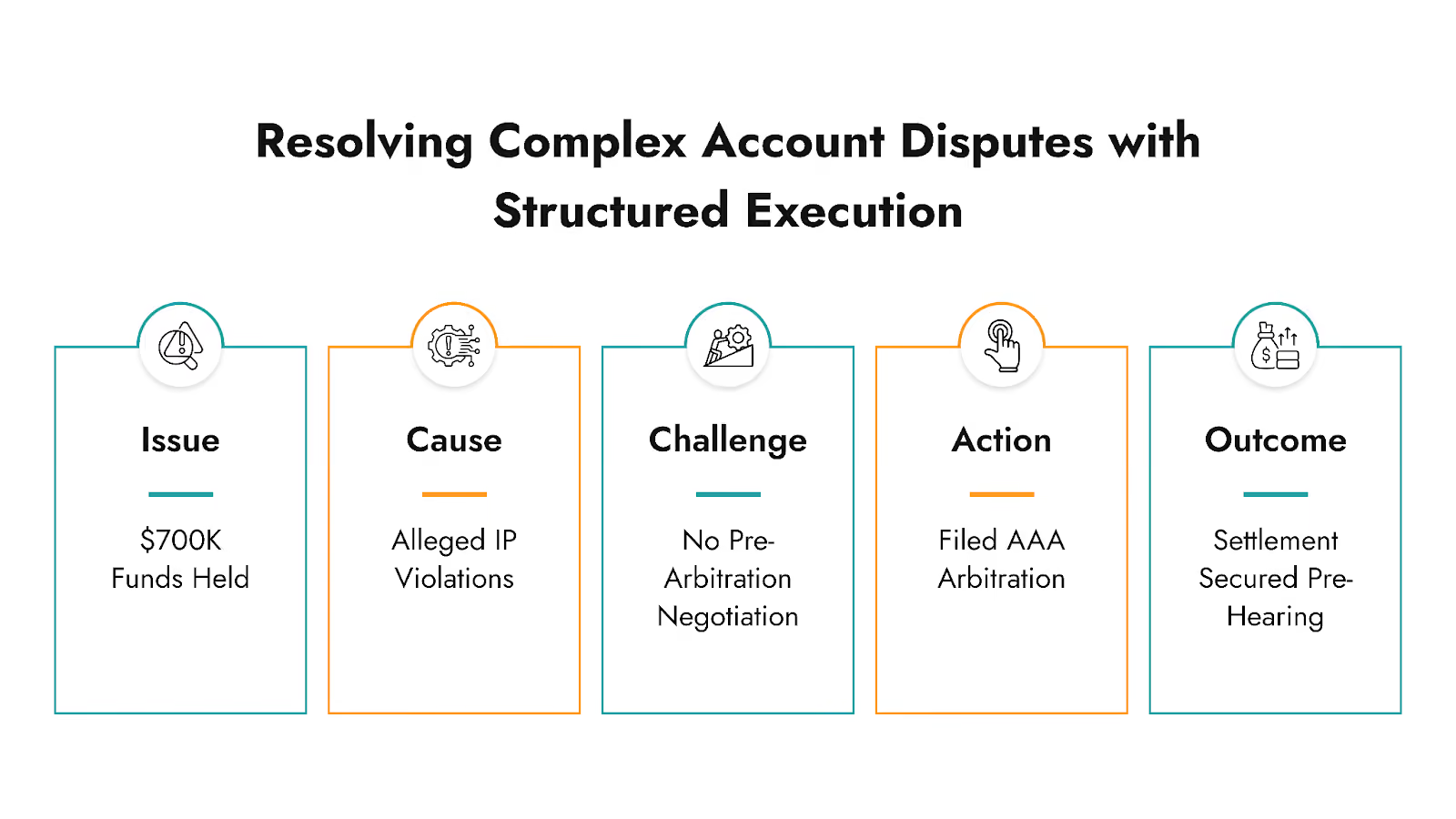
A large seller in Canada had approximately $700,000 in funds held due to hundreds of alleged IP violations. When Amazon refused to negotiate pre-arbitration, we filed for AAA arbitration.
Once the “meter was running” in formal arbitration, Amazon’s counsel ran their own risk-adjusted analysis. They approached us with a settlement offer just days before the evidentiary hearing. Following three rounds of negotiations, we reached an agreement that the client was satisfied with.
The Power of Cross-Examination: Exposing the Machine
The turning point in AAA arbitration is often the cross-examination of Amazon’s witness. These witnesses are internal risk managers, not entrepreneurs. Their understanding of “selling on Amazon” is often limited to rigid competencies.
Case Study 3: The Inauthentic Logic Failure
In an arbitration case involving an alleged inauthentic skincare product, we forced Amazon’s witness to admit they never conducted a test buy or notified customers of the alleged inauthentic products Amazon had sold and shipped to them.
We used Amazon's own transaction reports to show they continued shipping the products after the suspension. If they truly believed the products were counterfeit and dangerous, why ship them? Arbitrators notice when enforcement logic contradicts operational behavior.
Why Smaller Sellers Struggle to Use AAA Arbitration
A significant challenge within the Amazon dispute framework is the "threshold of entry" for smaller claims. Because the BSA mandates individual AAA proceedings for each account and explicitly prohibits class actions, sellers with damages under $60,000 often find themselves in a strategic vacuum. In these instances, the administrative and legal costs of professional-grade arbitration can quickly eclipse the total amount in dispute.
However, the landscape is shifting. To address this "justice gap," new models are emerging that leverage technological infrastructure to aggregate and manage smaller claims at scale. By automating the data synthesis and legal filing processes, it is becoming increasingly possible to introduce these smaller claims into the legal pipeline efficiently. This democratization of access to the AAA ensures that smaller brands are no longer forced to accept capital or inventory losses simply because the math of a traditional legal fight doesn't align.
The Strategic Risks of Self-Representation in Amazon Disputes

Technically, AAA rules allow a “pro se” (self-representation) filing, but for a 7 or 8-figure brand, this is dangerous:
- The Discovery Trap
Amazon’s counsel will request years of internal communications and sales data. Without an attorney, you may inadvertently disclose sensitive data or fail to meet legal requirements.
- The “One Shot” Reality
Arbitration awards are generally final. If you fumble a cross-examination or the entire case, you cannot simply try again.
- Asymmetric Skill
Amazon’s counsel are experts at defending their BSA, policies, and enforcement actions. You will be expected to argue complex legal theories against professionals.
While the Amazon arbitration process allows pro se filings, navigating AAA arbitration without experienced counsel introduces significant procedural and strategic risks.
Understanding AAA B2B Arbitration Trends and Timelines
While past Amazon cases are confidential, 2024 AAA B2B data provides a necessary benchmark:
- Total Claims: AAA B2B claims in 2024 exceeded $21 billion.
- Settlement Rate: 46% of B2B cases settle before an award.
- Timeline: For claims of $1 million+, the median time to award is 19.1 months, significantly faster than the 31.6-month median in U.S. District Courts.
These numbers show why many businesses choose AAA arbitration. Cases often settle before a final decision, and when they do go to an award, arbitration can move faster than a typical court case.
As you scale toward 8- and 9-figure levels, legal literacy is infrastructure. Before you commit to the fight, ask yourself: Can I prove every dollar? Is my attorney sharing the risk? Does the math justify the fight?
If the answer is yes, you are making a business decision. Walk into that moment informed, strategic, and disciplined. That difference determines outcomes.
This article is for educational and informational purposes only and does not constitute legal advice, nor does it create an attorney–client relationship.
Frequently Asked Questions
Will Amazon blacklist me?

We have never seen Amazon take retribution or blacklist a seller for filing an arbitration for funds or reimbursements.
Can I recover attorney fees?
Arbitrators have discretion to award fees, but it is never a guarantee.
Can I recover lost profits?
No, you sign away the right to lost revenue or profits under the BSA.
How long does it take?
Median time for large claims is 19.1 months. Our internal data shows a range from 6.9 to 25.2 months, depending on complexity.