


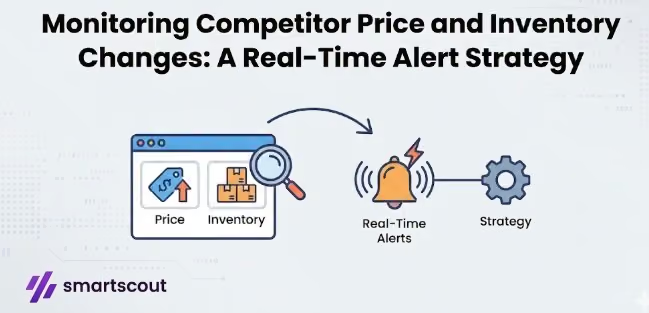
The Importance of Brand-Level, Data-Driven Amazon Research
Successful Amazon sellers rely on data-driven insights to inform every decision. Analyzing performance at the brand level (rather than just individual ASINs) can reveal the full story behind a business’s presence on Amazon. By looking at how an entire brand performs, sellers and analysts can uncover strategic patterns that single-product views might miss. This brand-focused perspective is crucial because it highlights macro trends: which brands are gaining or losing momentum, how they handle stockouts or pricing changes, and where opportunities lie. Ultimately, brand-level research provides a 360-degree view of Amazon’s marketplace dynamics, enabling more confident and data-backed decisions for growing revenue and market share.
Crucially, data-driven research empowers teams to move beyond gut feelings. Hard numbers on sales ranks, price history, inventory availability, and buyer behavior allow Amazon brand managers and operational analysts to react faster, optimize better, and outmaneuver the competition. For example, if you know a competing brand’s sales spiked after a price drop last quarter, or that they struggle with frequent stockouts, you can proactively adjust your own strategy. Data shines light on hidden patterns – like seasonality in demand or emerging competitors – that a purely anecdotal approach would overlook.
In short, brand-level data is the foundation of modern Amazon strategy. It’s the difference between guessing at what might drive growth versus pinpointing exactly where to act.
The Need for Real-Time Competitive Monitoring
While historical data and high-level brand insights are invaluable, the Amazon marketplace changes by the hour. Prices on Amazon can update every few minutes in response to demand, Amazon’s own adjustments, or competitor actions. Inventory status is equally fluid – a top seller might run out of stock overnight, or a new competitor might suddenly enter the market. For brands vying to maximize revenue and Buy Box share, real-time monitoring of competitor prices and inventory is becoming mission-critical. Amazon itself advises sellers to “keep tabs on the lowest price in the Amazon store” and watch the competitive landscape closely as part of a smart pricing strategy. In practice, this means continuously tracking what your rivals are charging and whether they’re in stock.
The reason timeliness matters is simple: if you detect a competitor’s move late, you’ve likely already lost sales or margin. Consider a scenario where a direct competitor launches a surprise 20% off sale on a popular item. If you only review prices weekly, you might miss two or three days of undercut pricing – enough time for shoppers to flock to the cheaper offer. By contrast, a seller who gets an alert within minutes of that price drop can respond immediately (e.g. matching the price, or highlighting their product’s extra value) and retain competitiveness. Inventory shifts have similar urgency. If a rival brand’s top product goes out of stock this afternoon, that’s a golden window for you to capture their would-be buyers – but only if you know about it right away. Real-time alerts that a competitor has stocked out enable you to raise your price slightly or ramp up advertising to capture demand in their absence.
In essence, an effective Amazon strategy now demands both broad data analysis and live monitoring. The broad analysis (e.g. a brand’s overall pricing trends or average stockout rate) guides long-term tactics, while real-time monitoring fuels rapid reactions day-to-day. Together, they help protect your sales and even turn competitor missteps (like a stockout) into your opportunity. Next, we’ll explore how sellers can actually implement these monitoring and alert systems.
Data Sources and Tools for Tracking Prices and Inventory
Achieving real-time awareness of competitor moves might sound daunting, but a combination of Amazon’s own data feeds and third-party tools makes it feasible. Let’s break down the key data sources and tools for tracking competitor price changes and inventory levels on Amazon:
- Amazon’s Notification API (SP-API) – Amazon has introduced a Selling Partner Notifications API that provides near real-time data on certain events. For example, the “AnyOfferChanged” notification will alert you whenever one of the top offers on a listing changes – including when a competitor changes their price or when the Buy Box winner switches. These notifications are first-party data direct from Amazon, delivered almost instantly, so sellers no longer need to manually refresh pages or rely on stale reports. By tapping into this API (often via an integration or a third-party service), a brand can automatically get updates the moment a competitor undercuts their price or a new seller enters with a different offer. Likewise, Amazon’s notifications include an “ItemInventoryLevel” and “FBAInventoryAvailability” event for inventory changes, which provide snapshots when stock levels change or an item goes out of stock. In short, Amazon is giving attentive sellers the hooks to know immediately about price and stock changes that could impact their business.
- SmartScout’s Brand and Buy Box Tools – Third-party platforms like SmartScout aggregate massive amounts of Amazon marketplace data and present it in a user-friendly way. SmartScout in particular shines at brand-level intelligence. Using SmartScout’s Brands Database and dashboards, you can pull up a complete breakdown of a competitor brand, including which sellers carry their products, historical pricing trends, and even metrics like how often Amazon (the retailer) ran out of stock on that brand’s items (via metrics such as Amazon OOS%). The Buy Box History feature in SmartScout provides a complete historical view of who’s selling a product, how prices have fluctuated over time, and which strategies led to Buy Box wins. While this is historical rather than instant data, it’s incredibly useful for spotting patterns – for instance, if you see that a competitor tends to drop their price at the end of each quarter to hit sales goals, you can anticipate and prepare for that. SmartScout essentially turns raw data into a competitive storyline: you can see “every seller, every price change, every Buy Box win” in one place. For inventory, SmartScout’s data will show how many sellers are on a listing and can even highlight when Amazon Retail (1P) is out of stock on a brand’s product. These insights enable more informed alert rules – for example, you might set a trigger if SmartScout’s data shows a usually well-stocked competing product suddenly has zero sellers (indicating a likely stockout scenario).
- Competitive Price Trackers & Alerts – Beyond Amazon-specific tools, there are general e-commerce price tracking services that monitor websites (including Amazon listings) and send alerts on changes. Modern price tracker software often tracks both pricing and stock availability by scraping Amazon pages or using APIs. Some services allow you to monitor a set of ASINs and get an email or SMS whenever a price changes or an item’s availability status changes. This can be useful if you want a quick-and-dirty alert system without deep integration – though such tools might not scale to a large catalog. More sophisticated platforms visualize historical trends and even recommend pricing actions based on the data. The key is ensuring whichever tool you use, it’s configured to check frequently (many times per day) given how fast Amazon’s marketplace moves.
- Manual Methods (Limited Use) – It’s worth mentioning that some sellers still use manual tricks like the classic “999 cart” method to check competitor stock. The 999 trick involves adding an unusually large quantity of a competitor’s product to your Amazon cart to see how many units are actually available. If the seller has, say, 50 units left, Amazon will usually adjust your cart quantity to 50, effectively revealing their stock. This can be a quick way to gauge a competitor’s inventory in a pinch or on a small scale. However, it has many limitations: most savvy sellers now set maximum order quantities to block this, and if stock is above 999 you won’t get an exact number anyway. Manual checks are also labor-intensive and not real-time. In the fast-paced environment we’ve described, a purely manual approach will likely lag behind. That’s why serious brands invest in automated tracking – whether through the Amazon APIs, SmartScout’s platform, or other software – to ensure no critical change goes unnoticed.
Building a Real-Time Alert Strategy
Having raw data on price and inventory changes is only half the battle. The real magic lies in translating those signals into actionable alerts and a playbook for responding. A robust real-time alert strategy for Amazon should include:
- Defining Key Alert Triggers: Decide which events warrant an immediate notification to your team. Common triggers include:
- Competitor Price Drop – e.g. if a specific competitor’s price falls below your price (or below your minimum margin threshold) on a comparable product.
- Buy Box Loss – if you are the brand owner or a seller on a listing and suddenly lose the Buy Box to another seller due to a price change or other factor.
- Competitor Stockout – if a major competitor’s item goes from in-stock to out-of-stock status.
- New Entrant – if a new competitor product appears in your category, or a new third-party seller jumps onto one of your product listings (potentially signaling future price competition).
- Unusual Demand Spike – if your sales velocity suddenly jumps (possibly because a competitor ran out of stock, handing you extra sales), you might want an alert to investigate why.
- Competitor Price Drop – e.g. if a specific competitor’s price falls below your price (or below your minimum margin threshold) on a comparable product.
- Choosing Alert Channels: Determine how alerts will reach you immediately. Many Amazon teams use a combination of channels: Email & SMS – use direct notifications for urgent issues (for instance, a text message if a top listing loses the Buy Box); Slack/Teams – pipe alerts into a shared chat channel for instant team visibility; Live Dashboards – maintain a screen showing up-to-the-minute competitor prices and stock status for your key products, which is especially handy during peak times or promotions.
- Automating the Monitoring: Whenever possible, let software do the watching. Use the Amazon SP-API notifications or SmartScout’s data feeds to automatically check conditions and trigger your alerts. For example, you might deploy a small script or AWS Lambda function that listens for an “AnyOfferChanged” event and evaluates if the new price falls below your threshold – if so, it sends out an alert with details. If you’re less technical, leverage tools with built-in alerting capabilities (some platforms can email you if a tracked ASIN’s price moves outside a defined band, etc.). The goal is to avoid relying on a person constantly refreshing pages. Humans should step in when it’s time to strategize and act, not just to detect changes.
- Developing a Response Playbook: An alert is only valuable if you know how to respond. Pre-plan the actions for each type of alert so your team can execute quickly. For instance:
- If you get a competitor price-drop alert, your playbook might say: check our own price and profit margin for that product. If we can match or beat the new price and still profit, adjust our price immediately (manually or via a repricing tool). If we cannot drop price profitably, consider emphasizing differentiation (e.g. bundle value, superior reviews) or temporarily shifting ad spend toward other products until the price war passes.
- If a competitor stockout alert comes in, plan to capitalize: you could temporarily increase your price by a small percentage (since customers have fewer options, you can capture more profit), and boost advertising for that product to capture searches that would have gone to the competitor. Additionally, ensure your own inventory is sufficient – if you’re also running low, expedite replenishment to avoid missing the opportunity.
- If you lose the Buy Box, identify who took it and why. If it’s due to price, consider matching within your profit limits (Amazon’s own Pricing Health notification flags when your offer is too high to win the Buy Box); if it’s due to an unauthorized seller undercutting you, enforce your pricing policy via Amazon Brand Registry or other compliance channels.
- If a new competitor appears, quickly assess their offer (price, reviews, fulfillment method). Use your tools to size up their sales and reputation; then decide if they pose a serious threat requiring a price or marketing response, or just a minor player you can monitor for now.
- If you get a competitor price-drop alert, your playbook might say: check our own price and profit margin for that product. If we can match or beat the new price and still profit, adjust our price immediately (manually or via a repricing tool). If we cannot drop price profitably, consider emphasizing differentiation (e.g. bundle value, superior reviews) or temporarily shifting ad spend toward other products until the price war passes.
Conclusion: Staying Ahead with Data-Driven Agility
Monitoring competitor price and inventory changes in real time has moved from a nice-to-have to a must-have for brands on Amazon. When decisions are backed by live data, brands can safeguard their revenue and even turn adversity into advantage. A competitor’s sudden price drop or stock outage is no longer a crisis – it’s simply an alert on your screen and a prompt for a well-rehearsed response. By investing in the right tools (like Amazon’s notification feeds and SmartScout’s rich brand-level data) and crafting a clear alert-and-response strategy, sellers can maintain an agile, proactive stance in a marketplace that never sleeps.
Finally, remember that technology and data are enablers; sound strategy still comes from human insight. It can be immensely valuable to have experienced partners help interpret the data and refine your approach. Many successful Amazon brands choose to work with specialized agencies like Skale Strategy to implement sophisticated monitoring systems and competitive response plans. These experts bring both the tools and the know-how to ensure no competitor move goes unnoticed and no opportunity is left on the table. By combining granular data with savvy strategy – whether in-house or with a trusted partner – your brand can not only monitor the Amazon competition in real time, but consistently stay one step ahead.


