


Active eBay listings only tell you what sellers are hoping to get. Sold listings tell you what buyers actually paid, which is the number that matters when you are pricing an item, sizing up demand, or deciding whether something is worth sourcing.
eBay keeps this data a few clicks out of the way, so this guide walks through every reliable method to see sold items, on desktop and mobile, how to view your own and a competitor's sales, how to reach data older than 90 days, and how to read the results without fooling yourself.
Key Takeaways
- Sold listings show what buyers actually paid, making them far more useful for pricing and product research than active listings.
- Use the "Sold Items" filter on eBay desktop or mobile to quickly view completed sales and identify realistic market prices.
- Completed listings include both sold and unsold items, while sold listings show only successful transactions.
- Standard eBay sold data is limited to about 90 days, but Terapeak Product Research provides historical sales data going back 1–3 years.
- When evaluating sold data, focus on average price ranges, sell-through rates, shipping costs, and recent sales trends rather than individual high-priced outliers.
Why Sold Listings Beat Active Listings?
It is tempting to price an item by glancing at what is currently listed, but active prices are wishes, not sales. Plenty of listings sit unsold for weeks at optimistic prices. Sold listings show the real, completed transactions: the final price, whether shipping was included, and when the sale happened.
For a seller, that is how you set a price that actually moves. For a buyer, it is how you avoid overpaying. For anyone sourcing inventory, it is the difference between a hunch and a decision.
Sold vs Completed Listings: What Is the Difference?
These two filters look similar and trip up a lot of people. Completed listings are every listing that has ended, whether or not it sold. Sold listings are only the ones that ended in a sale.
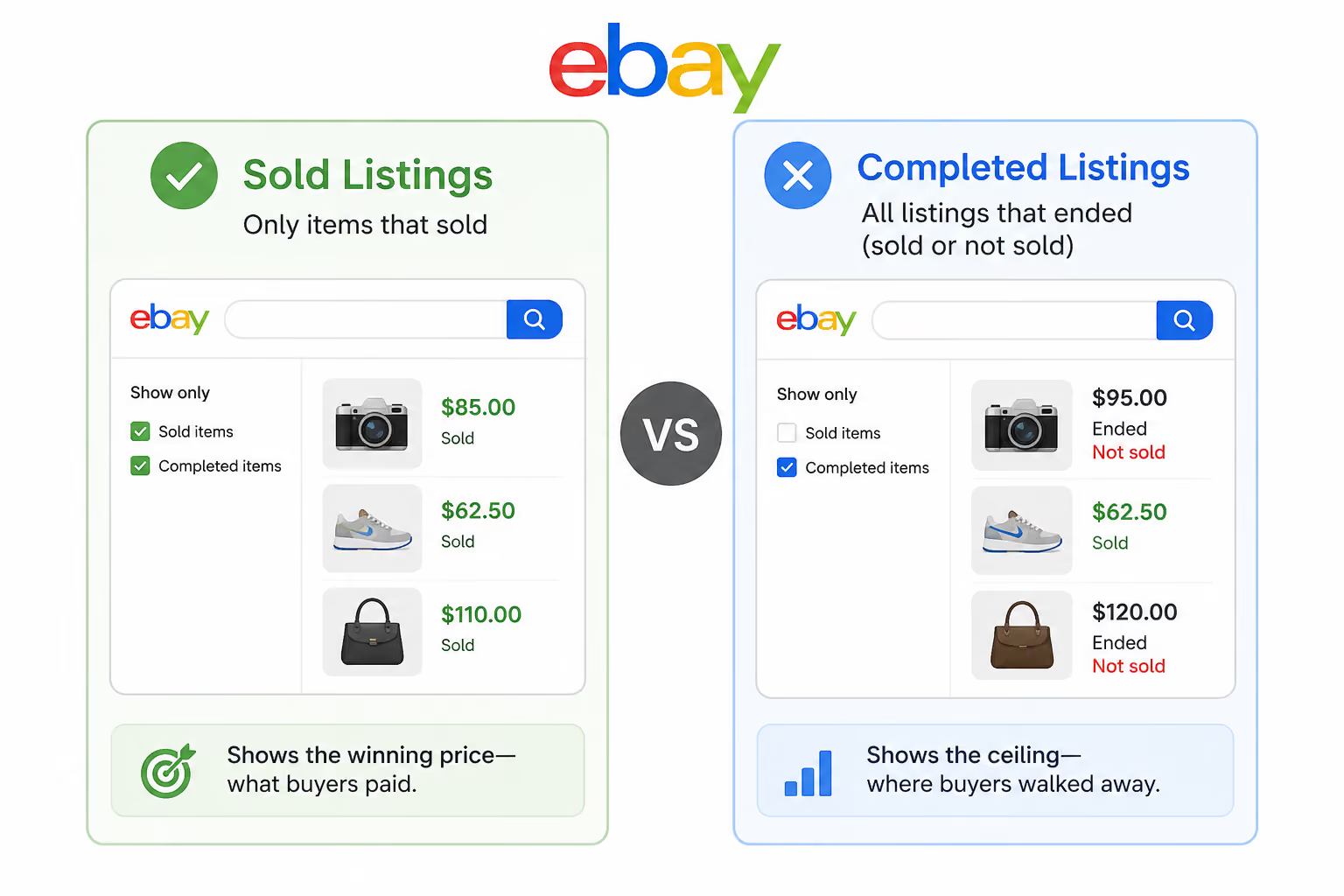
When you tick "Sold items," eBay usually switches on "Completed items" too, but it is worth viewing completed listings on their own sometimes. If you see a price point where lots of listings ended without selling, that price is likely too high. Use sold listings to find the winning price, and completed listings to find the ceiling buyers walked away from.
How To See Sold Items on eBay (Desktop)
The quickest method lives right in the search results, with no special page and no need to be logged in.
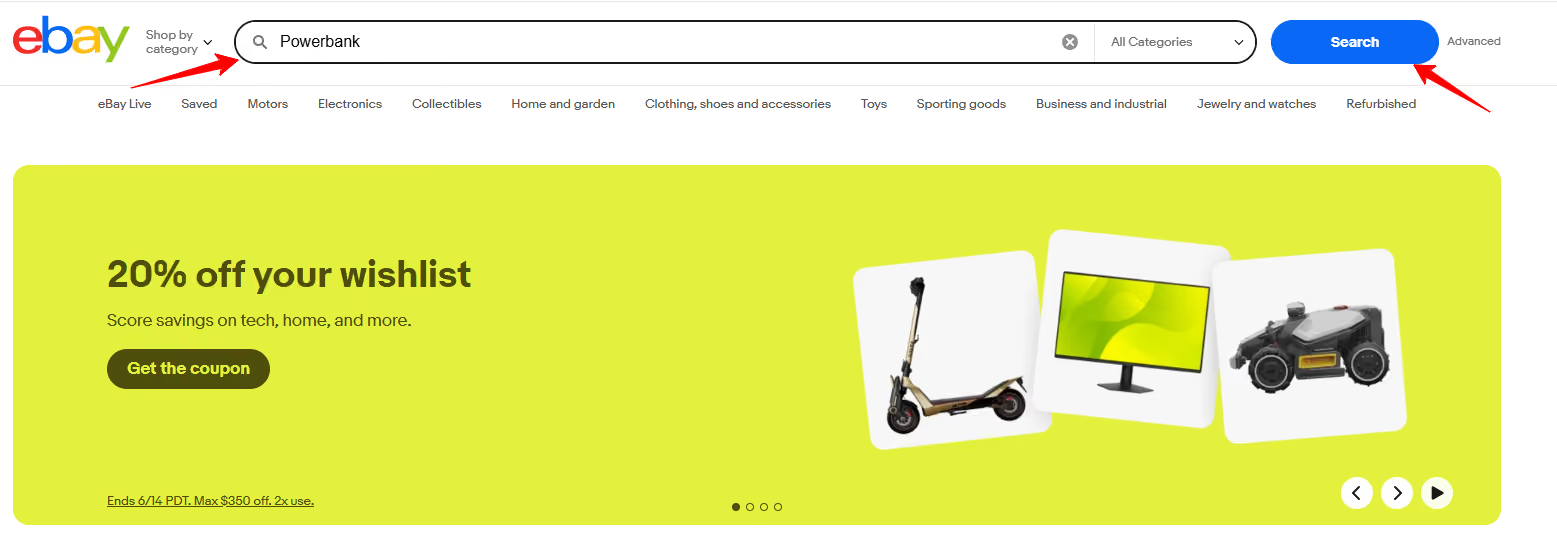
Step 1. Type the item you want into the eBay search bar and hit search.
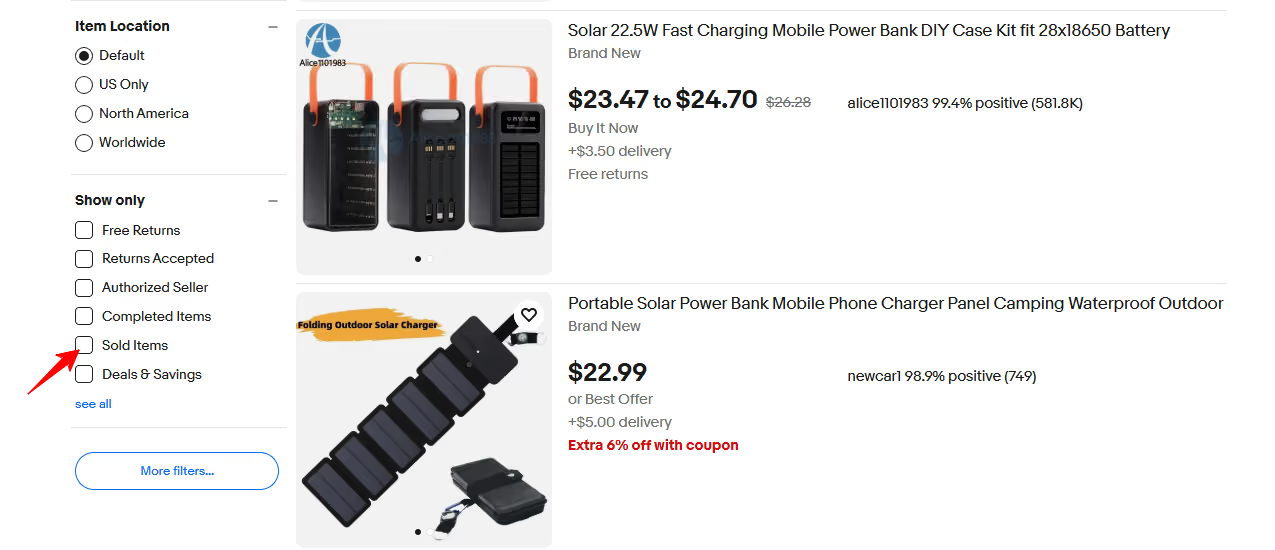
Step 2. On the results page, look at the filter sidebar on the left. Scroll to the "Show only" section and check "Sold items." That also unlocks "Completed items."
Step 3. The page reloads, showing only sold listings, each with its final sale price highlighted.
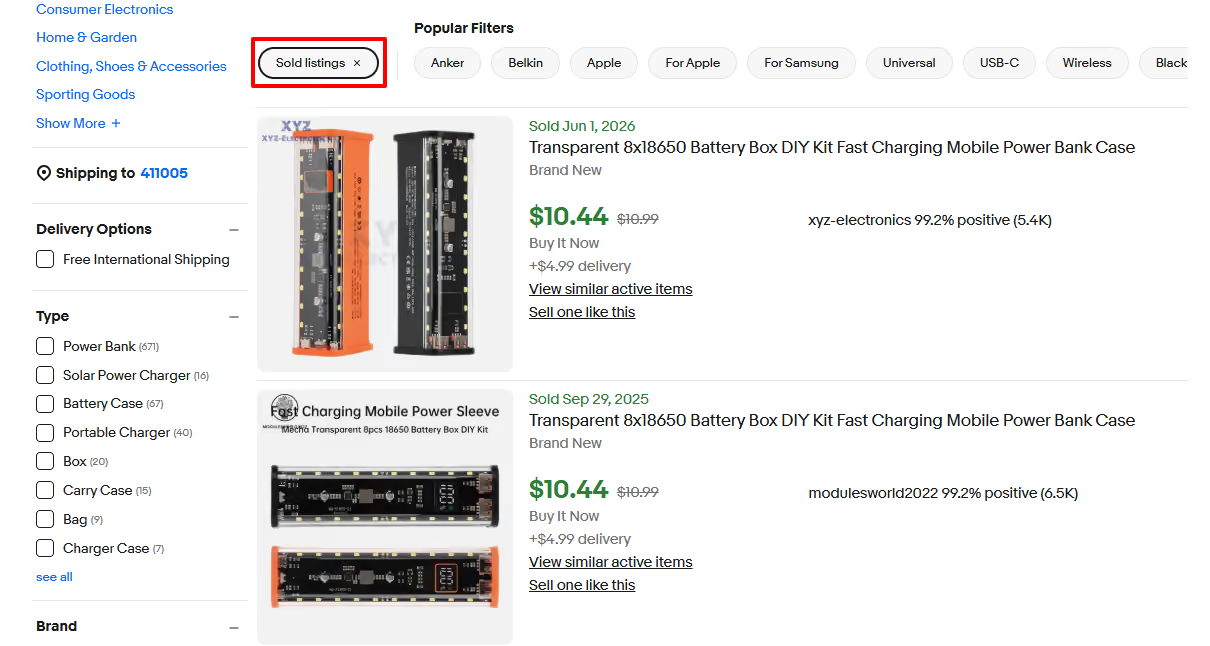
Sort by price or recency, and add filters such as condition or price range to tighten the comparison.
Always match the condition and the exact model or variant of what you are researching. A sold price for a brand-new unit tells you very little about a used one.
How to Use eBay Advanced Search for Sold Items?
If you want more control over the filters, the Advanced Search page does the same job with extra options.
- Click "Advanced" next to the search button.
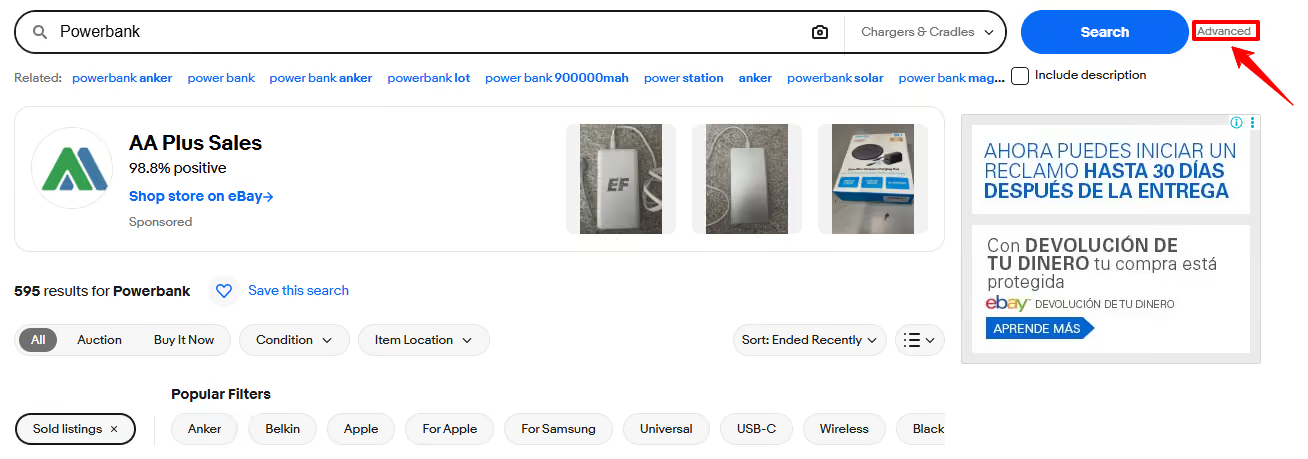
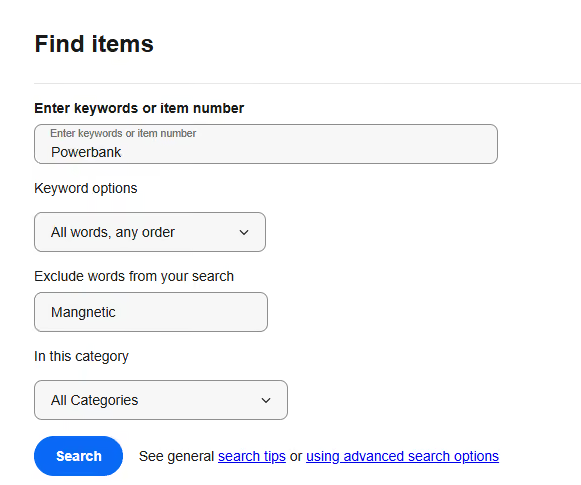
- Enter your keywords, then tick "Sold listings" (and "Completed listings" if you also want unsold results).
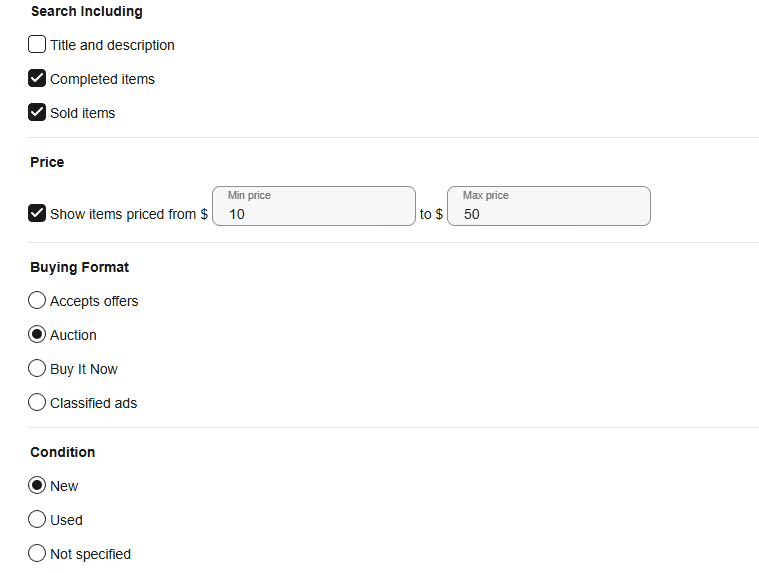
- Add filters such as category, price range, condition, or location, then search.
One limit applies to both this method and the sidebar filter: eBay's public sold data only goes back about 90 days. For anything older, you will need Terapeak, covered further down.
The URL Shortcut for Power Users
Once you have an eBay search results page open, you can force it to show sold items by editing the web address.

Add &LH_Sold=1 for sold listings, or &LH_Complete=1 for all completed listings, then press enter. It is a fast trick once you run a lot of comparisons, and it makes sold-item searches easy to bookmark and reuse.
How To See Sold Items on the eBay App (Mobile)
The mobile flow is slightly different but takes seconds, which makes it ideal when you are shopping in a store.
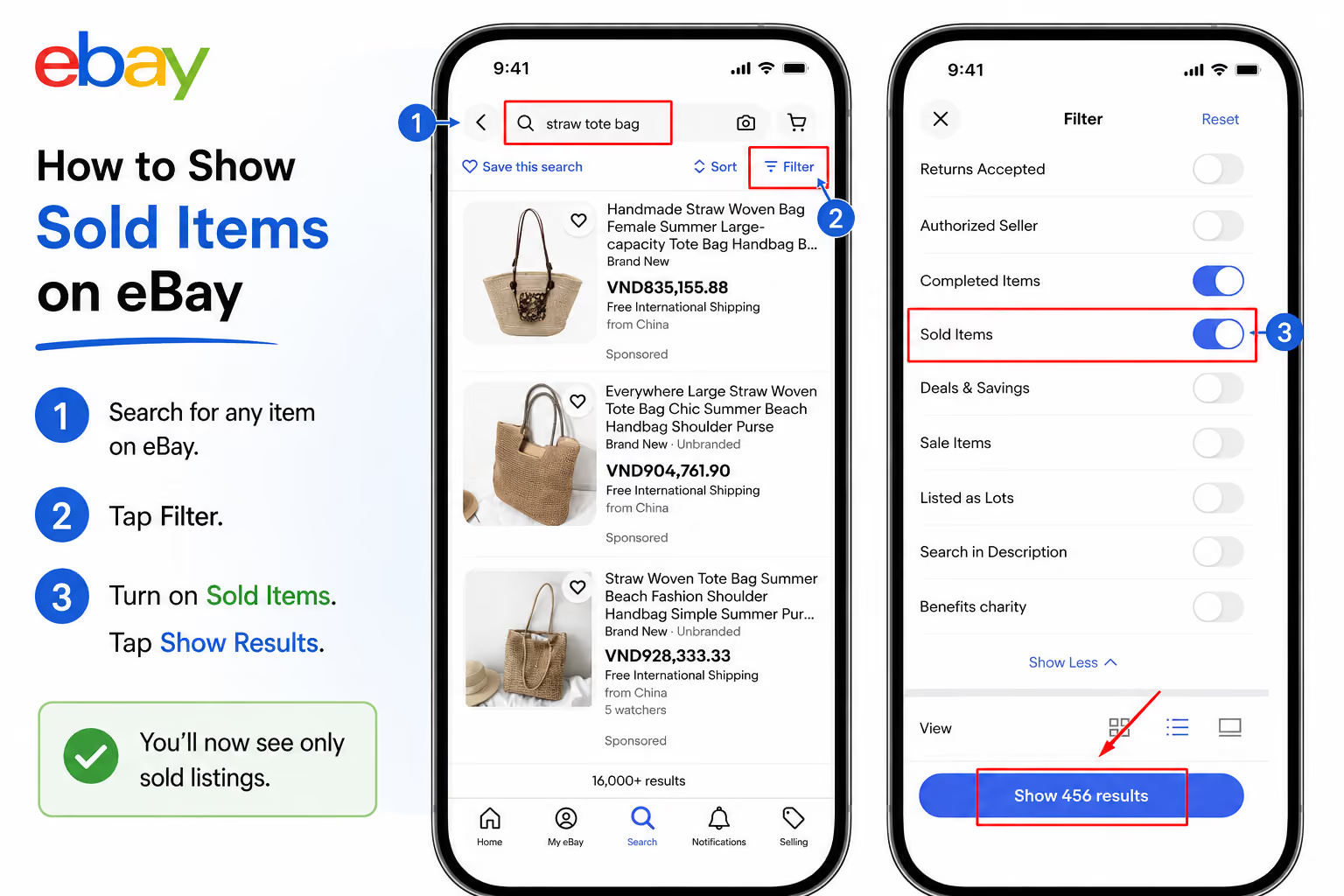
1. Search for your item in the app as usual.
2. Tap "Filter" in the top right.
3. Scroll down and tap "Show More."
4. Toggle "Sold Items" on. "Completed Items" turns on alongside it.
5. Tap "Show Results." Final prices appear in green, and "Sort" lets you order by date or price.
How to See Your Own Sold Items on eBay?
Researching the market is one thing, but you will also want to review your own sales history for restocking and repricing. Open Seller Hub and go to the Orders tab, where your sold orders live.
Unlike the public search, your own history reaches back well past 90 days, and you can filter by date, order status, and buyer. On mobile, tap the "Selling" tab and open "Sold." This is the fastest way to see which of your products repeat, what they sold for last time, and what is worth listing again.
How To See a Specific Seller's Sold Items
Watching a competitor's sales is one of the most useful moves in product research. There are two simple ways to do it. In Advanced Search, type the seller's username into the "Sellers" field and tick "Sold listings."
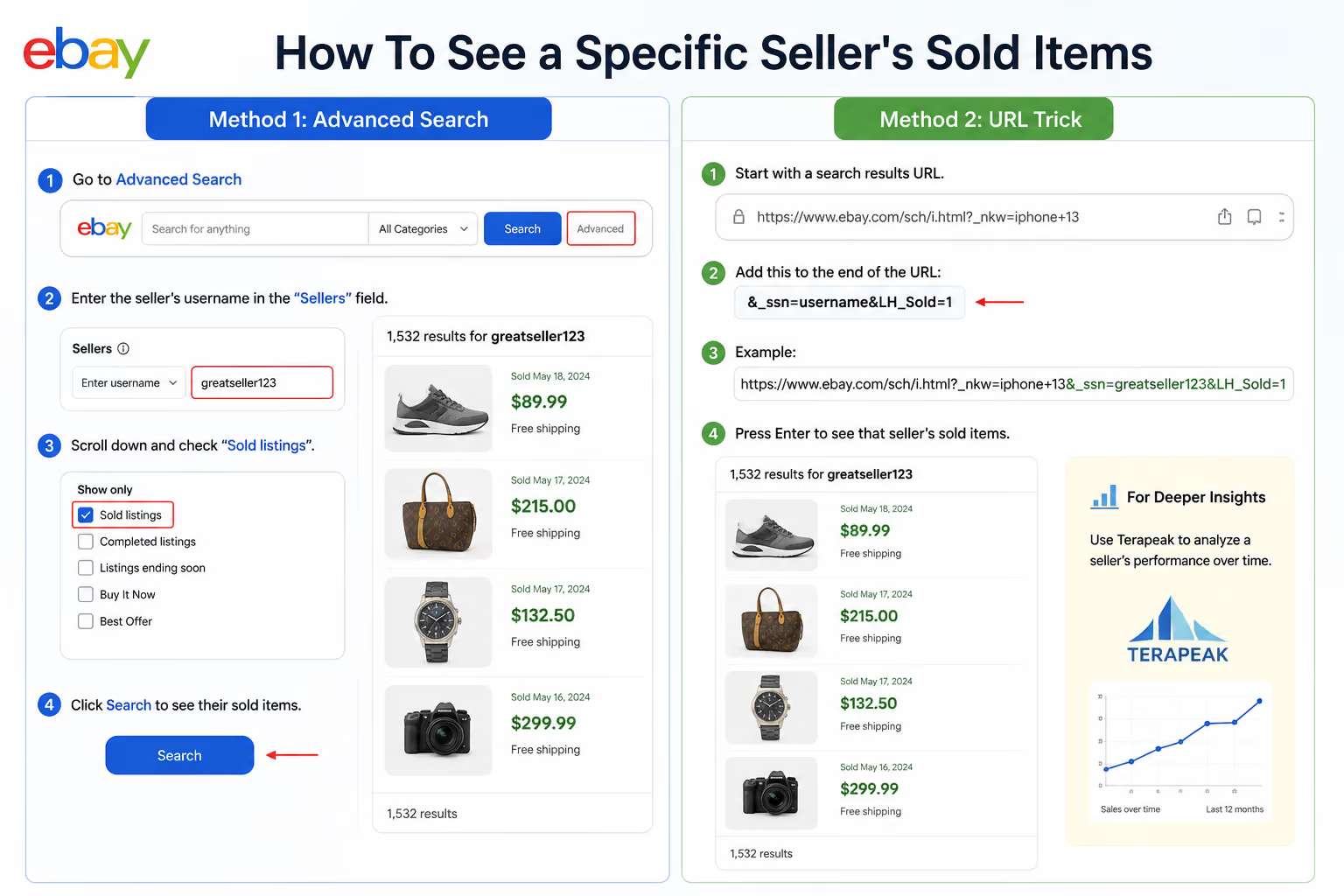
Or, using the URL trick above, append &_ssn=username&LH_Sold=1 to a search results address, swapping in their username. Either approach shows which of their items are actually moving and at what price. For a deeper view of a competitor's performance over time, Terapeak breaks the same data down by seller.
How To See Sold Items Older Than 90 Days (Terapeak)
When you need history beyond the 90-day window, eBay's own research tool, Terapeak Product Research, is the answer.
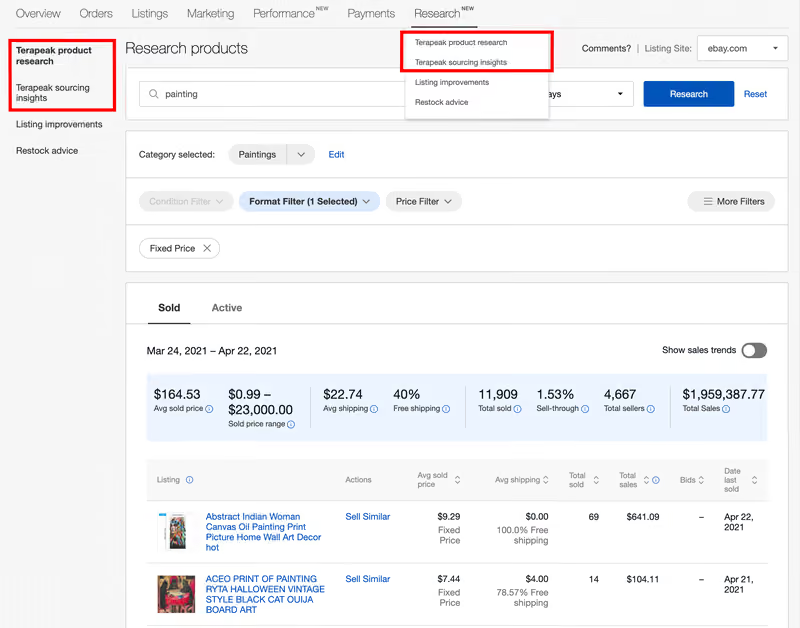
You will find it in your Seller Hub under the Research tab. Depending on your eBay Store subscription, it reaches back roughly one to three years and goes deeper than standard search:
- Actual sold prices over time, including amounts accepted through Best Offer
- Sell-through rate, so you see how often an item sells, not only for how much
- Average shipping cost buyers paid
- Demand trends and seasonality across a longer period
Most experienced sellers use the quick search filters for a fast gut check and Terapeak for the deeper analysis before committing money to inventory.
What You Can and Cannot See in a Sold Listing
It helps to know exactly what the data does and does not reveal, so you do not draw the wrong conclusion. You can see:
- The final sale price and the date the item sold
- Item condition, quantity sold, and the shipping cost
- The listing format, auction or Buy It Now, and for auctions the number of bids
What stays hidden:
- The buyer's identity. eBay anonymizes usernames, so you can see the sale but never who bought it.
- Exact Best Offer amounts. A standard sold listing often shows the list price with a "Best offer accepted" note rather than the real figure. Terapeak is where you see the actual accepted price.
How To Price Your Items Using Sold Data
Sold listings turn pricing from guesswork into a quick, repeatable calculation. Here is the workflow:
1. Pull 10 to 20 recent sold comps in matching condition for the exact item.
2. Throw out the highest and lowest as outliers. The cluster in the middle is your realistic market value.
3. Subtract your costs to find your true take-home: eBay and payment fees run roughly 13 to 15% plus a small per-order fee in most categories, on top of your shipping cost.
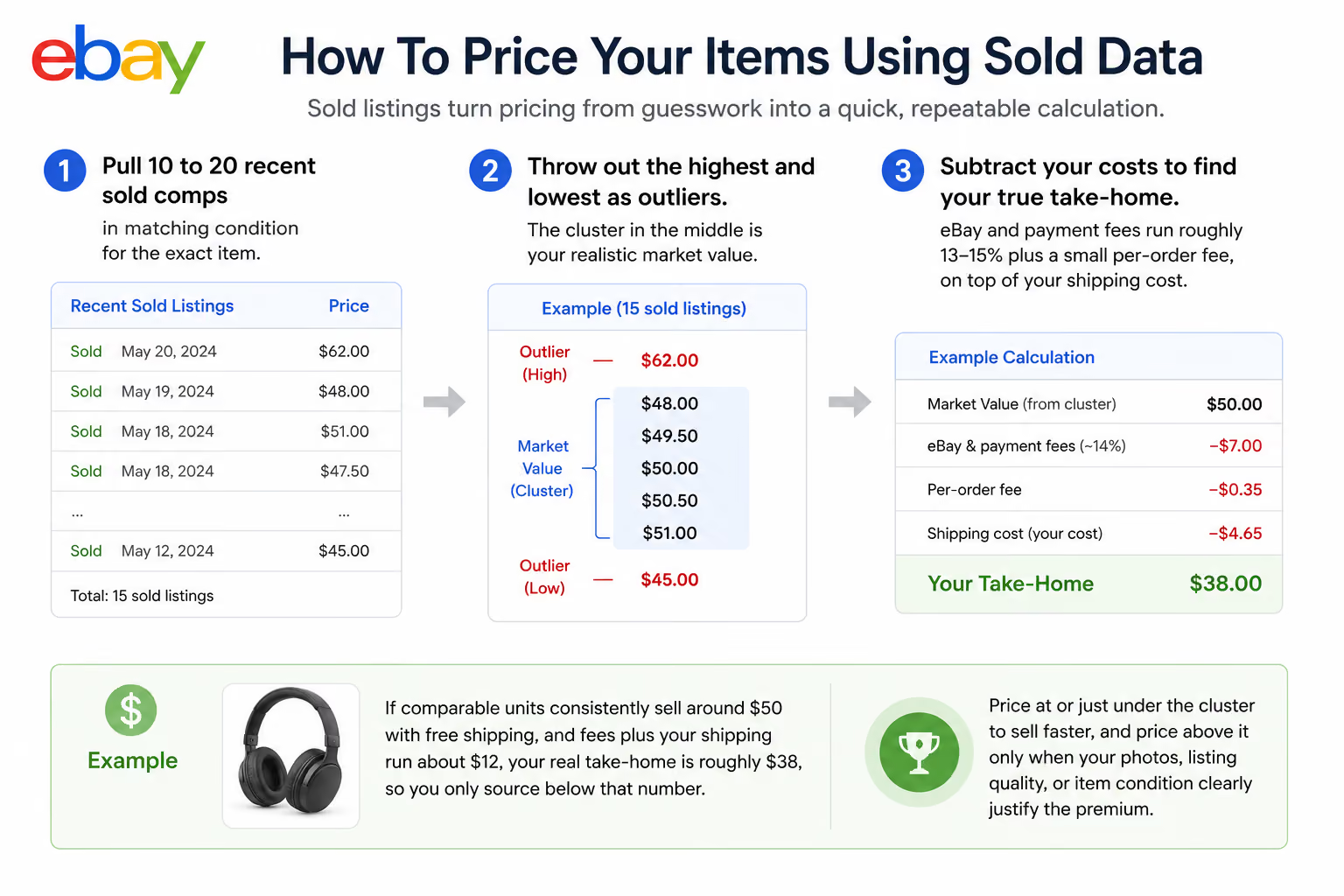
As a quick example, if comparable units consistently sell around $50 with free shipping, and fees plus your shipping run about $12, your real take-home is roughly $38, so you only source below that number. Price at or just under the cluster to sell faster, and price above it only when your photos, listing quality, or item condition clearly justify the premium.
Using Sold Data for Product Research and Sourcing
For resellers, sold data is the foundation of every buying decision. Price is only half of it. Watch the sell-through rate, the share of listings that actually sell, and how frequently recent sales appear, because an item that sells often at a fair price beats one that sells rarely at a great one.
This is what makes the mobile method so handy for retail and online arbitrage: scan an item in a store, check its sold comps and how fast they move, and buy only when the spread covers your fees and effort.
One note for cross-platform sellers. eBay sold comps tell you what something sells for on eBay, but not whether the same product is worth selling elsewhere. If you also resell on Amazon, that is a separate question of demand and post-fee margin, and a tool like SmartScout with its FBA Calculator answers it. If your business lives only on eBay, the methods above are all you need.
How To Read eBay Sold Data Without Fooling Yourself
Pulling up sold listings is the easy part. Reading them well is what protects your margin. A few habits keep you honest:
- Look at the range, not one sale. A single high price is often a fluke; the middle cluster is the truth.
- Factor in shipping. A $40 sale with free shipping is not the same as $40 plus $12 shipping. Compare total cost to the buyer.
- Weigh sell-through, not just price. Ten sales last month at a fair price beats one sale at a great price.
- Mind recency and seasonality. Prices for electronics, fashion, and collectibles drift, so favor recent sales and watch the dates.
- Ignore the outliers. Bundles, rare variants, parts-only units, and obvious mispricings distort the picture.
Common Problems and Quick Fixes
If the sold data is not behaving, it is almost always one of these:
- No results at all: you usually need a keyword first, since eBay will not show sold items for an empty or overly narrow search. Loosen filters and try a broader term.
- Nothing older than three months: that is the 90-day limit doing its job. Switch to Terapeak for history.
- The filter will not stick: clear your browser cache or use the desktop site, which exposes the full filter set more reliably than some mobile views.
Frequently Asked Questions
Do I need an eBay account to see sold items?
No. The search-filter method works without logging in. You only need an account, and a Store subscription for the full Terapeak tool, to reach the deeper research features.
How far back can I see sold items on eBay?
About 90 days through standard and advanced search. For older sales, Terapeak Product Research extends that to roughly one to three years depending on your subscription.
Can I see who bought an item?
No. eBay anonymizes buyer usernames, so you can see the sale, price, and date, but not the buyer's identity.
Can buyers see sold listings, or only sellers?
Both. The sold-items filter is public and works the same whether you are researching a fair price as a buyer or pricing inventory as a seller.
Are eBay sold prices reliable?
Yes, because they reflect real completed sales rather than asking prices. Just remember to factor in shipping, and that exact Best Offer amounts may be hidden outside Terapeak.


