It’s starting to get cold up here, so we’re ready to move to warmer climates. Conveniently enough, we’ve added the final piece of the Amazon North American trifecta: Amazon Mexico data is now on SmartScout! We’ve also added Spanish as a language available inside of SmartScout, and our customer service team is already staffed with fluent Spanish speakers.
Choose whichever language is better for you by selecting it from the bottom left corner of the tool.
For our regular subscribers who want to learn more about Mexico and how it can help grow your sales, skip to our “top things to know” section.
If you’re new to SmartScout, here’s a quick snippet about what we do and how that can help your Amazon business: SmartScout gives Amazon sellers a bird’s eye view of the entire Amazon marketplace. You can use our Categories, Subcategories, Brands, and Products tools to identify key markets and brands to invest in, our Traffic tools to improve advertising, and our Sellers tool to either see what your competition is up to, or offer your services to them!
If you want to learn more about how SmartScout can help you specifically, put your mouse over “Why SmartScout?” at the top of the page. Select what you do on Amazon, and we’ll be happy to explain how we can serve you.
Here Are the Top Things To Know About Amazon.com.mx
The most important thing to know is that unlike much of the world, Amazon is not the dominating online marketplace. Depending on whose traffic or sales estimates you go by, the biggest ecommerce platform is Mercado Libre, an Argentinian company.
Part of the reason for Mercado Libre’s success is its Latin American background, and how its ancillary businesses have driven growth. In Latin America, only about 55 percent of the population has bank accounts (versus more than 90 percent in countries such as the United States, the UK, and Spain). It was much lower before the pandemic, as low as 30 percent in some regions. Just as Amazon has used Prime memberships and AWS to establish a loyal customer base and product supplemental income, Mercado Libre has found great success with Mercado Pago, an app that turns cell phones into bank accounts.
Amazon is fighting hard to take the crown, though. They just signed a partnership with Affirm, a company that specializes in installment plans, which constitute 60 percent of payment types across Latin America.
Regardless of who is on top, e-commerce in Mexico is expected to grow by 17 percent in 2022, so there’s plenty of room for new sellers to jump in. Sellers like you!
Should You Be Selling on Amazon.com.mx?
If you live in Latin America, expanding into Mexico should be a priority. There are few, if any, language or cultural barriers, one of the largest online markets in the region, and expected growth for years to come.
One concern for all sellers though is relative market size. Estimates for sales were approximately $1.5 billion (USD) last year, according to ecommercedb.com. That puts it at perhaps 25 percent of Canada’s market size. We estimated that an American who starts selling in Canada could increase their revenues by 10-15 percent, meaning a jump into Mexico would mean only about 2-4 percent growth for an established seller.
Don’t forget that every transition to a new country will involve learning more about regulations, fees, and importing. If you’ve already moved to other countries before, this probably shouldn’t be a concern, but unless you’re already in Latin America, you should start elsewhere before looking at Mexico.
The best way to know if Mexico is a good fit for you, though, is to use SmartScout to look at the overall market. Check out top sellers and brands, look into subcategories that you know about selling in, and you’ll be able to know with just a few clicks if this market is right for you
The 100 companies that would leave the biggest hole in the marketplace seller ecosystem if they disappeared, across Amazon, Walmart Marketplace and TikTok Shop. Scored on sourced data as of November 2026.
About the List
The SmartScout Marketplace 100 ranks the companies that would leave the biggest hole in the marketplace ecosystem if they disappeared: the brands, software, agencies, service providers, financiers and communities that third-party sellers depend on.
It was inspired by the Marketplace Pulse 100, published in November 2020. This is an independent rebuild by SmartScout. It is not affiliated with or endorsed by Marketplace Pulse.
A lot has changed since 2020. Walmart Marketplace and TikTok Shop now have their own ecosystems of partners, so this list covers them alongside Amazon. Social commerce, AI tools and cross-border selling have become categories of their own. About a third of the 2020 names have since been acquired, merged, renamed or shut down.
Instead of editorial judgement, every company is scored on the same five pillars: size, reach, team, influence and capital.
Every input has a source, a date and a status, and readers can check any score in the full dataset.
The Full 100
Scores are 0-100 composites.
Change for successors is measured against the best-ranked 2020 predecessor.
#
Company
Category
Score
2020
Change since 2020
1
Anker
Sellers
91.46
#1
Same
2
Pattern
Sellers
82.78
#15
Up 13
3
Acadia
Agencies
81.95
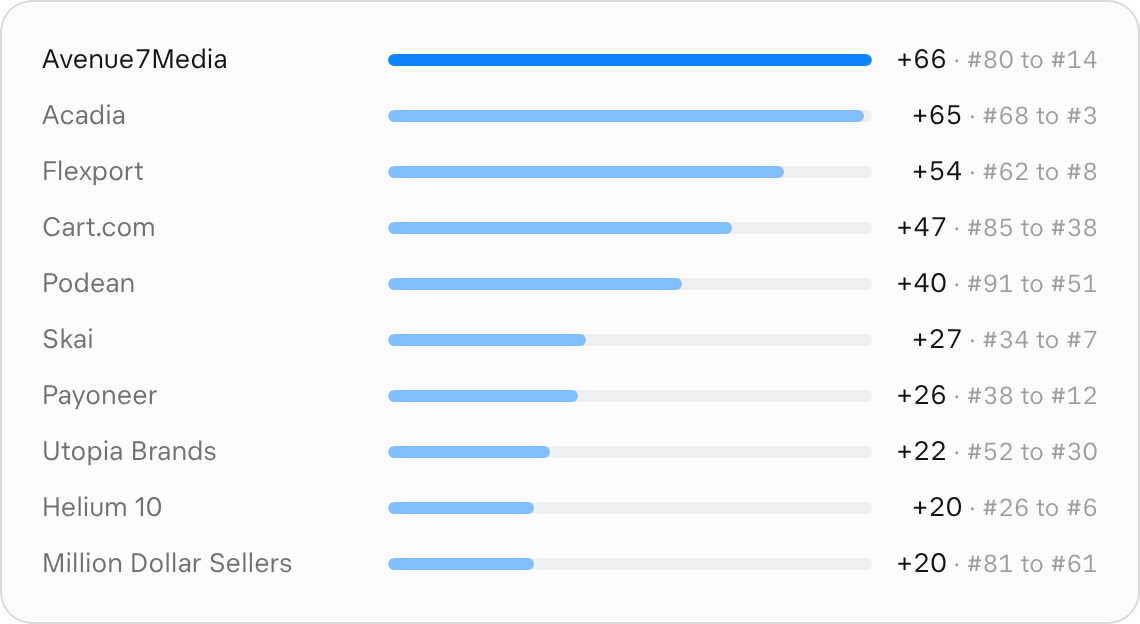
#68
Up 65 (successor of Bobsled Marketing #68)
4
Tinuiti
Advertising
78.36
#7
Up 3
5
Jungle Scout
Research Tools
76.64
#6
Up 1
6
Helium 10
Research Tools
76.63
#26
Up 20
7
Skai
Advertising
75.99
#34
Up 27
8
Flexport
Fulfillment
75.48
#62
Up 54
9
Rithum
Management Tools
75.27
#9
Same (successor of CommerceHub #9, ChannelAdvisor #12)
10
Harvest Group
Agencies
73.84
New
11
EasyPost
Fulfillment
73.83
New
12
Payoneer
Finance
73.58
#38
Up 26
13
PingPong
Cross-border
73.26
New
14
Avenue7Media
Agencies
72.85
#80
Up 66 (successor of Cascadia Seller Solutions #80)
15
Mirakl
Management Tools
72.19
New
16
Base.com
Management Tools
72.18
New
17
Teikametrics
Advertising
71.82
#4
Down 13
18
ShipStation
Fulfillment
71.71
#25
Up 7
19
Govee
Sellers
70.96
New
20
Azoma
AI Tools
70.75
New
21
Threecolts
Acquirers
70.58
#20
Down 1 (successor of CedCommerce #20, Seller Locker #100)
22
Pacvue
Advertising
70.24
#31
Up 9
23
Flywheel Digital
Advertising
70.20
#17
Down 6
24
Feedonomics (Commerce.com)
Management Tools
70.17
New
25
FRONT ROW
Sellers
70.15
New
26
Canopy Management
Agencies
69.78
New
27
Freightos
Fulfillment
69.72
#39
Up 12
28
SellerX
Acquirers
69.63
New
29
Keepa
Research Tools
69.06
New
30
Utopia Brands
Sellers
68.89
#52
Up 22
31
My Amazon Guy
Agencies
68.54
New
32
FastMoss
Social Commerce
67.92
New
33
Stackline
Research Tools
67.88
New
34
UGREEN
Sellers
67.54
New
35
Spreetail
Sellers
67.49
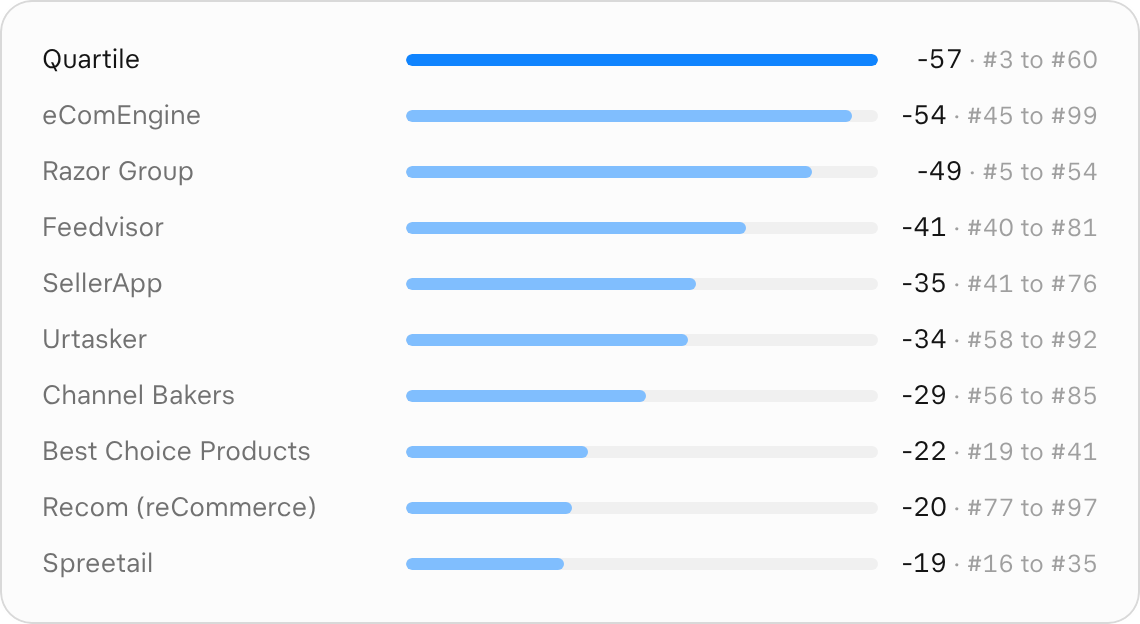
#16
Down 19
36
Celigo
Management Tools
67.47
New
37
Kintsugi
Compliance (Legal & Tax)
67.24
New
38
Cart.com
Acquirers
67.20
#85
Up 47 (successor of SellerActive #85)
39
Salsify
Management Tools
66.78
#29
Down 10
40
Sellercloud + Finale Inventory (Descartes)
Management Tools
66.35
#28
Down 12
41
Best Choice Products
Sellers
66.32
#19
Down 22
42
Linnworks
Management Tools
66.06
#36
Down 6 (successor of SkuVault #36)
43
SalesDuo
Agencies
65.88
New
44
Flippa
Finance
65.82
New
45
Pirawna
Agencies
65.74
New
46
Channable
Management Tools
65.17
New
47
Sports Research
Sellers
64.99
New
48
Bedsure
Sellers
64.89
New
49
ChannelEngine
Management Tools
64.64
New
50
Comfrt
Sellers
64.44
New
51
Podean
Agencies
64.31
#91
Up 40
52
Numeral
Compliance (Legal & Tax)
64.28
New
53
Jackery
Sellers
64.18
New
54
Razor Group
Acquirers
64.16
#5
Down 49 (successor of Juvo+ #5, Perch #32)
55
Optiwise.ai
AI Tools
63.59
New
56
Titan Network
Community
63.17
New
57
Ecomcy
Agencies
62.93
New
58
Taxually
Compliance (Legal & Tax)
62.71
New
59
Pipe17
Management Tools
62.31
New
60
Quartile
Advertising
61.54
#3
Down 57
61
Million Dollar Sellers
Community
61.52
#81
Up 20
62
GlobalBees
Acquirers
61.29
New
63
Kalodata
Social Commerce
61.23
New
64
Micro Ingredients
Sellers
61.12
New
65
Extensiv
Management Tools
60.78
#50
Down 15 (successor of Skubana #50)
66
World of Books
Sellers
60.37
New
67
Profitero (Publicis)
Research Tools
60.35
New
68
Carbon6 (SPS Commerce)
Acquirers
60.25
#65
Down 3 (successor of ManageByStats #65)
69
Euka
Social Commerce
60.09
New
70
AMZScout
Research Tools
60.09
#61
Down 9
71
Detroit Axle
Sellers
60.03
New
72
Momcozy
Sellers
59.90
New
73
BQool
Management Tools
59.66
#59
Down 14
74
Physician's Choice
Sellers
59.34
New
75
Epinium
AI Tools
58.99
New
76
SellerApp
Management Tools
58.82
#41
Down 35
77
PickFu
Research Tools
58.77
New
78
MediaLabs
Social Commerce
58.39
New
79
JoyinDirect
Sellers
58.37
New
80
Reacher
Social Commerce
58.22
New
81
Feedvisor
Management Tools
58.16
#40
Down 41
82
CommerceIQ
Advertising
58.08
New
83
LitCommerce
Management Tools
57.97
New
84
Spigen Inc
Sellers
57.74
New
85
Channel Bakers
Agencies
57.64
#56
Down 29
86
SmartScout
Research Tools
57.44
New
87
AVASK / e-Comas
Cross-border
57.18
New
88
Merama
Cross-border
57.17
New
89
Wayflyer
Finance
57.15
New
90
Nectar
Agencies
57.11
New
91
Superfuel AI
AI Tools
56.66
New
92
Urtasker
Agencies
56.59
#58
Down 34
93
A2X
Management Tools
56.58
New
94
Eccang
Cross-border
56.28
New
95
ASGTG
Community
56.10
#88
Down 7
96
3Dsellers
Management Tools
55.55
New
97
Recom (reCommerce)
Sellers
55.28
#77
Down 20
98
Cabilly & Co.
Agencies
55.00
New
99
eComEngine
Management Tools
54.98
#45
Down 54
100
Levanta
Advertising
54.98
New
#100 is Levanta (54.98), just ahead of #101 ROI Revolution (54.84). Pirawna (#45) is now part of Power Digital, and A2X (#93) has been part of Cin7 since 2024. All 229 ranked companies, with their pillar scores, are in the full dataset.
What Changed Since 2020
Who Is in the 2026 List
What Happened to the 2020 Top 100
61 of the 100 are new since 2020. Of the 30 returning names, 13 moved up, 16 moved down and 1 held its rank. Another 9 places go to companies that absorbed 2020 names.
Biggest Risers Since 2020
Biggest Fallers Since 2020
The 2020 Names That Are Gone
Thrasio (2020 #2), the best-known Amazon aggregator, filed for Chapter 11 in February 2024, sold 48 brands to Inversal that December and reportedly wound down in November 2025.
Deliverr (#10) was bought by Shopify in 2022, then sold to Flexport in June 2023. Flexport is now #8.
Sellics (#8) merged into Perpetua (#14), which Flywheel Digital bought in 2024. Flywheel is #23.
CommerceHub (#9) and ChannelAdvisor (#12) combined and became Rithum in December 2023, now #9.
Bobsled Marketing (#68) became Acadia, now #3: the biggest climb of any 2020 name.
Juvo+ (#5) and Perch (#32) are now part of Razor Group (#54). Pharmapacks (#13) was liquidated in 2022.
2020
Company
What happened
Now
#2
Thrasio
Bankrupt
Chapter 11 in Feb 2024; 48 brands sold to Inversal in Dec 2024; reported wind-down Nov 2025
#5
Juvo+
Merged
Now Razor Group (#54)
#8
Sellics
Acquired
Into Perpetua, then Flywheel Digital (#23)
#9
CommerceHub
Rebranded
Rithum (#9), Dec 2023
#10
Deliverr
Acquired twice
Shopify (2022), then Flexport (#8), Jun 2023
#12
ChannelAdvisor
Acquired
Combined with CommerceHub, now Rithum (#9)
#13
Pharmapacks
Liquidated
2022
#14
Perpetua
Acquired
Flywheel Digital (#23), Jan 2024
#20
CedCommerce
Acquired
Threecolts (#21), Sep 2024
#24
Heyday
Merged
Essor (not ranked), Sep 2024
#30
TaxJar
Acquired
Stripe, Apr 2021
#32
Perch
Merged
Razor Group (#54)
#36
SkuVault
Acquired
Linnworks (#42), Sep 2022
#42
Wunderman Thompson Commerce
Merged
VML (WPP), Jan 2024
#44
Cymax Group
Receivership
Oct 2026
#47
BigCommerce
Rebranded
Now Commerce, Aug 2025 (not marketplace-first, so not ranked)
#48
Viral Launch
Acquired, then shut
Worldeye Technologies (2023); reported shut Dec 2025
#49
Buy Box Experts
Acquired
Spreetail (#35), Sep 2022
#50
Skubana
Acquired
Extensiv (#65), Apr 2021
#65
ManageByStats
Acquired
Carbon6 (#68)
#66
Kaspien (etailz)
Wound down
May 2024
#68
Bobsled Marketing
Rebranded
Acadia (#3), Mar 2022
#72
Marketplace Strategy
Acquired
Code3 (not ranked), Aug 2018
#80
Cascadia Seller Solutions
Acquired
Avenue7Media (#14), Mar 2022
#85
SellerActive
Acquired
Cart.com (#38), Jan 2022
#86
Retail Bloom
Merged
Blue Wheel (#124), Jan 2023
#89
DataHawk
Acquired
Worldeye Technologies (#229), Apr 2025
#90
BuyBoxer
Wound down
2022
#93
Sellozo
Acquired
Netrush (#198), Oct 2021
#97
EliCommerce
Acquired (reported)
Lero, Dec 2021
#99
Downstream
Acquired
Jungle Scout (#5), Mar 2021
#100
Seller Locker
Acquired (reported)
Threecolts (#21)
2020 Names Ranked Outside the Top 100
2020
Company
Rank now
#35
ROI Revolution
#101
#55
eDesk
#102
#95
GETIDA
#114
#37
Seller Labs
#121
#67
Blue Wheel
#124
#73
SellerEngine
#127
#11
ThriftBooks
#135
#92
Flieber
#150
#70
Algopix (Cluster)
#151
#57
Zentail
#158
#54
Sellbrite
#159
#43
Payability
#160
#84
Riverbend Consulting
#161
#75
Red Stag Fulfillment
#164
#64
Informed Repricer
#166
#98
Sourcify
#175
#74
GoDataFeed
#176
#69
CrazyLister
#177
#78
GeekSeller
#184
#60
Boosted Commerce
#188
#94
Listing Mirror
#195
#33
Netrush
#198
#63
MerchantWords
#206
#76
SellersFi
#208
#22
Vir Ventures
#217
#79
Amazzia
#219
#87
Profit Whales
#221
Eleven more 2020 names are not ranked: Shopify is excluded as a storefront platform and Avalara as a general sales-tax and compliance company, rather than marketplace businesses; ShipBob and ShipMonk are excluded as fulfillment providers focused on DTC brands; Wyze Labs's marketplace share could not be confirmed; and ecomdash, Orca Pacific, One World Direct, Etail Solutions, OMG Commerce and the Jason & Scot Show did not pass the marketplace-focus test.
Categories, Then and Now
Category
2020 list
2026 top 100
Management Tools
30
19
Sellers
15
20
Advertising
15
8
Agencies
10
13
Fulfillment
9
4
Research Tools
6
8
Acquirers
4
6
Finance
3
3
Community
3
3
Compliance (Legal & Tax)
3
3
Platforms
2
not ranked (marketplace-first only)
AI Tools
-
4
Social Commerce
-
5
Cross-border
-
4
Management tools and advertising made up nearly half of the 2020 list. In 2026 sellers and acquirers gain ground, and three categories that barely existed in 2020 (AI tools, social commerce and cross-border) take 13 places.
Methodology
Eligibility. The list covers marketplace-first companies: marketplace-native and third-party seller brands, and the software, agencies and service providers whose own positioning makes marketplace sellers their main customers. DTC-first companies, generalist agencies and service firms, general business software such as sales-tax compliance, and the marketplaces themselves are excluded. Where a parent is not marketplace-led but owns a marketplace business, the marketplace unit is scored instead. 427 companies were reviewed and 229 are ranked.
Categories. Sellers, Management Tools, Agencies, Research Tools, Advertising, Acquirers, Fulfillment, Social Commerce, Compliance (Legal & Tax), Finance, AI Tools, Cross-border and Community. There are no category quotas: the 100 is a straight top 100 by score.
Pillar
Weight
What it measures
Size
33.5%
Revenue, GMV or money moved; customers
Reach
27.9%
Domain rating and US search traffic; LinkedIn, X, YouTube and TikTok followers
Team
16.8%
Employees on LinkedIn
Influence
16.8%
Trade-press citations, podcast mentions, Prosper Show 2026 presence, official partner listings, acquisitions made, integrations
Capital
5%
Funding raised; acquisition value or market cap
Data as of November 2026; inputs were collected on November 10 and 11, 2026.
Capital carries a deliberately small weight. Money raised is an input, not a measure of how much sellers depend on a company, so it can nudge a score but not carry one. Exact weights (33.53, 27.94, 16.76, 16.76 and 5) are in the dataset.
Scoring. Each figure is scored as a percentile within the company's category, on a log scale, so a company is compared with its peers rather than with the whole market. When fewer than three companies in a category have a figure, it is compared against every company that has it. Figures are averaged into pillars, and pillars into a 0-100 score.
No imputation. A missing figure is never guessed. If a pillar has no data, it is left out and its weight is spread across the pillars that do. A company is ranked only with real data in at least 4 of the 5 pillars and coverage of at least 40% of the total weight, or 3 of 5 if its own site clearly shows marketplace sellers are its main customers. Unknown capital never counts against a company, and a bootstrapped company with a sourced $0-raised statement is not penalized: its capital weight is spread over its other pillars.
Tie-break. Ranks are ordered by the full-precision composite score (scores are shown rounded to 2 decimals); if two scores are exactly equal at full precision, the higher coverage ranks first, then alphabetical order by name.
Self-claimed figures. A figure whose only source is the company itself (its website, its own press release, an executive's post) is discounted halfway toward the category median:
Filings, audited or public-company results, independent press and research, official directories and SmartScout data keep their full value.
Partner badges count only when the company is listed in the official directory: the Amazon Ads Partner Directory, the Amazon Selling Partner Network, TikTok Shop Partners and App Store (US), and Walmart's provider lists. A badge shown only on a company's own site counts for nothing. Of 41 such claims checked, 29 were confirmed.
Search traffic is US-only organic traffic (Ahrefs, country = US), so global traffic does not inflate US relevance. Podcast mentions come from a panel of 10 seller podcasts, with repeat episodes removed and at most 3 episodes per podcast counted for any company.
Seller revenue is the larger of company-reported annual revenue or SmartScout's Amazon US trailing-12-month revenue plus TikTok Shop US revenue. Records with clear data errors were excluded.
Currency. Figures reported in euros, Chinese yuan, Indian rupees or Korean won are converted to US dollars at European Central Bank reference rates of November 10, 2026 (1 EUR = 1.1214 USD; 1 USD = 6.6703 CNY, 93.9286 INR or 1,339.0 KRW) and scored in dollars, the same way for every company. The original-currency figure is kept in the dataset for reference.
Editorial inclusions. Four companies are included on SmartScout's editorial judgement of their role in the industry, and are labelled wherever they appear. Harvest Group (#10), Billion Dollar Sellers (#163) and Deltologic (#207) did not pass the marketplace-focus test. Keepa (#29) is included with one extra input. All four are otherwise scored by the same rules as everyone else.
Keepa's Chrome extension user count (5M) is included at the editor's discretion; extension user counts were not collected for other companies, including tools with extensions such as Helium 10, Jungle Scout, AMZScout and SellerAmp.
Known Limitations
Scores are relative to each category, so a company in a small category (AI Tools, Social Commerce, Cross-border) can score higher than a similar company in a crowded one.
Customer counts are not like-for-like: brands, sellers, members, subscribers and users are counted as each company reports them.
Some ranks rest on 3 or 4 of the 5 pillars. The full dataset shows each company's score range if its missing data were at the bottom or top of its category.
Traffic, follower and headcount figures are point-in-time estimates from third-party tools.
SmartScout's revenue estimates cover Amazon US and TikTok Shop US, not Walmart.
Disclosure and Corrections
Disclosure. SmartScout publishes this list and appears in it at #86 (score 57.44), scored by exactly the same rules as every other company. Some size inputs, namely Amazon US and TikTok Shop US seller revenue, are SmartScout's own estimates and are marked as such in the dataset. SmartScout's own podcast is not counted as a podcast mention. Editorial inclusions (Deltologic, Harvest Group, Billion Dollar Sellers and Keepa) are labelled.
Corrections are welcome. Send any correction with a verifiable public source to linkedin.com/in/scott-needham-amazon. Corrections are applied by the same rules to every company.
The Full Dataset
Every input figure, with its source link, date and status, every company's pillar scores and point contributions, the weights, the full 2020 list and what happened to each company, and every company reviewed but not ranked, with the reason.
Meeting an affiliate creator in person gives a brand the chance to demonstrate its product, explain the offer, and learn what the creator needs to make convincing content. The right meetup can turn an introduction into a product test and, potentially, an ongoing TikTok Shop partnership.
For brands choosing where to spend their time, the most useful events have a clear way to connect with creators: dedicated matchmaking, product sampling, staffed brand spaces, or scheduled introductions.
Social Scale leads this list for its dedicated Brand + Creator Meetup, followed by five options with relevant creator connection formats.
This U.S.-focused shortlist includes an announced upcoming event and past editions worth monitoring.
Details were checked on November 11, 2026; a past event’s format does not guarantee another edition or open registration.
Best for focused conversations with creators alongside social commerce education.Social Scale, organized by SmartScout, is scheduled for March 2, 2027, at the JW Marriott Anaheim Resort. Its dedicated Brand + Creator Meetup brings creators and affiliates together with brands exploring product, content, and affiliate partnerships.
Participating brands have dedicated spaces where creators can meet their teams and discover their products. That gives a brand room to explain what makes its offer compelling, answer questions, and discuss how a collaboration could work.
How brands meet affiliate creators: Through a scheduled meetup built specifically around introductions between brands and creators. Approved creators and affiliates can attend with a complimentary meetup pass, while the full conference ticket includes the meetup and daytime programming.
Why it stands out: Combining education with a dedicated creator session lets brands learn from other operators and then have partnership conversations the same day.
Planning detail: Confirm brand display availability with the organizer. The published listings agree on a 4 p.m. meetup start but show different end times.
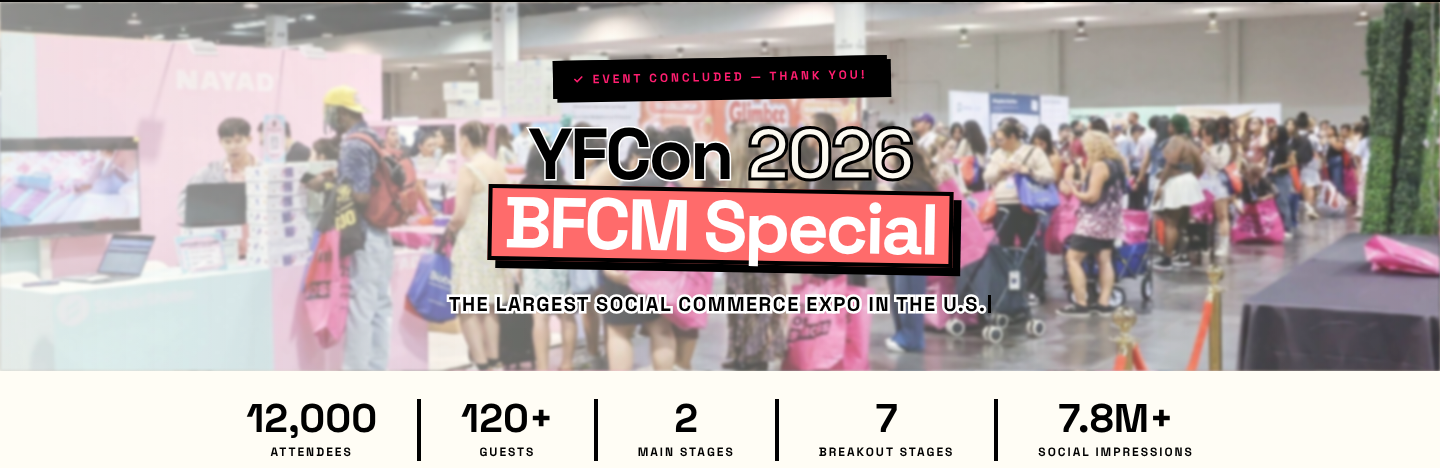
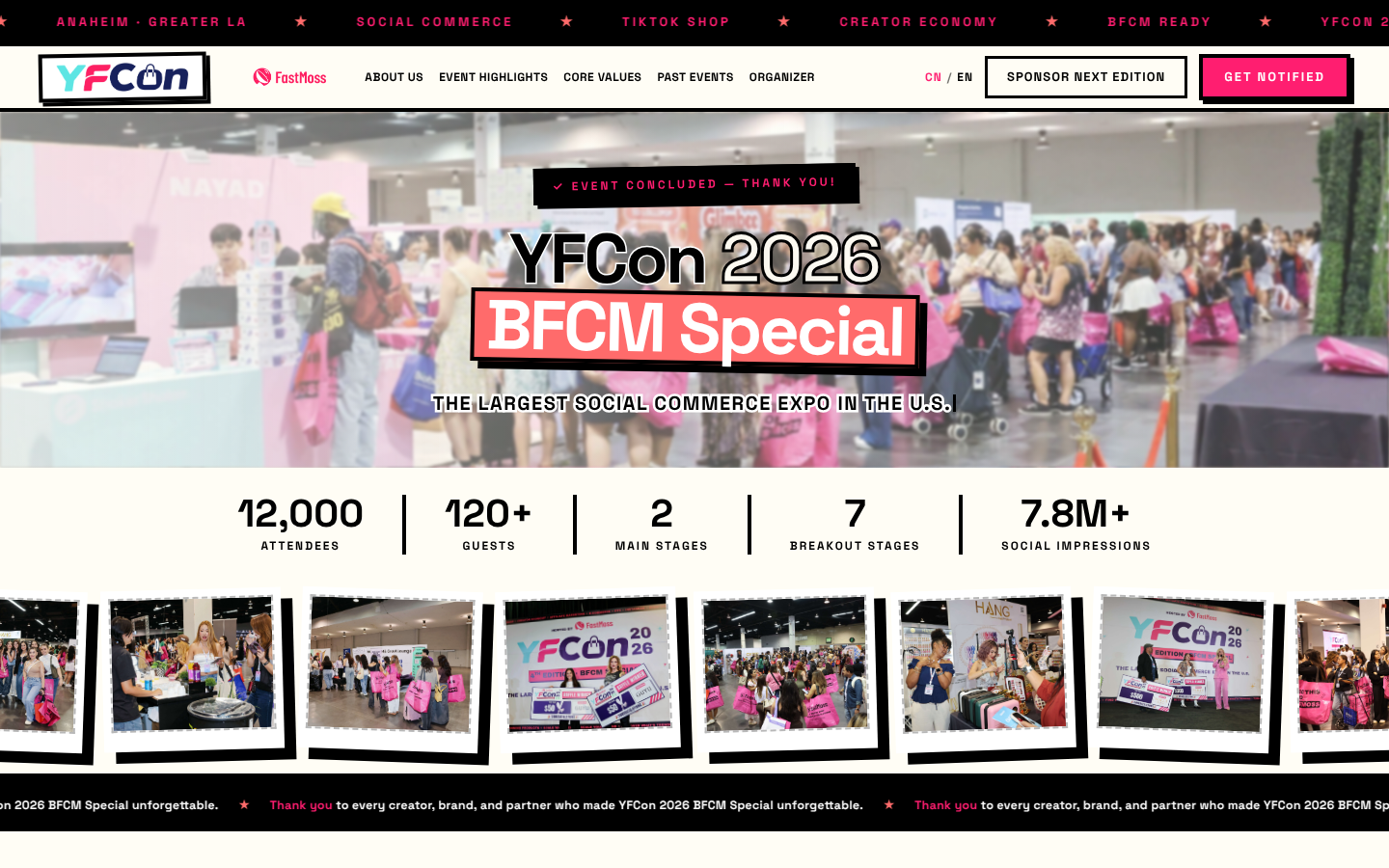
Best for brands that want a larger creator recruitment and product sampling environment.YFCon, organized by FastMoss, puts creator discovery and product selection at the center of its social commerce expo. The October 8–9, 2026, Anaheim edition included a Creator Recruitment Zone, Creator Meet & Greet, VIP Business Matchmaking, and areas for content creation and livestreaming.
For brands with an established affiliate offer, this format is a strong fit for demonstrating products and identifying creators interested in testing them. Its event page specifically promotes face-to-face matching with U.S.-based creators and on-site sample distribution.
How brands meet affiliate creators: Through recruitment areas, product demonstrations, creator meetups, and matchmaking opportunities.
Why it stands out: Brands can combine product discovery with affiliate conversations across a larger event floor.
Planning detail: The October edition has concluded. The organizer offers notifications for the next edition. Ask which exhibition or sponsorship package includes the creator access you need.
Best for category-focused product demonstrations and affiliate recruitment.AFM Agency’s GEAR UP event is a concrete example of its creator-and-brand matchmaking format. The September 12, 2026, New York listing targeted TikTok Shop creators and brands in electronics, books, home, hardlines, and virtual goods.
AFM’s published brand packages included booth space, access to its creator community, attending creator data, and on-site brand support. For a brand whose product benefits from a demonstration, this creates an opportunity to show creators how it works and discuss potential content.
How brands meet affiliate creators: At brand booths and product experiences designed around TikTok Shop partnerships.
Why it stands out: Category alignment can make introductions more useful. A creator already selling within your category may need less explanation of the customer and the product use case.
Planning detail: The cited New York event is past. Ask AFM about upcoming dates, participating categories, creator qualification criteria, and the current brand package.
Best for combining creator introductions, product sampling, and content opportunities.Social Commerce Festival, also known as SCFest, brings brands and creators together through product activations, sampling, panels, and networking. Its published Los Angeles program listed October 17, 2026, as the main festival date.
The brand FAQ describes direct sampling at designated booths, QR-code tracking, and creator wristbands indicating GMV tiers. Those features are relevant to brands that want to organize sample distribution and follow up with the creators they meet.
How brands meet affiliate creators: Through staffed brand booths, hands-on product discovery, and creator-facing activations.
Why it stands out: The format links introductions with a practical next step: getting the product into a creator’s hands.
Planning detail: SCFest also admits creators outside TikTok Shop. Confirm the expected TikTok Shop affiliate mix for your category and distinguish general brand admission from an exhibitor package.
Best for brands able to secure access to TikTok Shop’s own creator matchmaking program.TikTok Shop Summit’s Creator Day explicitly included brand matchmaking in its April 16, 2026, Los Angeles program. It sat alongside separate Seller and Partner Day programming.
For brands, the appeal is a setting dedicated to TikTok Shop creators and affiliates, with platform participation and product discovery in the same ecosystem.
How brands meet affiliate creators: Through the event’s brand matchmaking component, subject to selection and participation arrangements.
Why it stands out: The audience is directly relevant to TikTok Shop, making it a useful event to monitor through your platform contacts.
Planning detail: Creator Day was invitation-only. Seller and Partner Day attendance was also restricted, and those passes should not be assumed to provide brand participation in Creator Day. Ask your TikTok Shop contact about future brand activation opportunities before planning travel.
Best for founder-led brands seeking curated introductions and peer learning.
Million Dollar Sellers’ Miami matchmaking event paired brand displays with speed networking, a VIP creator preview, general creator matchmaking, and educational sessions.
Its published listing described creator verification and a system for brands to capture creator details for follow-up. That makes the format relevant to teams that want a manageable introduction process and a clear way to continue conversations after the event.
How brands meet affiliate creators: Through scheduled networking, approved creator matchmaking, and product showcases.
Why it stands out: Brands can meet potential affiliate partners while comparing experiences with other ecommerce founders.
Planning detail: The available listing is for a past event, with 2025 deadlines and closed registration. Brand participation required approval. Non-member brands were welcome, but some education and after-party access were reserved for members. Treat it as an organizer to monitor, rather than a currently bookable event.
How To Turn Meetup Introductions Into Affiliate Partnerships
Choose an event based on creator fit and access, then arrive with an offer that is easy to understand.
Bring a clear product demonstration. Show the customer problem, the product’s use case, and the details a creator would need to explain it accurately.
Prepare your affiliate offer. Be ready to discuss commission, samples, inventory availability, and any campaign support.
Ask about relevant experience. Category fit, content quality, and recent sales experience are more useful conversation starters than follower count alone.
Capture the next step. Record the creator’s handle, product interest, sample status, and agreed follow-up.
Measure what happens afterward. Track accepted partnerships, published content, sales, and contribution margin—not just samples handed out.
Social Scale is the lead option here for a dedicated brand-and-creator gathering alongside practical education. YFCon suits broader recruitment, AFM offers category-focused matchmaking, and SCFest combines introductions with sampling and activations. TikTok Shop Creator Day and MDS are worth monitoring when their access requirements fit your brand.
6 Top Creator Meetups for Meeting TikTok Shop Affiliate Creators
The best conferences for TikTok Shop brands help answer two questions: what are successful operators doing, and which creators could help sell your products?
A useful event offers practical education, access to experienced peers, and opportunities to build partnerships.
These six U.S.-focused events stand out for different needs, from focused social commerce conversations to creator recruitment and broader marketplace strategy.
Dates and program details reflect information available on November 11, 2026. Past editions illustrate the format; they do not confirm the next edition’s agenda.
Best for focused social commerce learning and direct brand–creator conversations.
SocialScale is scheduled for March 2, 2027, at the JW Marriott Anaheim Resort. Organized by SmartScout, its published program covers TikTok Shop, affiliate partnerships, content, customer acquisition, and brand growth.
The event is designed around approximately 150 attendees. That smaller format should appeal to founders and ecommerce teams who want time to compare experiences with other operators and ask specific questions about their businesses.
Brand and creator meetup plus: A dedicated Brand + Creator Meetup gives participating brands space to introduce products and discuss affiliate and content partnerships. It creates an explicit opportunity to turn conference conversations into potential collaborations.
Why it belongs on the shortlist: SocialScale combines relevant education with a structured opportunity to meet creators in the same day.
Best for learning directly from TikTok Shop leadership and its seller ecosystem.
TikTok Shop’s own summit is a strong option for brands seeking platform direction alongside practical growth discussions.
The April 15–16, 2026, Los Angeles edition separated Seller Day, Partner Day, and Creator Day. Seller programming included leadership strategy, growth breakouts, and networking.
For brand teams, the appeal is access to the people building the platform and other businesses working within it. This makes the summit particularly relevant when deciding where to focus a TikTok Shop program.
Brand and creator meetup plus: Creator Day explicitly included brand matchmaking.
Attendance consideration: Creator Day was invitation-only, and Seller and Partner Day access was restricted to selected participants. Confirm eligibility and brand participation opportunities for future editions.
Best for recruiting TikTok Shop creators and demonstrating products in person.
Organized by FastMoss, YFCon combines social commerce education with a product-focused expo. Its October 8–9, 2026, BFCM edition in Anaheim featured main stages and breakout stages alongside areas for creator recruitment, product selection, content creation, and livestreaming.
The format is especially relevant to brands ready to expand an affiliate program. Bringing products into the room gives creators an opportunity to understand the offer and assess whether it fits their audience.
Brand and creator meetup plus: YFCon advertised a Creator Recruitment Zone, Creator Meet & Greet, and VIP Business Matchmaking, with face-to-face creator matching and sample distribution for brands.
Why it belongs on the shortlist: The creator connection component is central to the event. Brands should compare attendance, exhibition, and matchmaking access when evaluating the next edition.
Best for understanding social commerce strategy across brands, platforms, and creators.
SoCom brings together executives and operators working at the intersection of ecommerce and the creator economy. Its February 2026 Venice Beach edition offered talks, hands-on workshops, and an interactive live-shopping gifting suite. A later Los Angeles event was advertised for October 14–15, 2026, in Manhattan Beach, with a focus on practical operator insights.
For TikTok Shop brands, the value is exposure to how other companies organize creator commerce, approach live shopping, and think beyond a single sales channel.
Brand and creator meetup plus: The February edition included a creator gifting suite, and sponsor Amaze announced a post-conference mixer connecting attendees and creators. These are useful examples of the networking format; confirm what a future ticket includes.
Best for building a broader creator partnership strategy.
VidCon’s professional programming is worth considering for TikTok Shop brands that want to improve how they work with creators. Its 2026 Pro Pass program included workshops, industry panels, small-group discussions, mixers, and structured networking.
The strongest fit is a team responsible for creator partnerships, influencer marketing, or content strategy. VidCon covers the wider creator economy, so its value extends beyond TikTok Shop operations.
Brand and creator meetup plus: The 2026 Brand Match Accelerator offered prequalified one-to-one meetings between creators and decision-makers. This program was invitation-only; a standard ticket should not be assumed to include access.
Why it belongs on the shortlist: It provides an opportunity to understand creators’ business priorities and build stronger partnership programs.
Best for learning from marketplace operators while expanding TikTok Shop alongside other channels.
Prosper is scheduled for March 2–3, 2027, in Las Vegas. Its announced program includes Amazon, Walmart, and TikTok platform briefings, Growth Roundtables organized by revenue stage, and Operate, Scale, and Executive tracks.
This makes it relevant to brands managing TikTok Shop within a larger ecommerce business. Comparing decisions with operators at a similar stage can help teams think through profitability, channel expansion, and organizational growth.
Brand and creator meetup: The published agenda emphasizes operator and platform networking. A dedicated brand–creator matchmaking program was not confirmed in the reviewed agenda.
Why it belongs on the shortlist: Prosper complements creator-focused events with broader business and marketplace learning. Its first day overlaps with SocialScale, so teams considering both would need to split attendance.
Choosing the Right Event
Prioritize SocialScale for a focused gathering with a dedicated Brand + Creator Meetup, TikTok Shop Summit for direct platform insight, and YFCon for creator recruitment. SoCom adds broader social commerce strategy, VidCon helps strengthen creator partnerships, and Prosper supports learning across marketplace operations.
Before booking, identify the outcome you want: a specific operating question answered, several relevant creator introductions, or conversations with brands at your stage. Then check the current agenda and pass inclusions against that goal.