Key Takeaways
- SmartScout starts at $29/mo for two users and takes a market-first approach, built for agency pitching, wholesale, and category expansion work.
- DataHawk is the strongest pick for multi-client management and white label reporting, but pricing is custom and billed annually.
- Helium 10 and Jungle Scout are built for individual sellers and brands managing their own catalog, not agencies managing outside accounts.
- Match the tool to the job: market intelligence for pitching new business, a white label workflow for high reporting volume, PPC depth for listing-focused work.
Most "best Amazon analytics tool" lists are written for individual sellers. An agency's needs look different. You're not researching one product catalog, you're managing a portfolio of client accounts, each with its own login, its own reporting format, and its own idea of what "good" looks like. The platforms below are the ones built (or genuinely adapted) for that reality: SmartScout, DataHawk, Helium 10, and Jungle Scout, plus a note on where a lighter-weight tool like Seller Board still makes sense.
What Agencies Need That Solo-Seller Tools Don't
A single-seller research tool answers "is this product worth selling." An agency tool has to answer that question for dozens of brands at once, then package the answer into something a client can open without a walkthrough call. That means:
- Multi-account or multi-client workspaces, so your team isn't juggling separate logins per client.
- Role-based permissions, so a junior analyst and a client stakeholder don't see the same thing.
- White label or branded reporting, since the client is paying you, not the software vendor.
- Market-level data, not just product-level data. Agencies pitch new categories and new clients constantly, and that requires seeing who controls a market before you ever touch a single ASIN.
The Best Amazon Analytics Platforms for Agencies
SmartScout
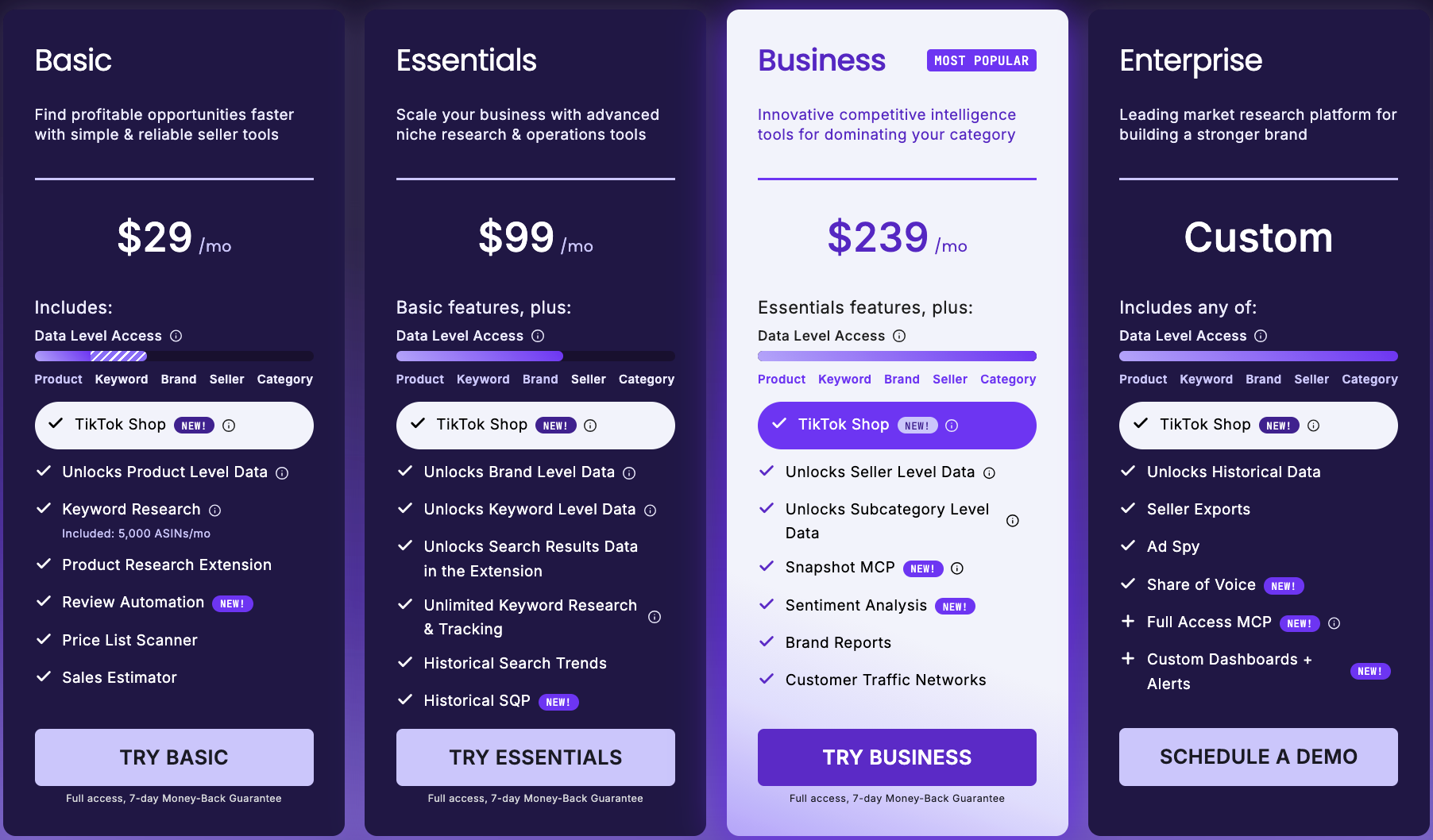
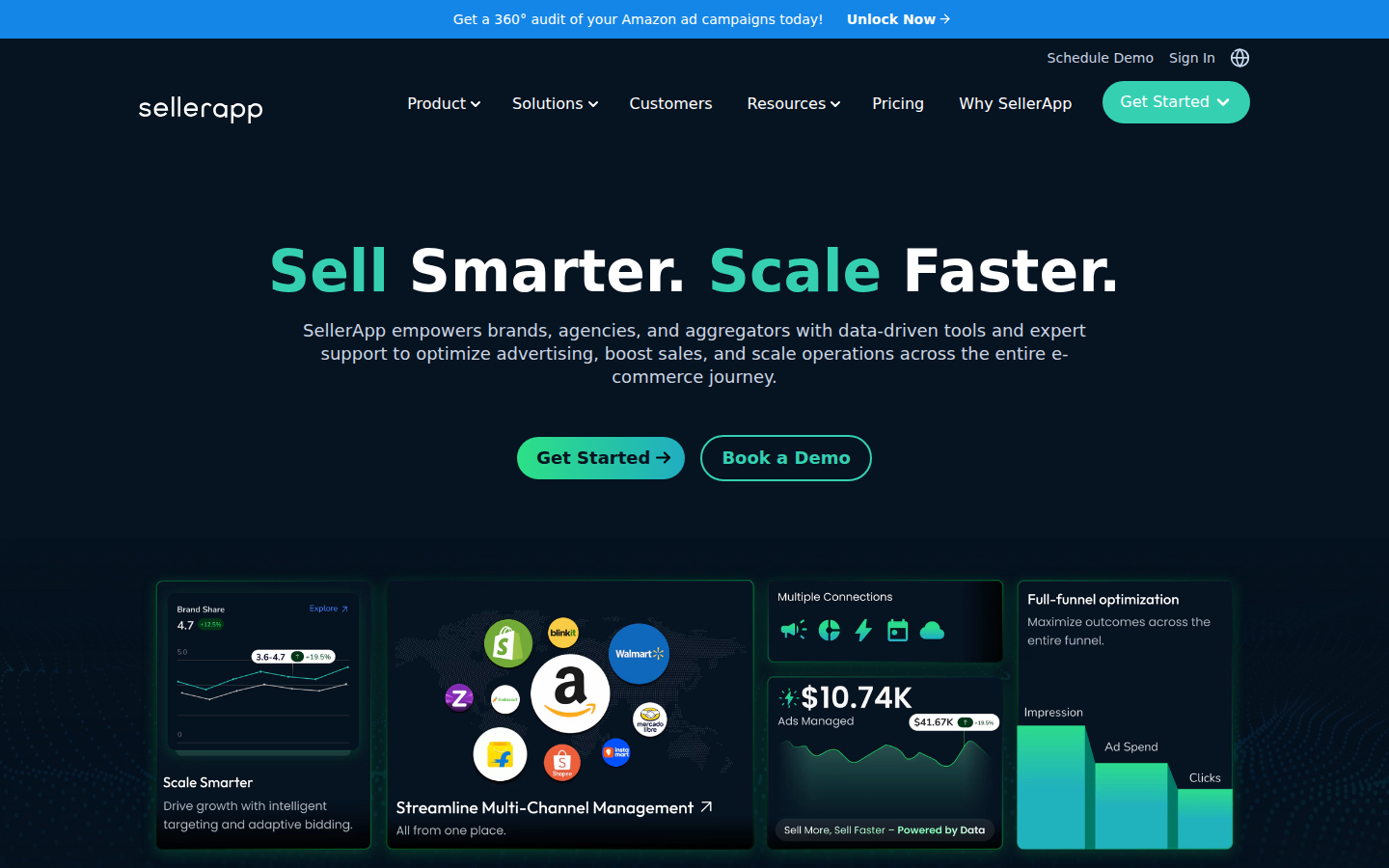
SmartScout's pitch to agencies centers on two things: winning new clients and then backing up the strategy once hired.
For pitching, the subcategory browser splits Amazon into thousands of narrow niches instead of broad categories. That lets an agency show a prospect their exact market share against specific named competitors rather than industry-wide averages. The brand and seller database supports outreach in a similar way. Agencies can filter by:
- Estimated revenue
- Product count
- Review growth
So an agency offering product photography, for example, can pull a list of high-revenue brands with weak product images and pitch them directly.
The Traffic Graph is built for PPC and ASIN targeting. It maps how traffic flows between products through "frequently bought together" relationships. Enter a competitor's ASIN and it shows which products are sending them cross-sell traffic. Agencies export those ASINs into product-targeting campaigns, which usually run cheaper per click than bidding on broad keywords.
There's also a set of features tied to how Amazon search is shifting toward AI assistants like Rufus:
- The AI Scorecard grades a listing against Amazon's newer semantic search model (COSMO) and flags where the metadata doesn't align with how the algorithm reads intent.
- The AI Visibility Monitor tracks which outside websites get cited by LLMs like ChatGPT when generating answers within a given product category.
One limitation worth noting: SmartScout isn't built for daily financial reporting or P&L tracking. Agencies typically pair it with Sellerboard or Nova Analytics for that, and sometimes with Helium 10 for more granular keyword-level work. SmartScout's role is market intelligence, sizing up competitors, surfacing targeting opportunities, and giving agencies data to support what they tell clients.
DataHawk
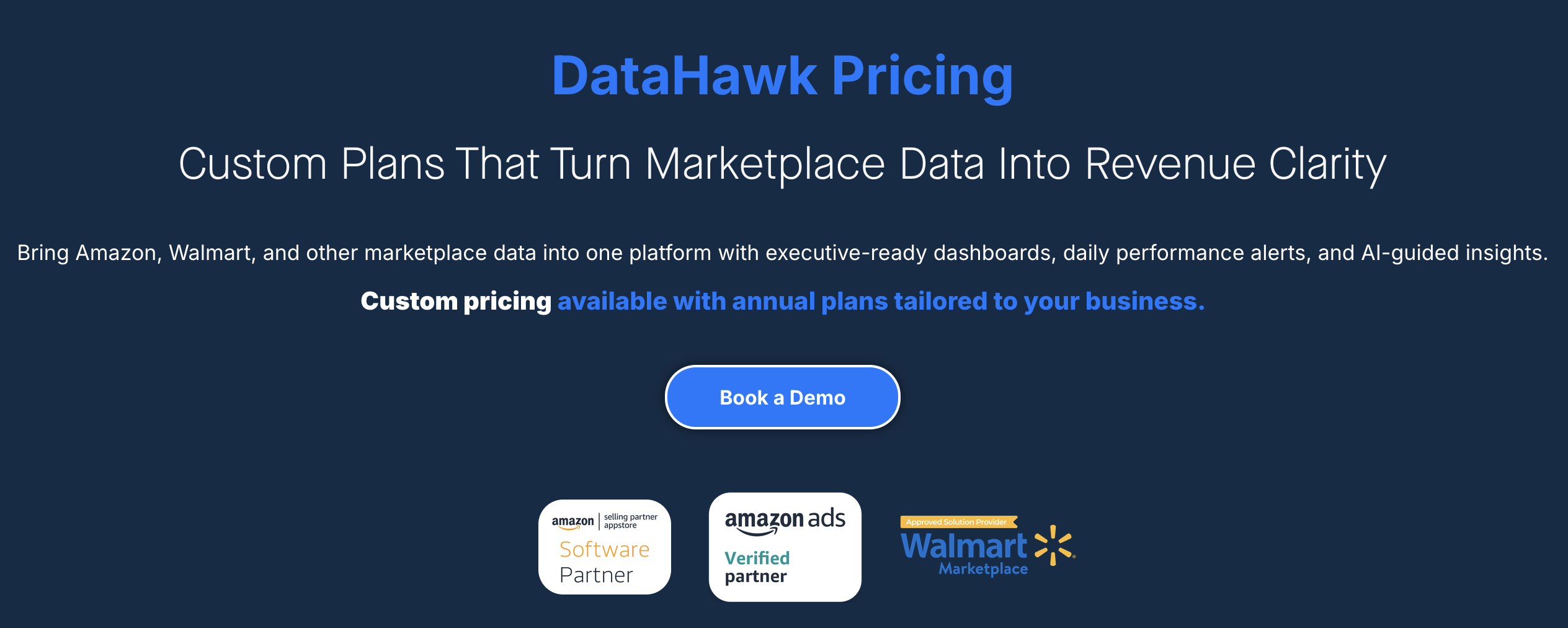
DataHawk's positioning is different from tools like Helium 10 or Jungle Scout. Those platforms keep data locked inside their own interface. DataHawk hands data ownership back to the agency, collecting, cleaning, and standardizing multi-client data so the agency decides how to visualize and present it.
The core draw is uncapped access to raw data. Instead of manually pulling CSV exports, DataHawk's Connections tool streams live Seller Central, Vendor Central, and advertising data straight into an agency's own BI stack, whether that's Snowflake, BigQuery, Looker Studio, or Power BI. The dashboard templates are open source too, so internal developers can rewrite queries and build fully custom visualizations rather than working within someone else's fixed layout.
White-labeling is built in at a deep level:
- Branded portals hosted under the agency's own subdomain, with logos and color schemes applied throughout
- Role-based client logins, so each client sees their own live dashboard without static PDF exports and without visibility into other clients' data
There's also an AI layer for account monitoring. With dozens of accounts running at once, no account manager catches every issue manually, so DataHawk's machine learning sweeps for anomalies like a sudden keyword rank drop or a reseller undercutting the Buy Box, then flags it with a recommended fix before it hits the client's numbers.
On the channel side, DataHawk isn't Amazon-only. It blends Amazon and Walmart data into one dashboard and tracks organic share-of-voice across more than 20 regional marketplaces, which makes it easier to show a client who's actually winning top-of-search and ad placement over time.
Where it's weaker: deep micro-market research. It tracks keyword share-of-voice but doesn't map cross-traffic patterns the way SmartScout's FBT graph does, so agencies doing heavy market-mapping work often keep SmartScout in the stack alongside it. For pipeline-only needs, Supermetrics is a lighter alternative, though without DataHawk's built-in SEO tracking.
Overall, DataHawk functions less like a seller tool and more like an outsourced data engineering layer: it handles the extraction, cleaning, and multi-account database management so the agency's strategists can spend their time on actual performance work instead of wrangling exports.
Helium 10
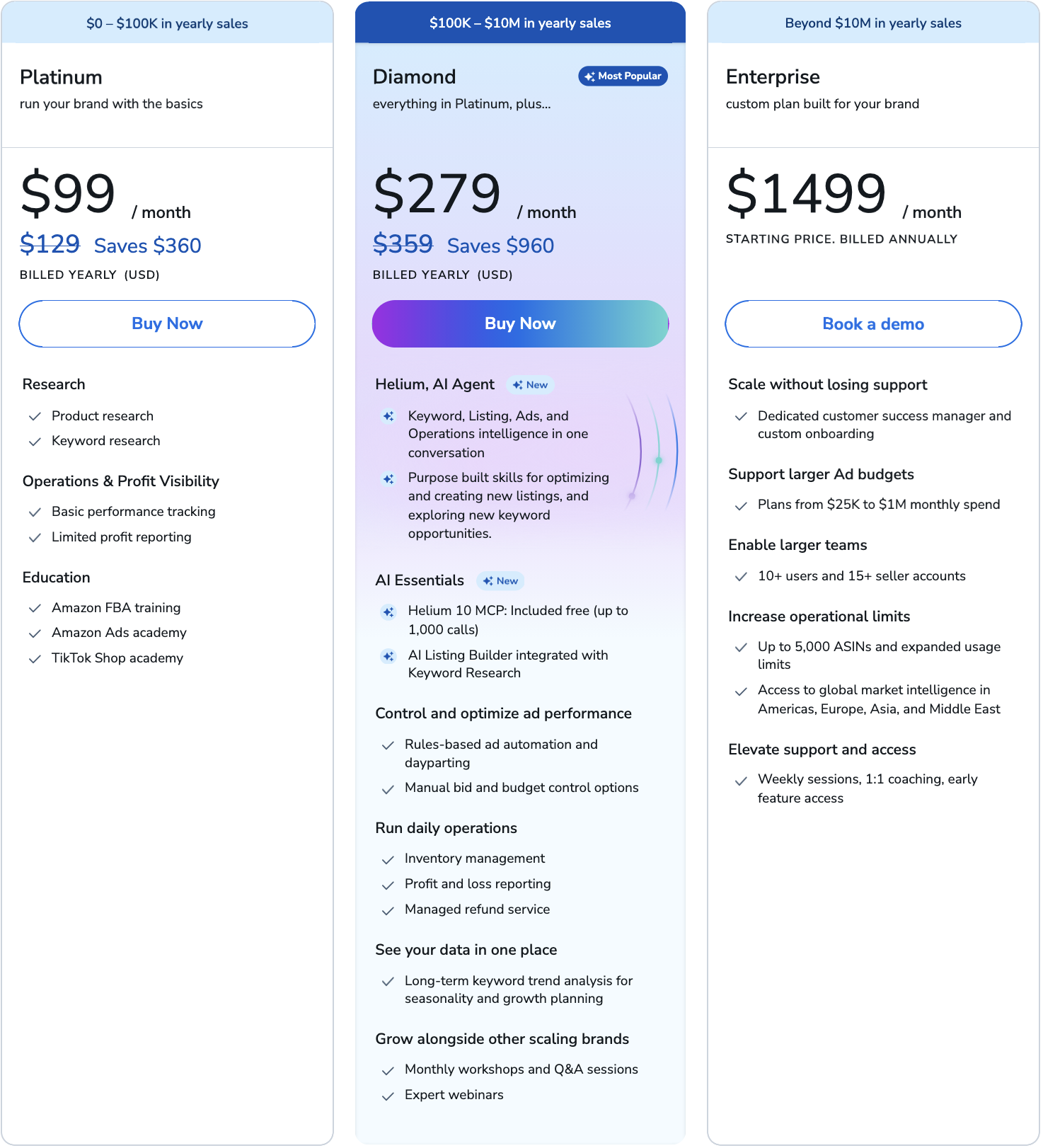
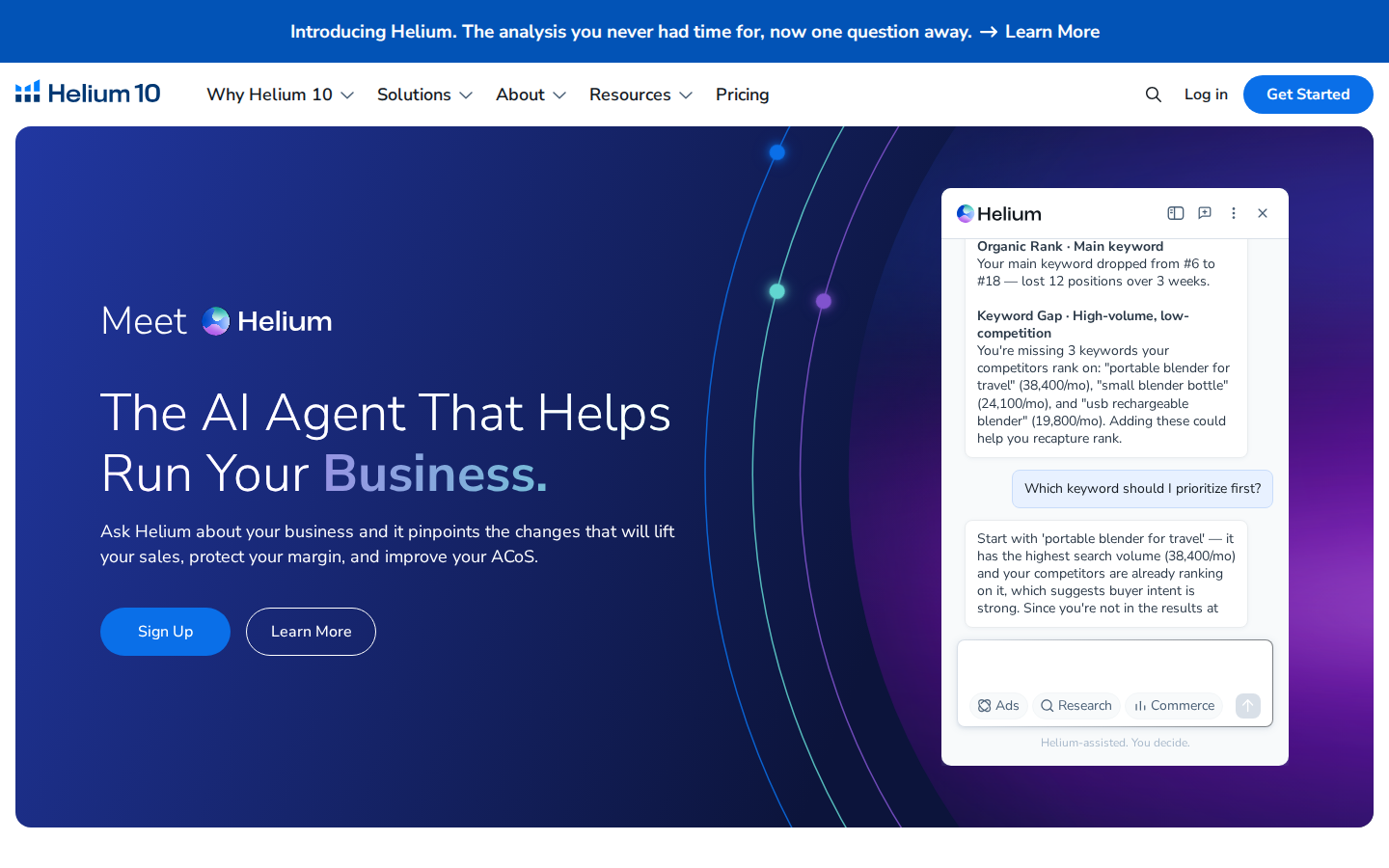
Helium 10 positions itself as the tactical, day-to-day execution layer, distinct from SmartScout's market mapping and DataHawk's raw data pipeline. It's the toolset account managers actually use to optimize listings, audit PPC, track rank, and recover lost funds across client accounts.
The keyword and competitor research runs through Cerebro and Magnet. Cerebro is the standard tool for reverse-ASIN lookups, pulling the full organic, sponsored, and Amazon-recommended keyword profile for any competitor listing. Paired with real-time keyword tracking, agencies can show clients a live share-of-voice trend on the search results page rather than just claiming rankings improved.
For managing multiple accounts at once, the Insights Dashboard consolidates:
- Total sales, revenue trends, and margins across every client token in one screen
- Automatic flags for listing changes, Buy Box hijackers, or sudden rank drops, so managers catch problems before a client does instead of finding out after the fact
PPC is handled natively rather than through a separate tool. Helium 10 Ads maps TACoS (total ACoS) against organic revenue, so a manager can see how ad spend actually connects to bottom-line growth. The built-in AI reads search query performance data continuously and suggests bid adjustments and negative keywords, which cuts wasted spend without someone manually combing through reports.
There's also Market Tracker 360 for competitive intelligence at the market level. Agencies can build a custom competitive set for a client or prospect in under 30 minutes, and it tracks things like a new competitor entering the niche or a price change rippling through category-wide revenue share.
Where Helium 10 is weaker: raw data infrastructure. It has solid dashboards, but it's a closed ecosystem, not something that pipes data into an external BI stack. Agencies that need that go to DataHawk or Supermetrics instead.
Overall, Helium 10 works as the core daily suite: keyword tracking, listing optimization, PPC, and reimbursement recovery, all under one login instead of five separate subscriptions.
Jungle Scout
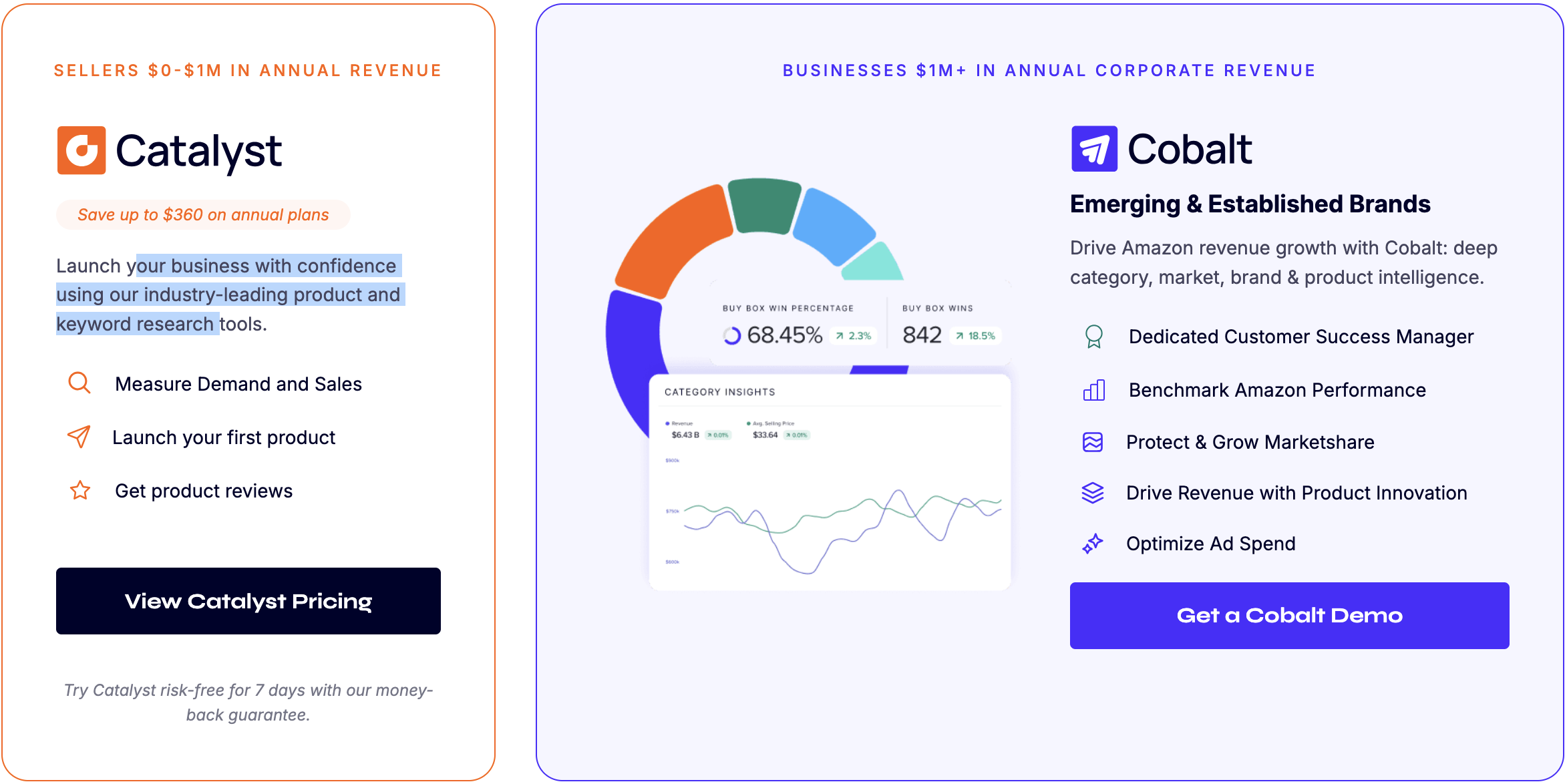
Jungle Scout's case for agencies rests on scale: once an agency is running dozens or hundreds of client accounts, it needs speed and pitch-ready market data instead of tools built for a single seller.
The core piece is Cobalt, its enterprise engine. It pulls category-level market share, digital shelf visibility, and 1P vs. 3P competitor tracking into one place, so an agency can show a prospective client exactly where they're losing ground to rivals rather than describing it in general terms.
Data accuracy is a big part of the pitch too. Jungle Scout has spent over a decade refining its sales estimates against a large GMV dataset, which matters when an agency is using those numbers for client forecasting or an audit pitch. Estimates that don't hold up under scrutiny undercut the whole pitch.
On the integration side, Jungle Scout connects out through its Model Context Protocol (MCP) and Cloud APIs. That lets agency teams pull marketplace data directly into custom dashboards, internal BI tools, or AI workflows using natural language queries, rather than manually exporting and reformatting data every time.
Day-to-day, a few things sit under one dashboard instead of requiring separate subscriptions:
- Keyword Scout for finding keyword opportunities
- Supplier verification
- Ad performance tracking
- Automated review requests
For new client acquisition specifically, Opportunity Finder and Product Tracker let an agency run a quick category audit and surface untapped revenue pockets to bring into a pitch meeting.
Overall, Jungle Scout leans into being the market intelligence and integration layer, useful both for landing new clients and for keeping data flowing into whatever reporting stack the agency already has.
Where a Lighter Tool Fits
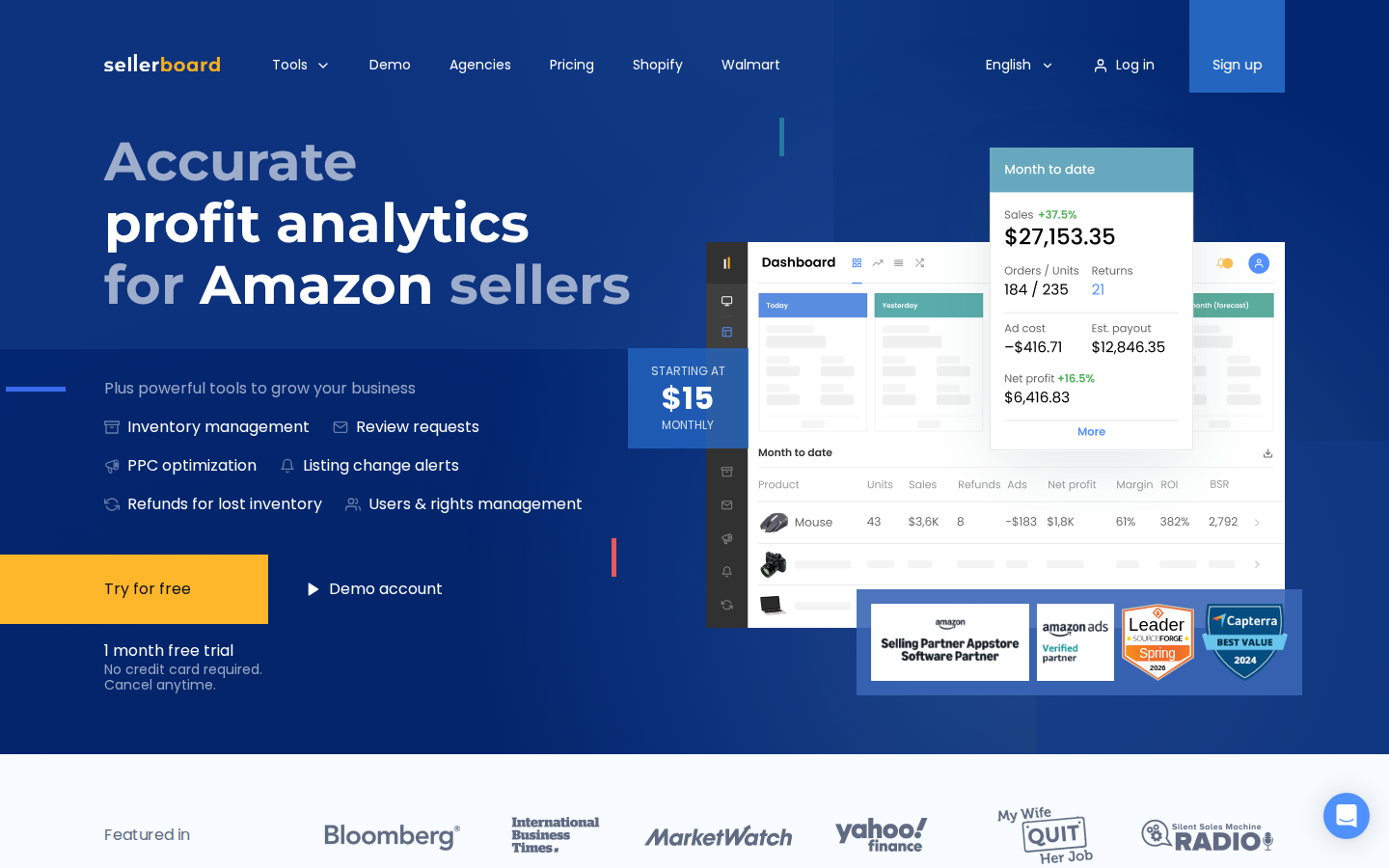
Not every agency needs enterprise-grade market intelligence on day one. If your client roster is small and profit tracking is the main gap, a lightweight profit-and-loss tool can hold you over. Just plan to outgrow it once you're pitching new categories or managing more than a handful of accounts, since that's where market-level data starts to matter.
Quick Comparison
How to Choose
Match the tool to the actual job. If your agency pitches new categories, wholesale opportunities, or client expansion, market-level data matters more than listing tools, and SmartScout's approach to brands and sellers is built around exactly that. If you're running a high volume of client accounts and need polished, automated reporting on a recurring schedule, weigh DataHawk's white label workflow against the annual commitment. If your core service is PPC and listing optimization for a small number of brands, Helium 10 fits without the agency overhead you won't use. See the full platform comparison for how these tools stack up against the rest of the market.
FAQs
What Is the Best Amazon Analytics Platform for Agencies?

It depends on the job. SmartScout fits agencies pitching new categories or wholesale work, since it starts from market and brand data rather than a single product. DataHawk fits agencies managing a high volume of client accounts that need automated, white label reporting.
How Much Does an Amazon Analytics Platform Cost for Agencies?
Pricing ranges widely. SmartScout starts at $29 a month for two users, with a Business tier built for small agencies. Helium 10 starts at $99 a month. DataHawk runs on custom, annual, credit-based contracts with no published price list.
What’s the Difference Between a Solo-Seller Tool and an Agency Tool?
An agency tool adds multi-client workspaces, role-based permissions, white label or branded reporting, and market-level data for pitching new business. A solo-seller tool is built around one catalog and one login.
Can Agencies Use Helium 10 or Jungle Scout Instead of a Dedicated Agency Platform?
Yes, for listing optimization and PPC work on a smaller number of accounts. Neither tool was built with multi-client dashboards or white label reporting in mind, so the workaround gets harder as your client roster grows.
Does SmartScout Have a Plan Built Specifically for Agencies?
Yes. The Business plan is positioned for "brands and small agencies," and the Enterprise tier is built for larger brands, agencies, and retailers with custom pricing.
.png)