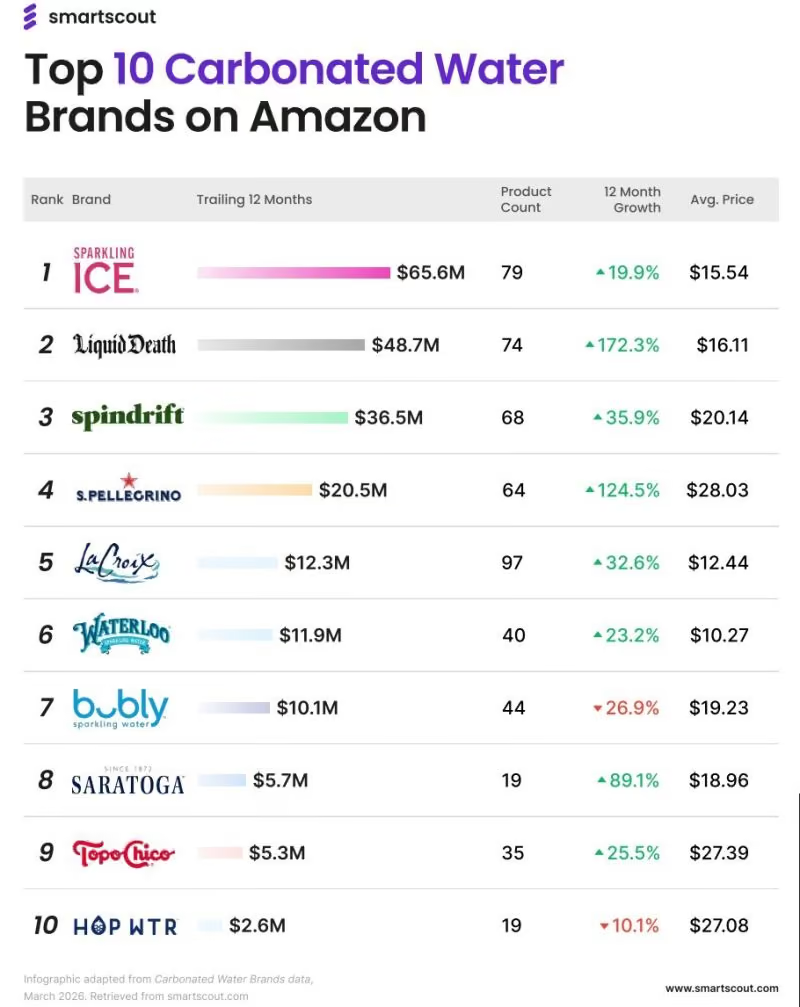
Liquid Death’s rise on Amazon is hard to ignore. Over the past two years, sales are up +172%, and the brand keeps feeding the flywheel with new flavor launches. Even the spicy one is legitimately good, which is not something people usually say about “spicy water.”
But the bigger story is what the leaderboard reveals about the entire category: carbonated water on Amazon is basically a bulk-buy game. It’s starting to look less like a “search and discover” channel and more like a Costco-style pantry restock loop.
Top 10 Carbonated Water Brands on Amazon (TTM)
(SmartScout estimates, trailing 12 months)
Rank
Brand
Est. Yearly Revenue (TTM)
12 Month Growth
1
Sparkling Ice
$65.6M
+19.9%
2
Liquid Death
$48.7M
+172.3%
3
Spindrift
$36.5M
+35.9%
4
S.Pellegrino
$20.5M
+124.5%
5
LaCroix
$12.3M
+32.6%
6
Waterloo
$11.9M
+23.2%
7
bubly
$10.1M
−26.9%
8
Saratoga
$5.7M
+89.1%
9
Topo Chico
$5.3M
+25.5%
10
HOP WTR
$2.6M
−10.1%
What stands out (and why it matters)
1) Every brand here is 1P
That’s the loudest signal in the dataset.
Beverages are heavy, low margin, and operationally unforgiving. The “best” business model on Amazon is often the one with:
the cheapest landed freight
the most consistent in-stock position
the best ability to run promos and hold the Buy Box
the lowest cost per unit to ship and handle
That’s a 1P advantage most of the time.
2) Liquid Death is building a brand moat
Most water brands fight on price-per-can and flavor variety.
Liquid Death fights on identity. The packaging is a billboard. The name is polarizing. The vibe is meme-ready. It turns a commodity product into something people talk about, gift, and share.
That creates real insulation against “another 12-pack is $2 cheaper.”
3) Legacy brands aren’t dead
S.Pellegrino growing triple digits is a reminder that “old brand” does not mean “stagnant brand.”
Amazon isn’t only a disruptor channel. For the right products, it’s also a distribution accelerator for brands that already have trust.
4) Not all boats are rising
bubly is down −26.9% and HOP WTR is down −10.1%. That usually happens in categories where:
price competition intensifies
pack economics change
promotions become more aggressive
or the brand loses momentum in visibility (ads + ranking + reviews + availability)
Is it possible to do beverages as a 3P seller?
Yes, but it’s hard to do at scale and even harder to dominate.
Where 3P typically struggles in beverages:
Shipping economics: water is heavy; shipping kills profit if your cost structure is off by a little
Damage/returns: dented cans, leaking cases, and customer dissatisfaction compound fast
Pricing wars: 1P can often sustain lower pricing and still win the Buy Box consistently
So yes, it’s possible. But the leaderboard tells you it’s not the default path.
Amazon is quietly a Costco competitor
This is the most underrated takeaway. People aren’t shopping carbonated water like they shop gadgets. They’re restocking. That behavior is closer to warehouse club shopping than traditional Amazon browsing.
And that shifts what “winning” looks like:
bigger packs
predictable replenishment
dependable availability
competitive per-unit pricing
“I have to imagine profit margins here are low.” You’re probably right.
But here’s what you might be missing:
Brands may accept lower margin for velocity. High-volume pantry staples can be a strategic channel, not a profit-max channel.
The customer lifetime value can be strong. If you become the default restock, you don’t need to “win discovery” every time.
Promo + Subscribe & Save can drive stability. It’s less about one-time impulse and more about repeat behavior.
Amazon rewards conversion and consistency. In-stock and Buy Box consistency can matter more than branding.
The real question
Liquid Death is proving that branding still matters in a commodity category. But the leaderboard also proves that distribution mechanics matter even more.
So the question isn’t just “who has the best water.” It’s: who can win the restock loop without bleeding out on logistics.
SoldScope has carved out a useful position in the Amazon software market: it offers a broad collection of seller tools without charging the higher prices associated with some established platforms. Its plans cover product and keyword research, rank tracking, listing analysis, review automation, a Chrome extension, and other everyday Amazon workflows.
That makes price an important part of any honest SoldScope comparison. If your only goal is finding the lowest-cost paid toolkit, SoldScope may be hard to beat. Its Starter plan is currently listed at $29 per month, or $24 per month when billed annually.
But the cheapest plan is not automatically the best fit. Some sellers need deeper competitive intelligence, a broader view of brands and categories, more mature operational tools, or data across multiple marketplaces. The best SoldScope alternative depends on what questions you need the software to answer.
Below are five strong alternatives, starting with SmartScout.
Disclosure: This article is published by SmartScout. We put SmartScout first because we believe it is the strongest overall alternative for sellers and brands that want to understand the market beyond individual products. We have also included competitors that may be a better fit for certain budgets and use cases.
SoldScope Alternatives at a Glance
Tool
Best for
Entry price*
Main strength
SmartScout
Sellers, brands, agencies, and wholesale teams
$49/month or $29/month billed annually
Product, keyword, brand, seller, and category intelligence
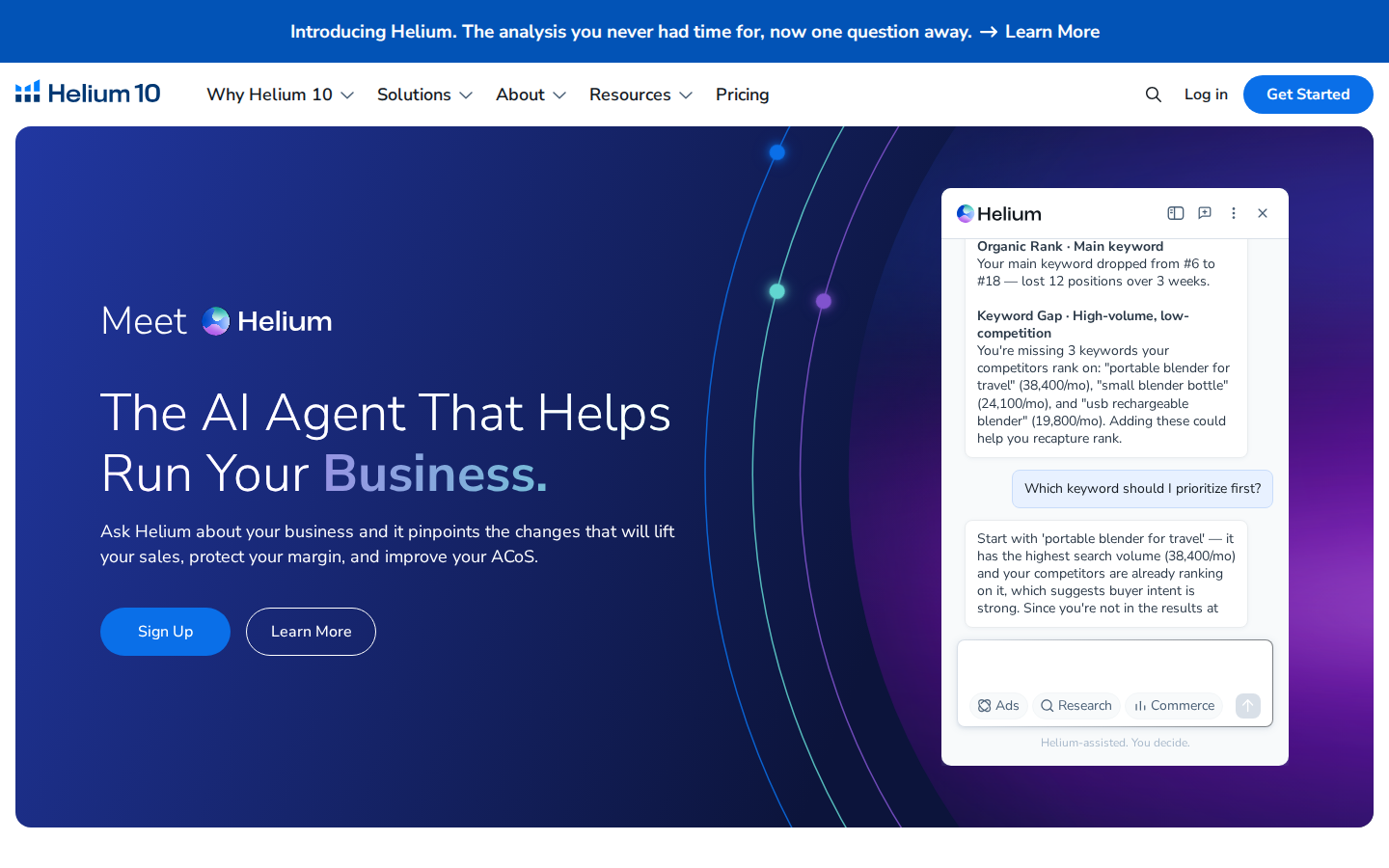
Helium 10
Sellers wanting a large all-in-one operations suite
$129/month or $99/month billed annually
Broad collection of research and operational tools
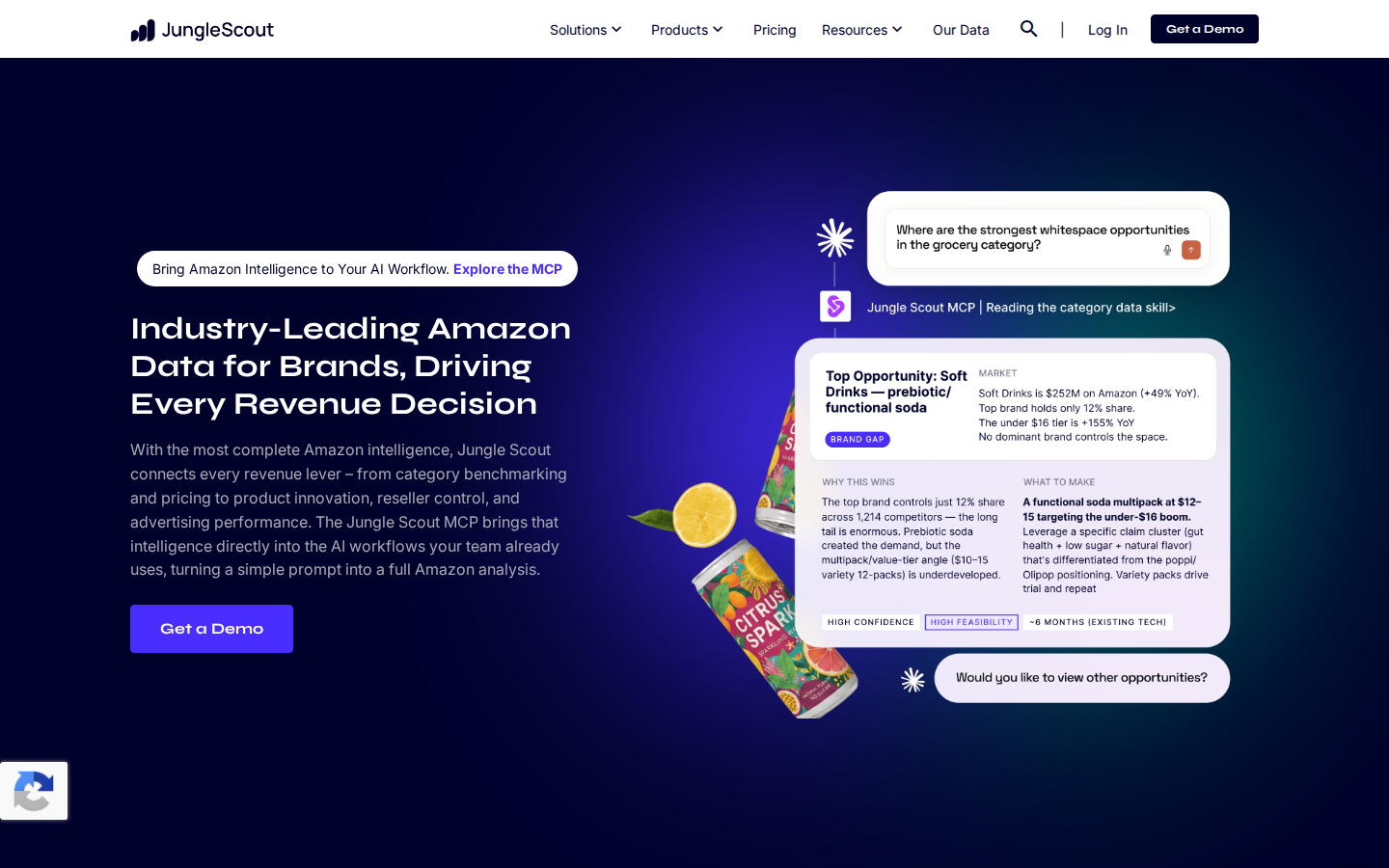
Jungle Scout
New and growing private-label sellers
Varies by plan and billing term
Product discovery, launch workflows, and seller education
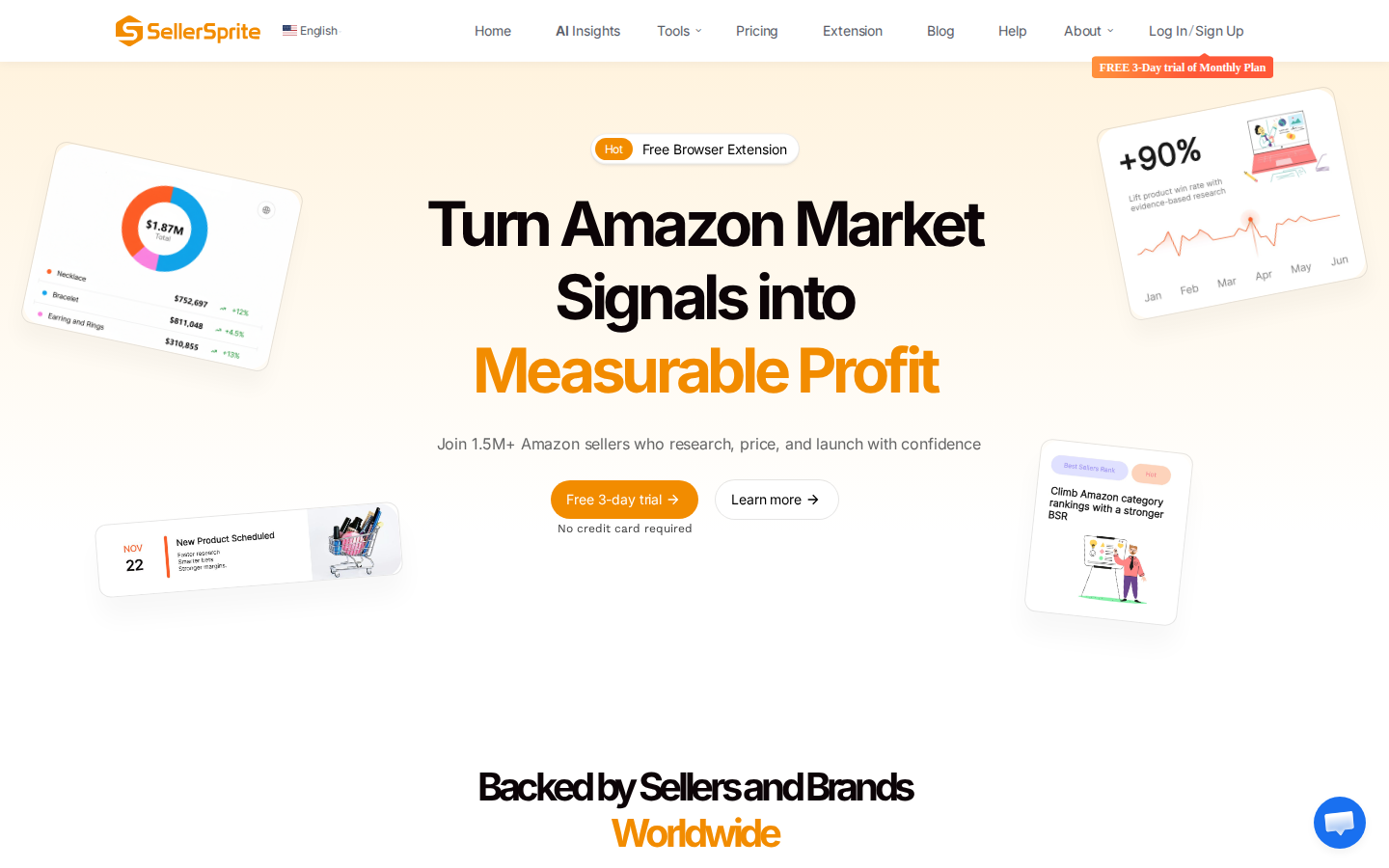
SellerSprite
Keyword-focused sellers and international marketplace research
Varies by plan and region
Keyword mining, reverse ASIN research, and marketplace coverage
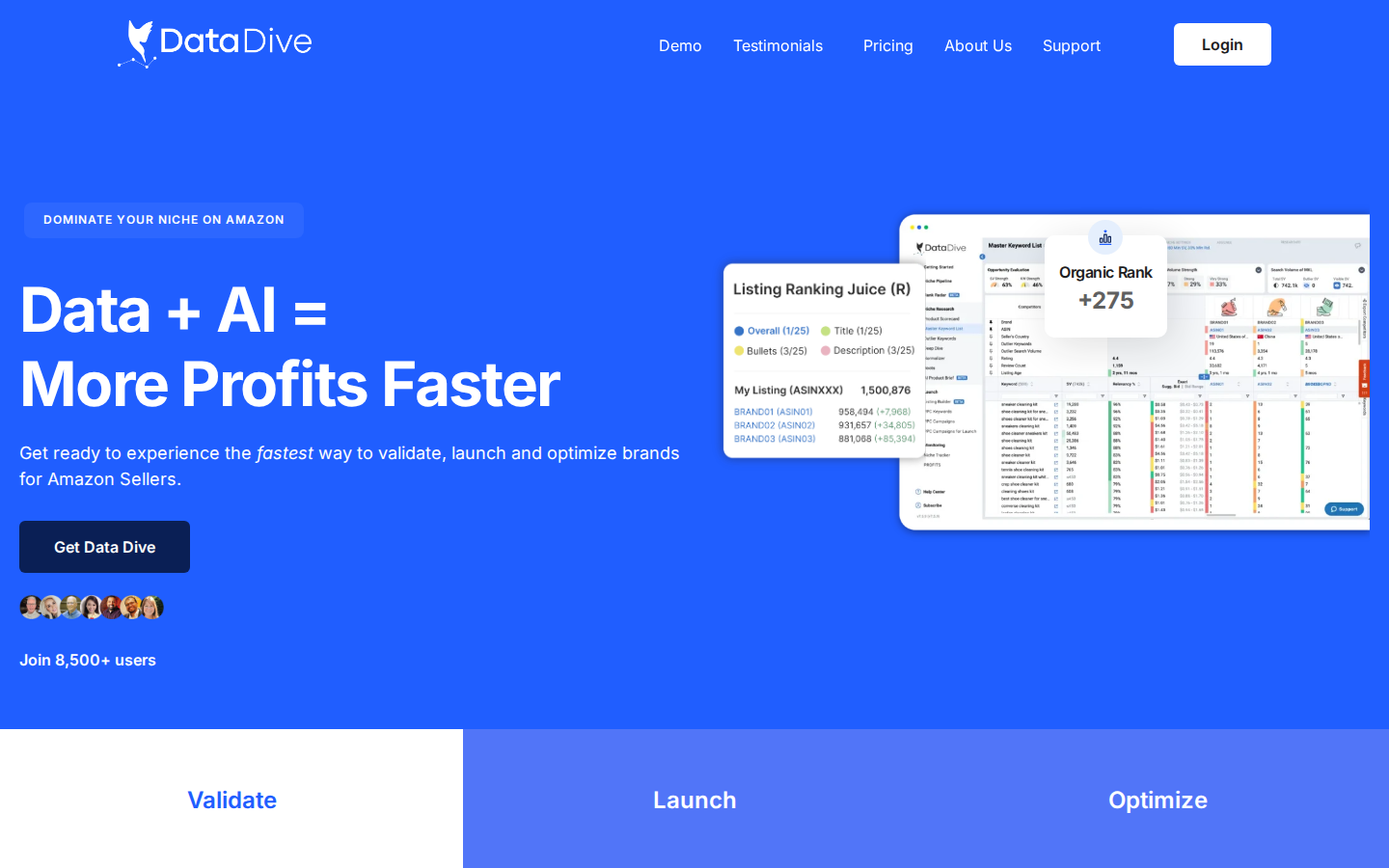
Data Dive
Private-label sellers focused on product development and listing optimization
$39/month or $32/month billed annually
Niche validation, keyword analysis, and listing workflows
*Pricing is based on publicly listed U.S. pricing in September 2026 and can change. Compare current features, limits, and billing terms before subscribing.
1. SmartScout: Best Overall SoldScope Alternative for Market Intelligence
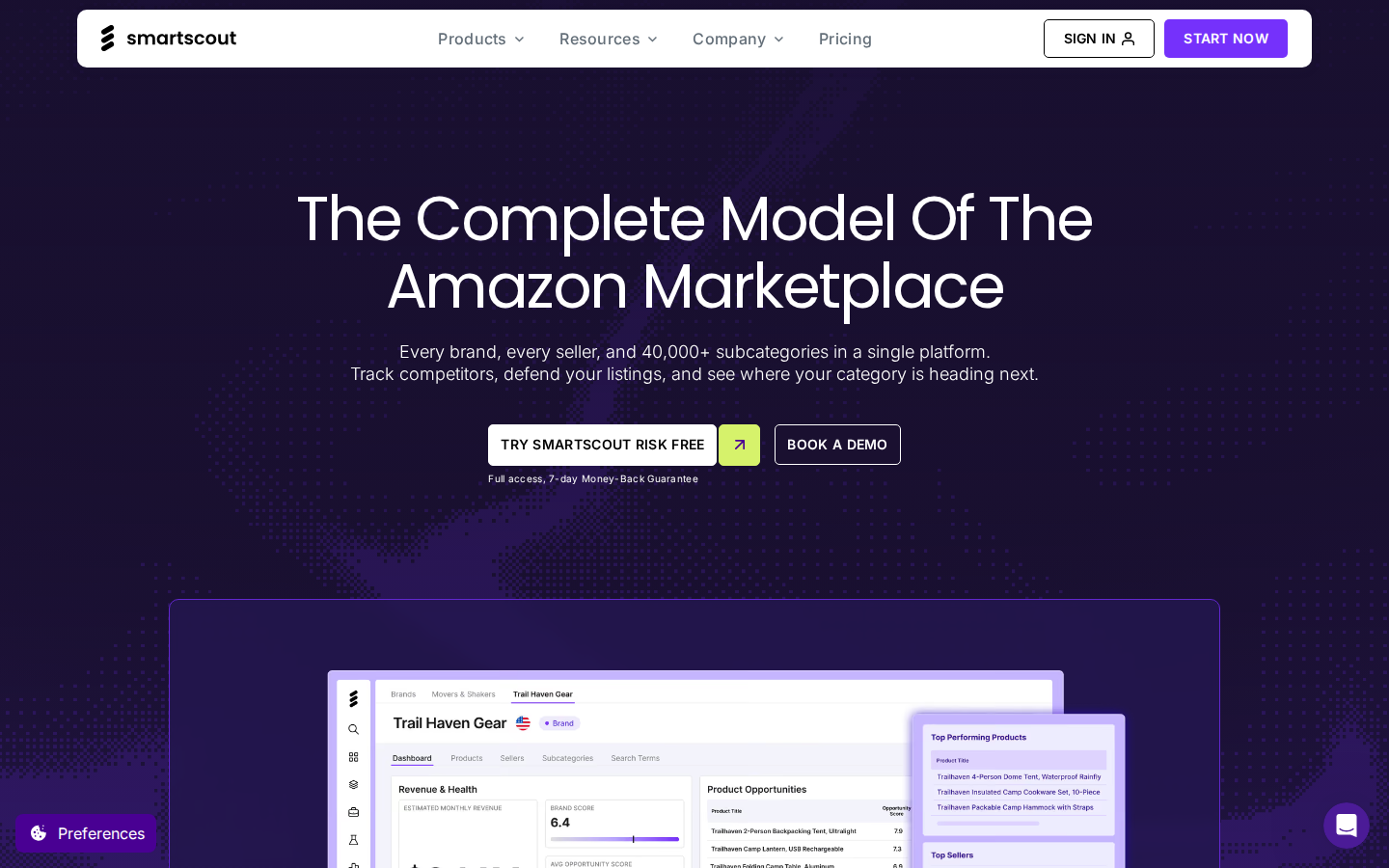
SmartScoutis the best SoldScope alternative for sellers who want to move from researching individual products to understanding entire brands, sellers, niches, and categories.
SoldScope and SmartScout overlap in several practical areas. Both provide tools for Amazon product and keyword research, sales estimation, competitor analysis, and listing-related workflows. The biggest difference is the level at which they are designed to analyze the marketplace.
SmartScout connects product data to a wider competitive picture. Users can research millions of products, examine brands and their catalogs, identify third-party sellers, compare subcategory market share, analyze keyword visibility, and see how traffic connects competing listings. That makes it especially useful for established Amazon sellers, wholesale teams, agencies, aggregators, and brands making category-level decisions.
SmartScout pricing compared with SoldScope
SoldScope is less expensive at the entry level. Its Starter plan is listed at $29 per month or $24 per month billed annually. SmartScout Basic is listed at $49 per month or $29 per month billed annually.
That five-dollar difference between the annual entry plans is important. SoldScope still wins on absolute price, but SmartScout has a genuine budget plan for sellers who do not need its more advanced brand, seller, and category datasets. SmartScout Basic includes product-level research, keyword research, the Product Research Extension, review automation, a price-list scanner, and sales estimates.
SmartScout also offers more expensive plans for teams that need deeper data. Essentials is listed at $119 monthly or $99 per month billed annually, while Business is $299 monthly or $239 per month billed annually. Those are meaningful software expenses, but the comparable upper self-serve pricing is still below Helium 10 Diamond, which is listed at $359 monthly or $279 per month billed annually.
The practical takeaway is simple:
Choose SoldScope when minimizing software cost is the overriding priority.
Choose SmartScout Basic when you want an affordable starting point with a path into a much deeper market-intelligence platform.
Choose SmartScout Essentials or Business when brand, seller, category, market-share, or broader competitive analysis will influence real decisions.
Where SmartScout stands out
Product, keyword, brand, seller, and category-level research
Brand and subcategory market-share analysis
Seller databases, seller history, and catalog research
Rank Maker for reverse ASIN and keyword strategy
Traffic Graph for understanding the competitive landscape around search terms and products
Historical product, pricing, review, offer, and sales-rank data
TikTok Shop research included across current plans, with deeper access by tier
Higher-level tools such as Share of Voice, Ad Spy, custom dashboards, and alerts for qualifying plans
Where SoldScope may be better
Lower entry price
A straightforward toolkit for a solo seller with lighter research needs
Higher included focus on certain operational features at a low price, depending on the plan
Best for: Sellers, brands, agencies, wholesale teams, and marketplace professionals who want competitive context—not just a shortlist of products.
2. Helium 10: Best for a Broad All-in-One Seller Suite
Helium 10 is one of the best-known SoldScope competitors. It combines product research, reverse ASIN keyword research, listing optimization, rank tracking, financial dashboards, inventory management, review requests, reimbursement services, advertising features, and education.
Its breadth is the main attraction. A seller who wants one platform touching research, launch, operations, and advertising may prefer Helium 10 over a more specialized market-intelligence product.
That breadth comes with a higher price. Helium 10 currently lists Platinum at $129 monthly or $99 per month billed annually. Diamond is listed at $359 monthly or $279 per month billed annually, with some advanced capabilities or higher limits available as add-ons. This makes SoldScope's criticism that Helium 10 can feel expensive understandable, especially for a new seller who will use only a fraction of the suite.
SmartScout sits between these positions. Its $29-per-month annual Basic plan is much closer to SoldScope's budget pricing, while its higher plans offer deeper market research without reaching Helium 10 Diamond's current price.
Where Helium 10 stands out
Large suite covering much of the Amazon seller lifecycle
Well-known keyword tools such as Cerebro and Magnet
Listing creation and optimization workflows
Connected-account tools for profits, inventory, and operations
Advertising automation on qualifying plans
Extensive seller education
Where SoldScope may be better
Much lower cost for basic seller research
Less risk of paying for a large suite of tools you rarely use
Simpler choice for sellers who primarily need core research and tracking
Best for: Active private-label sellers who want a broad operations platform and expect to use many parts of it.
3. Jungle Scout: Best for Guided Product Research and Launches
Jungle Scout remains a recognizable option for Amazon sellers researching products and launching private-label brands. Its seller offering focuses on demand validation, keyword research, competitive analysis, listing optimization, rank tracking, and launch support. Jungle Scout also separates its seller-focused Catalyst product from Cobalt, its higher-end platform for established brands and enterprise teams.
Compared with SoldScope, Jungle Scout may appeal to beginners who value education, a familiar research workflow, and a platform organized around moving from product idea to launch. SoldScope may be more attractive when subscription cost and access to a wide list of individual tools are the primary considerations.
Where Jungle Scout stands out
Established product-research workflow
Product discovery and sales-estimation tools
Supplier and launch resources
Training content for newer sellers
A separate enterprise platform for deeper market and brand intelligence
Where SoldScope may be better
Aggressive entry-level pricing
Useful free tools that can be tested before paying
A broad collection of tactical utilities for smaller sellers
Best for: New or growing private-label sellers who want structured product discovery and launch support.
4. SellerSprite: Best for Deep Keyword Research Across Marketplaces
SellerSprite is a strong SoldScope alternative for sellers whose workflow revolves around keywords, reverse ASIN research, competitor traffic, product tracking, and international Amazon marketplaces.
Its toolkit includes product research, category insights, keyword mining, reverse ASIN searches, traffic comparison, keyword conversion-rate data, listing tools, review analysis, and product and keyword monitoring. SellerSprite also offers a free browser extension and supports multiple Amazon marketplaces.
SellerSprite can be data-dense, which experienced researchers may appreciate but newer sellers may find less intuitive. SoldScope's cleaner low-cost proposition may make more sense for someone who wants a simpler set of everyday tools.
Where SellerSprite stands out
Detailed keyword-mining and reverse ASIN workflows
Research across multiple Amazon marketplaces
Competitor traffic and advertising insights
Product, keyword, and new-listing tracking
Free tools and browser extension
Where SoldScope may be better
Simpler positioning for a beginning seller
Transparent, easy-to-understand entry pricing
A balanced toolkit beyond keyword research
Best for: Keyword-heavy researchers, international sellers, and users comfortable working with dense datasets.
5. Data Dive: Best for Private-Label Product Development
Data Dive is more specialized than SoldScope. It is built around niche validation, competitor keyword analysis, product development, listing optimization, rank tracking, and PPC launch workflows.
Its Starter plan is currently listed at $39 monthly or $32 per month billed annually. That is still above SoldScope's entry plan, but it is reasonably close for sellers who specifically want Data Dive's research methodology and listing-development workflow. Higher tiers increase research limits, tracked keywords, collaboration, and PPC capabilities.
Data Dive is less of a general toolbox and more of a guided system for private-label research and optimization. That focus is a benefit if it matches your business model and a limitation if you need seller, wholesale, or market-share intelligence.
Where Data Dive stands out
Structured niche and competitor analysis
Keyword-root and listing optimization workflows
Product briefs and AI-assisted copywriting
Rank tracking and PPC campaign tools
Collaboration features on higher tiers
Where SoldScope may be better
Lower entry price
Broader collection of general seller utilities
Better fit for users who do not need a private-label product-development system
Best for: Private-label sellers validating niches, developing products, and building keyword-driven listings.
How to Choose the Best SoldScope Alternative
Start with the decision you are trying to make—not the length of the feature list.
Choose SmartScout if you need to understand the wider market
SmartScout is the strongest choice when your questions involve brands, sellers, categories, market share, traffic relationships, or competitive positioning. The Basic plan keeps the initial cost approachable, while the higher plans provide room for a growing operation.
Choose Helium 10 if you want one large operational suite
Helium 10 makes sense when product research, listings, inventory, financial tracking, education, and advertising all need to live in one ecosystem—and you will use enough of those features to justify the price.
Choose Jungle Scout if you want a guided path from idea to launch
Jungle Scout is a practical fit for newer private-label sellers who want familiar product-discovery workflows and seller education.
Choose SellerSprite if keyword depth and international research matter most
SellerSprite is worth evaluating when detailed keyword datasets, reverse ASIN workflows, and research across several Amazon marketplaces drive your process.
Choose Data Dive if you have a focused private-label workflow
Data Dive is a good option when you want a repeatable system for validating niches, creating product briefs, optimizing listings, and planning PPC.
Stay with SoldScope if price is the deciding factor
SoldScope is not a bad product simply because alternatives exist. Its biggest strength is legitimate: a wide feature set at a low entry price. A new or part-time seller may not need to pay more until the limits of that toolkit begin to affect decisions.
Final Verdict
The best overall SoldScope alternative is SmartScout for sellers and teams that want a fuller picture of Amazon competition. It costs slightly more than SoldScope at the entry level, but the annual Basic plan keeps the gap small: $29 per month for SmartScout versus $24 per month for SoldScope at current listed prices.
SmartScout also offers something important as a business grows: a clear path from product research into brand, seller, category, market-share, and cross-marketplace intelligence. Its advanced plans are not cheap, and we would not pretend otherwise. However, they remain below Helium 10's current comparable upper self-serve pricing while serving a different, more market-intelligence-oriented use case.
If you are choosing primarily on price, SoldScope deserves serious consideration. If you want software that can help you understand not only what a product is doing but also who is winning the market and why, try SmartScout.
FAQs
5 Best SoldScope Alternatives for Amazon Sellers in 2026
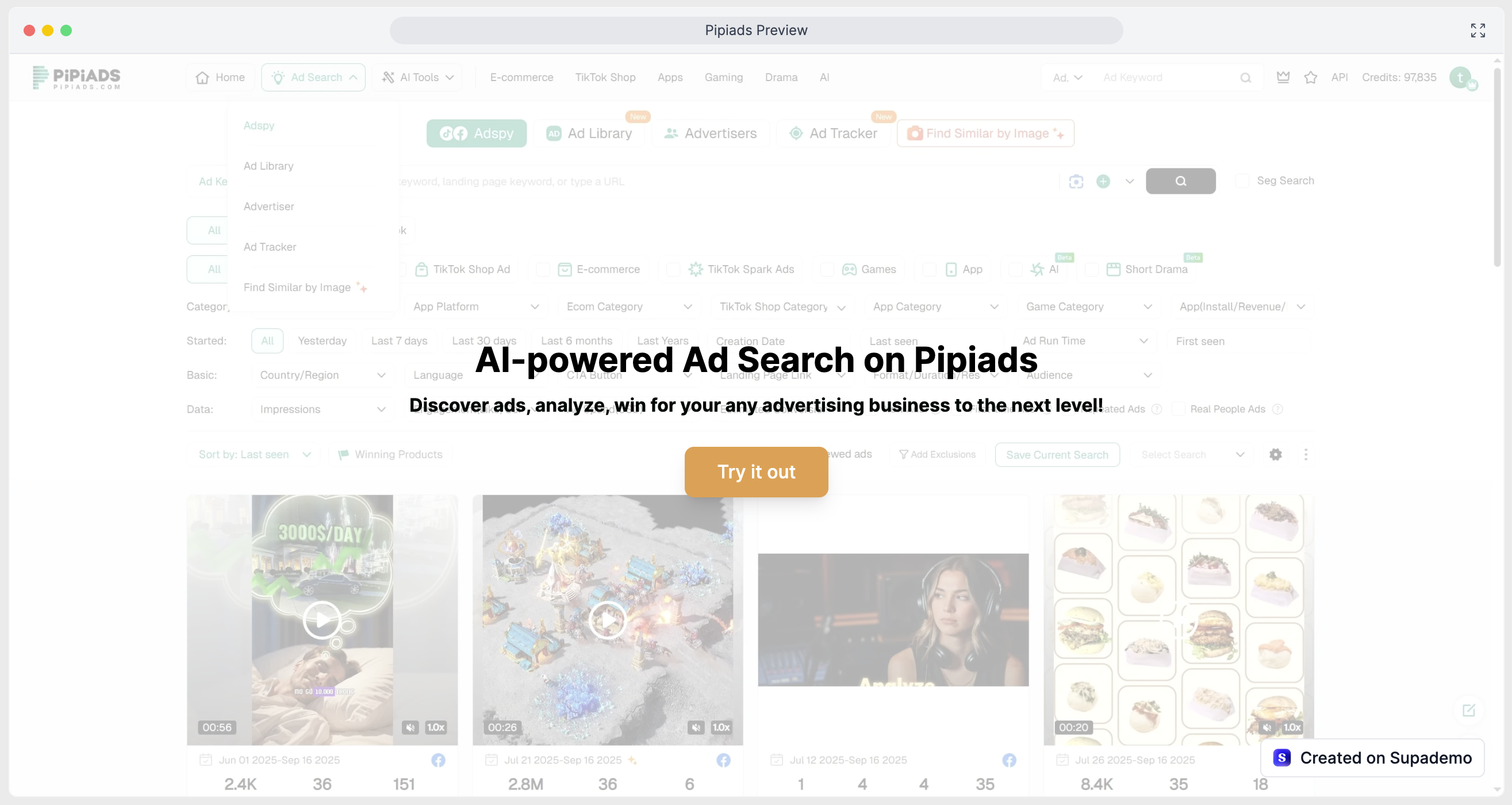
PiPiADS is an advertising-intelligence and ecommerce product-research platform. It helps marketers search TikTok and Facebook ads, track advertisers, research TikTok Shop products and stores, study competitor creatives, and identify products showing strong paid-promotion signals.
That makes PiPiADS useful for performance marketers, dropshippers, media buyers, and creative strategists. Its TikTok Shop tools connect products and stores with ad activity, estimated spend, exposure, conversions, orders, scripts, hooks, and creative formats.
But paid ads are only one part of ecommerce intelligence.
Brands may need category market share, product concentration, creator performance, or cross-marketplace demand. Agencies may require deeper TikTok Shop coverage across shops, livestreams, and international regions. Dropshippers may want multi-platform sourcing tools, while some creative teams only need a large ad library at a lower level of complexity.
We compared five strong PiPiADS alternatives across those different jobs. SmartScout ranks first for TikTok Shop market intelligence and cross-marketplace analysis, but this guide also explains when FastMoss, Kalodata, Minea, BigSpy—or PiPiADS itself—may be the better fit.
Quick answer: SmartScout is the best PiPiADS alternative for brands and agencies that need category sizing, market share, shop analysis, product momentum, and creator performance across TikTok Shop, Amazon, and Walmart. FastMoss is stronger for broad TikTok-native and livestream research, Kalodata for product and creator discovery, Minea for multi-platform dropshipping and ad research, and BigSpy for a broad, accessible creative library.
PiPiADS Alternatives at a Glance
Platform
Best for
Key strength
Important tradeoff
SmartScout
Brands and agencies making market-level decisions
TikTok Shop category intelligence plus Amazon and Walmart research
Not a dedicated multi-network ad library
FastMoss
TikTok-first operators and live-commerce teams
Products, shops, creators, videos, ads, livestreams, regions, and history
Large feature set can require more time and budget
Kalodata
Product, creator, and affiliate teams
Product discovery connected with creators, shops, content, ads, and live commerce
Primarily TikTok-focused rather than cross-marketplace
Minea
Dropshippers researching ads and sourcing products
TikTok and Meta ad research tied to products, shops, and suppliers
Dropshipping orientation may not fit established marketplace brands
BigSpy
Creative teams seeking broad ad inspiration
Large multi-platform ad library, flexible filters, and free access
Less focused on complete TikTok Shop market structure
1. SmartScout: Best PiPiADS Alternative for TikTok Shop Market Intelligence
SmartScout is the best PiPiADS alternative for teams that need to decide which markets are worth entering, not only which ads appear to be working.
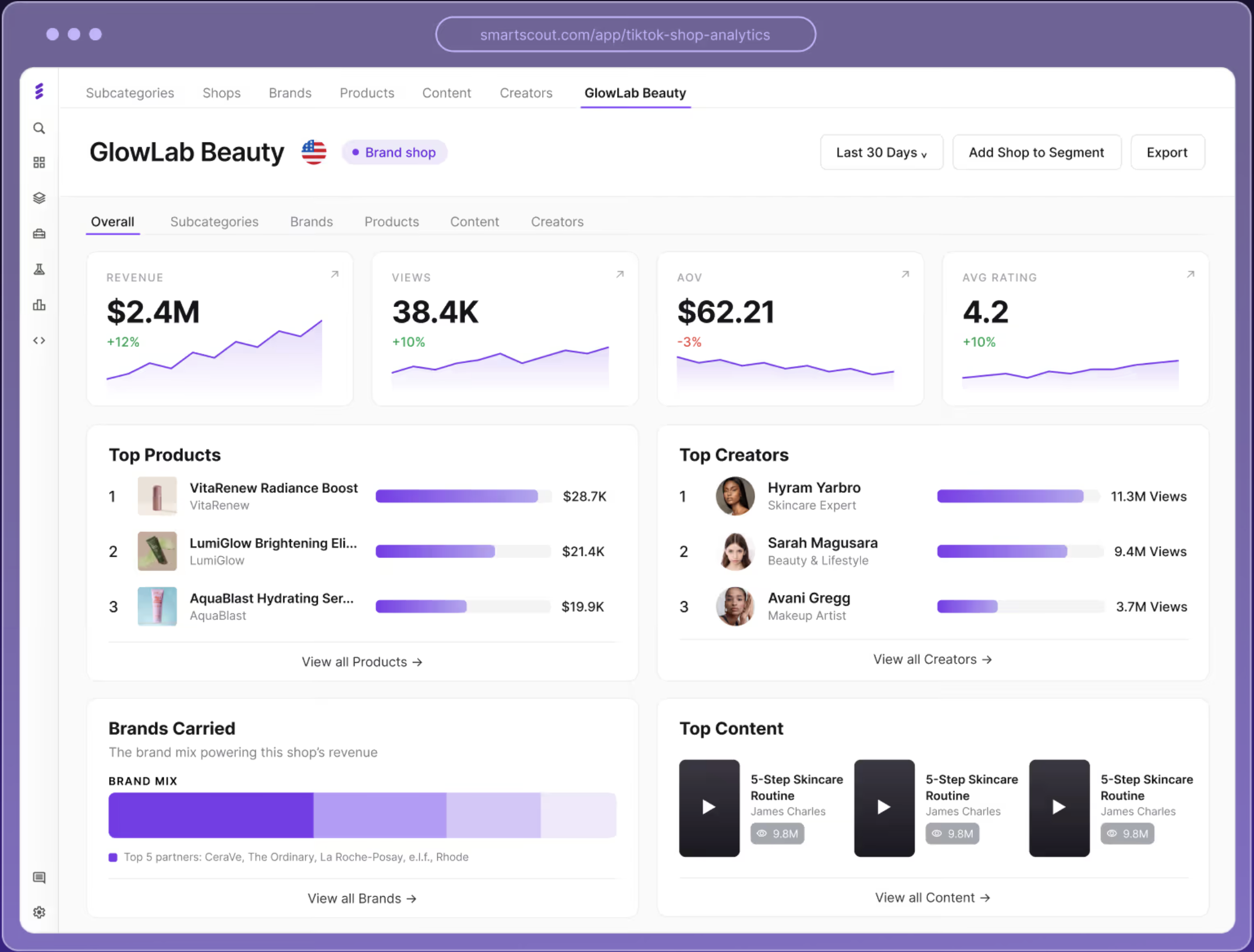
PiPiADS begins with advertising and creative activity. SmartScout begins with the marketplace. Its TikTok Shop analytics cover categories, shops, products, creators, affiliates, videos, and trends. Teams can examine estimated shop revenue, product momentum, category size, market share, product concentration, creator activity, and competitive intensity.
That distinction matters because advertising activity can validate attention without proving that the underlying market is attractive. A product may have several successful ads while competing in a category already dominated by a few shops. Another product may receive less paid promotion but sit inside a rapidly expanding category with more room for a new brand.
SmartScout helps users evaluate the market behind the creative signal.
Its other major advantage is cross-marketplace intelligence. SmartScout supports research across Amazon, TikTok Shop, and Walmart. A brand can investigate a TikTok Shop trend, measure the surrounding category and competitors, then evaluate related demand and marketplace position on Amazon instead of treating each channel as an isolated business.
Product momentum, velocity, creator attention, and repeat video-driven performance
Creator and affiliate analysis based on commerce activity
White-space opportunity research for finding markets where demand may outpace competition
Marketplace intelligence across Amazon, TikTok Shop, and Walmart
TikTok Shop analytics included with every SmartScout plan
Where SmartScout may not be the best fit
If your daily job is to search millions of ad creatives, study scripts and hooks, and build paid-social campaigns, PiPiADS may remain the better specialist. Minea and BigSpy are also more direct alternatives for multi-platform ad discovery.
FastMoss may be better for teams that require extensive livestream analysis or the broadest TikTok-native research environment. SmartScout is strongest when category strategy, competitor share, product opportunity, and cross-marketplace context are the priority.
Best for: Brands, agencies, Amazon sellers expanding to TikTok Shop, Walmart marketplace teams, and ecommerce leaders allocating inventory and marketing resources across channels.
Verdict: Choose SmartScout when the question is larger than “Which ad should we copy?” and includes “How large is this market, who controls it, and where can we actually win?”
2. FastMoss: Best for Broad TikTok Shop and Livestream Research
FastMoss is a strong PiPiADS alternative for teams that want advertising intelligence inside a much broader TikTok Shop research platform.
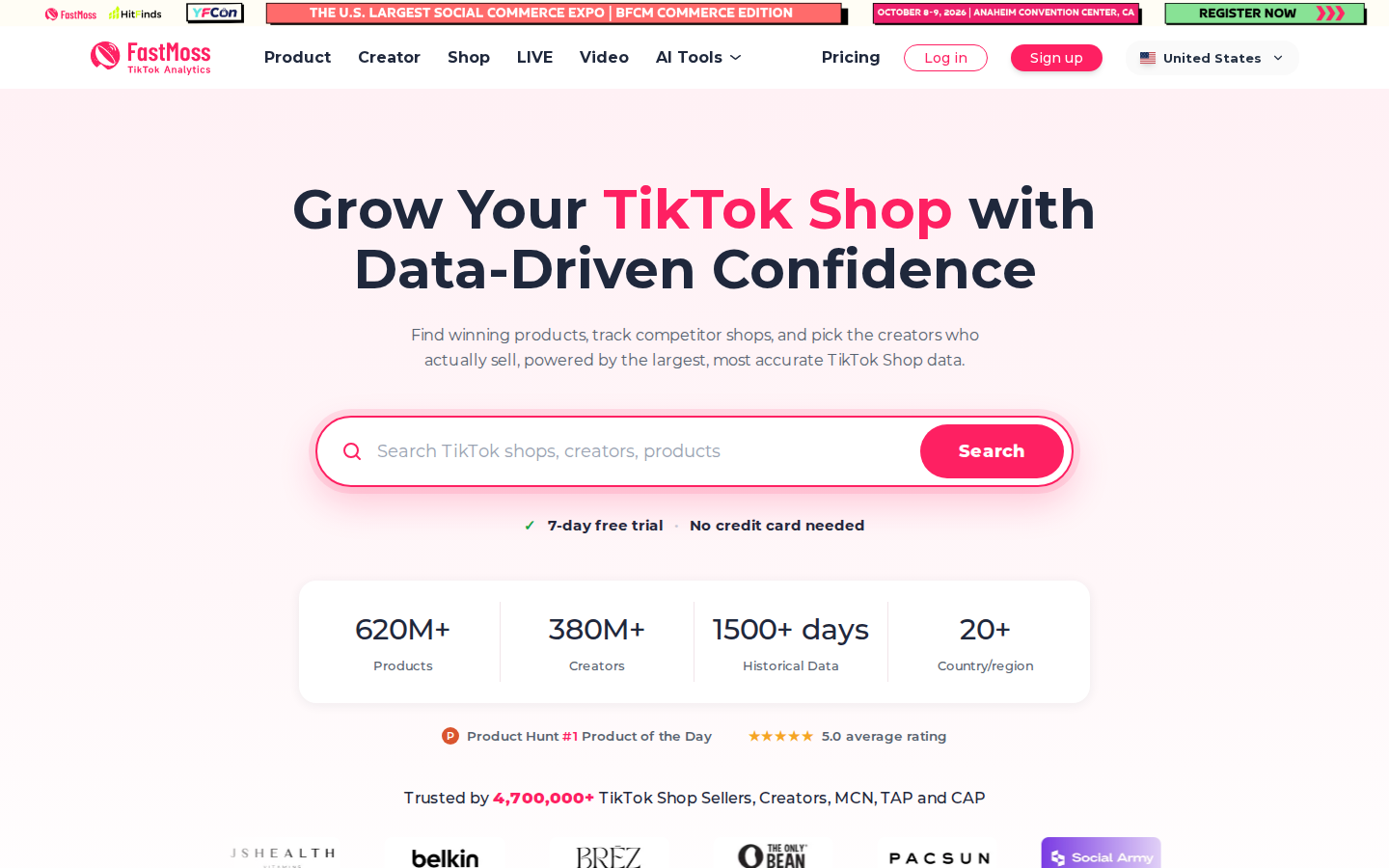
FastMoss covers products, competitor shops, creators, ads, videos, and livestreams across more than 20 countries or regions. It also advertises a large product and creator database and more than 1,500 days of historical data.
Compared with PiPiADS, FastMoss places more emphasis on the entire TikTok commerce ecosystem. Users can research products and creatives, but they can also analyze shops, evaluate creators, monitor live sessions, compare regions, and study longer-term performance.
FastMoss strengths
Broad coverage across TikTok Shop products, shops, creators, ads, videos, and livestreams
Strong competitor-shop and creator-vetting workflows
Livestream research for markets where live commerce drives significant sales
Multi-region coverage for international operators
Long historical windows for seasonality and trend analysis
Developer and AI options for advanced workflows
FastMoss limitations
FastMoss can be more platform than an ad buyer needs. Teams focused strictly on finding creatives may get to answers faster with PiPiADS, Minea, or BigSpy. It is also TikTok-centered, while SmartScout provides stronger context across Amazon, TikTok Shop, and Walmart.
Best for: TikTok-first agencies, experienced sellers, international operators, creator teams, and live-commerce businesses.
3. Kalodata: Best for Product Discovery and Creator Analysis
Kalodata is another strong PiPiADS competitor for TikTok Shop sellers who care more about products and creators than about building a broad cross-network ad library.
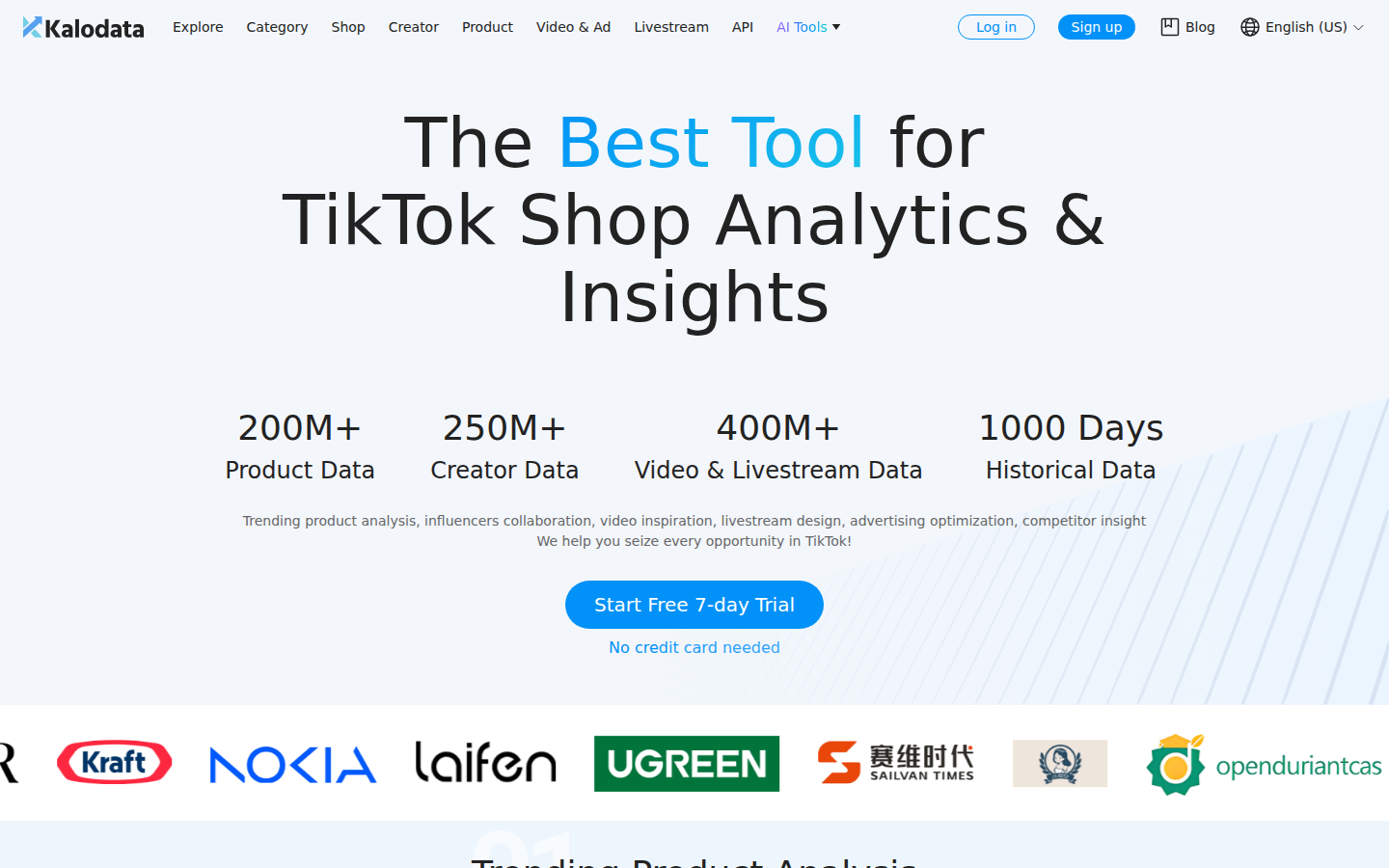
Kalodata covers categories, products, shops, creators, videos, advertising, and livestreams. Teams can use it to discover products, examine competitor shops, connect creator activity with commerce signals, study successful content, and evaluate live selling.
Where PiPiADS uses paid promotion as a central discovery signal, Kalodata offers a more balanced TikTok Shop workflow across products, creators, content, shops, and sales estimates.
Kalodata also states that its transaction and ad-spend figures are modeled from public-channel data and may differ from actual values. It recommends against using estimates for high-precision tasks such as commission settlement. The same caution should apply to every third-party platform in this category.
Kalodata strengths
Product, creator, shop, category, video, ad, and livestream research
Strong product-discovery and affiliate-partner workflows
Content and creator research connected with commerce signals
Historical data for evaluating performance over time
TikTok-native experience built around seller and brand decisions
Kalodata limitations
Kalodata is not primarily a general ad-spy platform across many networks. It may be less useful than PiPiADS, Minea, or BigSpy for teams managing both TikTok and Meta creative research. Brands needing category-first intelligence across several marketplaces may prefer SmartScout.
Best for: TikTok Shop brands, sellers, agencies, affiliate managers, and creator-partnership teams.
4. Minea: Best for Multi-Platform Dropshipping and Product Sourcing
Minea is one of the closest PiPiADS alternatives for dropshippers and ecommerce marketers who want ad research tied directly to product discovery and sourcing.
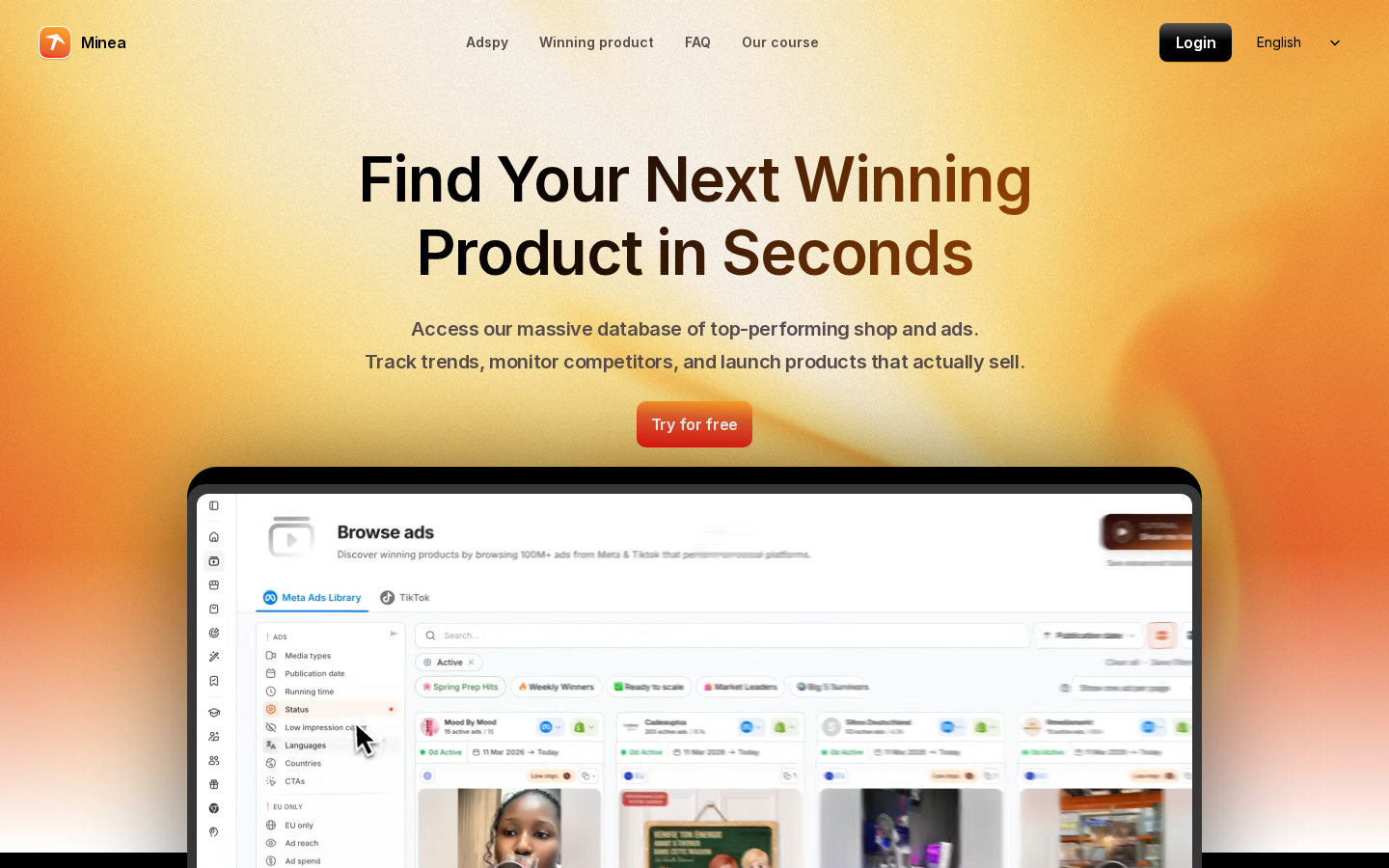
Its TikTok ad-spy tools support creative search, historical performance, competitor tracking, viral-signal detection, and filters by product or niche. Users can study hooks, video formats, music, duration, and creative angles, then connect the ad with product listings, stores, and potential suppliers.
Minea also covers Meta advertising and broader ecommerce research. That makes it useful for operators who discover a product on TikTok but plan to advertise or validate it across multiple social platforms.
Minea strengths
TikTok ad discovery with filters, competitor tracking, and historical signals
Creative analysis covering hooks, formats, sounds, duration, and angles
Product, shop, and supplier research connected with advertised products
Multi-platform workflow spanning TikTok and Meta advertising
Useful path from ad discovery to product sourcing and campaign launch
Minea limitations
Minea is heavily oriented toward dropshipping and rapid product sourcing. An established CPG brand, marketplace agency, or enterprise ecommerce team may care more about category share, competitor structure, creators, and durable market demand than sourcing a product seen in a viral ad.
Minea’s own comparison claims should also be treated as marketing rather than independent evidence. Test the platform using creatives and competitors you already know before relying on its viral or performance signals.
Best for: Dropshippers, ecommerce entrepreneurs, paid-social marketers, and teams moving from creative discovery to product sourcing.
5. BigSpy: Best for Broad and Accessible Ad Inspiration
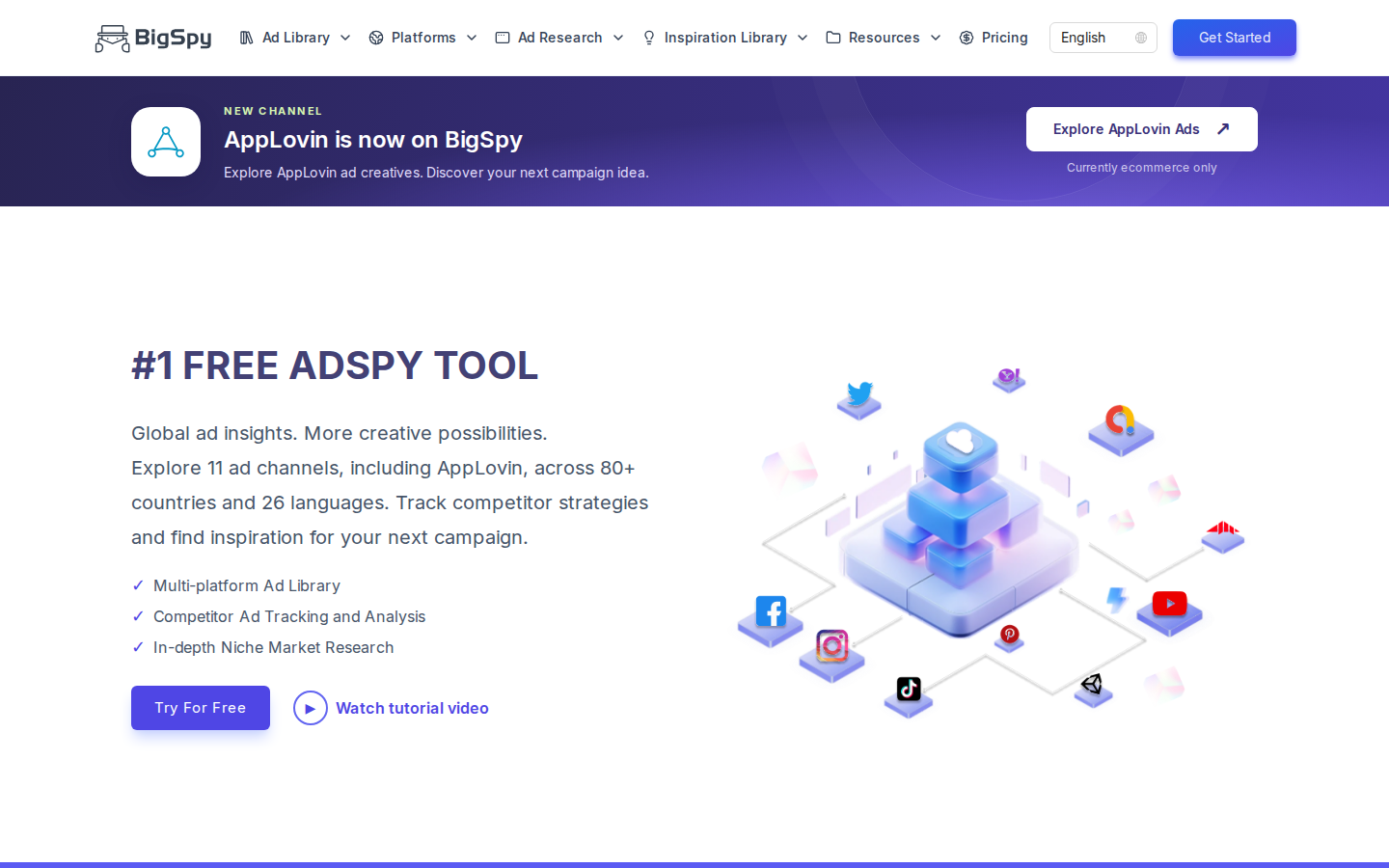
BigSpy is a broad ad-intelligence platform for creative discovery and competitor research. It supports TikTok Shop ads, TikTok creative research, advertiser and domain analysis, popular and rising creative charts, ad copy research, and additional networks beyond TikTok.
BigSpy’s TikTok tools allow users to filter by keyword, advertiser, ad text, video subtitles, landing page, country, objective, engagement, duration, language, industry, and time period. The company says its TikTok dataset spans more than 70 countries or regions and includes millions of ad assets.
It also provides a free version, making it a practical place for a small creative team to collect examples and explore ad patterns before purchasing a more specialized platform.
BigSpy strengths
Broad creative library across TikTok and other advertising platforms
Flexible search across ad text, subtitles, advertisers, domains, and landing pages
Popular, rising, and new-creative discovery
Filters for geography, objective, engagement, duration, language, industry, and time
Free access for basic creative research
BigSpy limitations
BigSpy is strongest as an ad library and creative-research system. It does not replace TikTok Shop category sizing, shop performance, creator sales analysis, livestream intelligence, or cross-marketplace market share.
Creative metrics such as likes, comments, shares, and estimated impressions are useful signals, but they do not reveal margin, return rates, fulfillment quality, or actual profitability.
Best for: Creative strategists, media buyers, agencies, SaaS marketers, app marketers, and ecommerce teams seeking broad ad inspiration.
Is PiPiADS Still the Right Choice?
PiPiADS may remain the best option when advertising is the center of your TikTok Shop research process.
Its official platform combines ad search, advertiser research, tracking, image search, TikTok Shop products, stores, top-product lists, store monitoring, and creative analysis. It is built to help users connect a product with the ads, scripts, hooks, advertiser behavior, and estimated performance behind it.
Stay with PiPiADS if:
Your team spends most of its research time studying TikTok and Facebook ads.
You want product and store discovery closely connected with paid-promotion signals.
Creative hooks, scripts, formats, landing pages, and advertiser tracking drive your workflow.
You operate in dropshipping or performance marketing, where testing speed matters more than category strategy.
PiPiADS already covers the networks, countries, filters, and history your team needs.
An alternative makes more sense when advertising data is only one input into a larger market, product, creator, or channel decision.
How to Choose the Best PiPiADS Alternative
Choose SmartScout for TikTok Shop category sizing, market share, shops, products, creators, trends, and unified Amazon and Walmart intelligence.
Choose FastMoss for deep TikTok-native analysis, livestreams, international coverage, and longer historical research.
Choose Kalodata for product discovery and creator analysis inside a broad TikTok Shop workflow.
Choose Minea for TikTok and Meta ad research tied to dropshipping products, stores, and supplier discovery.
Choose BigSpy for a broad, accessible ad library and multi-platform creative inspiration.
Stay with PiPiADS when detailed ad, advertiser, creative, store, and product research is the primary job.
A Note About Ad and TikTok Shop Data Accuracy
Third-party platforms generally collect public signals and use proprietary models to estimate impressions, sales, conversions, spend, orders, and attribution. These values are directional—not audited campaign or financial data.
Ad activity can help validate demand, but it has important limits:
A long-running ad does not prove the campaign is profitable.
High engagement does not guarantee purchases.
Estimated spend and conversion figures may differ materially from the advertiser’s actual results.
A winning creative can be difficult to reproduce without the same offer, audience, brand trust, landing page, inventory, and fulfillment.
A product can perform in paid social while competing in an unattractive or saturated category.
Use first-party TikTok Ads Manager and Seller Center data for your own exact performance. Use PiPiADS and its alternatives for competitive research, creative inspiration, product discovery, and market signals that first-party analytics cannot show.
Final Recommendation
PiPiADS is a credible specialist for marketers who want to connect TikTok Shop products and stores with ads, advertisers, scripts, hooks, and paid-promotion signals.
But when the decision requires category market share, competitive concentration, shop performance, creator activity, and connections between TikTok Shop and other marketplaces, SmartScout is the strongest PiPiADS alternative.
Explore SmartScout TikTok Shop Analytics to research shops, products, categories, creators, affiliates, videos, and emerging opportunities alongside Amazon and Walmart intelligence.
FAQs
5 Best PiPiADS Alternatives for TikTok Shop and Ad Research in 2026
FastMoss is one of the most comprehensive TikTok Shop analytics platforms available. It covers product discovery, competitor shops, creators, ads, videos, and livestreams across multiple regions. Its scale and TikTok-native depth make it a serious option for sellers, agencies, creators, and live-commerce teams.
But a large feature set is not always the same thing as the right fit.
Some brands need category market share and cross-marketplace intelligence more than another TikTok-only dashboard. Other teams want a simpler starting point, a stronger focus on creator attribution, specialized ad intelligence, or API access for custom reporting.
We compared five of the best FastMoss alternatives based on those real use cases. SmartScout ranks first for its category-level analysis and unified Amazon, TikTok Shop, and Walmart research, but this guide also explains where each competitor—and FastMoss itself—may be the better choice.
Quick answer: SmartScout is the best overall FastMoss alternative for brands and agencies that want TikTok Shop category sizing, market share, product momentum, shop analysis, and creator performance alongside Amazon and Walmart intelligence. Kalodata is the closest TikTok-native alternative, EchoTik works well for lighter research, PiPiADS specializes in paid-ad intelligence, and Tabcut is a strong option for API-driven reporting.
FastMoss Alternatives at a Glance
Platform
Best for
Key strength
Important tradeoff
SmartScout
Brands and agencies operating across marketplaces
Category market share plus Amazon, TikTok Shop, and Walmart intelligence
Less focused on highly detailed livestream workflows
Kalodata
TikTok-first product and creator teams
Product, creator, video, shop, ad, and livestream analysis
Primarily a TikTok Shop platform rather than a cross-marketplace system
EchoTik
Beginners and smaller sellers
Accessible product, shop, creator, and content research
May lack the depth advanced teams expect from FastMoss
PiPiADS
Performance marketers and creative teams
TikTok Shop ad and competitor creative research
Advertising focus does not replace broader market intelligence
Tabcut
Data teams and custom reporting workflows
TikTok Shop API with historical and multi-region data
Requires technical resources to realize its full value
1. SmartScout: Best Overall FastMoss Alternative for Market Intelligence
SmartScout is the best FastMoss alternative for teams that need not only to simply identify what is selling today but also to evaluate the market around a product.
Its TikTok Shop analytics cover products, shops, categories, creators, affiliates, videos, and trends. SmartScout combines estimated shop revenue and product momentum with category sizing, market share, product concentration, and competitive intensity. This helps users distinguish an attractive market from a product that is briefly going viral inside an already crowded category.
That market-structure view is especially useful for established brands. Before committing inventory, recruiting creators, or increasing ad spend, a team can examine how large a category is, whether revenue is concentrated among a few shops, which products are gaining durable momentum, and where demand may be growing faster than competition.
SmartScout’s other major advantage is marketplace breadth. It supports intelligence across Amazon, TikTok Shop, and Walmart. Brands and agencies can research opportunities and competitors across channels without assembling a separate platform and research method for each marketplace.
Product momentum, velocity, creator attention, and video-driven demand signals
Creator and affiliate analysis tied to commerce activity
Unified research across Amazon, TikTok Shop, and Walmart
TikTok Shop analytics included with every SmartScout plan
Where SmartScout may not be the best fit
FastMoss may remain the better option for operators whose work is centered on detailed livestream monitoring, extensive international TikTok Shop coverage, or a very broad TikTok-native toolset. Kalodata may also appeal to teams that want product, creator, video, and livestream research inside a platform devoted primarily to TikTok commerce.
SmartScout is strongest when the question is broader: Which markets are worth entering, who controls them, and how does the opportunity compare across marketplaces?
Best for: Brands, agencies, Amazon sellers expanding to TikTok Shop, Walmart marketplace teams, and ecommerce leaders allocating resources across channels.
Verdict: Choose SmartScout when category strategy, competitive market share, and cross-marketplace intelligence matter more than having the largest collection of TikTok-specific screens.
2. Kalodata: Best Direct Alternative for Product and Creator Research
Kalodata is one of the closest direct FastMoss competitors. Its platform covers categories, shops, creators, products, videos, ads, and livestreams, making it a credible replacement for teams that want a broad TikTok Shop research suite.
Kalodata is particularly strong for product discovery and creator analysis. Sellers can research trending products, evaluate shops, study the videos and livestreams connected with sales activity, and identify creators who may be effective affiliate partners.
Kalodata also states clearly that its transaction and ad-spend figures are estimates built from public-channel data and should not be used for high-precision tasks such as commission settlement. That is a useful and realistic standard for evaluating every third-party TikTok Shop platform.
Kalodata strengths
Broad coverage of products, creators, shops, categories, videos, ads, and livestreams
Strong workflows for finding products and evaluating creator partnerships
TikTok-native interface designed around commerce research
Historical data and multi-entity analysis for connecting content with sales signals
Kalodata limitations
Like FastMoss, Kalodata is primarily a TikTok Shop research product. Teams that also need deep Amazon and Walmart intelligence may prefer SmartScout’s unified marketplace approach. FastMoss may still be preferable for users who value its claimed data scale, longer historical coverage, or existing live-commerce workflow.
Best for: TikTok-first sellers, agencies, brands, and affiliate teams focused on product and creator research.
3. EchoTik: Best for Beginners and Lightweight TikTok Shop Research
EchoTik is a practical FastMoss alternative for users who need the central research workflows without starting with such a large and complex platform.
EchoTik connects product, store, creator, and content signals for product selection, competitor tracking, and campaign planning. It also offers browser-based tools, which can be useful for sellers who prefer to research while browsing rather than constantly moving between TikTok and a separate analytics dashboard.
EchoTik strengths
Research across products, stores, creators, videos, and livestream activity
Approachable workflow for early-stage sellers
Competitor monitoring and product-discovery use cases
Browser-based research options
EchoTik limitations
FastMoss is built for much deeper TikTok-native research and advertises extensive historical and regional coverage. Advanced operators, large agencies, and livestream-heavy teams may find EchoTik too lightweight. Brands requiring category market share or cross-marketplace comparisons may be better served by SmartScout.
Best for: New TikTok Shop sellers, individual researchers, and smaller teams seeking an accessible starting point.
4. PiPiADS: Best for TikTok Shop Ads and Creative Research
PiPiADS is a specialized FastMoss alternative for teams whose TikTok Shop strategy is driven by paid advertising.
The platform helps users discover products through advertising activity, inspect competitor creatives, track stores and advertisers, and analyze signals such as estimated spend, exposure, conversions, and orders. Creative teams can study video hooks, scripts, formats, offers, and product pages connected with active campaigns.
This is useful because sustained ad activity can provide a different signal than organic virality. If an advertiser continues running a creative, the campaign may be producing enough return to justify continued spend. That does not prove profitability, but it gives researchers another way to prioritize products and creative concepts for further validation.
PiPiADS strengths
Deep focus on TikTok ad creatives and competitor advertising activity
Product discovery informed by paid-media signals
Competitor store and advertiser monitoring
Creative references for hooks, scripts, formats, offers, and landing pages
PiPiADS limitations
PiPiADS is an advertising specialist. It does not replace category sizing, complete creator research, livestream analysis, or a unified cross-marketplace view. FastMoss is the better all-around tool for teams that need ads to sit alongside products, creators, shops, and livestreams in one TikTok-native platform.
Best for: Performance marketers, media buyers, dropshippers, creative strategists, and brands with meaningful TikTok ad spend.
5. Tabcut: Best for TikTok Shop API Access and Custom Dashboards
Tabcut is a compelling FastMoss alternative for companies that want TikTok Shop data inside internal dashboards, spreadsheets, models, or automated client reports.
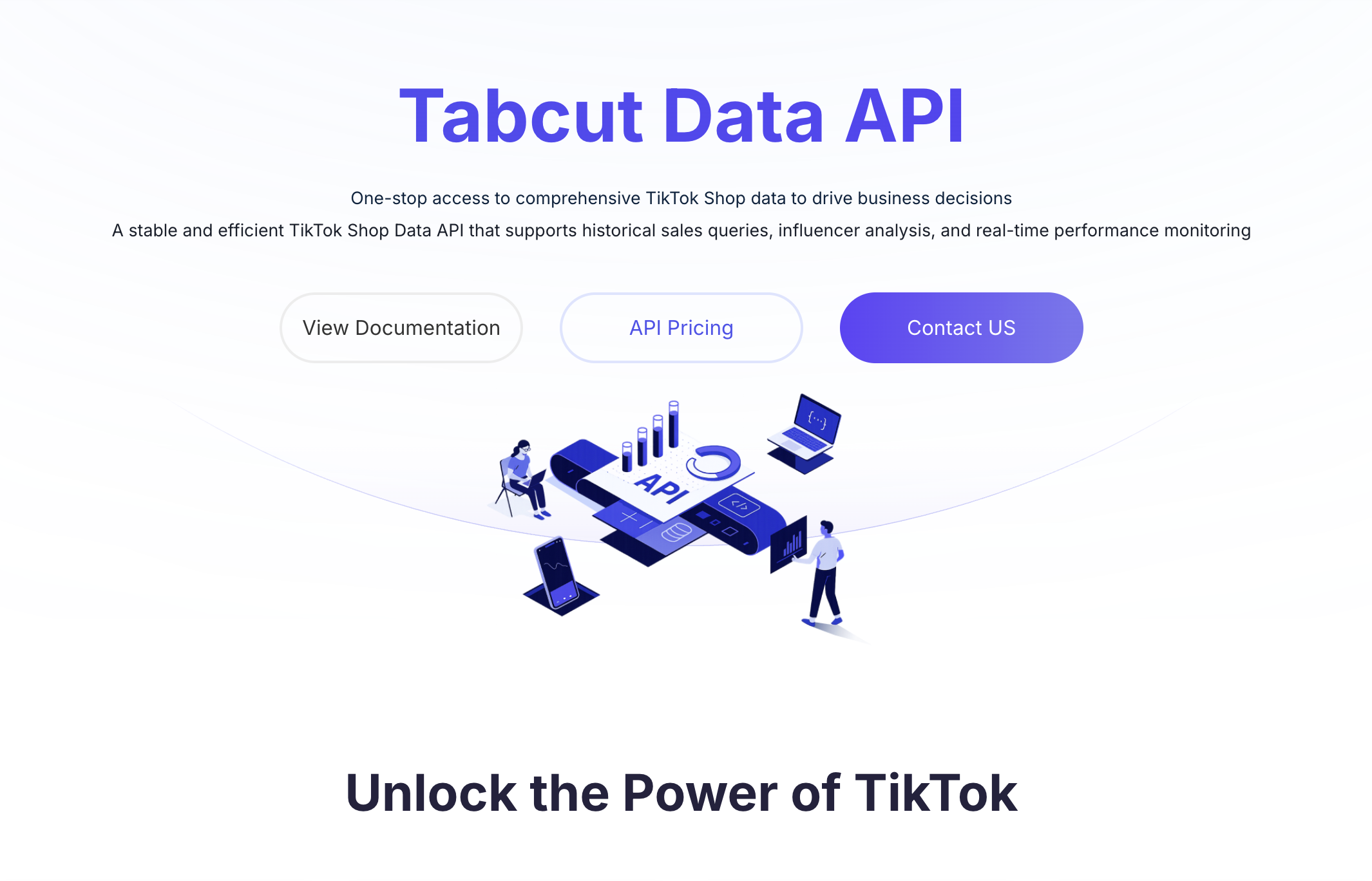
Its API covers products, stores, influencers, videos, livestreams, and ads. Tabcut advertises historical queries, multi-region coverage, daily updates, custom date ranges, and custom API development. That makes it relevant to consulting firms, agencies, investment teams, and brands with their own data infrastructure.
Tabcut strengths
Programmatic access to major TikTok Shop data entities
Historical and multi-region research capabilities
Suitable for recurring reports and internal business-intelligence workflows
Custom API development options for specialized requirements
Tabcut limitations
API access creates work as well as flexibility. Your team needs the technical resources to integrate, validate, monitor, and maintain the resulting data pipeline. FastMoss, SmartScout, or Kalodata will deliver answers faster for users who want a ready-made research interface rather than a development project.
Best for: Data teams, developers, consultancies, agencies, and enterprises building custom TikTok Shop reporting.
Is FastMoss Still the Right Choice?
FastMoss remains a strong choice when your business is deeply centered on TikTok Shop and wants broad native coverage in one platform. Its official site highlights product discovery, competitor shops, creator vetting, ads, videos, livestreams, more than 20 countries or regions, and more than 1,500 days of historical data.
It may be the best fit if:
Livestream commerce is a central sales channel for your team.
You operate across several international TikTok Shop markets.
You want deep product, creator, shop, ad, video, and livestream research in one interface.
Your team already knows the platform and benefits from its breadth more than it suffers from its complexity.
An alternative makes more sense when FastMoss’s strongest capabilities do not match your primary decision. Paying for maximum TikTok-native breadth is less useful if you mainly need category market share across channels, a simpler research experience, paid-ad intelligence, or an API.
How to Choose the Best FastMoss Alternative
Start with the decision you need the platform to improve:
Choose SmartScout for category sizing, market share, competitive intelligence, and unified research across Amazon, TikTok Shop, and Walmart.
Choose Kalodata for a close TikTok-native alternative centered on product, creator, video, shop, and livestream research.
Choose EchoTik for accessible, lightweight research and competitor monitoring.
Choose PiPiADS when paid advertising and creative intelligence drive your TikTok Shop strategy.
Choose Tabcut when your team wants TikTok Shop data through an API for custom reporting.
Stay with FastMoss when livestream depth, international TikTok Shop coverage, historical data, and a broad native feature set are the priority.
A Note About TikTok Shop Data Accuracy
Third-party TikTok Shop platforms generally collect public marketplace signals and apply proprietary models to estimate sales, revenue, ad spend, and attribution. These figures are best used as directional competitive intelligence—not audited financial data.
Use TikTok Seller Center for exact first-party information about your own shop. Use FastMoss and the alternatives above to research competitors, categories, creators, content, and market movement that first-party analytics cannot fully reveal.
For major sourcing, inventory, partnership, or advertising decisions, validate important conclusions with multiple signals rather than relying on one estimated number.
Final Recommendation
FastMoss is a credible, feature-rich TikTok Shop analytics platform and may remain the best choice for TikTok-native teams that need extensive livestream, regional, and historical research.
But if your priority is understanding category size, market share, competitive concentration, and opportunities across multiple marketplaces, SmartScout is the strongest FastMoss alternative.
Explore SmartScout TikTok Shop Analytics to research shops, products, categories, creators, affiliates, videos, and emerging opportunities alongside Amazon and Walmart market intelligence.
FAQs
5 Best FastMoss Alternatives for TikTok Shop Analytics in 2026
Lorem ipsum dolor sit amet, consectetur adipiscing elit, sed do eiusmod tempor incididunt ut labore et dolore magna aliqua. Ut enim ad minim veniam, quis nostrud exercitation ullamco laboris nisi ut aliquip ex ea commodo consequat. Duis aute irure dolor in reprehenderit in voluptate velit esse cillum dolore eu fugiat nulla pariatur.
Lorem ipsum dolor sit amet, consectetur adipiscing elit, sed do eiusmod tempor incididunt ut labore et dolore magna aliqua. Ut enim ad minim veniam, quis nostrud exercitation ullamco laboris nisi ut aliquip ex ea commodo consequat. Duis aute irure dolor in reprehenderit in voluptate velit esse cillum dolore eu fugiat nulla pariatur.
Lorem ipsum dolor sit amet, consectetur adipiscing elit, sed do eiusmod tempor incididunt ut labore et dolore magna aliqua. Ut enim ad minim veniam, quis nostrud exercitation ullamco laboris nisi ut aliquip ex ea commodo consequat. Duis aute irure dolor in reprehenderit in voluptate velit esse cillum dolore eu fugiat nulla pariatur.



.png)