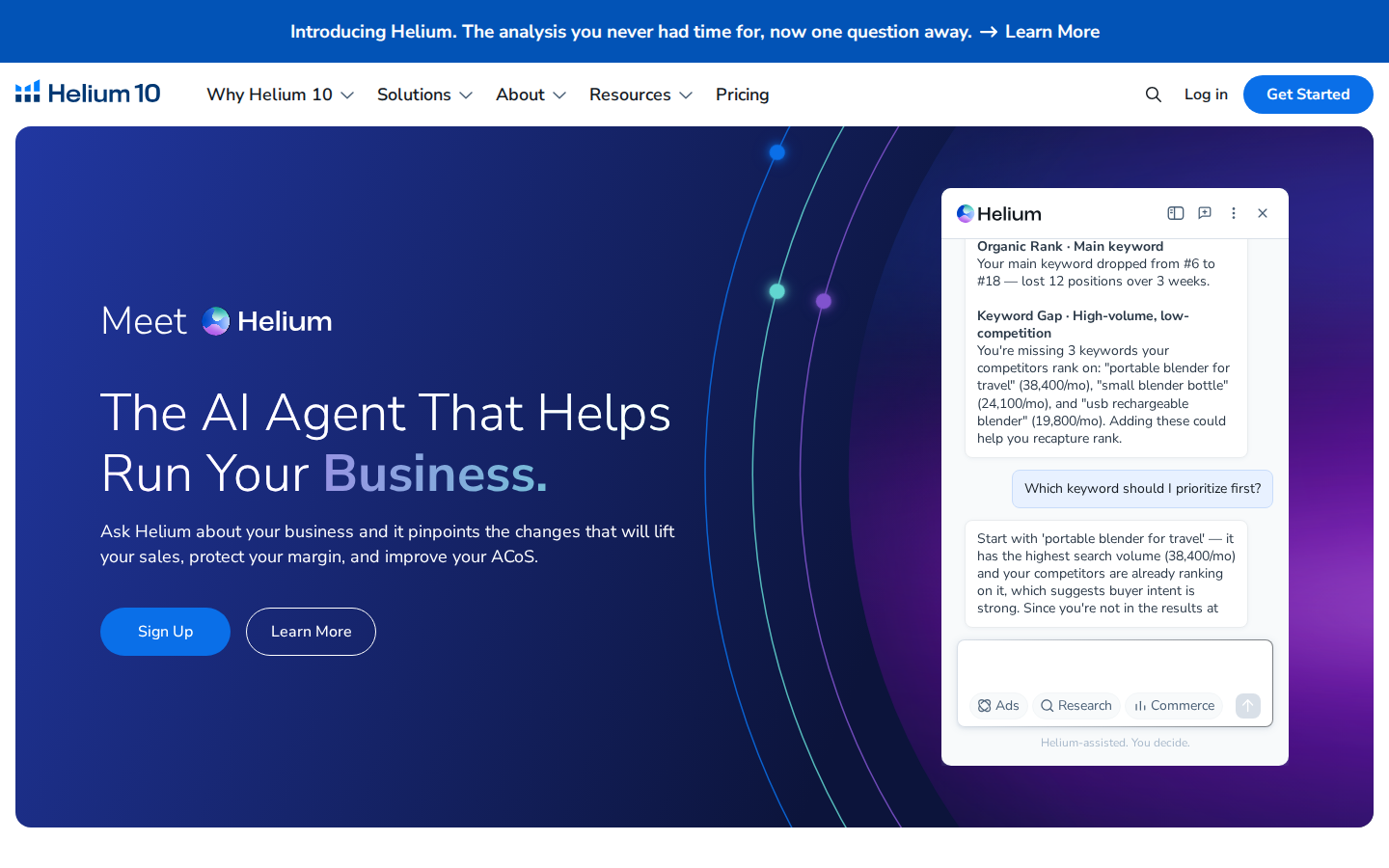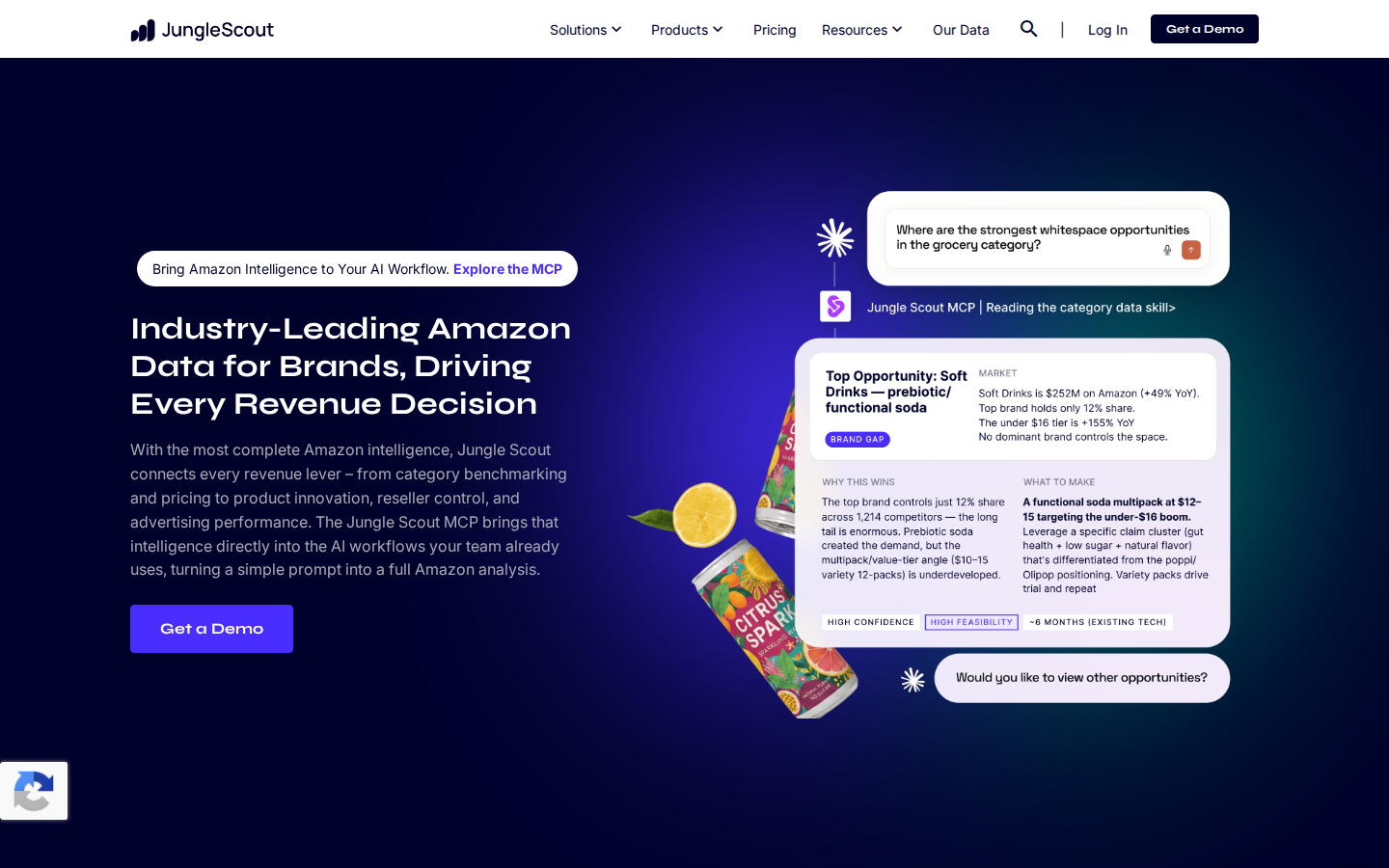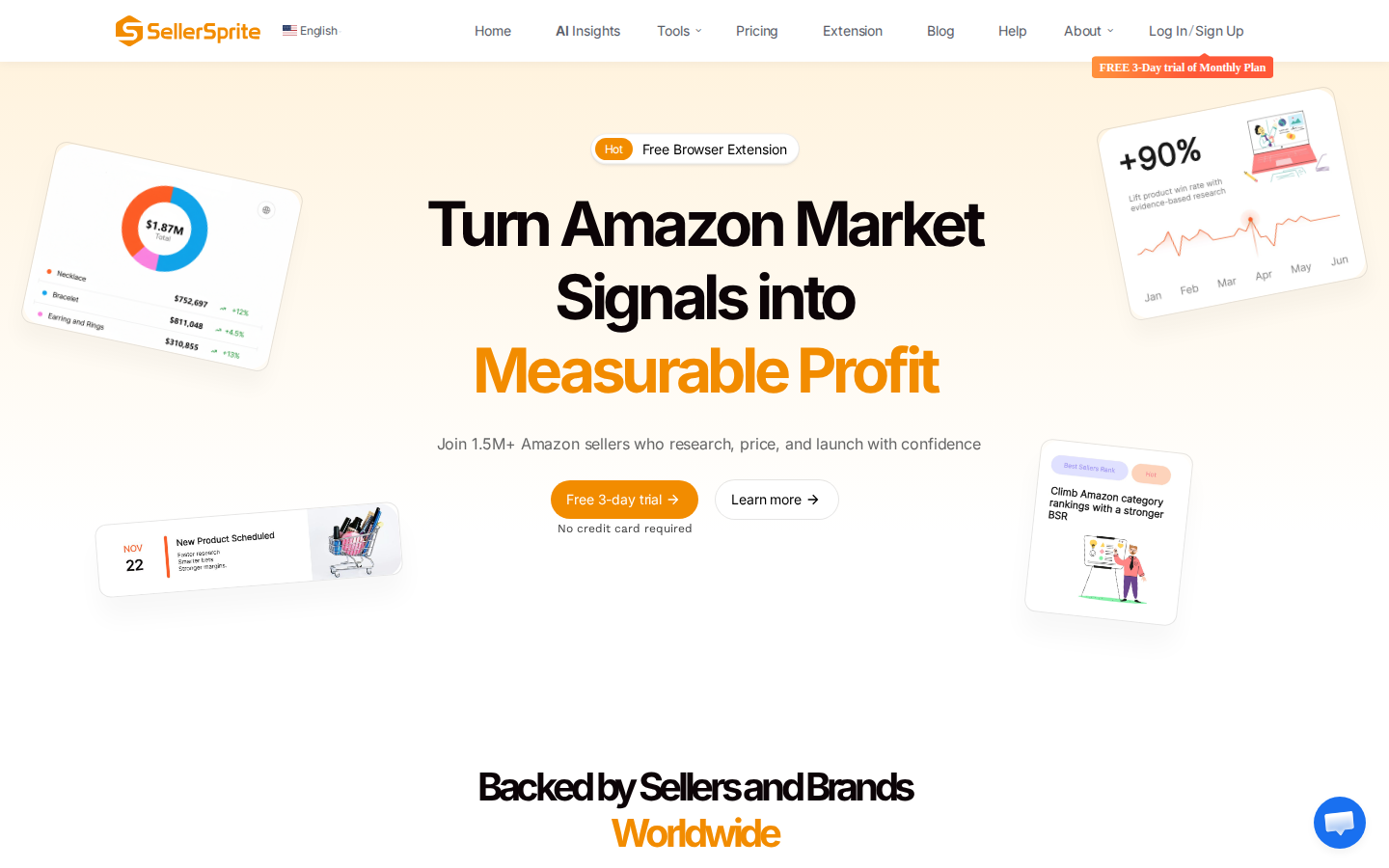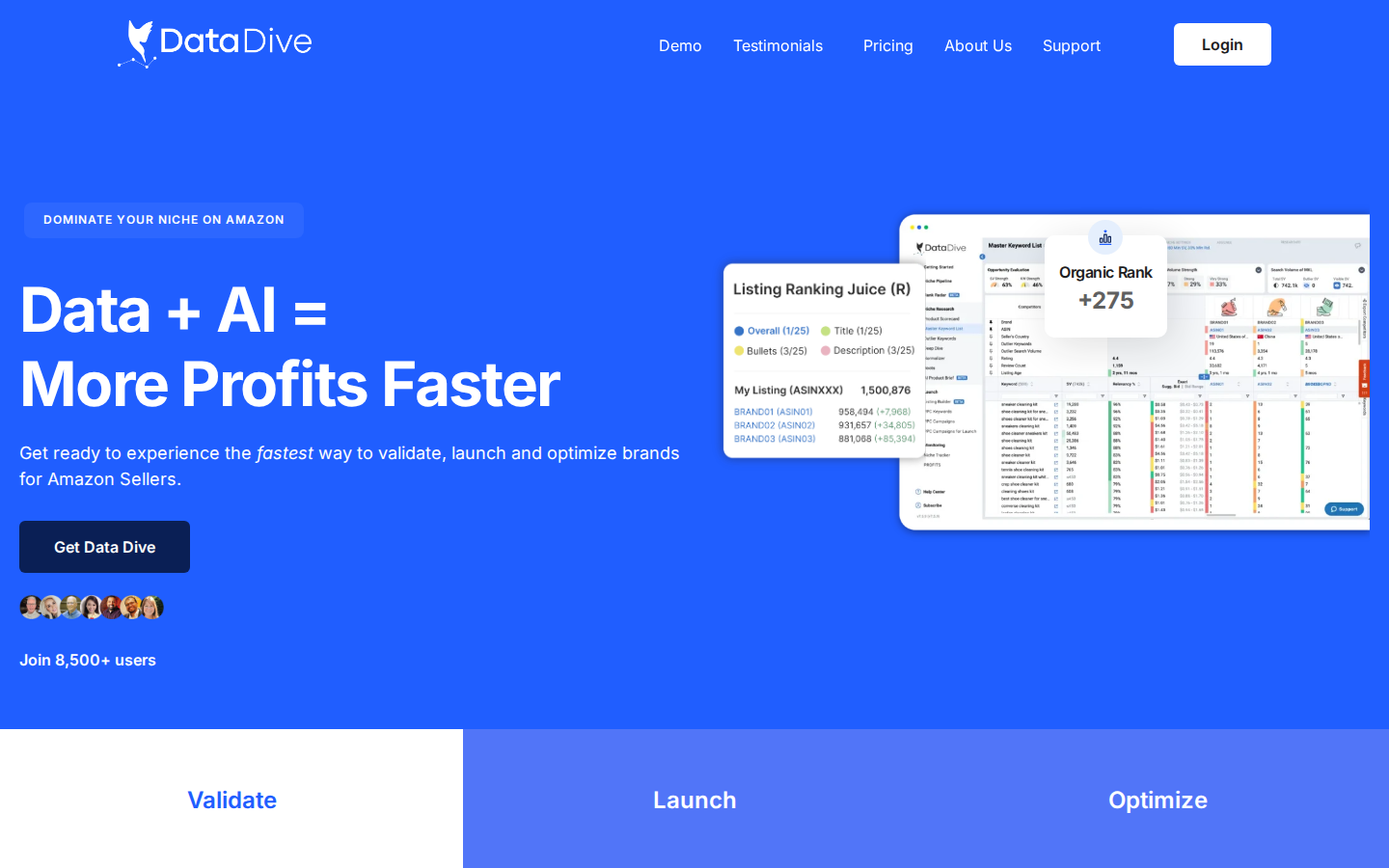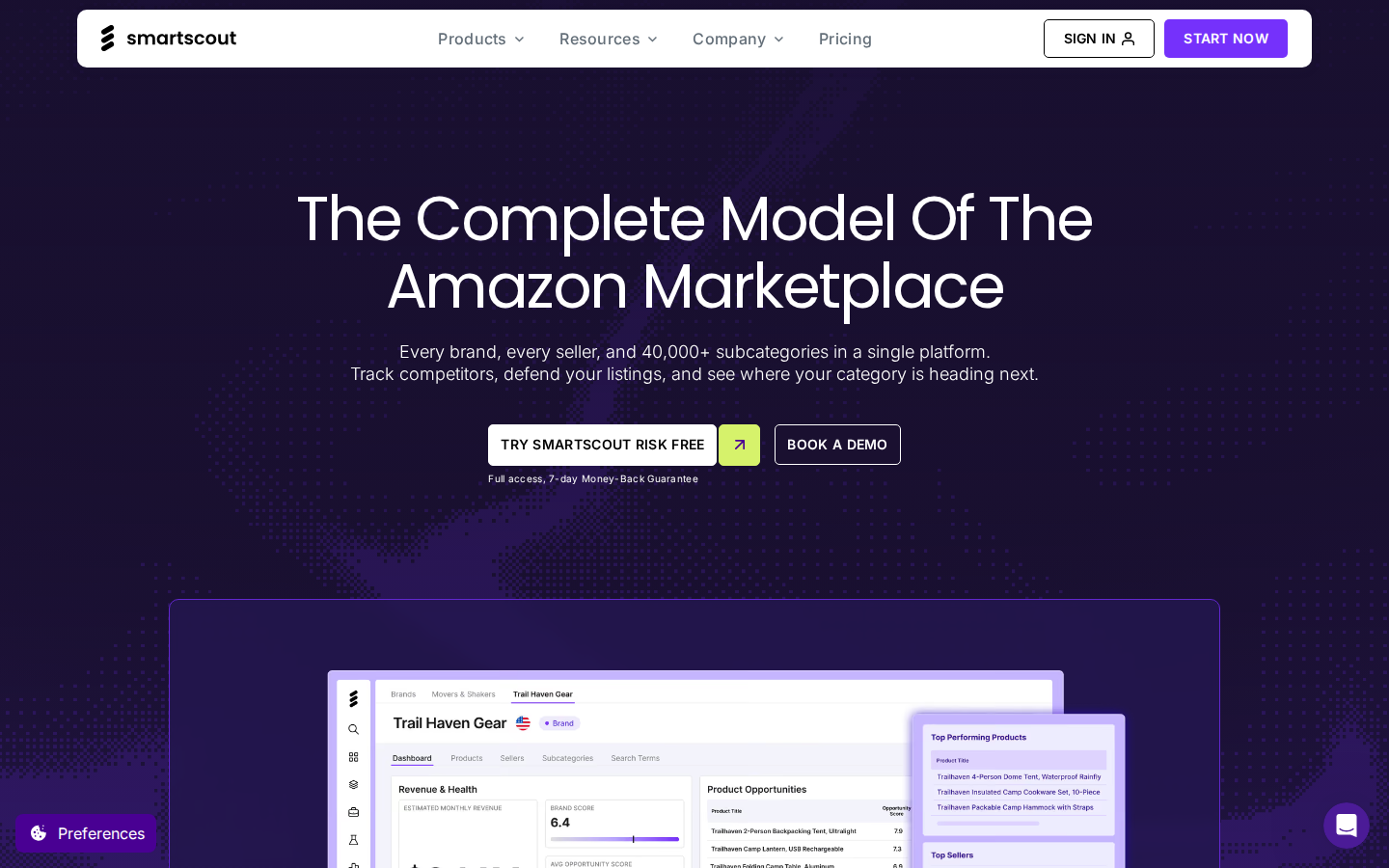
Published by SmartScout. We place our own product first because we believe its broad keyword history and placement-level advertising intelligence make it a strong choice for competitive research. The other tools have real strengths, which we describe below.
Search results are the storefront most Amazon shoppers see first. If a rival brand takes more of the visible positions for your most important keywords, it can win attention before a shopper ever reaches your listing. Amazon share of voice (SOV) helps you measure that competition over time.
The catch is that “share of voice” does not have one universal formula. A tool might count appearances, weight positions by likely clicks, measure ad impressions, or aggregate a chosen set of keywords. Before comparing two percentages, check the keywords, placements, time period, and weighting behind each one.
Organic vs. Sponsored Share of Voice
Organic SOV measures how much visibility your products or brand earn in non-ad search results. A higher organic ranking for an important query may improve it, but rank alone is not the whole story: several ASINs from one brand can appear on the same page, and the first result tends to matter more than a result far below it.
Sponsored SOV measures visibility in paid placements. Sponsored Products, Sponsored Brands, and Sponsored Brands video can put a brand in different parts of the results page. The prominent first Sponsored Products slot deserves particular attention. Winning that position can be more valuable than merely appearing somewhere among the sponsored results.
There is also a useful distinction between visibility share and spend share. An observed ad position or modeled share of clicks is not an advertiser's actual bill. Competitive ad spend requires estimates of search volume, click-through rate (CTR), cost per click (CPC), and how often a brand wins each placement. Treat a competitor spend number as directional intelligence, not access to its Amazon Ads account.
1. SmartScout: Best for Broad Competitive Visibility and Estimated Ad Spend
SmartScout connects keyword visibility to brands, products, categories, and advertising. We track more than 2 million Amazon keywords with a 24-month history, giving teams a way to look beyond a short list of manually monitored terms. You can study a single search term or trends across a collection of keywords and see how a brand's organic and paid presence changes over time.
Our AdSpy separates key paid positions: Sponsored Brands, Sponsored Products, and Sponsored Brands video. It also tracks the top Sponsored Products position on its own line. That specific spot is too valuable to bury in an average across every sponsored placement. Placement-level win rates show how consistently a brand appears, and searches can be captured multiple times a day to reduce the risk of treating one auction snapshot as the whole market.
SmartScout models CTR by placement, then combines keyword search volume, placement win rates, and estimated CPC to produce directional competitive ad spend.
This helps answer practical questions: Which competitor is consistently buying your category's most important terms? Is it defending its own brand? Is its presence in the top sponsored slot growing? Which keywords appear to consume the largest budget?
Where it fits best: Teams that need a wide competitive map, historical trends, and an estimate of where rivals direct search ad dollars. Its search-result-based spend estimate does not include every Amazon advertising surface: product detail page ads, Sponsored Display, DSP, and ads beyond the tracked search placements are outside that model. The estimates are useful for comparing patterns, not auditing another company's actual spend.
2. Xnurta: Best for Tying SOV Research to Ad Operations
Xnurta SOV Insights provides brand- and product-level views of visibility for selected search terms. Its published description says it monitors the top three pages of Amazon results and includes organic rankings, Sponsored Products, Sponsored Brands, and Sponsored Brands video. Teams can compare brands and products, view placement-specific SOV, and study changes over time.
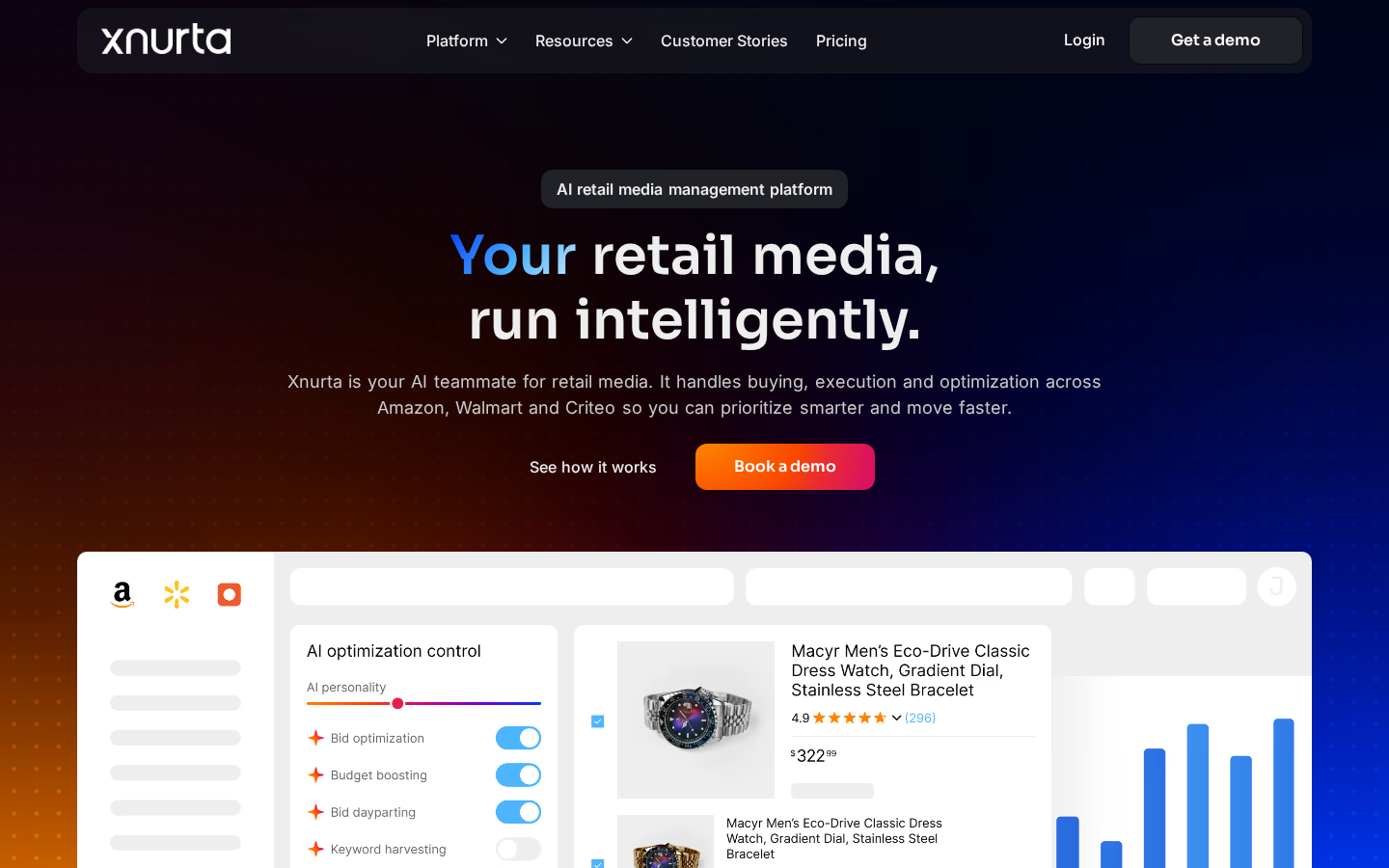
Xnurta also connects SOV analysis to its broader Sponsored Ads management platform, making it a sensible evaluation for advertisers who want competitive monitoring near bidding and budget workflows. Ask how its keyword selection, time sampling, and SOV denominator compare with the terms and placements your team cares about.
Where it fits best: Brands and agencies that want to act on SOV findings in the same advertising environment.
3. Intentwise: Best for Frequent Monitoring of a Chosen Keyword Set
Intentwise Share of Voice breaks out total, organic, and ad SOV at the brand, keyword, and product levels. Its documentation says it captures the first page of selected Amazon searches four times daily across U.S. regions. It also reports best and average organic and ad positions, plus daily, weekly, and monthly trends.
Intentwise describes its total SOV as a brand's share of all page-one appearances, including organic, sponsored, and branded placements. That clear definition is useful when a team needs to explain exactly what a headline percentage means. Its emphasis on a selected keyword set makes the choice and maintenance of that set especially important.
Where it fits best: Operators who already know which search terms to monitor and want regular competitive position reporting.
4. Pacvue: Best for Large, Cross-Retailer Teams
Pacvue Market and Competitive Insights measures organic and paid SOV on Amazon and other supported retail networks. It lets teams benchmark visibility by keyword, product, and category and connect those signals with demand, pricing, and media decisions.
For a brand selling through several retailers, that scope is attractive: the same group can examine where visibility is shifting across channels and bring the findings into its retail media workflow. Pacvue is worth evaluating when Amazon SOV is one part of a larger enterprise measurement and activation program. Confirm the exact retailer, ad placement, reporting, and historical coverage needed for your account in a demo.
Where it fits best: Established brands and agencies with cross-retailer media operations.
5. DataHawk: Best for Keyword Reporting and BI Workflows
DataHawk builds SOV analysis from tracked keyword rankings on Amazon and Walmart. Its documentation describes daily organic rank monitoring and sponsored rank coverage through Premium Keywords, with options to move the resulting metrics into BI tools such as Power BI.
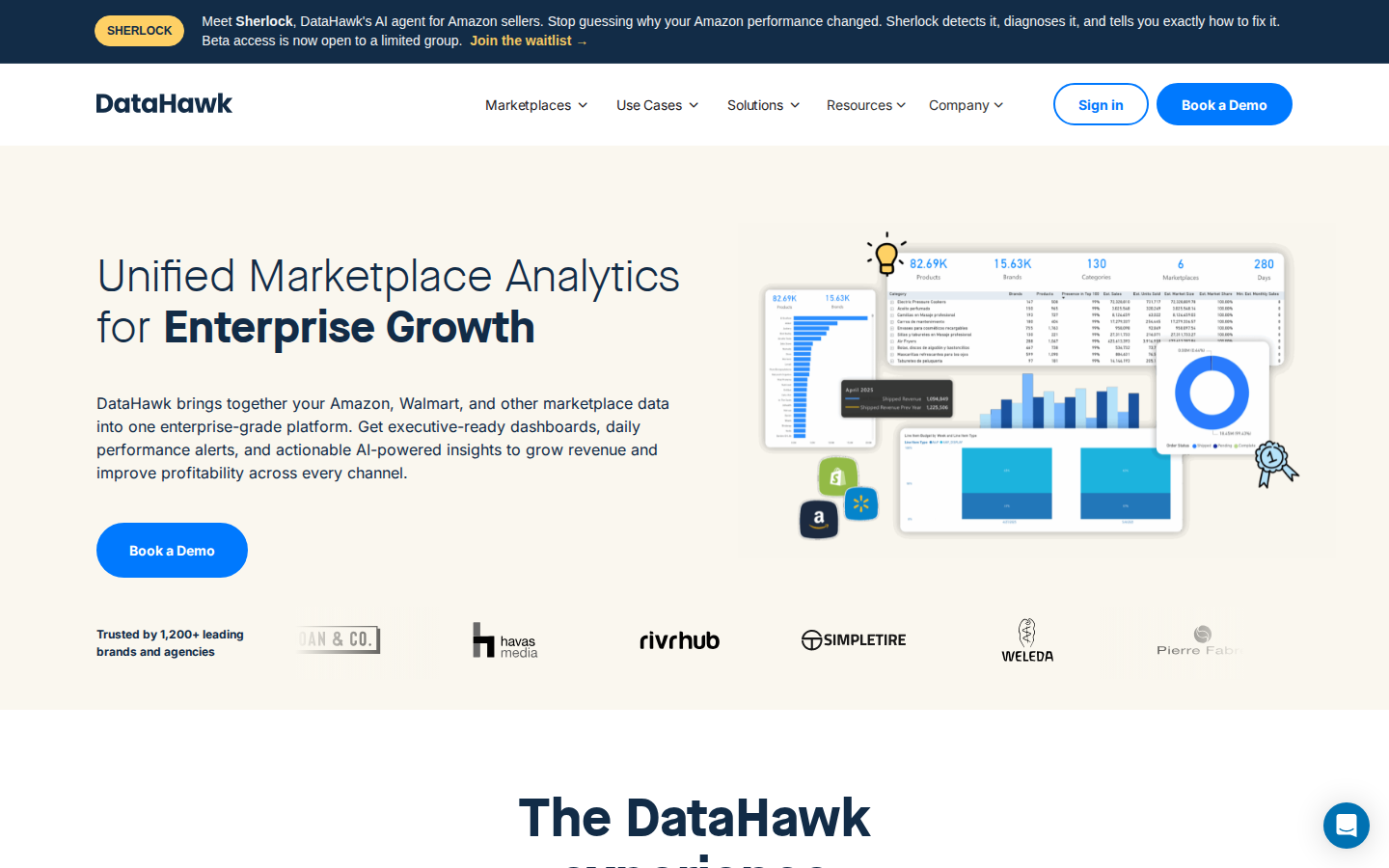
That makes it a useful choice when your team wants defined keyword groups, a consistent trend line, and flexible reporting. If sponsored visibility is central to the project, verify that your plan and tracked keywords include the paid rank coverage you need.
Where it fits best: Analytics teams that want SOV alongside keyword rank tracking and custom dashboards.
How To Choose an Amazon SOV Tool
Start with the decision you need to make.
For organic growth, ask which terms and ASINs are gaining positions and whether the metric weights prominent results more heavily.
For advertising, ask whether the platform distinguishes Sponsored Products, Sponsored Brands, video, and the first sponsored slot.
For competitor budgets, ask how the provider turns observed placements into estimated clicks and spend.
Then compare the measurement design: How many relevant keywords are available? Can you bring your own list? How often is each search checked? How far back does history go? Does the tool count appearances or estimate likely clicks? A 30% SOV figure can mean different things under different methods.
For brands that want a wide view of Amazon competition and a way to connect who wins visibility with where paid search dollars may be going, start with SmartScout's Share of Voice and AdSpy.
If your priority is managing campaigns within the same platform, explore Xnurta or Pacvue. If you need regular reporting on a defined keyword set, evaluate Intentwise and DataHawk.
FAQs
Is Amazon Share of Voice the Same As Market Share?

No. Share of voice measures search visibility under a stated methodology; market share measures sales within a defined market. A brand can gain sponsored visibility without immediately gaining the same share of sales.
Can I Get My Competitors’ Exact Amazon Ad Spend?
No third-party search observation reveals a competitor's complete bill. Spend estimates can be useful for direction and relative comparisons, but they depend on assumptions about volume, wins, clicks, and CPC and may omit other ad surfaces.
Should I Combine Organic and Sponsored SOV?
You can show an overall figure for a quick summary, but keep the two components visible. Organic gains and paid gains call for different actions, and a blended number can hide one falling while the other rises.
.png)