AI can help Amazon sellers write listings, create product images, analyze performance, and manage advertising. It can also change how customers discover products before they ever reach Amazon.
That makes choosing the right tools more consequential than choosing the best copywriter. Sellers need to understand their market, communicate their products clearly, and measure whether they are appearing in AI-generated recommendations.
The best setup combines Amazon’s native AI with specialist software for the work that matters most to your business. Here are 10 tools worth considering, with a different strength behind each recommendation.
Best AI Tools for Amazon Sellers at a Glance
These selections cover different jobs rather than ten interchangeable subscriptions. Features and access can vary by plan, marketplace, and account eligibility.
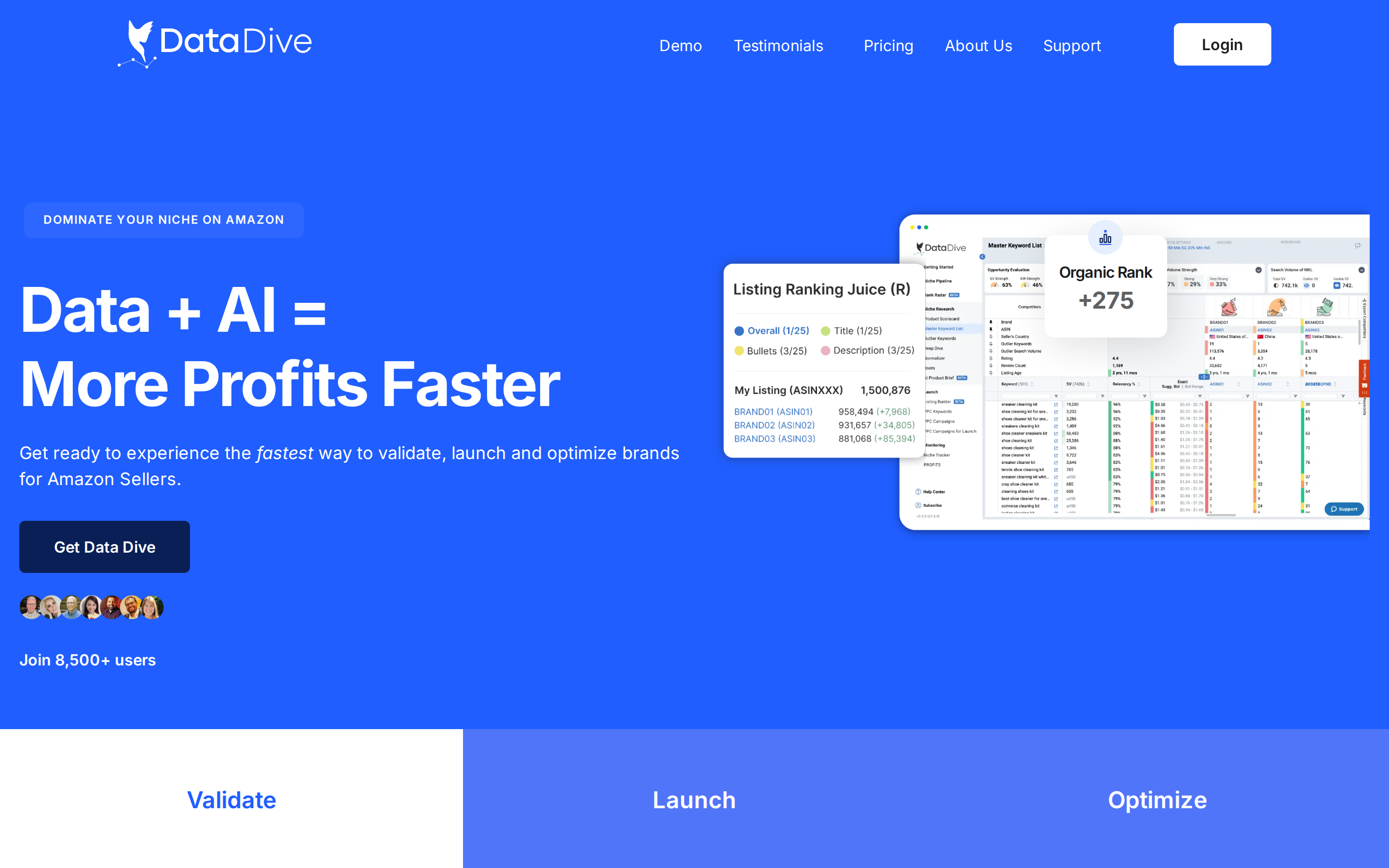
1) SmartScout
Best for AI visibility and marketplace intelligence
A shopper can ask ChatGPT for a product recommendation and arrive at Amazon with a shortlist already formed. Sellers need a way to understand whether their products appear in that discovery process.
SmartScout addresses this with two complementary tools.
Its Amazon AI Scorecard evaluates how clearly a listing explains the product, intended audience, use cases, and differentiation. Sellers receive a score, a detailed breakdown, and recommendations for improving weak or incomplete information.
The AI Visibility Monitor measures observed visibility in ChatGPT. It runs selected prompts repeatedly and tracks product and brand mentions, competitive positions, and citation sources—including Amazon pages when cited.
For sellers, that creates a practical workflow: assess listing clarity, improve the content, and monitor how visibility changes across relevant shopping prompts.

Why it stands out: SmartScout combines AI-discovery measurement with broader marketplace research. Sellers can investigate both their competitive market and their presence in ChatGPT recommendations.
The scorecard is SmartScout’s assessment, not an internal Amazon ranking score. Citation visibility also measures exposure within monitored responses; it does not by itself prove clicks or attributed Amazon sales.
Explore AI Visibility Monitor · Explore Amazon AI Scorecard
2) Amazon Seller Assistant
Best for everyday account management inside Amazon
Amazon Seller Assistant is an obvious place to start because it operates within the environment sellers already use.
Amazon describes it as an AI business partner that provides tailored insights and recommendations based on a seller’s business. For supported workflows, it can also take action with the seller’s permission.
Its advantage is context. A general-purpose chatbot needs you to supply reports and explain your account. Seller Assistant is designed around Amazon selling and the seller’s specific business needs.
A useful starting point is to ask about account performance, investigate an issue, or request guidance on an available workflow. Review the supporting information and proposed changes before approving actions.
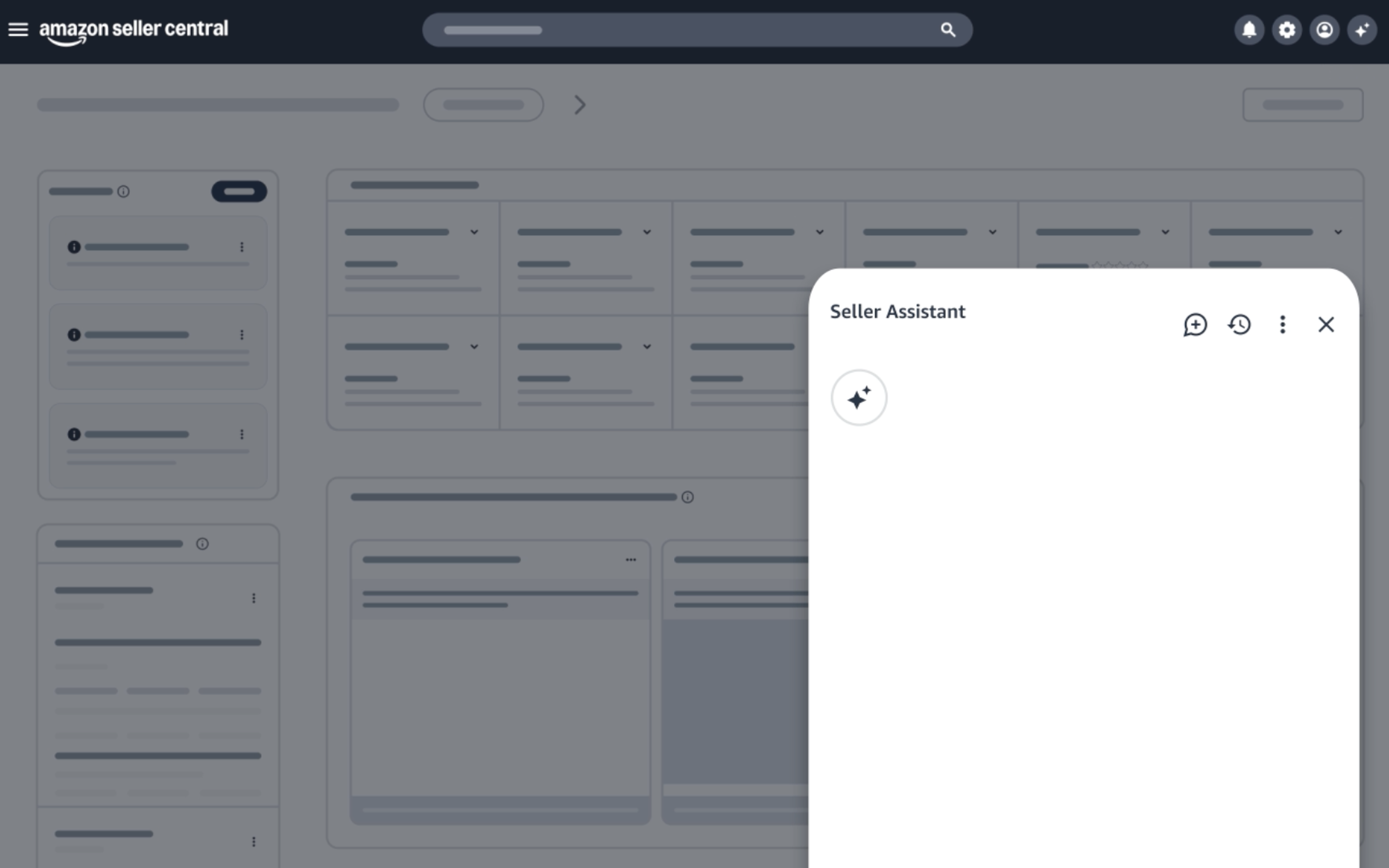
Why it stands out: Native access and Amazon-specific context make it well suited to routine operational questions.
Use specialist market research software when the question requires a broader view of competitors, categories, or demand beyond your own business.
Learn about Amazon Seller Assistant
3) Amazon AI Listing Tools
Best for creating and improving listings directly in Seller Central
Amazon’s generative AI listing tools let sellers begin with a short product description, an image, or a URL from their own website. The system can generate titles, bullet points, and descriptions.
For existing listings, Enhance My Listing provides recommendations for titles, attributes, descriptions, and other details. Sellers can review, customize, accept, or decline the suggestions.
This makes Amazon’s native tools a sensible first step for sellers who need to launch products or refresh a catalog without adding another copywriting workflow.
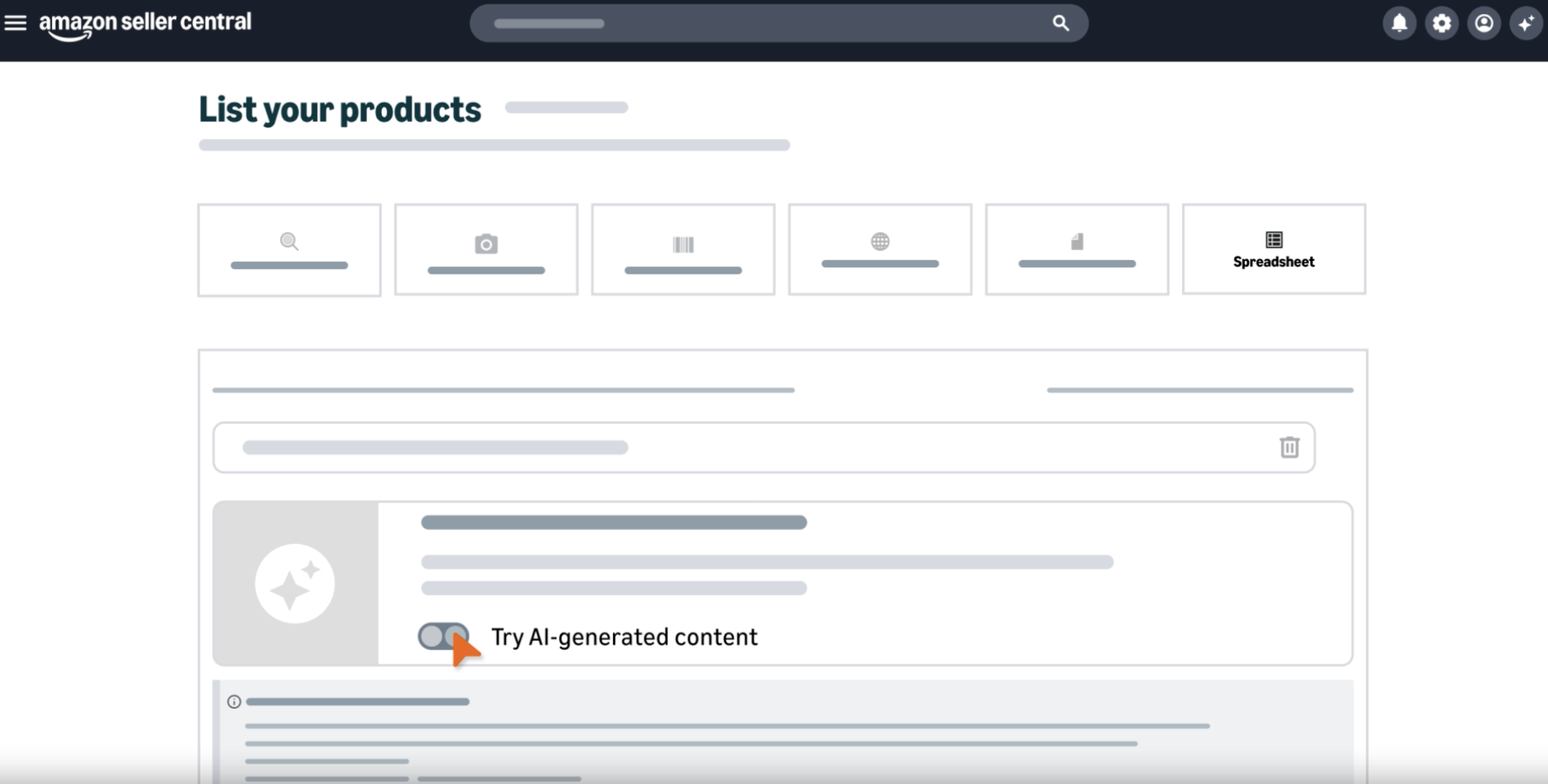
Why it stands out: Listing creation and improvement happen close to where the content will be published, informed by Amazon’s shopping insights.
Provide accurate specifications and verify the output. A polished description is only useful if it correctly represents the product and answers the buyer’s questions.
Explore Amazon’s AI listing tools
4) Amazon Creative Studio
Best for producing creative for Amazon advertising
Sellers often have product photography but lack the time or resources to turn it into a range of advertising assets.
Amazon Creative Studio helps bridge that gap. Its AI creative capabilities include lifestyle images, video ads generated from static product images, and audio advertising assets.
For a seller testing a campaign, the practical value is speed: explore different settings, messages, and creative concepts before committing more production resources.

Why it stands out: It is built for Amazon advertisers and brings several creative formats into an Amazon-focused workflow.
Use it to develop testable creative variations, then judge them by campaign results. Check generated imagery for accurate packaging, proportions, colors, and product use.
Explore Amazon Creative Studio
5) Helium 10
Best for connecting keyword research with AI listing creation
AI copywriting becomes more useful when it is grounded in relevant search data.
Helium 10’s Listing Builder combines keyword discovery, keyword organization, and AI-generated listing content. Sellers can research competitor ASINs, prioritize terms, and use those inputs when creating or revising copy.
The workflow also supports product images and brand-voice instructions, giving sellers more control over how the product is described.
For teams already using Helium 10, the benefit is continuity: research can feed directly into listing production without repeatedly moving keyword lists between tools.

Why it stands out: Its strength is the connection between keyword research and copywriting, especially for sellers with a structured Amazon SEO process.
Prioritize relevant keywords and clear language. A listing that includes every possible phrase can still fail to explain why a shopper should buy.
6) Jungle Scout AI Assist
Best for turning seller data into practical insights
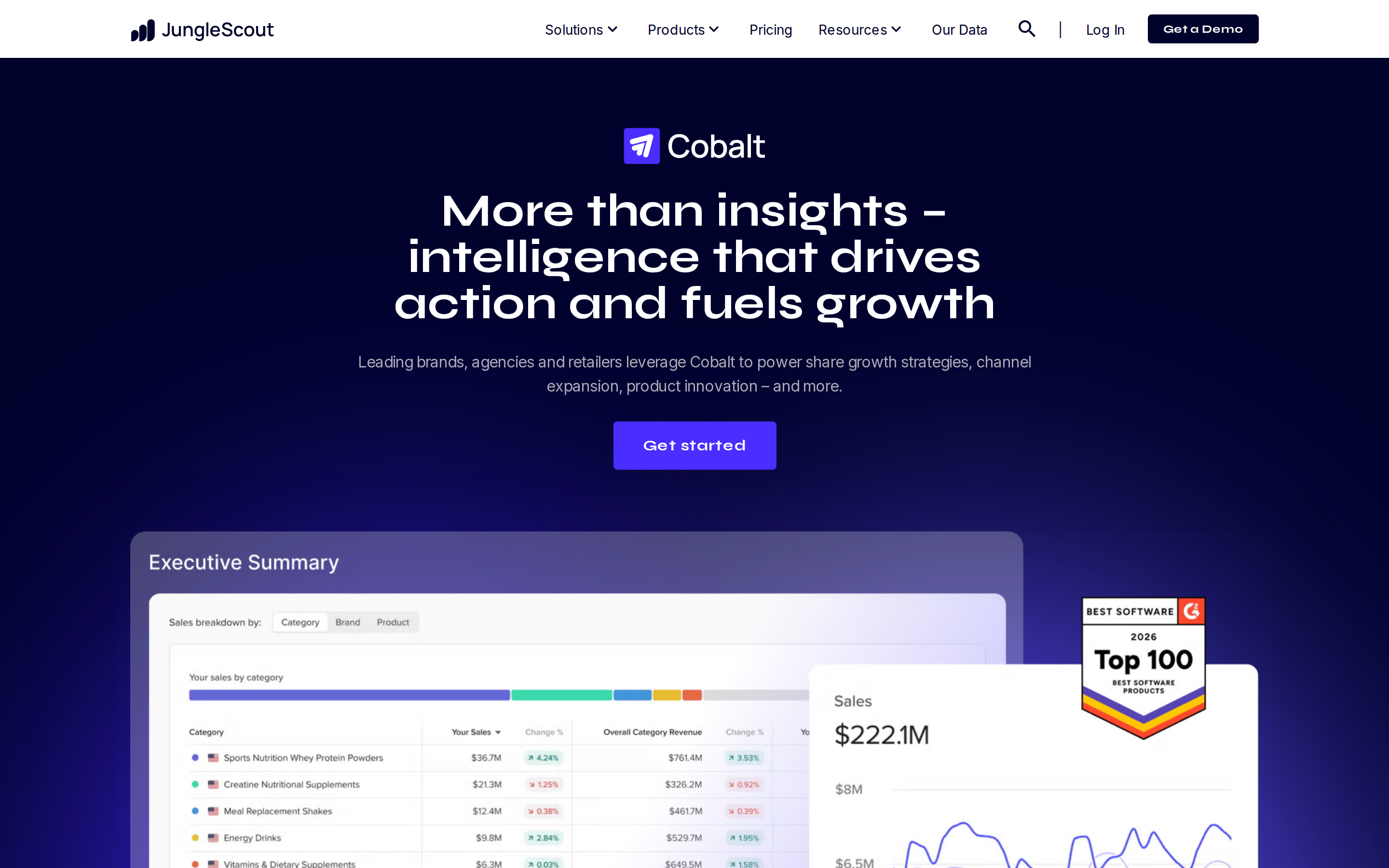
Jungle Scout’s AI Assist adds interpretation and writing support to its seller platform.
Within Sales Analytics, AI Assist can analyze Profit Overview data and suggest areas to investigate, such as underperforming products or elevated refunds. Its Listing Builder also uses AI Assist to help create listing copy.
That makes it useful for sellers who want help moving from a dashboard full of numbers to a manageable set of questions and next steps.
For example, an AI-generated summary can give a weekly review structure: which products deserve attention, where profitability looks weaker, and what information needs a closer look.

Why it stands out: It brings AI assistance into an established seller research and analytics workflow.
Treat the recommendations as starting points. Check the underlying data and include the costs that matter to your business before making profitability decisions.
7) Photoroom
Best for editing product photos at scale
Photoroom focuses on one of ecommerce’s most repetitive jobs: making product photography usable and consistent.
Its tools can remove backgrounds, adjust lighting, and generate settings around product images. Batch editing helps apply a consistent approach across multiple photos.
For Amazon sellers with many SKUs, that can reduce the time spent preparing images individually. It is also useful for exploring lifestyle scenes for secondary images and advertising concepts.
Why it stands out: Photoroom is centered on product imagery and repeatable catalog workflows, making it a strong fit when image preparation is the bottleneck.
Start with accurate product photography and inspect the results. Generated scenes should preserve what the customer will actually receive, and each asset needs to fit the requirements of its intended placement.
8) Canva Magic Studio
Best for turning product assets into branded marketing content
A good product photo is only one ingredient in a finished marketing asset. Sellers also need readable layouts, benefit callouts, consistent branding, and versions for different channels.
Canva’s Magic Studio brings AI-assisted design, writing, editing, and format adaptation into its visual editor. Teams can use it to develop layouts from prompts or existing media and refine them with their own brand assets.
For Amazon sellers, useful applications include secondary listing graphics, A+ Content design concepts, promotional videos, and off-Amazon social content.

Why it stands out: Canva helps non-designers assemble complete marketing assets and adapt them across formats.
Choose Photoroom when the main job is product-photo editing. Choose Canva when the main job is combining photography, typography, and messaging into a finished design.
9) Pacvue
Best for larger advertising teams and agencies
As advertising operations become more complex, the challenge expands beyond setting bids. Teams need to diagnose performance changes, connect commerce and media data, and turn findings into controlled actions.
Pacvue’s AI capabilities address that workflow. Pacvue Agent supports conversational analysis, recommendations, reporting, and guided actions with approvals. It also supports Amazon Marketing Cloud workflows, including query building and audience creation.
For a brand or agency managing significant advertising complexity, this can help reduce the time between spotting a problem and deciding what to do about it.

Why it stands out: Pacvue connects analysis with advertising execution and governance, making it particularly relevant to teams managing multiple stakeholders and campaigns.
Its strongest fit is a business with enough advertising scale and operational complexity to benefit from a dedicated retail-media platform.
10) Claude
Best for custom analysis and work that falls between seller tools
Some seller questions do not fit neatly into a software dashboard.
You might need to combine an advertising export with a margin spreadsheet, summarize customer feedback, or turn a supplier specification sheet into a creative brief. Claude can work with uploaded information and create spreadsheets, documents, presentations, and other outputs.
Useful seller workflows include grouping search terms, summarizing product-level performance, building scenarios from supplied costs, and drafting operating procedures.

Why it stands out: It is flexible enough to handle analysis and document work across several parts of the business.
The quality of the result depends on the information supplied. Give Claude the relevant exports, date ranges, definitions, and assumptions, and verify calculations before acting. Without supplied data or an authorized connection, it does not automatically know your live Amazon performance.
How To Choose the Right AI Tools for Your Amazon Business
Start with the work that is slowing your team down.
If account management and basic listing updates consume most of your time, explore Amazon’s native tools first. If your main challenge is marketplace understanding and AI discoverability, SmartScout adds a different layer through research, listing assessment, and ChatGPT citation monitoring.
For keyword-led listing production, evaluate Helium 10. For AI assistance within seller analytics, consider Jungle Scout. Use Photoroom or Canva when creative production is the constraint, and consider Pacvue when advertising operations justify a more specialized platform.
A general-purpose assistant such as Claude can support the custom analysis and documentation that connects these workflows.
Measure each tool against a concrete outcome: hours saved, stronger creative tests, clearer listings, better-informed advertising decisions, or improved visibility across monitored shopping prompts. The most valuable AI stack is the one your team uses to make better decisions and complete useful work.