


TikTok, with nearly 2 billion monthly active users, is no longer just a social media platform. It is now a marketplace where shoppers can watch a product in action, hear a creator talk about it, and buy it without leaving the app.
In traditional marketplaces, shoppers usually search first and buy later. On TikTok Shop, discovery often happens first. A product can appear in a short video, live stream, creator post, or Shop tab, then turn into sales within minutes.
This is why more brands, Amazon sellers, DTC companies, and product researchers are now paying close attention to TikTok Shop.
We built SmartScout’s TikTok tool specifically because the sellers winning this market are doing research, and the rest aren’t. This guide shows you both how TikTok Shop works and how to make decisions with the data most sellers ignore.
Key Takeaways
- TikTok Shop works as a content-driven marketplace, where products are discovered through videos instead of search.
- Setting up a shop is straightforward, but accurate documents and compliance are essential for fast approval.
- Profitability depends on understanding fees, shipping, and commissions, not just revenue potential.
- Consistency wins on TikTok, and posting 1–3 videos daily per product helps identify what actually converts.
- Growth comes from working with creators and affiliates who can scale reach and drive conversions.
- SmartScout helps sellers identify high-potential products, analyze performance, and make data-driven decisions.
Start SmartScout with a 7-day Money Back Guarantee
What is TikTok Shop & Why It’s Different?
TikTok Shop is TikTok’s in-app ecommerce marketplace. It allows sellers to list products, promote them through content, and let shoppers purchase directly inside TikTok.
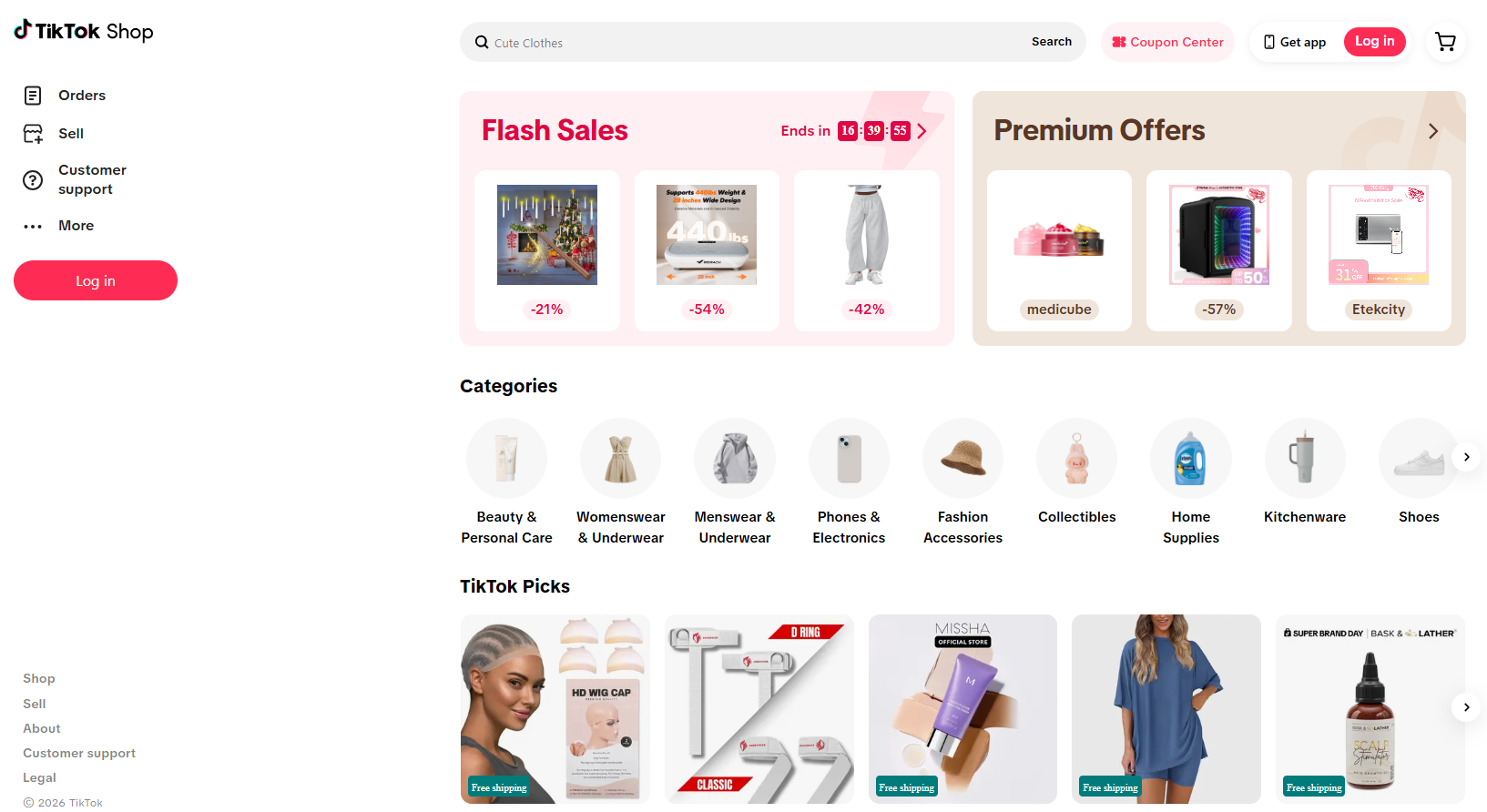
Seeing the popularity and interaction, ByteDance launched TikTok Shop in September 2023.
First, the company launched it as a testing component in Indonesia, and then it slowly expanded to the UK, the US, and globally.
The biggest difference between TikTok Shop and a normal e-commerce site is how shoppers find products. On a website, people usually land on a product page after searching, clicking an ad, or browsing a category. On TikTok, a shopper may first see the product in a creator video, a review, a live demo, or a trend.
A seller can use TikTok Shop to:
- List products inside TikTok
- Tag products in videos
- Sell during live streams
- Work with creators and affiliates
- Run promotions and discounts
- Manage orders through Seller Center
- Track basic shop performance
That makes TikTok a content-first marketplace, where attention drives demand.
Because of this, traditional product research tools often miss the signal. They focus on search volume, not content performance, which is exactly why SmartScout built a dedicated TikTok module.
Built for TikTok Shop sellers: SmartScout's new TikTok tool
SmartScout is a research platform used by Amazon and e-commerce sellers to find winning products and analyze competitors.
We’ve just launched a dedicated TikTok Shop module that brings the same data-first approach to TikTok, including:
- Shop revenue estimates
- Product sales trajectories
- Category opportunity analysis
- Creator and affiliate performance insights
We’ll walk through how to use this throughout the guide.
Try SmartScout TikTok Tool – 7 Day Trial
Is TikTok Shop Worth It? Fees, Margins, and the Real Math
TikTok Shop is thriving in the global eCommerce market with 15 million worldwide and 500K sellers in the US.

TikTok Shop’s GMV (gross merchandise value) reached $64.3 billion in 2025, nearly doubling the YoY growth and expanding the market to 16 different regions. The United States’ ecosystem generated $15.1 billion in GMV, topping all these regions.
Southeast Asia contributed $45.6 billion in total GMV, showing how strongly creator-led commerce is driving this ecosystem.
These numbers make TikTok Shop look like a massive opportunity. And it is!
But for sellers, the real question is not how big the market is. It is how much of that revenue you actually keep. Before you start selling, it’s important to understand how the economics actually work.
TikTok Shop Commission and Referral Fees
TikTok Shop charges a referral fee (platform commission) on every sale, which is typically around 6% for most categories in the US, with some categories like jewelry closer to 5%.
This fee is calculated on the total customer payment (including platform discounts, excluding tax) and is automatically deducted before payout.
Additionally, sellers often pay affiliate commissions (10–20%) when working with creators, which is optional but critical for scaling on TikTok. TikTok also allows ad-driven affiliate campaigns, where commission rates can be adjusted to improve conversion through paid traffic.
Source: TikTok
Shipping Costs Across the Three Fulfillment Options
Shipping on TikTok Shop depends on the fulfillment method you choose, and it directly impacts margins.
TikTok offers Standard and Express shipping, with delivery expectations of 3 days (Express) and up to 6 days (Standard/Economy), which sellers must meet to avoid penalties.
Sellers can either use TikTok’s logistics network or manage shipping themselves, with TikTok often negotiating discounted carrier rates.
For example, shipping a standard 1 lb product in the US may cost around $4–$6 with TikTok Shipping (platform-negotiated rates), while Fulfilled by TikTok may bring it closer to $3–$5 per unit at scale, plus storage fees, making it more cost-efficient for higher-volume sellers.
TikTok Shipping is the easiest starting point, while Fulfilled by TikTok becomes more efficient at volume. Check out more about shipping costs and packing instructions in the TikTok Shipping Guide.
Real Margin Math: A $25 Product Example
A $25 selling price can look profitable on the surface, but TikTok Shop costs stack quickly once you factor in fees, shipping, and creator commissions.
Here’s a simple breakdown:
This leaves you with roughly $6–$8 in profit before ads. Once you introduce paid promotion or increase commissions to scale, margins can shrink further.
The takeaway: TikTok rewards speed and creativity, but long-term success depends on understanding your unit economics from the start.
How to Set Up Your TikTok Shop
It’s very easy to create and set up a TikTok store on TikTok Shop. But before you start, it is important to know if you are eligible or not.
TikTok Shop Eligibility Requirements
TikTok Shop is not open to every seller in every country, since TikTok is banned in over 20+ countries. Even if TikTok is fully accessible in your country, you must meet TikTok’s compliance rules.
TikTok’s seller registration requirements include using a valid phone number or email address that is not already tied to another TikTok Shop, creating a strong password, and meeting platform rules.
In general, sellers should expect to provide:
- Business or personal identity details
- Tax information (where required)
- Bank account details for payouts
- Business verification documents
- Return address and shipping information
- Product category information
- Compliance documents for restricted categories
TikTok Shop also has strict product rules. Some items are prohibited because of safety, legal, or customer risk concerns. TikTok’s US prohibited products policy lists categories such as alcohol, tobacco, e-cigarettes, some safety products, security and privacy products, unqualified jewelry products, and certain vehicle or automotive items.
Where is TikTok Shop Available?
TikTok Shop is currently accepting sellers from the following countries:
- United States
- United Kingdom
- Indonesia
- Singapore
- Phillipines
- Japan
- Malaysia
- Vietnam
- Thailand
- Germany
- Spain
- Ireland
- Italy
- France
- Brazil
- Mexico
- Global Selling
Sellers can also sign up for regional cross-border programs (or a Global seller account) to sell in multiple regions.
Source: TikTok Business Help Center
Note: Politicians and political accounts are strictly prohibited from becoming TikTok Shop sellers.
How to Set Up a TikTok Shop Account: Step-by-Step
Once you have checked all the boxes of the eligibility criteria, you can start setting up your TikTok Shop:
Step 1. Visit TikTok Shop Seller Central and choose the country of your residence (and where you want to sell). Then click “Start Selling”.

Step 2. Next, sign up for a TikTok seller account. You can sign up using a new email address or just create with your existing TikTok account.
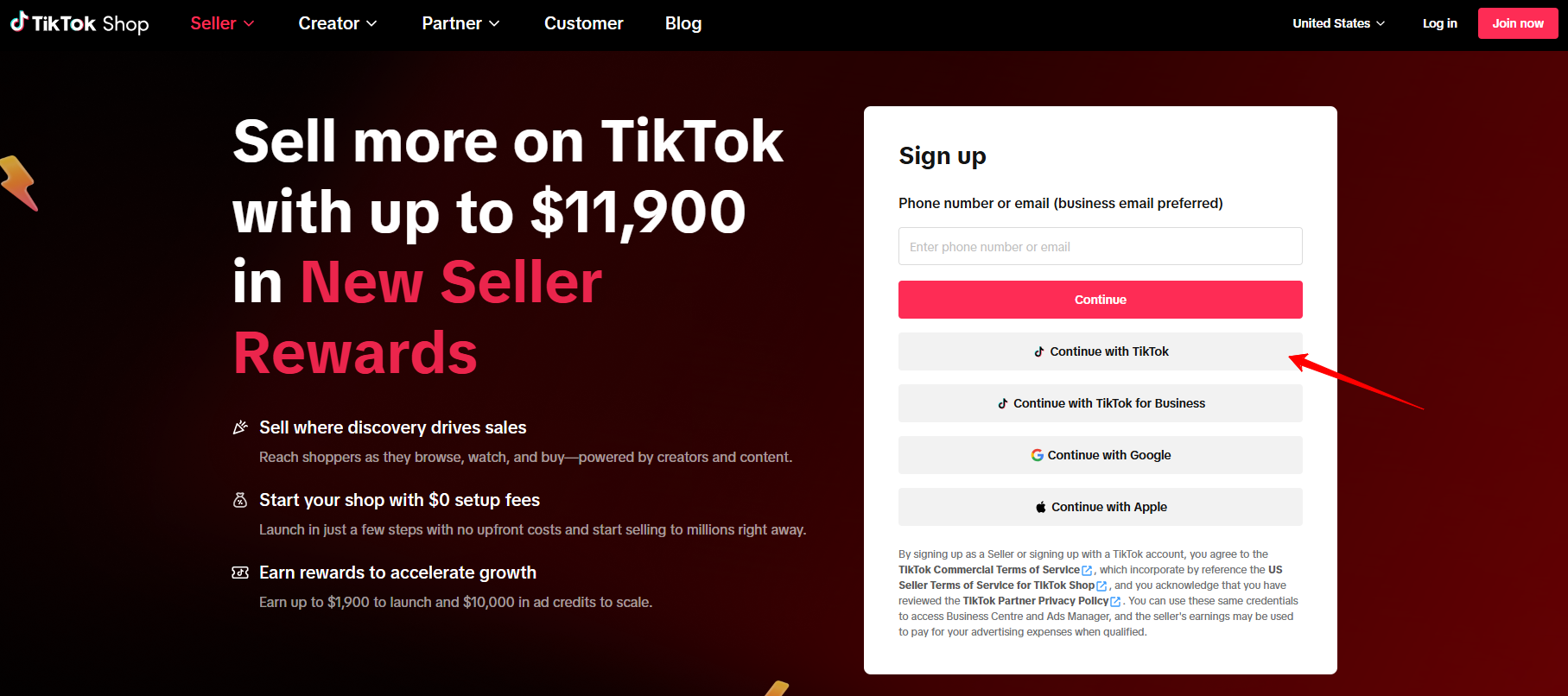
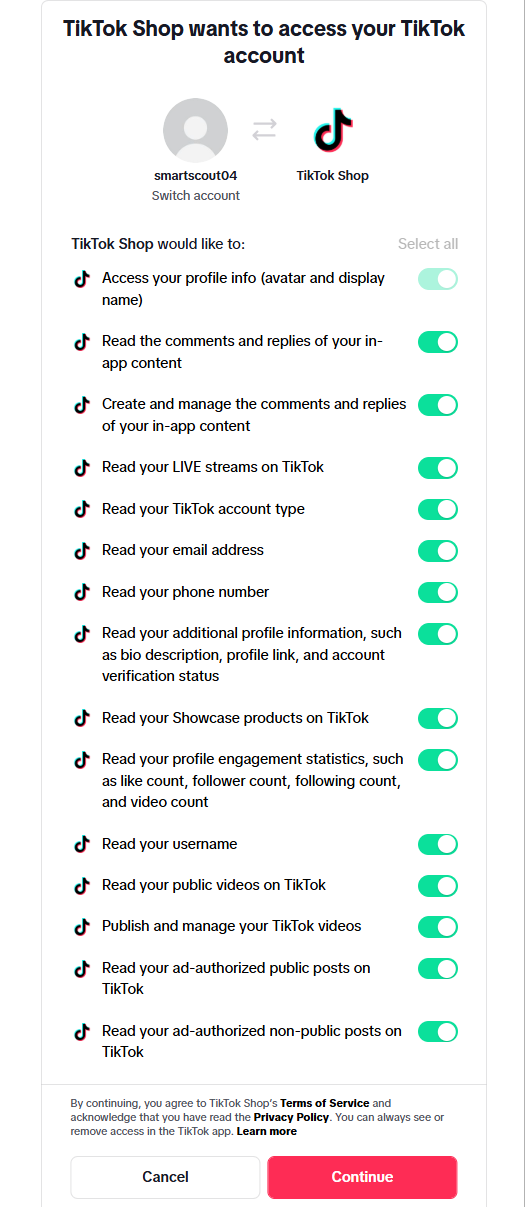
TikTok Shop will ask for your authorization to access your account info. Select or deselect accordingly and click Continue.
Step 3. Select your seller type as in Private Seller, Reseller, Dropshipper, or Affiliate Marketer and then click Next.
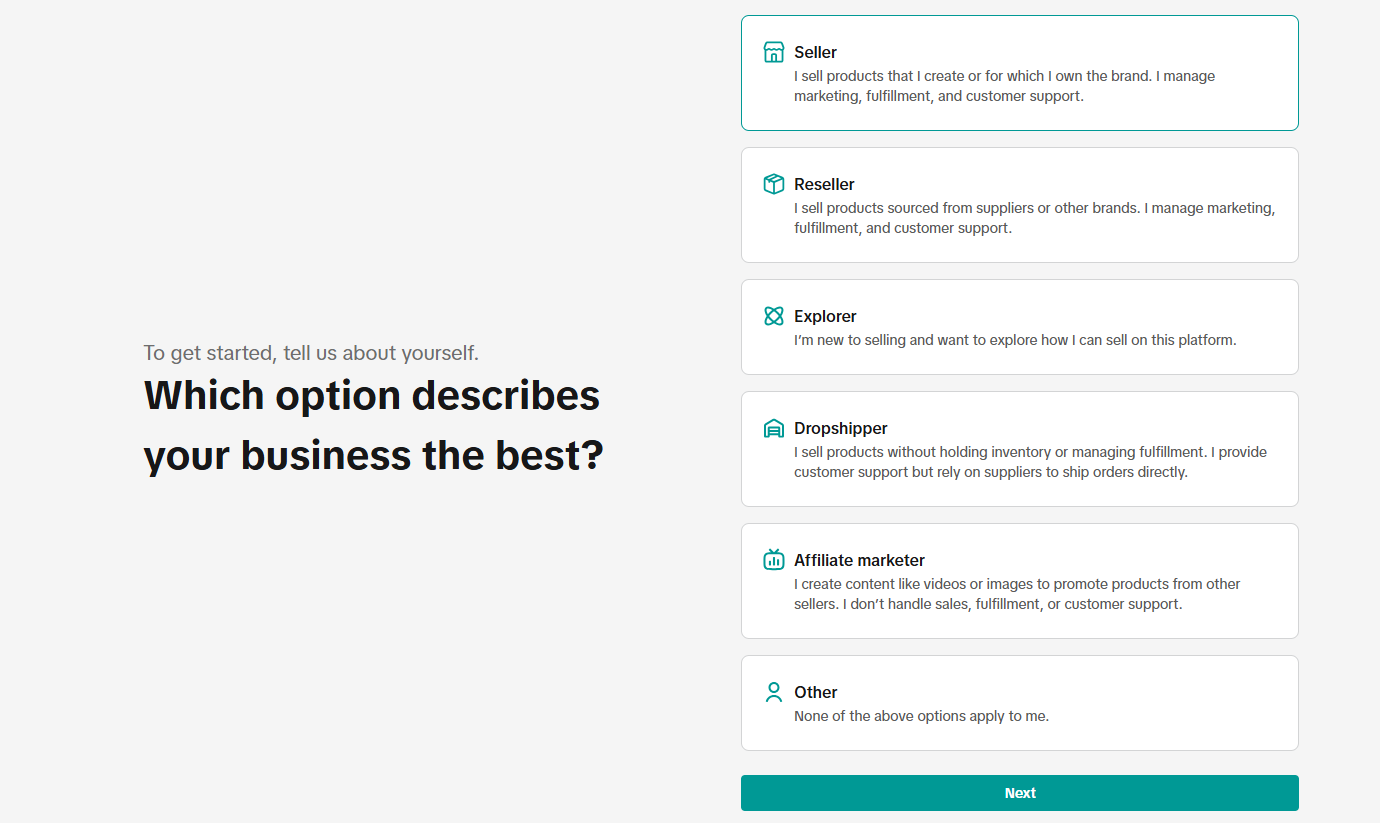
Then, select the business type according to the product you sell or are going to sell. Based on your selection, you will see the requirement for documents that you need to upload.
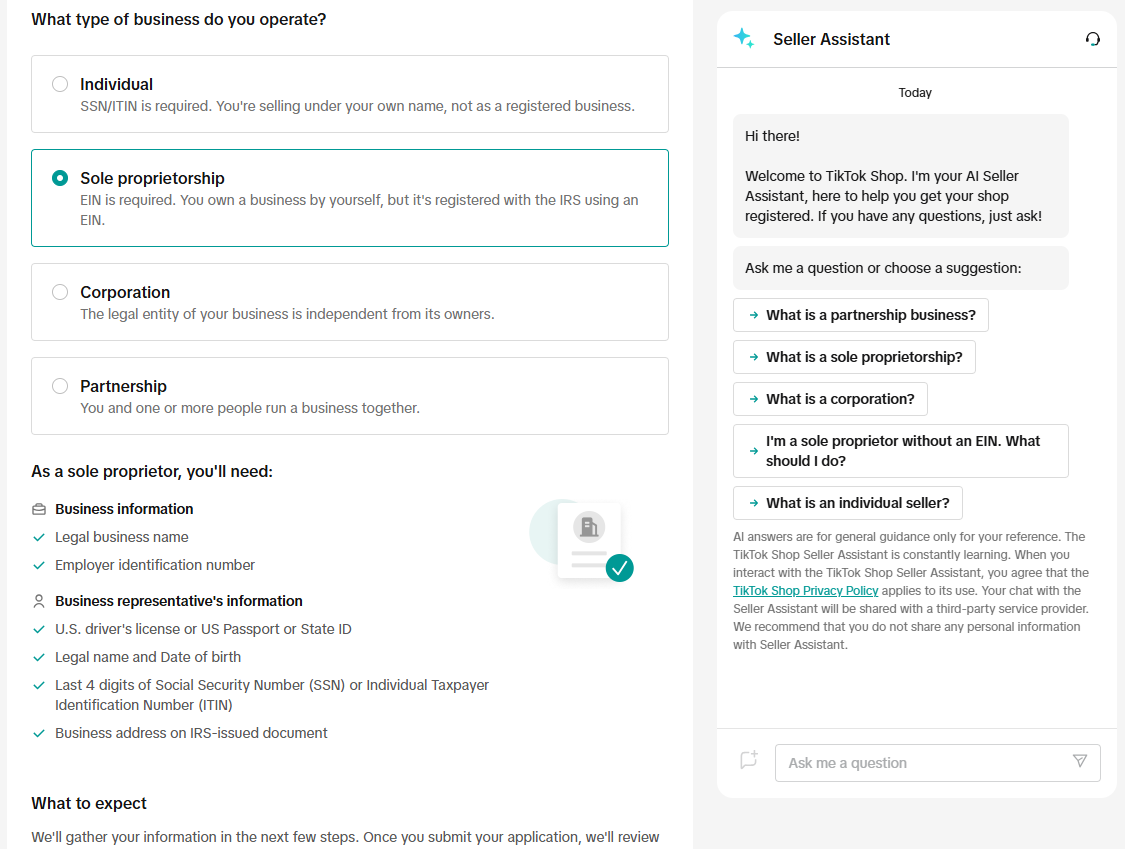
Step 4. Next, upload the required documents and fill in all the details about yourself and your citizenship.
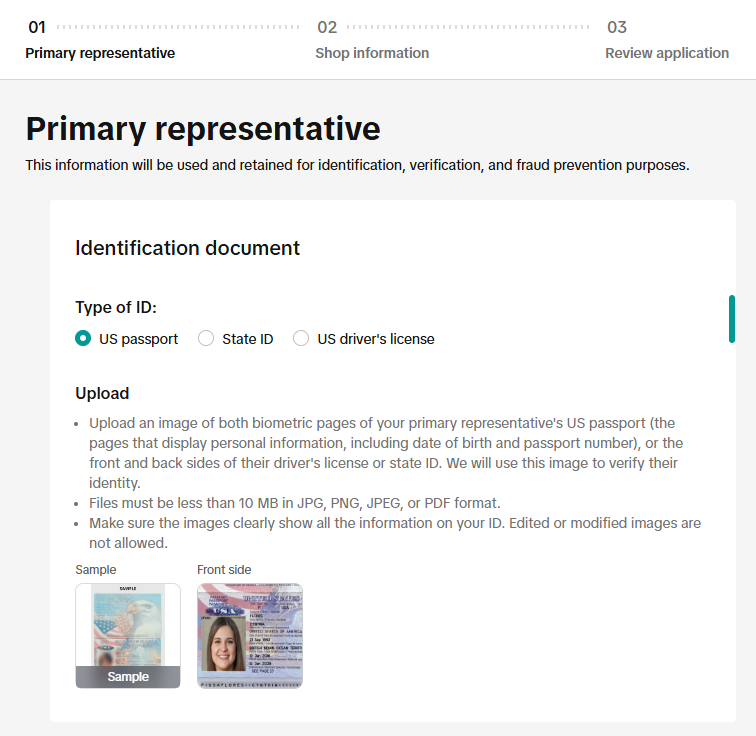
You might need these documents (for a US seller), depending on the selling type you choose:
- Government-issued ID (Passport, driver’s license, or state ID to confirm your identity)
- Tax information – SSN or ITIN (individual sellers) or EIN (business accounts)
- Bank account details (US-based account for receiving payouts)
- Business documents (if applicable) – Business registration or formation documents for company accounts
- Proof of address (May be required in some cases to match your identity details)
- Product compliance documents (if needed) – Certifications or approvals for restricted categories
Step 5. Once you are done filling in all the required fields, enter your shop information next (e.g., your shop name, logo, and product category). Then enter your phone number for verification. Enter the code and click next to submit your application.
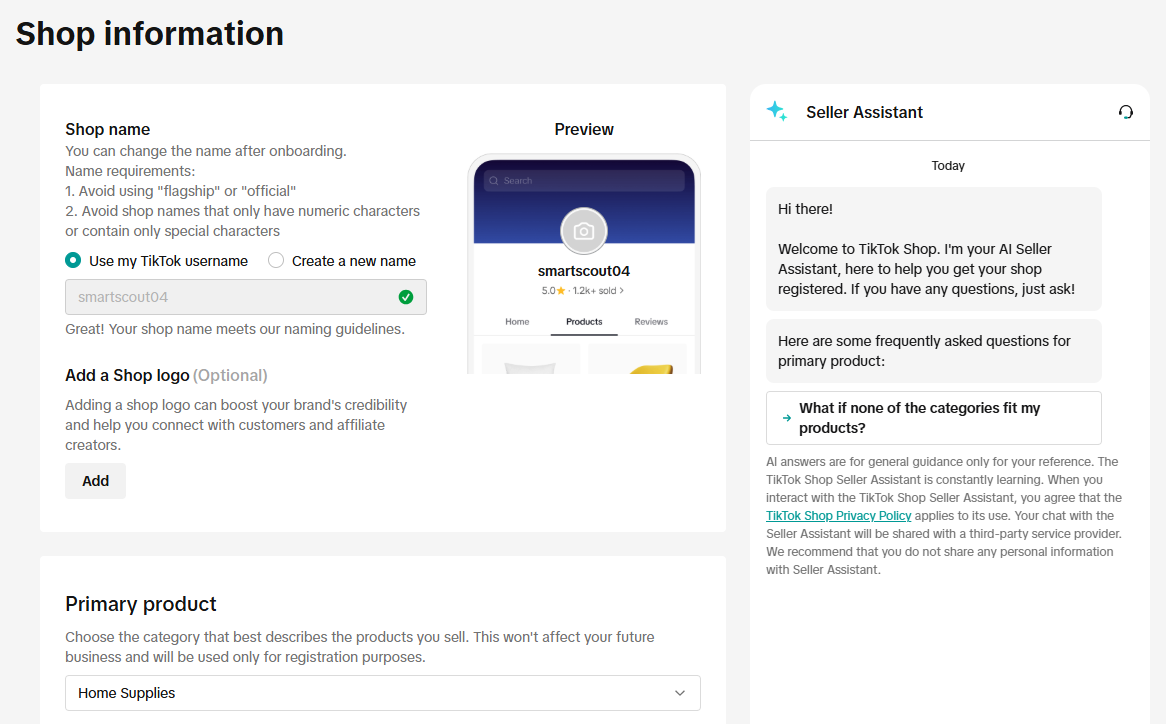
And like that, your first phase of becoming a TikTok Shop seller is complete. Now, you need to wait for some time for your application to be reviewed and approved.
Approval Timeline and Common Rejection Reasons
TikTok generally takes 24 hours to 6 business days to approve your application. Most applications are reviewed within 24–48 hours, though delays happen if documents need rechecking or resubmission.
Not all the applications get approved; some of them get rejected. TikTok rarely gives detailed explanations, but based on official guidance and platform patterns, these are the main reasons sellers get rejected:
- Mismatched business information
- Incorrect or Invalid Documents
- Bank & Tax Detail Errors
- Product or Category Compliance Issues
- Missing Brand Authorization (For Resellers)
- Incomplete Application Setup
Overall, accuracy and consistency across documents and a “ready-to-sell” setup are key to faster approval and fewer rejections.
Listing Your Products and Choosing a Fulfillment Method
If everything you have filled out is correct and you meet the criteria, you will get access to TikTok Seller Central, from where the next phases of listing products and adding payment information start.
Listing products on your TikTok storefront is similar to Amazon, but with no complex steps. Once you click “Add New Product” from your Seller Central.
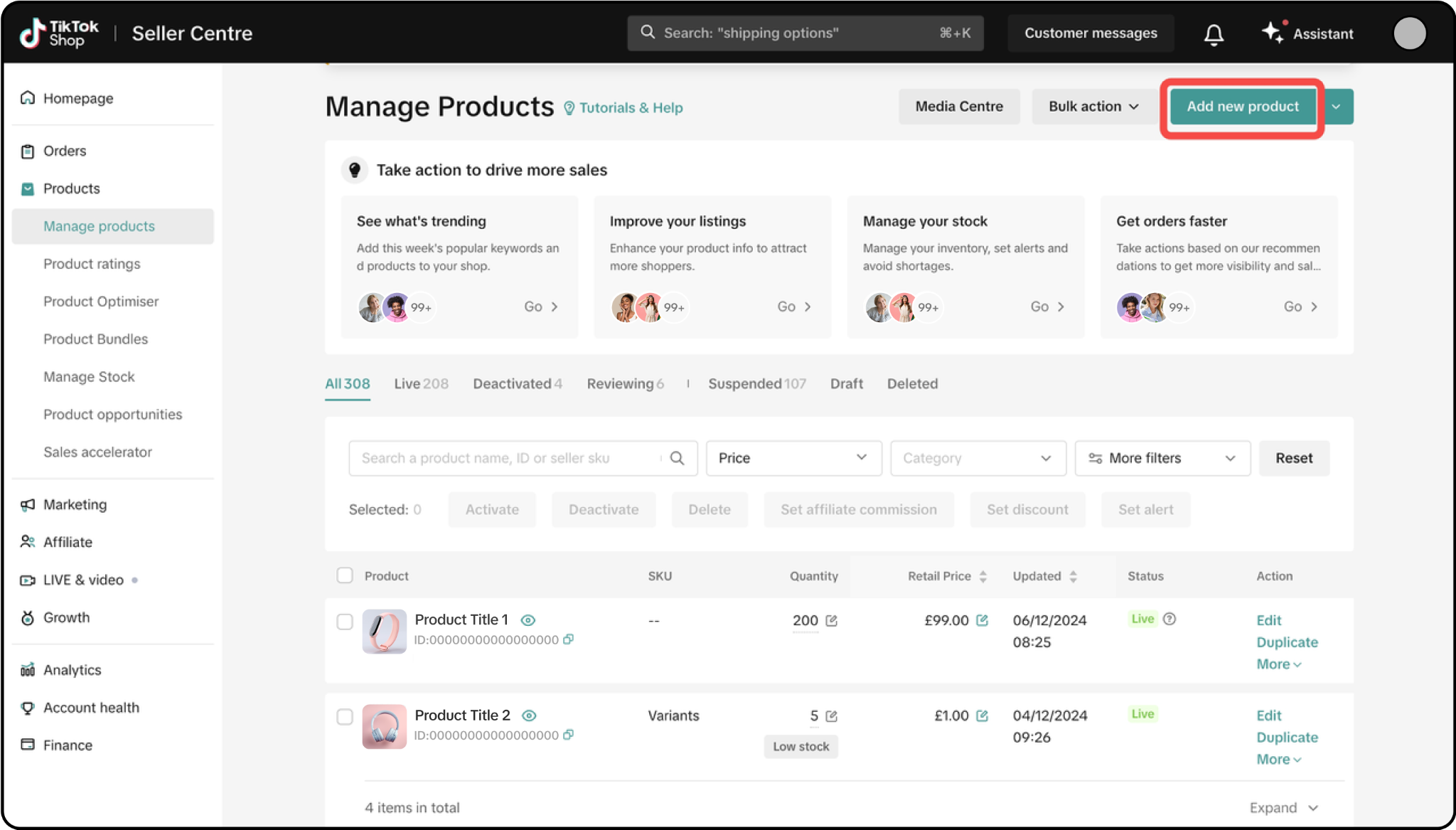
You need to add the following details:
- Upload clear product images
- Product Title
- Product Description
- Product Category
- Product Price
- Stock (the number of products in your inventory)
Make sure to be as descriptive and accurate as possible so TikTok can recommend your product to the right audience.
Comparing TikTok Shop's Three Fulfillment Options
This is a very crucial step for you as a TikTok seller. You need to specify how exactly you are going to fulfill your product to the customer. This includes the handling time and carrier. You must set up a realistic time so your customers know what to expect.
There are three options for product fulfillment:
1. TikTok Shipping: This is the default option from TikTok. The company assigns carriers like FedEx, UPS, or USPS and handles all the logistics and tracking updates (from picking the product from the warehouse to delivering to the customer’s doorstep). Sellers will pay standard shipping charges.
2. Seller Shipping: With this option, sellers take complete control of shipment and fulfillment. This option is most chosen by experienced sellers who have contracts with existing shipping systems.
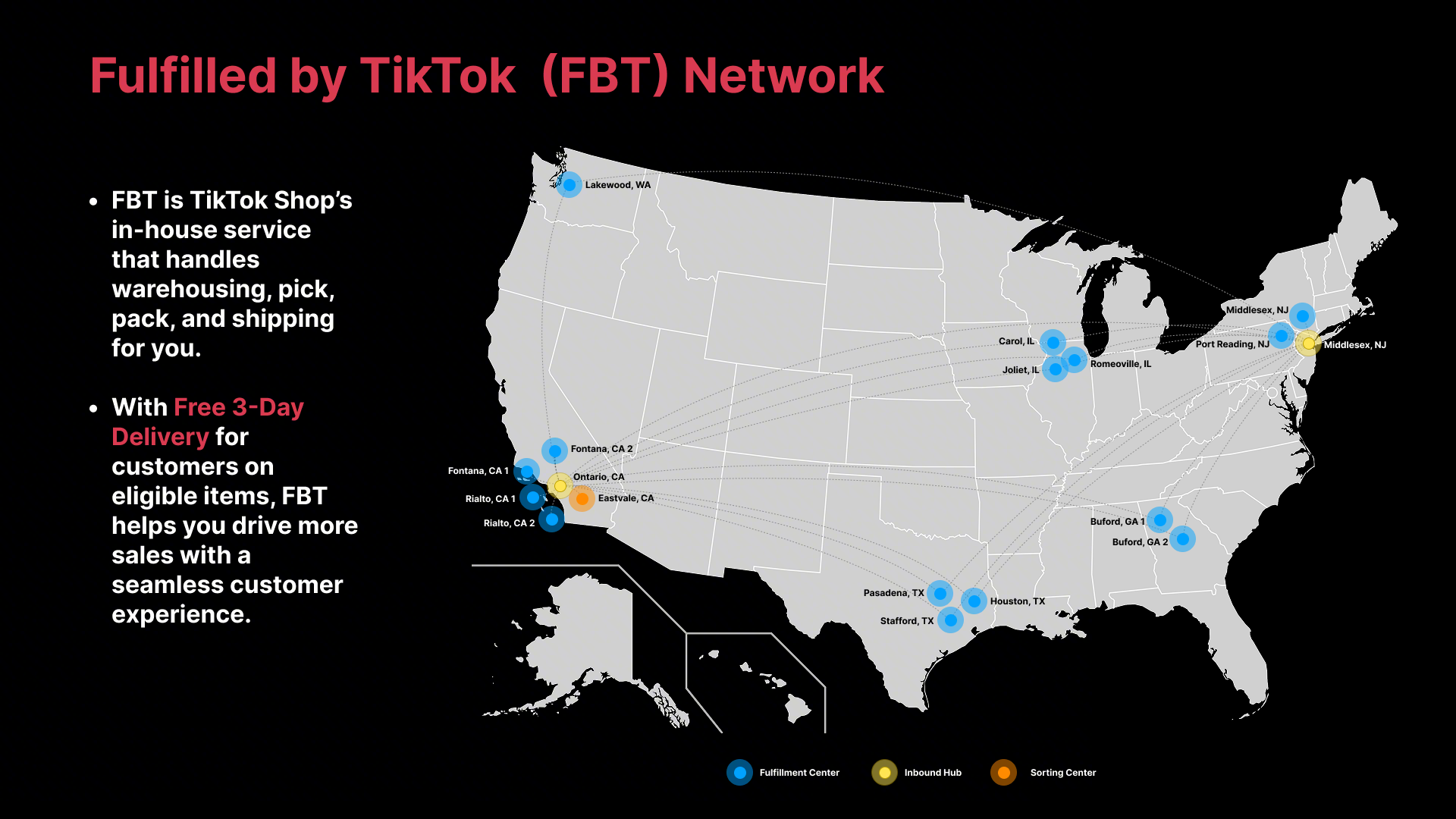
3. Fulfilled by TikTok: The FBT is similar to Amazon’s FBA fulfillment model. This is an invitation-only program for high-volume sellers. Sellers just need to ship their inventory to a verified TikTok warehouse, and the other fulfillment process will be taken care of by TikTok.
Pro Tip: If you are new to TikTok Shop, choose TikTok Shipping as your primary fulfillment option. This way, your customers get the exact time of delivery set by the app itself.
Building Your TikTok Content and Creator Engine
TikTok Shop doesn’t reward perfect products; it rewards content that converts.
If you want consistent sales, you need a system that produces content regularly and distributes it through creators.
Think of this as your growth engine: test content → identify winners → scale with creators.
Most sellers fail because they post randomly. The ones who win build repeatable processes.
Content Strategy That Drives Shop Sales
Start with volume, not perfection. Your goal is to test multiple content angles quickly and identify what works.
Focus on these core formats:
- Problem → Solution (show the pain, then fix it)
- Before → After (visual transformation)
- Demo in action (clear, real-life use)
Every video should hook attention in the first 2–3 seconds. If the scroll doesn’t stop, nothing else matters.
Instead of overproducing, keep content native and simple. TikTok favors videos that feel organic, not like polished ads.
Action steps:
- Post 1–3 videos daily per product
- Test different hooks for the same product
- Keep videos under 30 seconds
- Double down on formats that get engagement
Once a video starts gaining traction, reuse the format. Scaling on TikTok is less about new ideas and more about repeating what works.
Working with Creators and the TikTok Shop Affiliate Program
Creators are your fastest way to scale content. Instead of producing everything yourself, you can leverage creators to generate volume and reach.
TikTok Shop Affiliate allows sellers to work with creators who promote products for commission. Sellers can set up collaborations inside Seller Center, and creators can earn when their content drives sales.

TikTok’s affiliate page explains that sellers can log in to Seller Center, go to Affiliate, and set up collaborations to reach more customers.
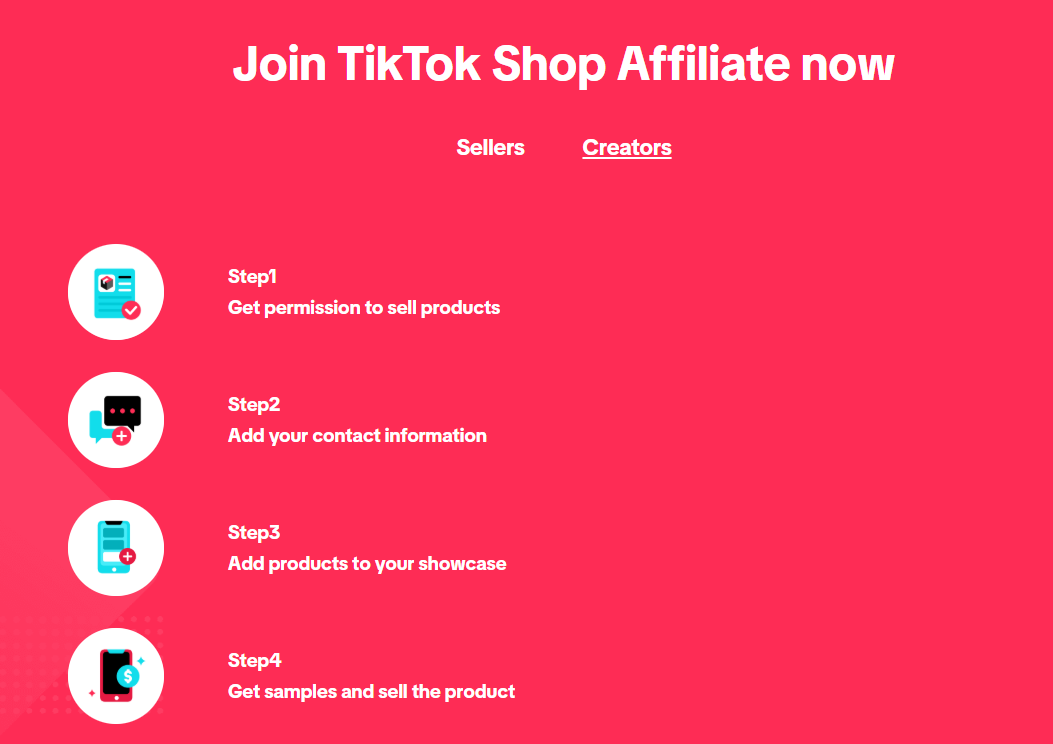
Affiliate marketing works well because sellers do not need to create every piece of content themselves. Creators bring their own audience, style, trust, and testing ability.
Start by setting up your affiliate program inside TikTok Shop and offering a competitive commission (usually 10–20%).
To build effective partnerships, sellers should:
- Offer competitive commission rates
- Provide clear product details and talking points
- Allow creators creative freedom
- Maintain fast communication and reliable inventory
Your goal is to get as many creators testing your product as possible. One strong creator can generate thousands of sales, but you only find them by testing multiple partnerships.
How to Find Creators Who Actually Move Product
Do not choose creators based on follower count. It’s one of the biggest mistakes new sellers make.

Instead, focus on conversion signals:
- Are viewers asking where to buy?
- Do videos show real product use?
- Is engagement consistent across posts?
SmartScout TikTok tool helps surface these signals by tracking creator performance, affiliate success rates, and video-driven product momentum.
Start by manually searching TikTok for your product or niche. Look at creators already posting similar content. Then validate with data. SmartScout helps you identify:
Mistakes That Kill New TikTok Shops
Sellers have a 90% cancellation rate within 30 days due to seller-fault reasons.
Most TikTok Shops do not fail because of the product. They fail because of poor execution. Avoiding a few common mistakes can save months of wasted time and budget.
- Chasing trends without validation: Viral products can disappear quickly. Always check if demand is consistent before investing in inventory.
- Ignoring unit economics: High revenue does not mean profit. You need to account for fees, shipping, and creator commissions before scaling.
- Choosing products that don’t fit TikTok: If a product is hard to demonstrate or explain quickly, it will struggle to convert on video.
- Relying only on your own content: Growth on TikTok depends on distribution. Without creators, scaling becomes slow and limited.
- Picking creators based on followers: A large audience does not guarantee sales. Engagement and product fit matter more than size.
- Posting inconsistently: TikTok rewards frequent posting and testing. Inconsistent content makes it harder to find what works.
- Not using data to guide decisions: Guessing leads to wasted effort. Sellers who track performance and trends make better decisions and scale faster.
Most of these mistakes come down to one issue. Sellers are operating without a system. Those who combine consistent content, creator partnerships, and data-backed decisions are more likely to succeed.
TikTok Shop vs. Amazon: Should You Sell on Both?
TikTok Shop and Amazon operate on completely different buying behaviors. Amazon captures existing demand, while TikTok creates it. That difference alone is why many sellers are now using both instead of choosing one.
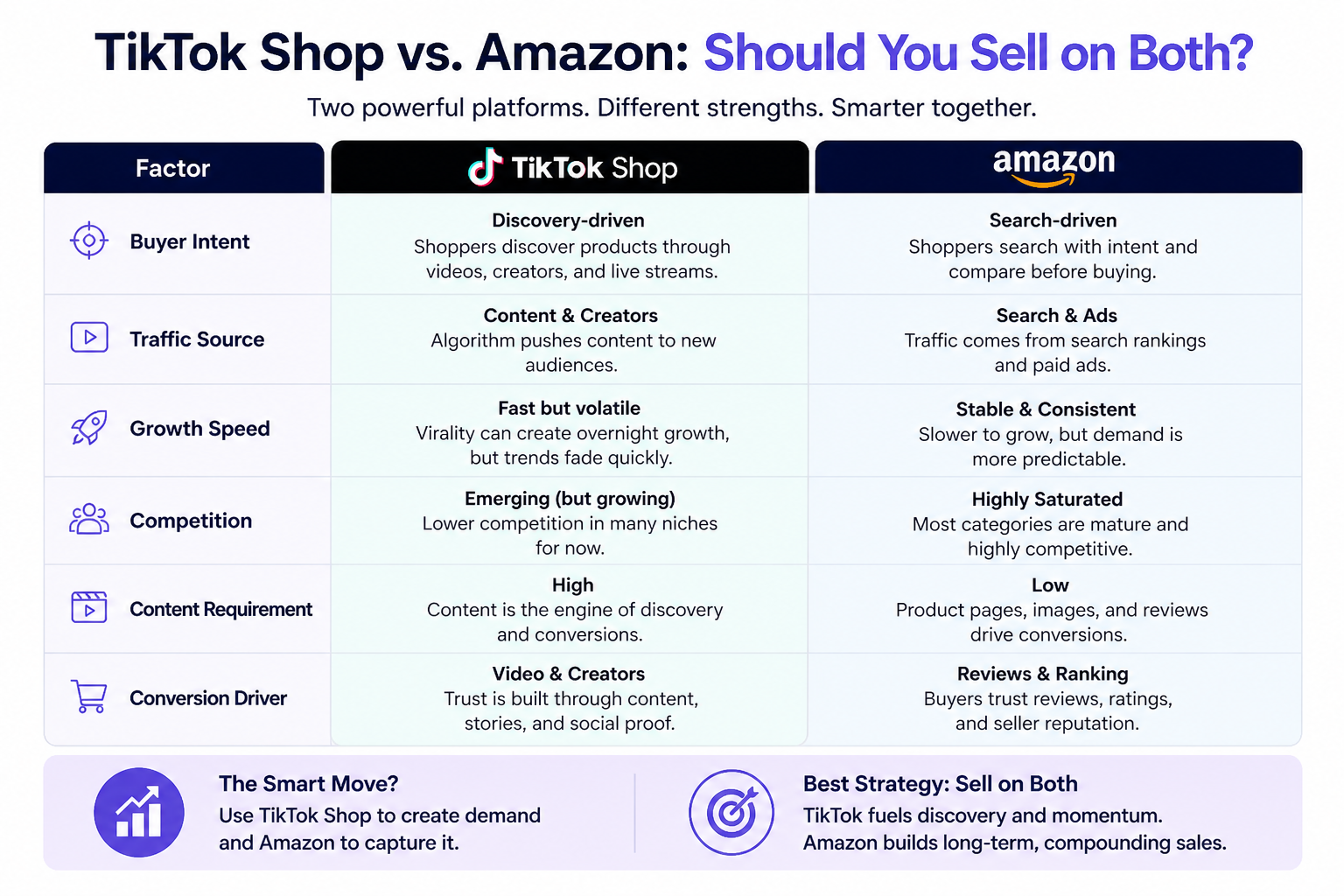
Amazon works best when shoppers already know what they want. They search, compare, and buy. This makes it a strong platform for stable, predictable revenue.
TikTok, on the other hand, is discovery-driven. Products gain traction through content, creators, and trends. A single video can generate demand overnight, but that demand can also fluctuate quickly.
For most sellers, the best approach is not choosing between the two. It is using them together. TikTok can be used to generate demand and test products quickly, while Amazon can capture that demand and build long-term revenue.
Get Started with SmartScout's TikTok Shop Tool
Finding products manually is a hassle for many sellers, especially those who are new to the platform. That’s SmartScout TikTok seller tool, which does the heavy lifting for you and provides winning products at your fingertips.
Let’s see how SmartScout makes this process easier. Here’s a quick overview of the SmartScout Seller tool:
Rather than making assumptions based on viral content alone, SmartScout helps sellers estimate shop performance through broader revenue signals, sales trajectories, and product concentration.
This allows sellers to identify which shops are consistently growing, which products are generating the most revenue, and whether certain competitors are scaling sustainably or simply benefiting from short-term viral momentum.
Top-performing Products
SmartScout’s TikTok research features help sellers identify top-performing products based on measurable sales signals, broader content momentum, and market performance.
Instead of relying solely on trend-chasing, sellers can use data-backed insights to focus on products with stronger sales consistency, validated demand, and broader scaling potential.
Monthly and Lifetime Sales Analysis
Not every trending product becomes a lasting opportunity.
Some products generate short bursts of sales before fading, while others maintain long-term growth through consistent demand.
Monthly and lifetime sales analysis helps sellers distinguish between temporary viral spikes and sustainable products. This makes it easier to evaluate product longevity, seasonal fluctuations, and long-term profitability before making inventory decisions.
SmartScout TikTok Shop Category Analytics
Many sellers only chase viral products. That can work for short-term wins, but long-term growth usually comes from understanding categories.
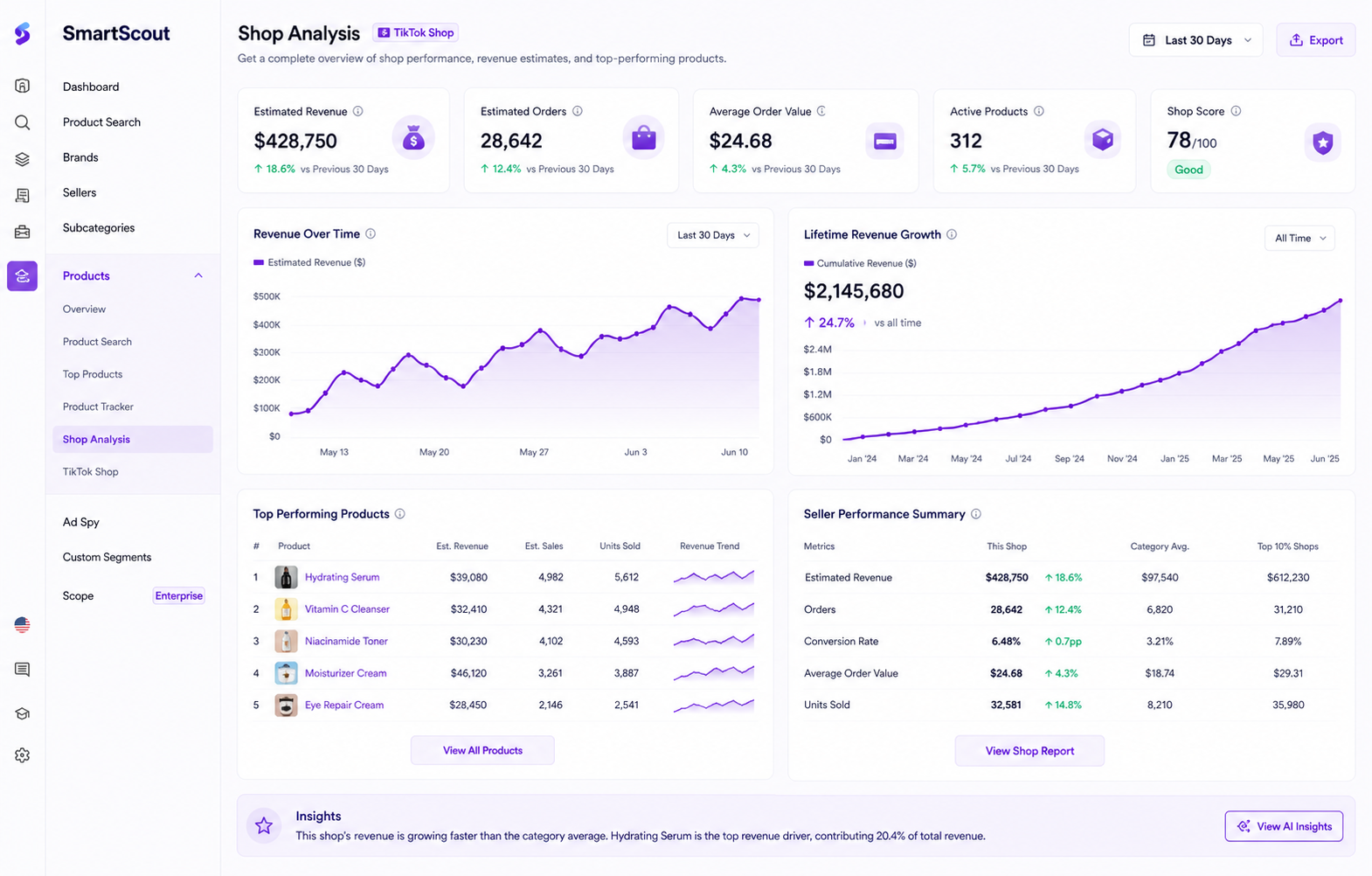
A category shows the bigger market picture. It helps sellers understand where demand is growing, where competition is weak, and where product gaps exist.
For example, two products may both look promising. But one may sit in a crowded category with dominant sellers. The other may sit in a smaller but faster-growing category where no shop has strong control yet.
That second opportunity may be easier to win.
Category Sizing
Category sizing allows sellers to estimate the broader scale of demand within specific TikTok Shop markets.
This provides critical insight into whether a niche is large enough to support long-term growth, whether consumer demand is expanding, and whether the category offers enough room for new entrants.
Category Market Share for Shops
Market share analysis provides visibility into who controls a niche.
The tool reveals:
- Dominant shops
- Competitive concentration
- Fragmented categories
- Market entry gaps
This information is especially useful for avoiding oversaturated markets.
Category Opportunity Finder
Perhaps one of the most valuable strategic advantages is identifying opportunities before they become overcrowded.

SmartScout’s opportunity analysis tools help sellers uncover underserved product categories, fast-growing niches, and emerging market gaps.
This early visibility can help sellers position themselves ahead of broader competition.
Trending Product Analysis
TikTok Shop is heavily influenced by content performance.

A product’s success often depends not only on demand but also on how effectively it spreads through TikTok’s video ecosystem.
Video Performance
Video performance insights help sellers analyze how products gain traction through short-form content.
By tracking engagement patterns, content velocity, and viral momentum, sellers can better understand whether a product is gaining sustainable attention or simply experiencing a temporary spike.
Creator and Affiliate Performance
Creators often drive major TikTok Shop sales growth.
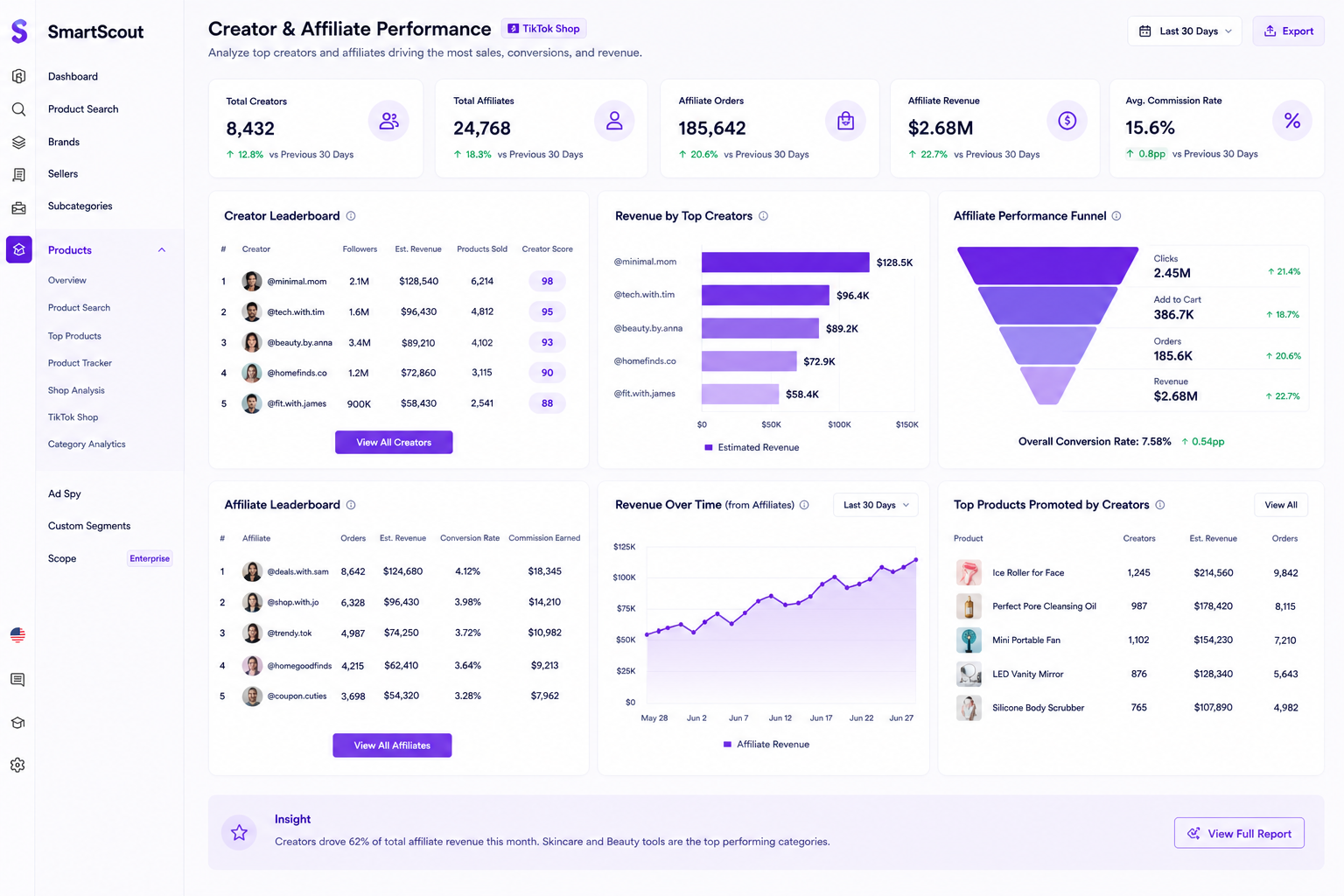
Affiliate and creator analytics can help sellers evaluate:
- Top-performing creators
- Affiliate conversion strength
- Partnership ROI
- Niche influencer performance
- Scaling opportunities through creator ecosystems
For brands leveraging influencer-driven commerce, this can significantly improve marketing efficiency.
Who is it built for?
- Amazon sellers expanding to TikTok
- E-commerce brands are testing new channels
- Product researchers looking for early trends
- Agencies managing creator campaigns
Start SmartScout with a 7-day Money Back Guarantee
Conclusion: Start Selling on TikTok Shop with SmartScout
TikTok Shop is slowly blending in with top marketplaces. This is the only place where you can scroll for entertainment, shop live, and earn money by selling at the same time.
If video creation is your strong point, selling products on TikTok Shop is very easy. Winning on TikTok Shop is not only about listing products. The sellers who win will be the ones who combine creative testing with real marketplace data.
That is where SmartScout’s TikTok tool can become valuable. With top-notch features available for TikTok and Amazon, SmartScout helps sellers move faster, make better decisions, and find stronger opportunities before the market gets crowded.
FAQs


